Made ByRestaurant
Grünewald Chef’s Table
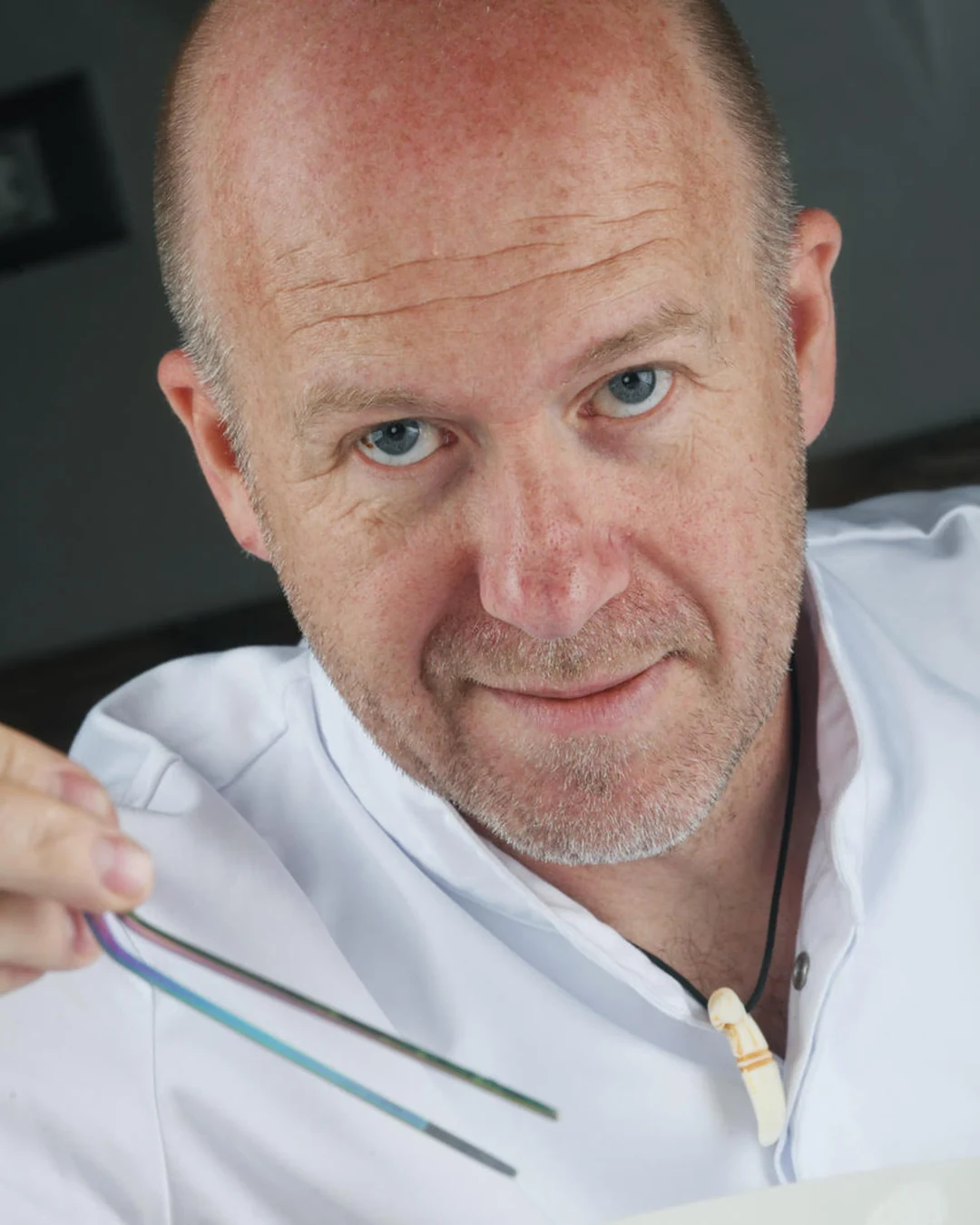
Chef in Residence
Uroš Štefelin
Chef
- 01CuisineModern French Chef's Table
- 02CityLuxembourg, Luxembourg
- 03RecognitionOne Michelin Star
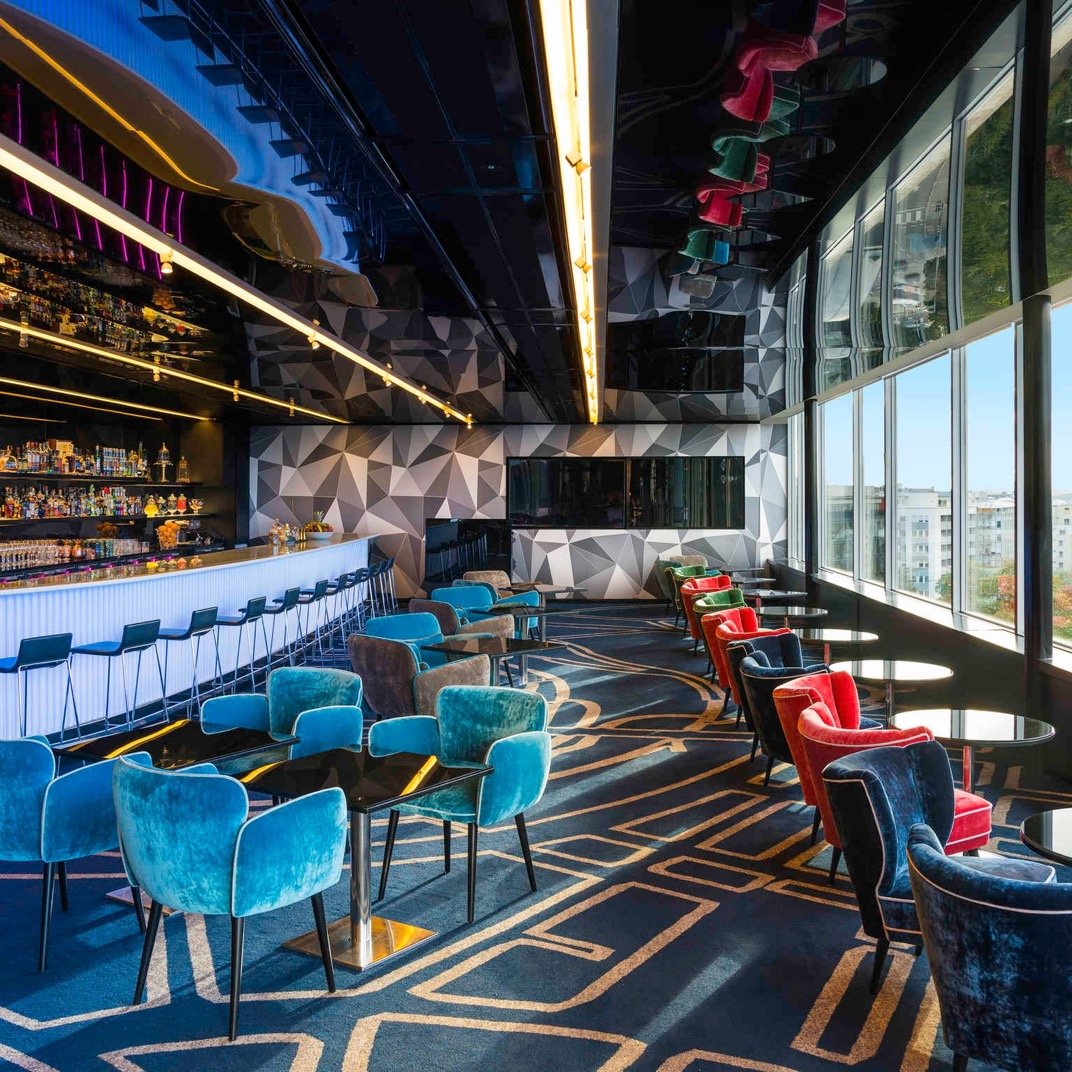
Grünewald Chef's Table earned its first Michelin star in 2025, placing it among Luxembourg's small tier of starred modern cuisine restaurants. Located in Dommeldange, the chef's table format and the cooking of Uroš Štefelin position it closer to the sourcing-led, produce-forward end of the city's fine dining spectrum than to its more classically French neighbours.
- 1 Michelin Star
At a glance
- Cuisine
- Modern French Chef's Table
- Price
- $$$$
- Per person
- $130
- Hours
- Mon: Closed; Tue: 7:30 PM–12 AM; Wed: 7:30 PM–12 AM; Thu: 7:30 PM–12 AM; Fri: 7:30 PM–12 AM; Sat: 7:30 PM–12 AM; Sun: Closed
- Neighborhood
- Luxembourg City
- Rating
- 4.6 (95)
<h2>Where Luxembourg's Fine Dining Sits in 2025</h2><p>Luxembourg's starred restaurant scene is compact by European capital standards, but its upper tier has grown meaningfully in the last decade. Two restaurants hold two Michelin stars, <a href="https://www.enprimeurclub.com/restaurants/amelys-luxembourg-restaurant">Amélys</a> and the long-established Léa Linster, while a cluster of single-star addresses rounds out the city's serious dining options. Grünewald Chef's Table joined that single-star cohort with the 2025 Michelin awards.</p><p>The modern cuisine category in Luxembourg occupies an interesting position: it is not the Franco-Belgian classicism of older generations, nor the strictly technique-forward cooking that dominated European fine dining in the 2010s. What emerges from the better kitchens in and around the capital is something more grounded in product provenance, where the cooking acts as a frame for ingredients rather than a transformation of them. Grünewald Chef's Table reads as a clear expression of that tendency, with chef Uroš Štefelin's approach sitting closer to the sourcing-led, produce-forward end of the spectrum than to, say, the formal architecture of <a href="https://www.enprimeurclub.com/restaurants/maison-lameloise-chagny-restaurant">Maison Lameloise</a> in Burgundy or the fire-driven technique of <a href="https://www.enprimeurclub.com/restaurants/11-woodfire-dubai-restaurant">11 Woodfire in Dubai</a>.</p><h2>The Setting: Dommeldange and the Chef's Table Format</h2><p>Dommeldange sits just north of Luxembourg City's core, a quieter residential district that has become associated with a more intimate register of hospitality than the city centre. Arriving at the address on Rue des Hauts-Fourneaux, the context is deliberately low-key, the restaurant does not announce itself with the visual signals typical of starred city-centre venues. That restraint is consistent with the chef's table format, which by design deprioritises spectacle in favour of proximity: proximity to the kitchen, to the cooking, and to the person responsible for both.</p><p>The chef's table model has spread across European fine dining for good reason. It removes the mediation between kitchen and guest, replacing it with a direct and often conversational exchange. At its most effective, the format makes the sourcing story audible: the chef can speak to where a specific cut came from, how a vegetable was grown, or why a particular producer was chosen for the season. For a kitchen emphasising ingredient provenance, that directness is not incidental, it is structural to the experience.</p><p></p><h2>Sourcing as the Culinary Argument</h2><p>The editorial angle that makes Grünewald Chef's Table worth attention within Luxembourg's broader dining conversation is not primarily about technique, it is about what arrives before the technique is applied. Sourcing-led kitchens, at their most coherent, treat ingredient selection as the first act of cooking. The choice of producer, the decision to work with a particular season's yield, the preference for a regional supply chain over a global one: these are culinary decisions as much as any knife skill or sauce reduction.</p><p>Luxembourg and its immediate surroundings, the Moselle valley to the east, the Ardennes to the north, the agricultural regions of adjacent Germany and Belgium, offer a sourcing geography that serious kitchens can draw on with specificity. The Moselle produces wines and, alongside them, the kind of small-scale horticultural and livestock operations that feed produce-conscious restaurants. When a kitchen in this region commits to working closely with its immediate supply chain, the menu becomes a seasonal argument for place rather than a generic exercise in fine dining format.</p><p>This approach places Grünewald Chef's Table in a broader European conversation. Restaurants like <a href="https://www.enprimeurclub.com/restaurants/agli-amici-godia-restaurant">Agli Amici in Godia</a> in northeast Italy have built multi-decade reputations on precisely this logic: the region's produce as the primary culinary statement, with technique in service of that produce rather than the reverse. Closer to Luxembourg, the same philosophy informs several of the more interesting addresses in the Benelux region, where border geography and agricultural diversity make hyper-local sourcing both practical and meaningful.</p><h2>How Grünewald Compares Within Luxembourg's Starred Set</h2><p>Among Luxembourg's current Michelin-starred restaurants, the competitive set is instructive. <a href="https://www.enprimeurclub.com/restaurants/equilibrium-luxembourg-restaurant">Equilibrium</a> and <a href="https://www.enprimeurclub.com/restaurants/de-jangeli-luxembourg-restaurant">De Jangeli</a> represent different registers of the city's dining ambition, while <a href="https://www.enprimeurclub.com/restaurants/bonifas-luxembourg-restaurant">Bonifas</a> and <a href="https://www.enprimeurclub.com/restaurants/parc-leh-luxembourg-restaurant">Parc Le'h</a> sit at other points on the quality spectrum. Archibald De Prince, one of the single-star addresses in the broader Luxembourg region, holds an explicitly organic designation, a formal commitment to sourcing that Grünewald approaches through format and cooking philosophy rather than certification language.</p><p>What separates Grünewald from the majority of its single-star peers is the chef's table format itself. Most starred restaurants in Luxembourg operate as conventional dining rooms, where the kitchen remains largely invisible to guests. The chef's table removes that invisibility. It also changes the economics and the cadence of service: fewer covers, longer seatings, and a meal that tends to be sequential and unhurried rather than concurrent across a full dining room. At the €€€€ price point shared with the city's other top-tier addresses, the value proposition is density of attention rather than volume of courses.</p><p>Internationally, the chef's table format at this level is a well-established marker of intent. <a href="https://www.enprimeurclub.com/restaurants/frantzen-stockholm-restaurant">Frantzén in Stockholm</a> is perhaps the most cited example of the format operating at maximum seriousness, a fully immersive, multi-hour progression through a kitchen-adjacent space. <a href="https://www.enprimeurclub.com/restaurants/fzn-by-bjorn-frantzen-dubai-restaurant">FZN by Björn Frantzén in Dubai</a> extends that model internationally. Grünewald is not competing at that scale or price tier, but the format alignment is meaningful: chef's table restaurants self-select for a guest who wants engagement, not just execution.</p><h2>Google Reviews and the Guest Signal</h2><p>A 4.6 rating across 95 Google reviews is a useful data point for a restaurant operating at this capacity level. Chef's table restaurants accumulate reviews slowly by design, low cover counts mean the sample builds gradually. A consistent 4.6 at 66 reviews suggests the kitchen is delivering reliably rather than producing occasional peaks surrounded by inconsistency. For a restaurant that received its first Michelin star in 2025 after a Plate in 2024, the review pattern and the award trajectory are aligned: a steady upward arc rather than a sudden spike.</p><p>Among the city's modern cuisine addresses, that review consistency matters for a different reason than it does in high-volume restaurants. When a kitchen serves thirty or forty guests on a given night rather than a hundred, each service represents a higher proportion of the total experience base. Consistency at low volume is, in some respects, a harder standard to meet than consistency at scale.</p><h2>Planning Your Visit</h2><p>Grünewald Chef's Table is located at 2 Rue des Hauts-Fourneaux in Dommeldange, a short distance from the centre of Luxembourg City. The €€€€ price tier puts it at the upper end of the city's restaurant market, in line with other starred addresses.</p><p></p><p>Among modern cuisine restaurants at a comparable tier and format internationally, <a href="https://www.enprimeurclub.com/restaurants/cracco-in-galleria-milan-restaurant">Cracco in Galleria in Milan</a>, <a href="https://www.enprimeurclub.com/restaurants/trescha-buenos-aires-restaurant">Trescha in Buenos Aires</a>, and <a href="https://www.enprimeurclub.com/restaurants/azafran-mendoza-restaurant">Azafrán in Mendoza</a> each offer reference points for what modern cuisine looks like when grounded in a specific regional identity. Grünewald Chef's Table is making a comparable argument from a smaller, less internationally profiled city, which is, in part, what makes its 2025 recognition worth tracking.</p>
Know before you go
- Dress code
- smart_casual
- Reservations
- essential
- Accessibility
- step_free_entrance
Frequently asked
What's Grünewald Chef’s Table's location?
Grünewald Chef’s Table is located at 2 Rue des Hauts-Fourneaux, 1719 Dommeldange Luxembourg, Luxembourg.
What's Grünewald Chef’s Table known for in terms of accolades?
Grünewald Chef’s Table has received recognition including: Michelin 1 Star (2025); Michelin Plate (2024).
What price level is Grünewald Chef’s Table?
Pricing at Grünewald Chef’s Table is listed as €€€€.
Who is the chef or culinary lead at Grünewald Chef’s Table?
The chef associated with Grünewald Chef’s Table is Uroš Štefelin.
Can I walk in to Grünewald Chef’s Table?
Reservations are recommended for Grünewald Chef’s Table in Luxembourg. Confirm current policy via the venue's official channels.
Address
2 Rue des Hauts-Fourneaux, 1719 Dommeldange Luxembourg
Luxembourg City
How it compares
Grünewald Chef’s Table
- Notes
- Dommeldange, Modern French Chef's Table
- Price
- $$$$
- Notes
- Grund, Italian Fine Dining
- Price
- $$$$
- Notes
- Roeser, Modern Italian Fine Dining
- Price
- $$$
- Notes
- Steinfort, French Contemporary Fine Dining
- Price
- $$$$
- Notes
- Schouweiler, Traditional French Country Bistro
- Price
- $$$$
- Notes
- Nospelt, Modern French Country Inn
- Price
- $$$
In residence
Similar places
Modern French Fine Dining
Ma Langue Sourit
Luxembourg, Luxembourg
★★
Italian Fine Dining
Mosconi
Luxembourg, Luxembourg
★
Modern French Fine Dining
Léa Linster
Luxembourg, Luxembourg
★★
Modern Plant-Based Fine Dining
Fields by René Mathieu
Luxembourg, Luxembourg
★
La Villa de Camille et Julien
Luxembourg, Luxembourg
★
Traditional French Country Bistro
Guillou Campagne
Luxembourg, Luxembourg
★