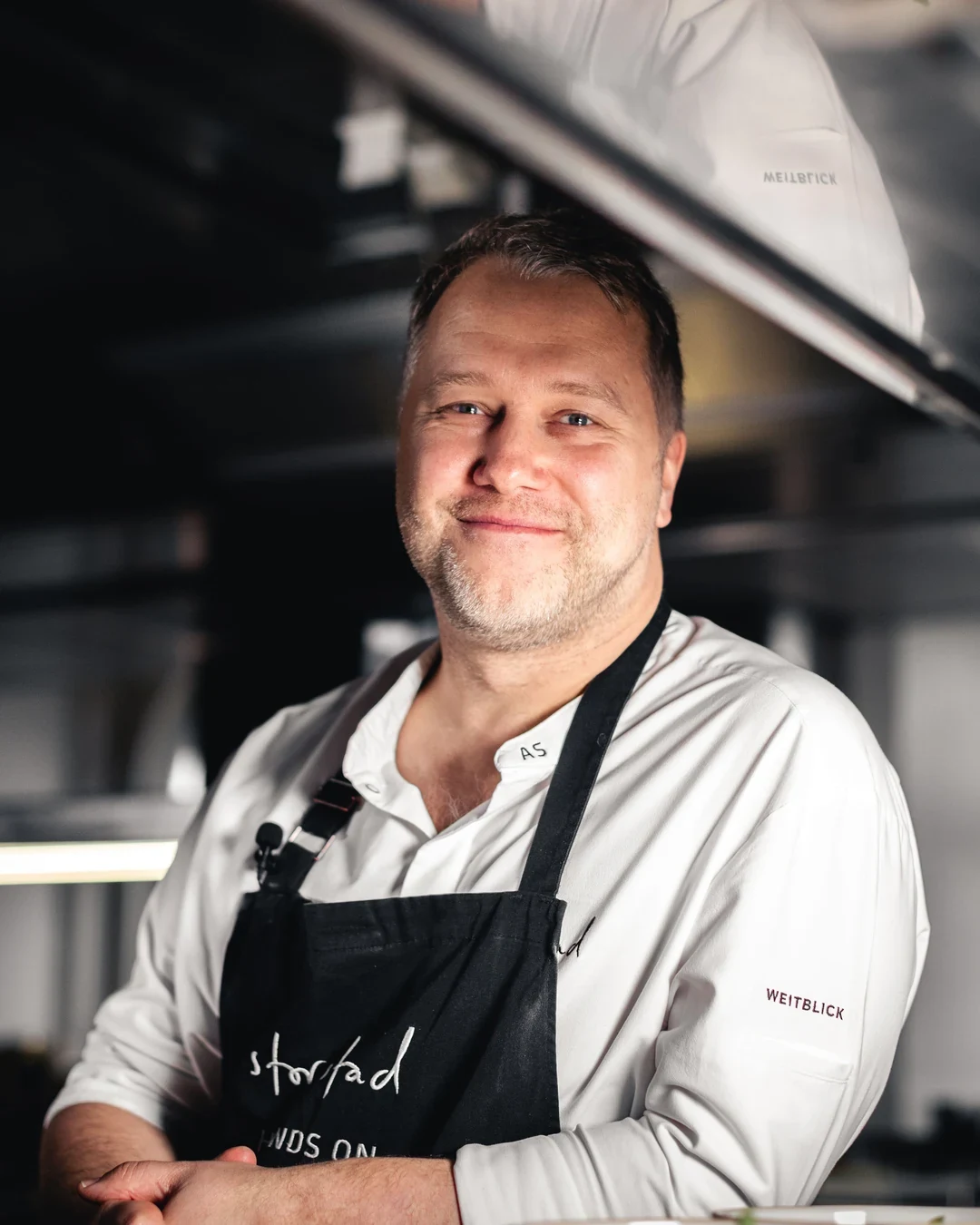
Portrait of Anton Schmaus
i. Biography
Anton Schmaus stands at the helm of the German national football team’s kitchen, a role that places him at the crossroads of discipline, travel, and performance. The result is a style that feels both precise and expansive: rooted in tradition, but alert to the wider world.
The Sunday letter
Read Made By's new profiles every Sunday.
Meet the chefs, winemakers and sommeliers behind the places we cover. See a sample below before you subscribe.
See a sample of the Sunday emailOne email a week. Unsubscribe from any issue.
The Path
Schmaus’s culinary journey began at the Benedictine boarding school in Metten, a formative start that hints at structure, rhythm, and the kind of quiet intensity that often marks a lasting career. From there, his path gathered momentum in a series of kitchens and ventures that each added another layer to his profile. Since 2009, he has been chef-restaurateur of Historisches Eck, a position that established his long-term presence in the restaurant world. In 2014, he became owner-chef of Storstad, extending his reach and sharpening the sense of authorial control that now defines his work. The following years brought further expansion: in 2016, he founded Sticky Fingers, and in 2017, Café Antoinette. That same year, he also became head chef of the German national football team, moving into a setting where culinary identity must coexist with exacting schedules and the demands of elite sport. Today, Anton is also chef of Borsa Restaurant, bringing a polished, modern authority to each of these roles. Across them, his career reads less like a straight line than a deliberate widening of scope, with each venue and title reflecting a different facet of the same culinary sensibility.
The Work Today
As head chef of the German national football team, Schmaus works in a world where the kitchen is never entirely separate from the road. Food must travel, routines must hold, and every meal must support the larger machinery of preparation and performance. Within that framework, he continues to express a style that is carefully composed rather than overly ornate, attentive to balance, texture, and season. His approach is unmistakably cosmopolitan, but not detached. The French backbone gives structure and refinement, while Asian influences bring energy and contrast. It is a cuisine of movement and dialogue, one that seems to draw strength from the meeting point between technique and curiosity.
The Work
What gives Schmaus’s cooking its particular clarity is the way it is shaped by high-quality, seasonal and often regional ingredients, alongside his background and culinary influences. That commitment to seasonality lends his work a natural cadence, while the regional thread keeps Bavaria present, not as a slogan but as a steady point of reference. There is a certain confidence in the restraint of this philosophy. Rather than chasing excess, the cooking allows ingredients to lead, with the chef’s technical instincts framing rather than overwhelming them. In that sense, Schmaus’s work reflects both control and openness: control in the precision of execution, openness in the way his influences travel across borders and traditions.
Career - chef — Borsa Restaurant, Istanbul, Turkey - head chef — German national football team, Germany (2017–present) - owner-chef — Storstad, Regensburg, Germany (2014–present) - chef-restaurateur — Historisches Eck, Regensburg, Germany (2009–present) - founder — Sticky Fingers (2016–present) - founder — Café Antoinette, St. Emmeram Castle (2017–present) Education: Benedictine boarding school in Metten
Signature
Anton’s signature dishes include Bresse chicken with Périgord truffle, ravioli with 30-months-aged Parmesan and Alba truffle, and Sucuk-Pasta. The dishes suggest the breadth of his palette: luxurious and rooted in classic fine-dining sensibilities, yet also willing to incorporate unexpected combinations and more contemporary accents. Together, they offer a glimpse of a chef who moves comfortably between elegance, richness, and invention.
In Their Words “I would describe my cooking style as a creative interaction between the big wide world, especially Asia, Sweden, and my homeland of Bavaria.” “Culinarily, Anton focuses

The Sunday letter
Get the next Made By profile in your inbox.
We send one email every Sunday morning with the people we profiled that week.
See a sample of the Sunday emailOne email a week. Unsubscribe from any issue.