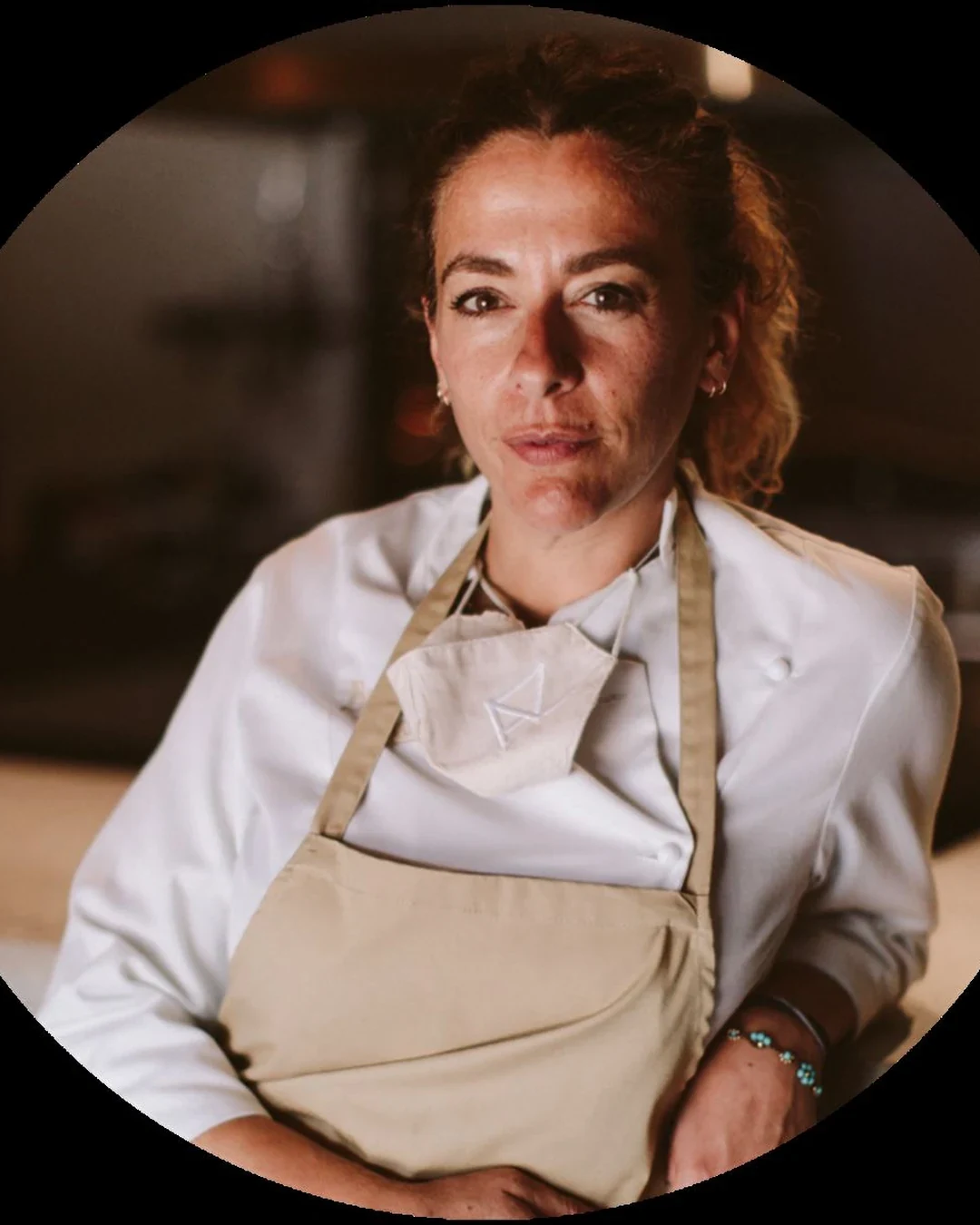
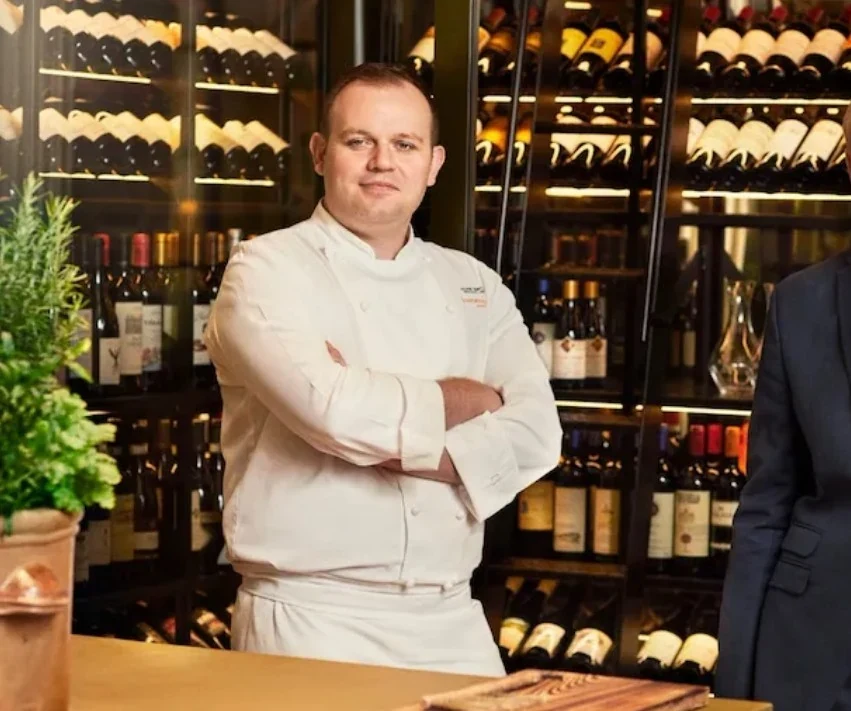
Portrait of Beatriz Pascual
i. Biography
Chef ownership in Salinas de Añana is conditioned by salt country. At Almazen in Salinas de Añana, Spain, Beatriz Pascual works with Añana salt, local muera, and regional produce as structural materials rather than decorative references. The cooking treats salt as inheritance with practical consequences: seasoning, preservation, texture, timing, and a local memory carried through use. Place-based cooking here is mineral before it is scenic. The fruit and vegetables grown nearby, the ingredients long present on local tables, and the saline character of the region set the working vocabulary. In Pascual’s kitchen, salt is not held for the finish; it shapes the method from the start.
The Sunday letter
Read Made By's new profiles every Sunday.
Meet the chefs, winemakers and sommeliers behind the places we cover. See a sample below before you subscribe.
See a sample of the Sunday emailOne email a week. Unsubscribe from any issue.
The Path
Since 2020, the kitchen at Almazen has been led by Beatriz Pascual as head chef. The work is rooted in the surrounding salt flats and the agricultural character of the region, giving the restaurant an identity closely tied to Salinas de Añana, Spain. Regional Cuisine at Almazen is handled through refinement rather than rupture. Inherited flavors are kept legible, then clarified through technique and restraint so familiar ideas remain connected to origin while taking a more precise form.
The Work Today
Regional Cuisine and farm-to-table cuisine define the current work at Almazen, where Pascual uses locally sourced organic fruits and vegetables for regionally inspired food. Añana salt functions as a central ingredient, not a garnish, and the cooking is built to pay tribute to the culinary richness of her region. Local muera, the naturally salty spring water, gives the salt vocabulary a technical role. Pascual uses its salinity to accelerate curing processes without diluting it. The result is salinity as both flavor and method: drawing out essence, tightening texture, and keeping each course connected to its place. The opening anchovies cured quickly in local muera set the register with directness: salt, sea, and region in one bite. Bonito is worked as a reinvention of bonito with tomato: dehydrated in front of the customer with a bath of muera, then served with fermented tomato sauce. The classic pairing remains visible, but the technique adds a contemporary layer. Fermentation and grain appear in another Michelin-noted course: a homemade ‘Baileys’ made with toasted cereal and fermented bread. The tone is lighter, but the method stays grounded in fermentation, grain, and conversion. The same salt-led vocabulary has also moved outside Almazen: an Añana salt-cured anchovy Gilda appeared as a light dish in a four-hands menu with Nobu San Sebastian in San Sebastian, Spain.
Career - Head chef — Almazen, Salinas de Añana, Álava, Spain (2020–present)
Signature
The signature set — anchoas, bonito, homemade ‘Baileys’, Añana salt-cured anchovy, Gilda, and New Style razor clams — shows a kitchen organized around salinity, sea flavor, fermentation, and regional memory. In Beatriz Pascual’s hands, these dishes keep sharpness and depth in balance without separating technique from place.
Acclaim
Recognition for this salt-led regional work includes Michelin Guide recommendation (2024).
FAQ What is Beatriz Pascual's current role? Beatriz Pascual is Chef and Owner of Almazen. What recognition has Beatriz Pascual received? Michelin Guide recommendation (2024). What is Beatriz Pascual known for? Regional Cuisine and farm-to-table cuisine at Almazen.
The Sunday letter
Get the next Made By profile in your inbox.
We send one email every Sunday morning with the people we profiled that week.
See a sample of the Sunday emailOne email a week. Unsubscribe from any issue.