Chef
Brad Carter
- Discipline
- Chef
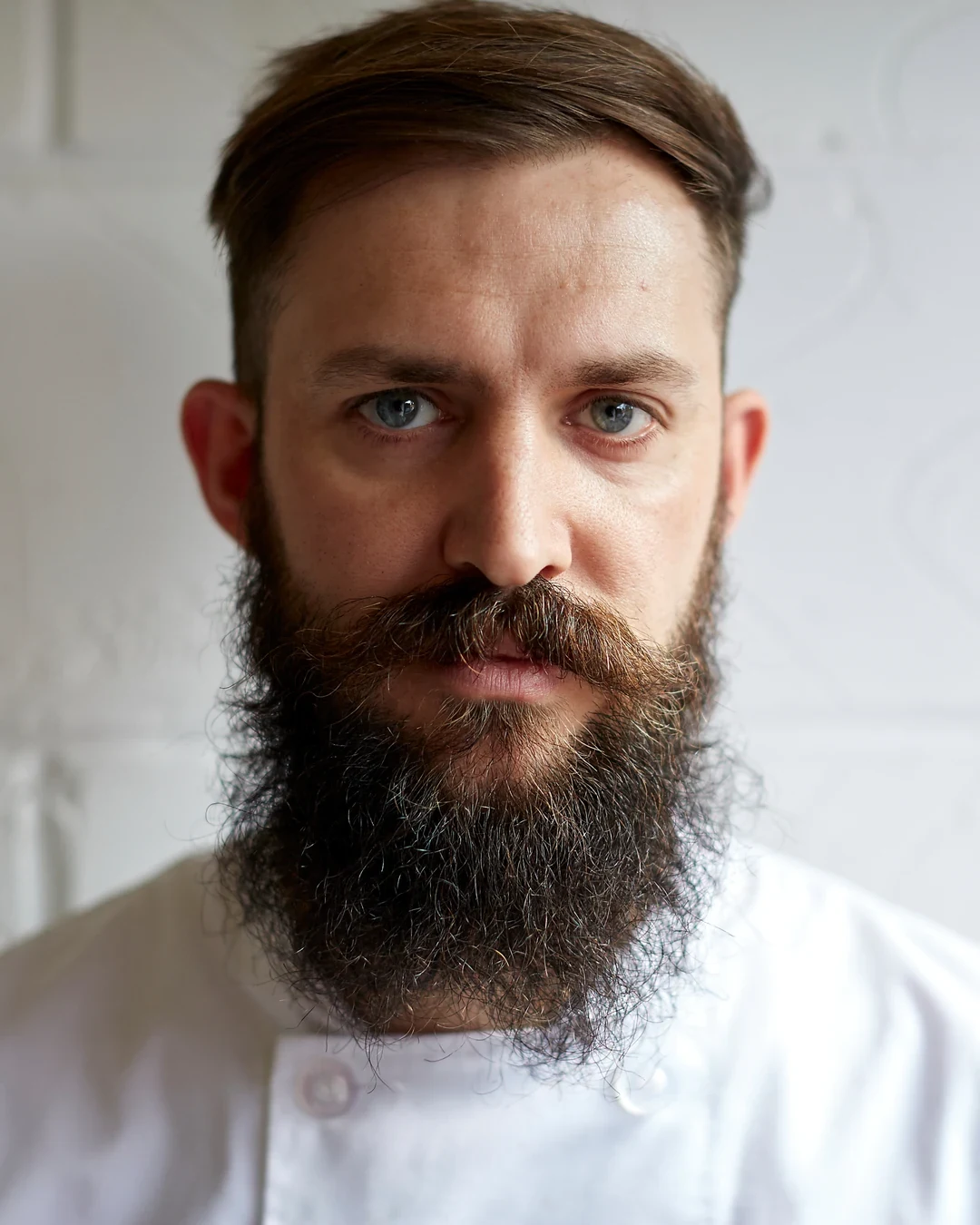
Portrait of Brad Carter
i. Biography
Brad Carter is the chef-owner of Carters of Moseley in Birmingham, a restaurant whose work is built around British terroir, daily-changing menus, local produce, heritage ingredients, nose-to-tail dining, fire, and fermentation. Birmingham-born and shaped by the city that raised him, he is closely associated with a style of cooking that is more tactile, seasonal, and tied to place than any single accolade can suggest. The Michelin Star earned by Carters of Moseley remains the most visible mark of his cooking, but it is only a shorthand for a practice that changes with the day and with what is available to the kitchen. Before becoming the public face of Carters of Moseley, Carter worked as kitchen porter at a local pub and as chef at fine-dining restaurants in Marseille, France and Menorca. Those early experiences formed a practical apprenticeship in discipline, service, and instinct, and they helped shape a career grounded in exacting kitchen work. Since 2010, he has held the role of chef-owner at Carters of Moseley, carrying both creative authority and the responsibility of keeping the restaurant’s identity intact while allowing it to stay responsive to change. At Carters of Moseley, the philosophy centers on a true expression of British terroir in the present moment. Menus evolve daily with the seasons and are led by available ingredients, so the food is never fixed for its own sake. Instead, each service reflects what the kitchen can work with most meaningfully that day. The emphasis on local produce, heritage ingredients, nose-to-tail dining, and ancestral techniques such as fire and fermentation gives the cooking both structure and momentum. These are practical methods rather than decorative ideas, and they shape the texture and seriousness of the restaurant’s food. Fire and fermentation suggest time as an ingredient, requiring patience, control, and attention to transformation. The nose-to-tail approach reinforces an ethic of completeness and respect, while heritage ingredients and local produce keep the cooking anchored in the region around it. Together, these choices create a restaurant that is attentive not only to taste, but also to use, continuity, and the daily realities of what can be done well. Carter’s connection to the Birmingham Slow Food movement sits naturally alongside this outlook, reflecting a wider commitment to care, responsibility, and the value of place. His own words capture that sense of stewardship: “I feel very honoured to be able to create something in there, but I also feel the responsibility.”
The Sunday letter
Read Made By's new profiles every Sunday.
Meet the chefs, winemakers and sommeliers behind the places we cover. See a sample below before you subscribe.
See a sample of the Sunday emailOne email a week. Unsubscribe from any issue.
Favorite Places
Recommended by Brad
Explore



The Sunday letter
Get the next Made By profile in your inbox.
We send one email every Sunday morning with the people we profiled that week.
See a sample of the Sunday emailOne email a week. Unsubscribe from any issue.