i. Biography
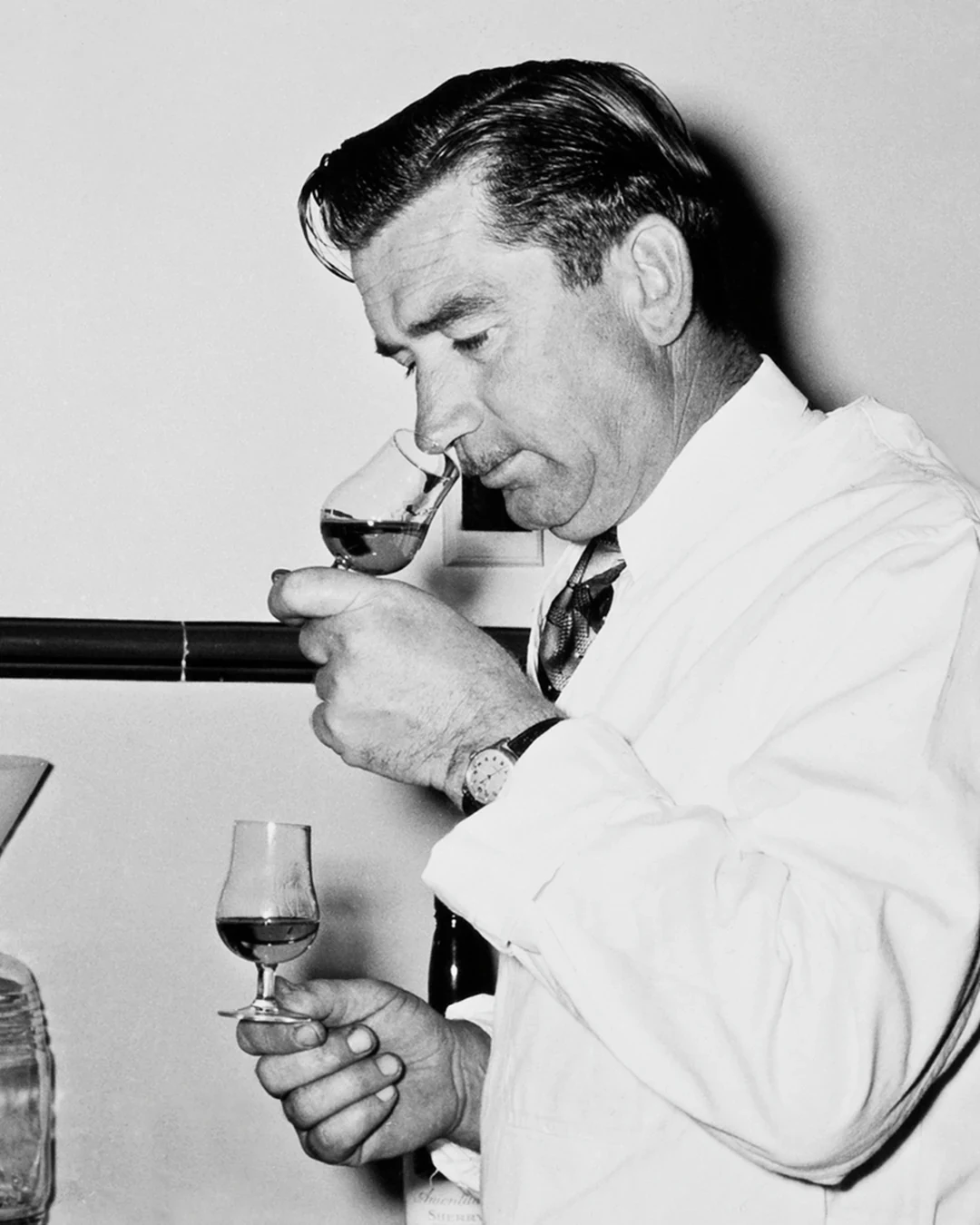
Named by The Sydney Morning Herald among the 100 most influential Australians of the century in 2001, Australian winemaker Max Schubert belonged to a house-trained lineage, shaped less by formal doctrine than by the daily discipline of Penfolds. Born in 1915, Schubert entered Penfolds in Nuriootpa in 1931 as an odd-jobs boy and messenger boy, starting at the edge of the cellar and moving closer to its center as the work accumulated in his hands. In his case, advancement was measured in labor: the errand boy became the maker entrusted with the future.
The Path
Craft at the cellar level formed through repetition, routine, and proximity to the work. In Nuriootpa, Schubert’s first tasks were practical ones: carrying messages, taking on odd jobs, and learning the cadence of a winery from the ground up. That starting point in 1931 placed him inside Penfolds’ working life before he held authority there, with service and ambition moving in the same register. By 1948, that progression had carried Schubert to Adelaide, where he became chief winemaker at Penfolds. The title did not mark a departure from apprenticeship so much as its completion. The boy who entered through the working side of the winery was now responsible for decisions at the center of production, and that rise gave his career both structure and weight. The defining turn came with Grange Hermitage. Schubert created it as an experimental red wine at Penfolds in Adelaide, and the description itself points to the uncertainty built into the work. After he was told to stop making it, he kept making Grange Hermitage in secret. That persistence changed the course of Australian wine, and the wine became its icon.
The Work Today
Schubert is best known today as the creator of Grange Hermitage. Its place in Australian wine rests on the sequence that made it: a maker formed inside the winery, a chief winemaker working from Adelaide, an experimental red begun in the early 1950s, and the decision to continue after instruction came to abandon it. The line from messenger boy to chief winemaker gives the work its scale. It also gives Schubert’s legacy continuity, running through a single house from Nuriootpa beginnings to Adelaide responsibility, and onward to a wine whose name still carries his authorship.
Signature
Max's signature wines include Grange Hermitage.
Acclaim
Max's honors include Sydney Morning Herald's 100 most influential Australians of the century (2001), Man of the Year (1988), Member of the Order of Australia (AM), and Maurice O'Shea Award.
Profile updated July 2026
FAQ
Asked of Max
What recognition has Max Schubert received?
Sydney Morning Herald's 100 most influential Australians of the century (2001).
What is Max Schubert known for?
Creator of Grange Hermitage.
Explore
In the same rooms