Chef
Rafa Bautista
- Discipline
- Chef

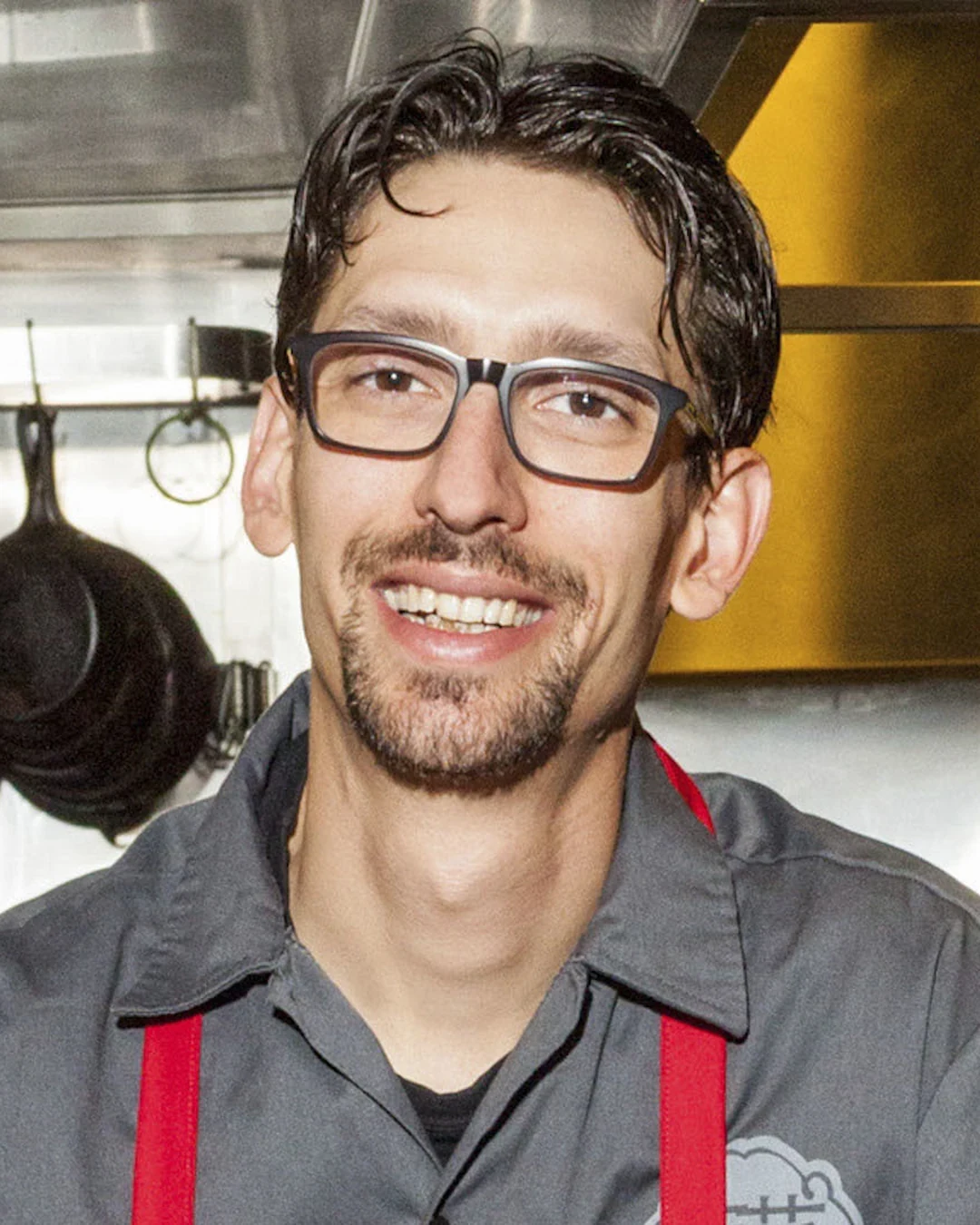
Portrait of Rafa Bautista
i. Biography
Rafa Bautista’s work at La Oveja Negra in Barbastro uses Somontano as pantry and memory without turning the region into display. The cooking connects Somontano regional cooking with southern touches, keeping a local frame while allowing warmth, depth and looseness where the dish calls for it. The inheritance is active rather than preserved under glass: seasonal, market-aware and adjusted to the people at the table.
The Sunday letter
Read Made By's new profiles every Sunday.
Meet the chefs, winemakers and sommeliers behind the places we cover. See a sample below before you subscribe.
See a sample of the Sunday emailOne email a week. Unsubscribe from any issue.
The Climb
Formal kitchen training at Escuela de Hostelería La Laguna de Baeza gave Rafa Bautista a disciplined base before La Oveja Negra. That kind of formation matters in a restaurant where freedom has to be structured and personality has to be controlled. The craft here depends on knowing when to hold the line and when to let the product, the region and the appetite in front of you shift the plate. Technique in this cooking is kept below the surface. It shows in how a sauce carries rather than covers, in the balance between richness and clarity, and in a meal that feels composed rather than assembled. The professional climb is less about display than about making control register as pleasure.
Today
La Oveja Negra runs as a two-part craft: Rafa Bautista in the kitchen and María Vegue leading service. The restaurant depends on that alignment. The room has to pace and translate the cooking with the same care the kitchen gives to finishing the plate. Creative, signature cuisine and market-fresh cuisine define the restaurant’s working register. Contemporary cuisine also fits because the house is not fixed to imitation and is not cut loose from place. The kitchen responds to the market, the dining room’s rhythm and guests prepared for a personal reading of the region. Rich flavours, precise sauces and courses that flow effortlessly are the menu’s known markers. Those qualities are structural, not decorative. Sauce gives direction, depth is managed, and sequence matters: one course sets up the next. The meal stays connected, beginning in Somontano regional cooking and opening outward through Bautista’s southern touches. The rebellious note attached to La Oveja Negra is best understood as a method rather than a pose. The cooking is aimed at open-minded diners because it works from regional ground without treating the region as a limit. Tradition is handled as material to be worked: kept recognizable, but not allowed to harden.
Recognition
In 2024, the MICHELIN Guide awarded La Oveja Negra in Barbastro a Bib Gourmand. That recognition belongs to the whole house. Territory, service and contemporary cooking meet at one address, with Somontano as the center of gravity. In the work of Rafa Bautista and María Vegue, La Oveja Negra reads as a rooted restaurant with pace: attentive to landscape, controlled in craft and open to movement.
FAQ What is Rafa Bautista's current role? Rafa Bautista runs La Oveja Negra with María Vegue, who leads service. Where did Rafa Bautista train or study? Rafa Bautista trained at Escuela de Hostelería La Laguna de Baeza. What is Rafa Bautista known for? Creative, signature cuisine and market-fresh cuisine.
Explore
The Sunday letter
Get the next Made By profile in your inbox.
We send one email every Sunday morning with the people we profiled that week.
See a sample of the Sunday emailOne email a week. Unsubscribe from any issue.