Chef
Raffaele de Mase
- Discipline
- Chef
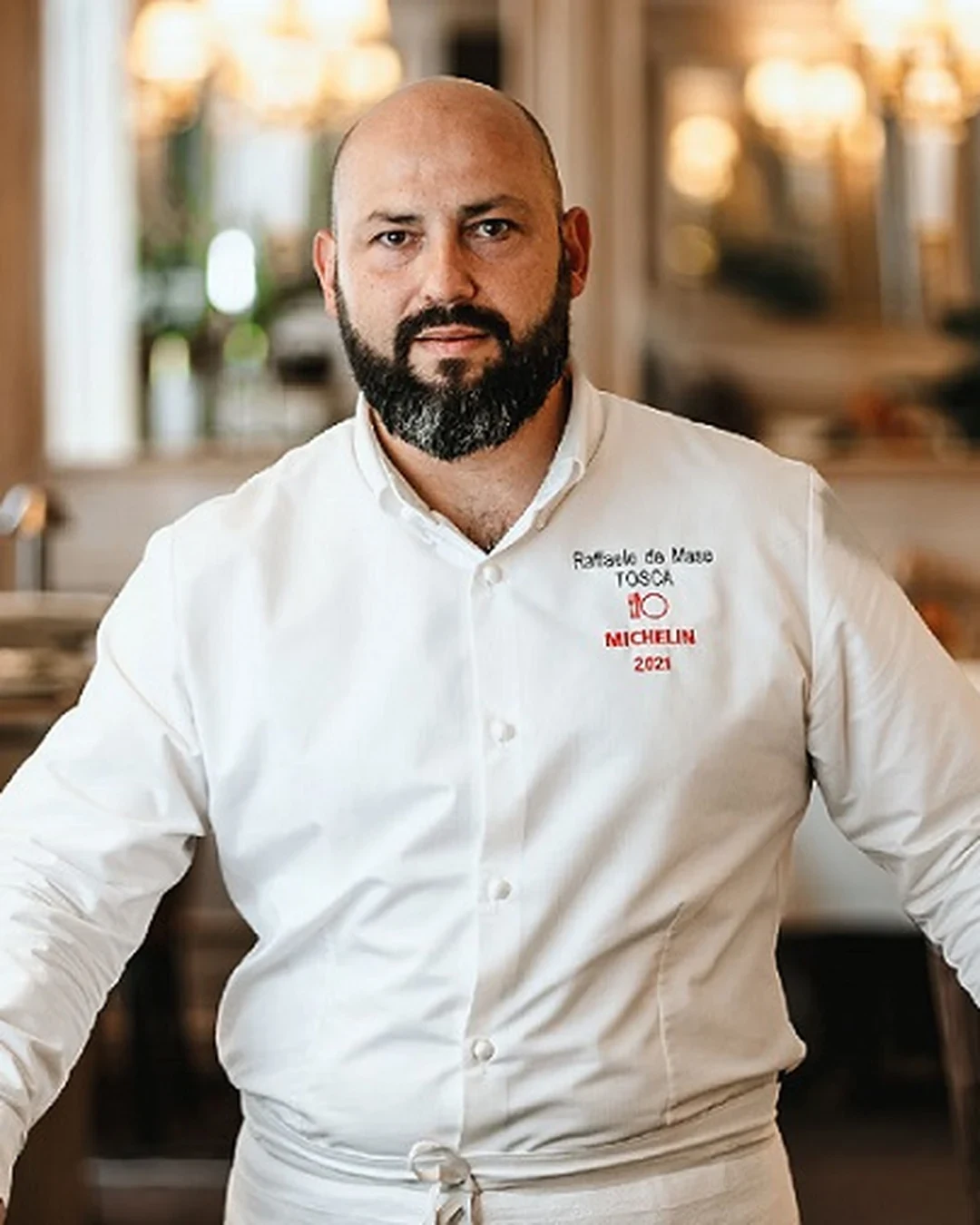
Portrait of Raffaele de Mase
i. Biography
Italian gourmet cuisine is the working line through this profile: Naples for formal hotel-school discipline, the Amalfi Coast and Rome for regional service experience, and Paris for the restaurant register in which Raffaele de Mase now cooks at Ristorante Tosca. The craft here is not presented as reinvention. It is Italian cooking held through technique, restraint, and detail across European hospitality settings.
The Sunday letter
Read Made By's new profiles every Sunday.
Meet the chefs, winemakers and sommeliers behind the places we cover. See a sample below before you subscribe.
See a sample of the Sunday emailOne email a week. Unsubscribe from any issue.
The Climb
Formal training at Istituto alberghiero I Cavalcanti di Napoli (1999) gave Raffaele de Mase the hotel-school base: technique, timing, ingredient respect, and kitchen discipline before personal style. For Italian gourmet cuisine, that foundation matters. Naples supplied the early grammar of appetite, seasonality, and simplicity without turning them into decoration. Regional kitchen work as chef in Amalfi Coast and chef in Rome (from 2002) widened the register without breaking the line. Amalfi Coast points toward freshness, citrus, and the sea; Rome asks for structure, depth, and confidence with tradition. In those settings, de Mase’s work is described through Italian elegance and a sense of place, with composition and pacing carrying as much weight as the ingredients themselves. Contemporary Italian hospitality often sits between local memory and international polish. As chef of Ristorante Tosca and Resident Chef of Hotel Palazzo Manfredi, Raffaele de Mase works inside that space, with France and Italy both active in the frame. The throughline is steady rather than abrupt: refinement, service detail, and an Italian kitchen language that can travel without losing its shape.
Today
The current restaurant register is split between Paris and Rome. At Ristorante Tosca in Paris, France, Raffaele de Mase works in a dining culture that demands precision; alongside his primary role as Resident Chef at Aroma in Rome, Italy, he remains tied to a city with a dense culinary inheritance. The tension is useful: one pole tests polish, the other keeps the work close to Italian structure. Italian gourmet cuisine is the stated specialty. Within it, de Mase returns to citrus fruits, root vegetables, and understated fish. That is a practical craft note rather than a slogan: citrus for lift and aromatic clarity, root vegetables for grounding and sweetness, fish for restraint and balance. The pattern favors contrast without excess. The geography explains the continuity: Naples for training, Rome and Paris for current and past kitchen identity, Aroma for the present Roman role. Ristorante Tosca sits within that movement as a Paris expression of Italian technique, where adaptation depends on control rather than nostalgia.
Career - Chef — Ristorante Tosca, Paris, France - Resident Chef — Hotel Palazzo Manfredi, Italy - Chef — Amalfi Coast - Chef — Rome (from 2002) Education: Istituto alberghiero I Cavalcanti di Napoli
Signature
Signature work includes Testa, Cuore, Pancia and spuma di riso agli scampi profumato agli agrumi. The names give two useful readings of the kitchen: Testa, Cuore, Pancia carries directness and structure, while spuma di riso agli scampi profumato agli agrumi places rice, scampi, and citrus fragrance in a lighter register. In both cases, Raffaele de Mase is working with recognisable Italian cues rather than obscuring them.
Recognition
Recognition for the work includes Michelin Plate / creative cooking distinction for Ristorante Tosca Paris (2025). The distinction is tied to a specific restaurant and year, and it fits a profile built on formal training, Italian elegance, and continued movement between Rome and Paris.
FAQ What is Raffaele de Mase's current role? Raffaele de Mase is Resident Chef. Where did Raffaele de Mase train or study? Raffaele de Mase trained at Istituto alberghiero I Cavalcanti di Napoli. What recognition has Raffaele de Mase received? Michelin Plate / creative cooking distinction for Ristorante Tosca Paris (2025).
Explore



The Sunday letter
Get the next Made By profile in your inbox.
We send one email every Sunday morning with the people we profiled that week.
See a sample of the Sunday emailOne email a week. Unsubscribe from any issue.