Chef
Scott Mackenzie
- Discipline
- Chef

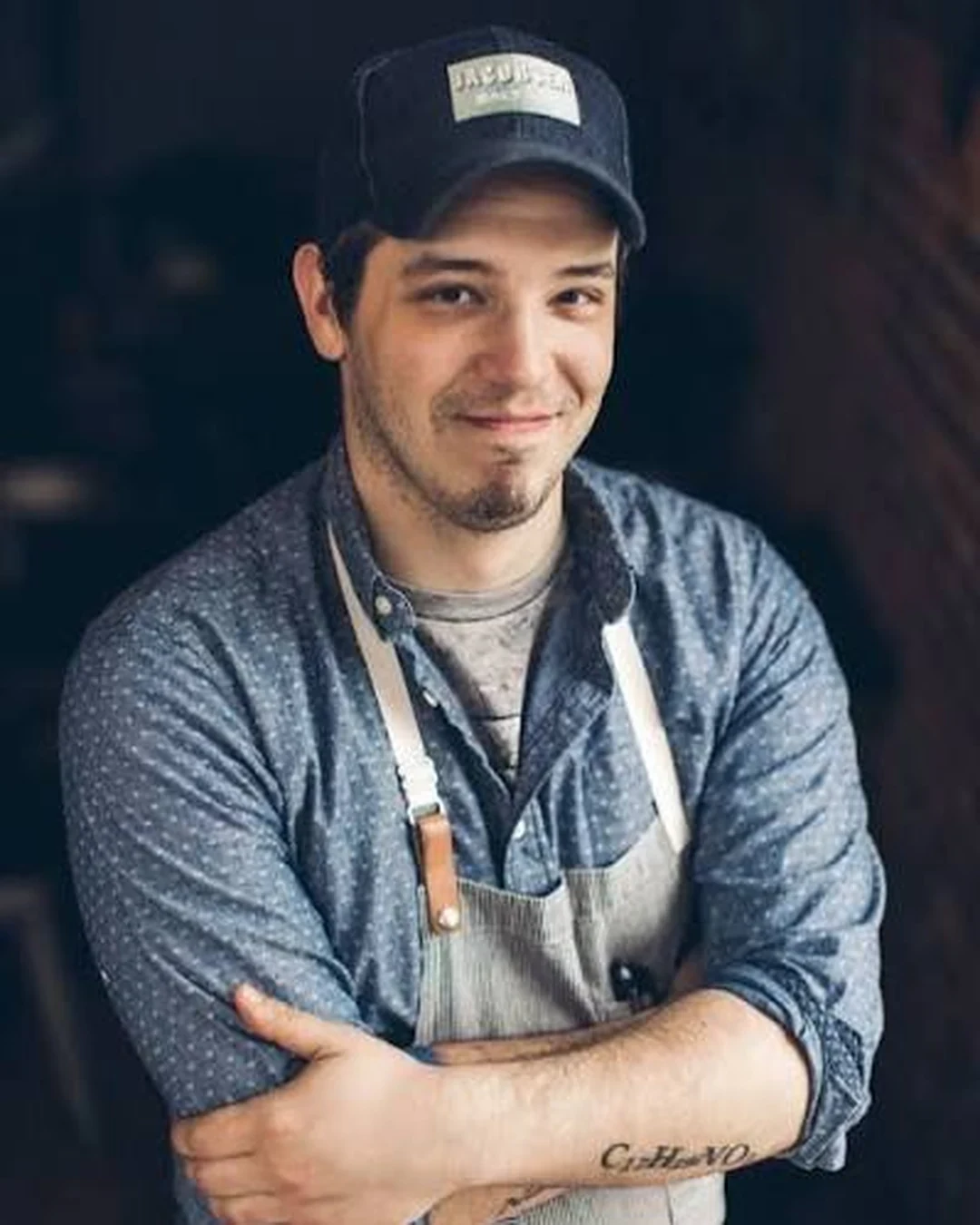
Portrait of Scott Mackenzie
i. Biography
Scott Mackenzie’s cooking is shaped by season, land, and community, with sustainability and restraint guiding decisions before service begins. He works from what is ready, what should be used fully, what needs restraint, and what belongs on the plate at that moment. His practice is built on progression, seasonality, and place, with local sourcing and careful handling at its center. Mackenzie trained at Thompson Rivers University Culinary Program, establishing the technical groundwork for a career that moved through Canadian dining rooms with increasing responsibility. He began as kitchen staff at Rush in Calgary, Alberta, Canada, where line work gave him the discipline of service and the rigor of the kitchen line. He then spent a long chapter at Model Milk in Calgary, Alberta, Canada, rising to Chef de Cuisine and holding that role from 2013 to 2021. There he developed a cooking language concerned with structure, depth, and measured intervention. In 2021, he became Executive Chef at River Café in Calgary, Alberta, Canada, where local sourcing, sustainability, and a close relationship with the land became central to the restaurant’s work. He later brought that approach to Arianna in Toronto, Ontario, Canada, as Chef de Cuisine, carrying forward a sensibility shaped by precision and place. At River Café, Mackenzie’s present work depends on timing as much as technique. He builds menus through communication with farmers, using those exchanges to track seasonal growth and determine what is ready to cook. The result is a kitchen practice led by availability, change, and the limits of what the land can support. His approach values local ingredients in season, whole-ingredient cooking, terroir, sustainability, and the relationship between food, community, and land. In practice, those ideas shape trim decisions, sourcing decisions, and plating decisions, with attention to how much to use, what to leave alone, and how to show abundance without excess. Yukon Arctic Char with Broxburn Farms broccoli, Okanagan sumac, seared leek and Avonlea buttermilk cream reflects that method in composed form. Fish, brassica, allium, acidity, and dairy are held in balance without treating locality as decoration. A listed version, Yukon Arctic Char with sumac, broccoli, seared leeks and Avonlea buttermilk sauce, keeps the same core elements while allowing the plate to remain responsive to season rather than fixed formula. Red Fife Risotto and Yukon Arctic Char with sumac mark two sides of the same practice, with grain and fish handled as carriers of place through ingredient choice, restraint, and clear structure rather than ornament. Mackenzie describes the care involved in his work plainly: “From the butchery to putting it on the plates, every single step is so delicate and so much care is put into them.” Contemporary Italian cooking at Arianna gives that same discipline another frame. There, he works within heritage and creative interpretation, keeping tradition in view while responding to the immediate demands of the kitchen. Recognition includes Canada’s 3rd Best New Restaurant (2009).
The Sunday letter
Read Made By's new profiles every Sunday.
Meet the chefs, winemakers and sommeliers behind the places we cover. See a sample below before you subscribe.
See a sample of the Sunday emailOne email a week. Unsubscribe from any issue.
Explore


The Sunday letter
Get the next Made By profile in your inbox.
We send one email every Sunday morning with the people we profiled that week.
See a sample of the Sunday emailOne email a week. Unsubscribe from any issue.