Chef
Yasu Tanaka
- Discipline
- Chef
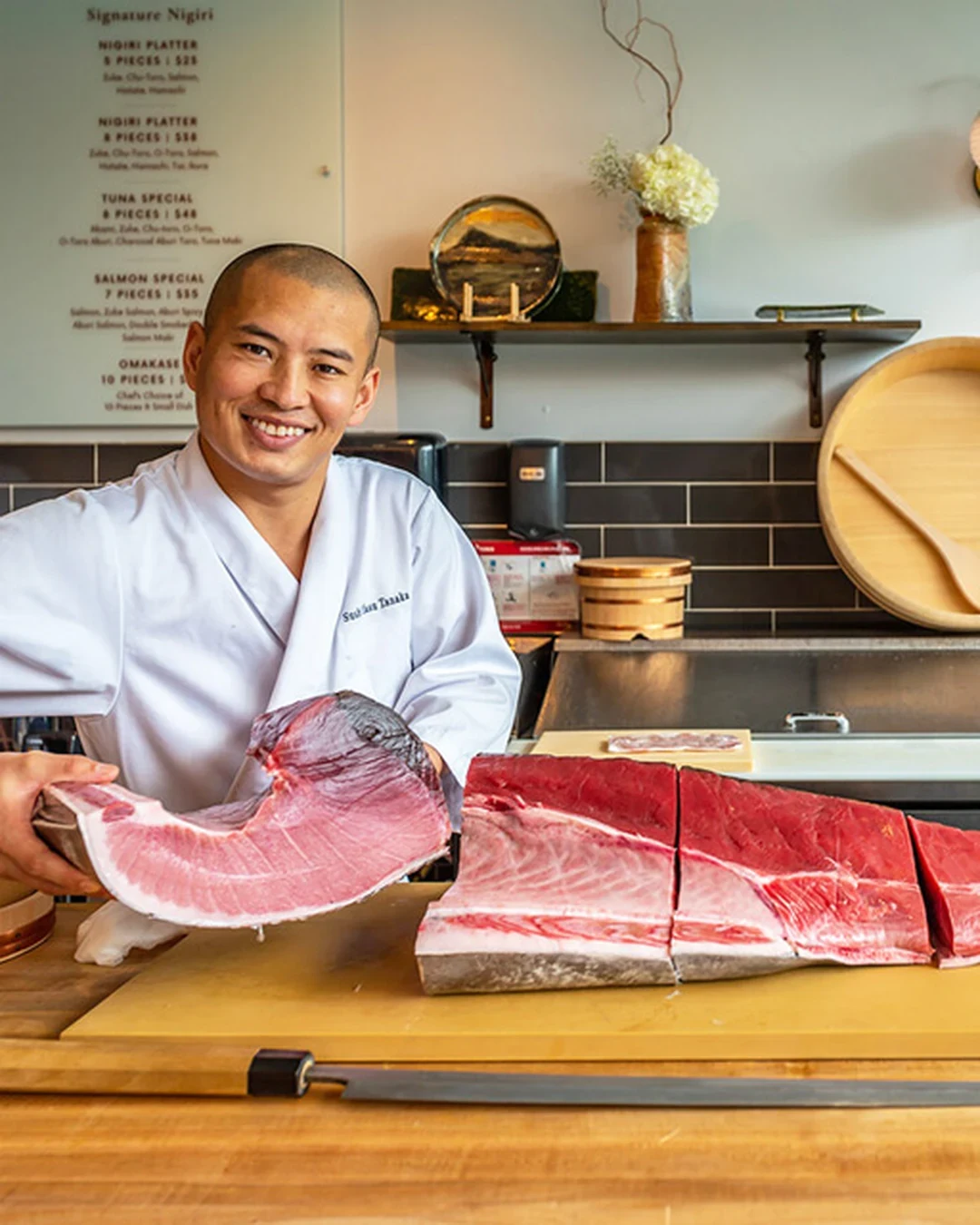
Portrait of Yasu Tanaka
i. Biography
From Japan to Azabu in New York, then to The Den at Azabu in Miami, sushi has been the working discipline through which Yasu Tanaka’s counter practice has developed. The craft is measured in repeatable decisions: rice temperature, fish cut, hand pressure, service rhythm, and the timing of a piece of nigiri placed in front of a guest. That work now continues at Sushi Yasu Tanaka in Miami, where Tanaka is the chef behind the namesake counter. Nigiri, in Tanaka’s practice, is treated as intimate, exacting work rather than display. The structure depends on disciplined rice preparation, fish sourced directly from Japanese vendors, and a guest-by-guest reading of the meal instead of a fixed performance. The result is sushi that stays precise without becoming cold, and personal without becoming casual.
The Sunday letter
Read Made By's new profiles every Sunday.
Meet the chefs, winemakers and sommeliers behind the places we cover. See a sample below before you subscribe.
See a sample of the Sunday emailOne email a week. Unsubscribe from any issue.
Coming Up
Patience and attention are useful before a cook ever stands behind a sushi counter. Before Yasu Tanaka entered sushi professionally, he served as a volunteer middle school teacher at overseas volunteer program in Mozambique. That work sits outside omakase formality, but the habits it implies—observation, restraint, and steady repetition—belong naturally to counter craft. The professional vocabulary of rice, vinegar, knife work, and timing took shape for Tanaka as sushi chef at Azabu in New York. The move to Miami brought him to the omakase counter at The Den at Azabu in Miami (2018–2020), where counter service required direct calibration with each guest: when to speak, when to hold silence, and when a single piece should carry the moment without further explanation. Current practice for Yasu includes several Miami roles: sushi chef of Sushi Yasu Tanaka, chef behind Pari Pari, and chef leading the experience alongside chef Raymond Li of YASU Omakase (since 2026). Across those positions, the through-line is craft discipline: daily repetition, close reading of ingredients and guests, and continued refinement of familiar gestures.
Where They Are Now
Nigiri-focused sushi defines the work at Sushi Yasu Tanaka in Miami. The restaurant is built around meticulous rice preparation and high-quality fish sourced from Japan. In that format, simplicity is not reduction; it is control over rice, fish, temperature, texture, vinegar, pressure, and timing. The rice program carries much of the structure. Tanaka uses two types of sushi rice, one made with Akazu and another with Yonezu, and makes the rice fresh every two hours. Alternating between the two vinegars lets the rice meet the fish with intention rather than function only as a base. Akazu and Yonezu bring different impressions, and the choice becomes part of how each piece is composed for the guest. The Miami work also extends to YASU Omakase in Miami, where Tanaka leads the experience alongside chef Raymond Li. The format is built around a unique and personal experience for each guest, with the meal unfolding through considered pieces rather than a simple sequence of courses. A named dish at YASU in Miami is Monaka PB&J, a wafer sandwiching ankimo, bourbon guava marmalade and Chinese celery. The construction is compact, crisp, rich, and layered; the name is playful, while the components remain deliberate. That balance—serious technique, personal expression, and careful hospitality—runs through Tanaka’s current work.
Career - Sushi chef — Sushi Yasu Tanaka, Miami Design District, Miami - Chef behind Pari Pari — Pari Pari, Wynwood, Miami - Chef leading the experience alongside chef Raymond Li — YASU Omakase, Miami Design District, Miami (2026–present) - Volunteer middle school teacher — overseas volunteer program, Mozambique - Sushi chef — Azabu, New York - Chef helming the omakase counter — The Den at Azabu, Miami (2018–2020)
Signature
Signature dishes include Sea urchin risotto and Monaka PB&J. the first is framed by the richness and softness of sea urchin; the second uses monaka around ankimo, bourbon guava marmalade and Chinese celery. Both belong to a broader practice wh
Explore


The Sunday letter
Get the next Made By profile in your inbox.
We send one email every Sunday morning with the people we profiled that week.
See a sample of the Sunday emailOne email a week. Unsubscribe from any issue.