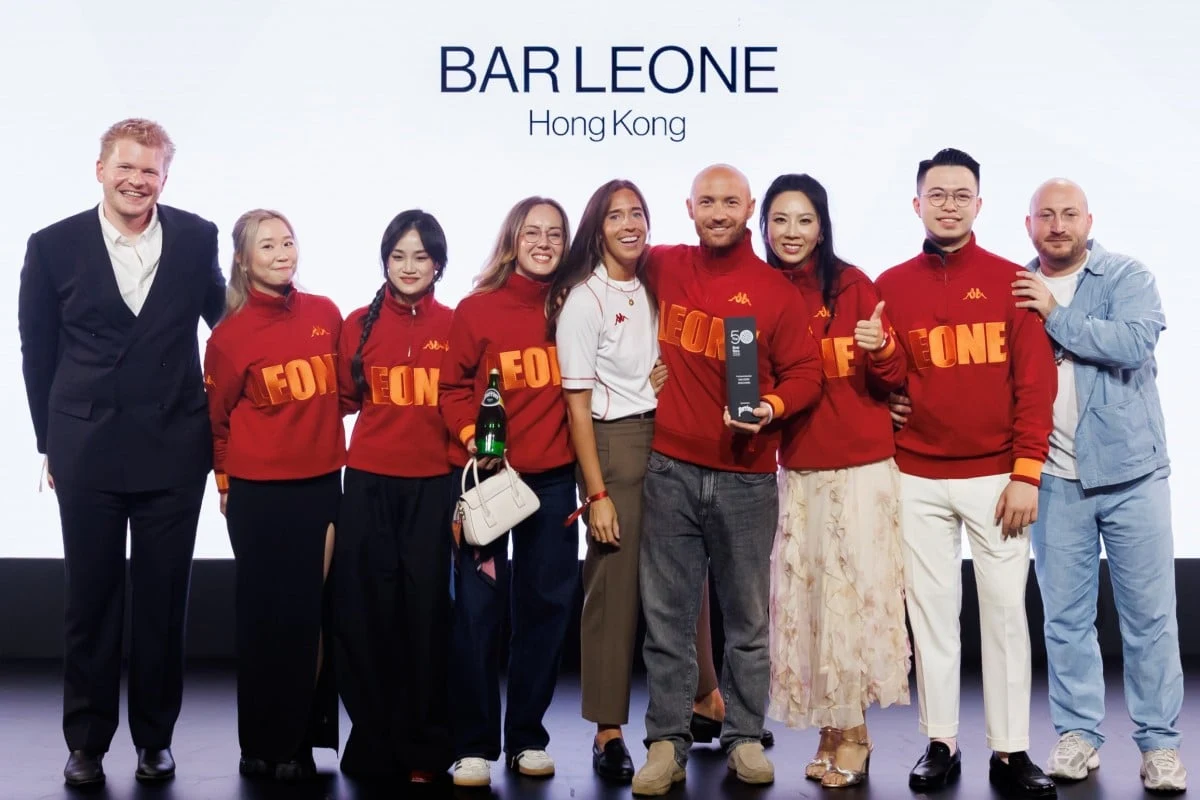
Glassware first, then floor pace, waiting, carrying, resetting: Lorenzo Antinori began at the service edge, working as a bar back and waiter for a year to a year and a half1 before he could stay behind the bar and make cocktails.1 To understand Bar Leone, start with the room's sequence: how it receives a guest, builds the first drink, serves, clears, and resets for the next handoff. Antinori is now co-founder of Bar Leone,2 the Hong Kong bar built around Cocktail Popolari, "cocktails for the people",3 and named The World's Best Bar in 2025.3
Lorenzo Antinori at Bar Leone, a Worlds 50 Bars 2026 name to study
Antinori co-founded Bar Leone in 2023,4 and the bar opened in June 2023.5 Bar Leone arrived with a plain-spoken bar program, Cocktail Popolari, meaning "cocktails for the people".3 The direct way in is service rhythm: read the pace of the station as closely as the list in the glass.
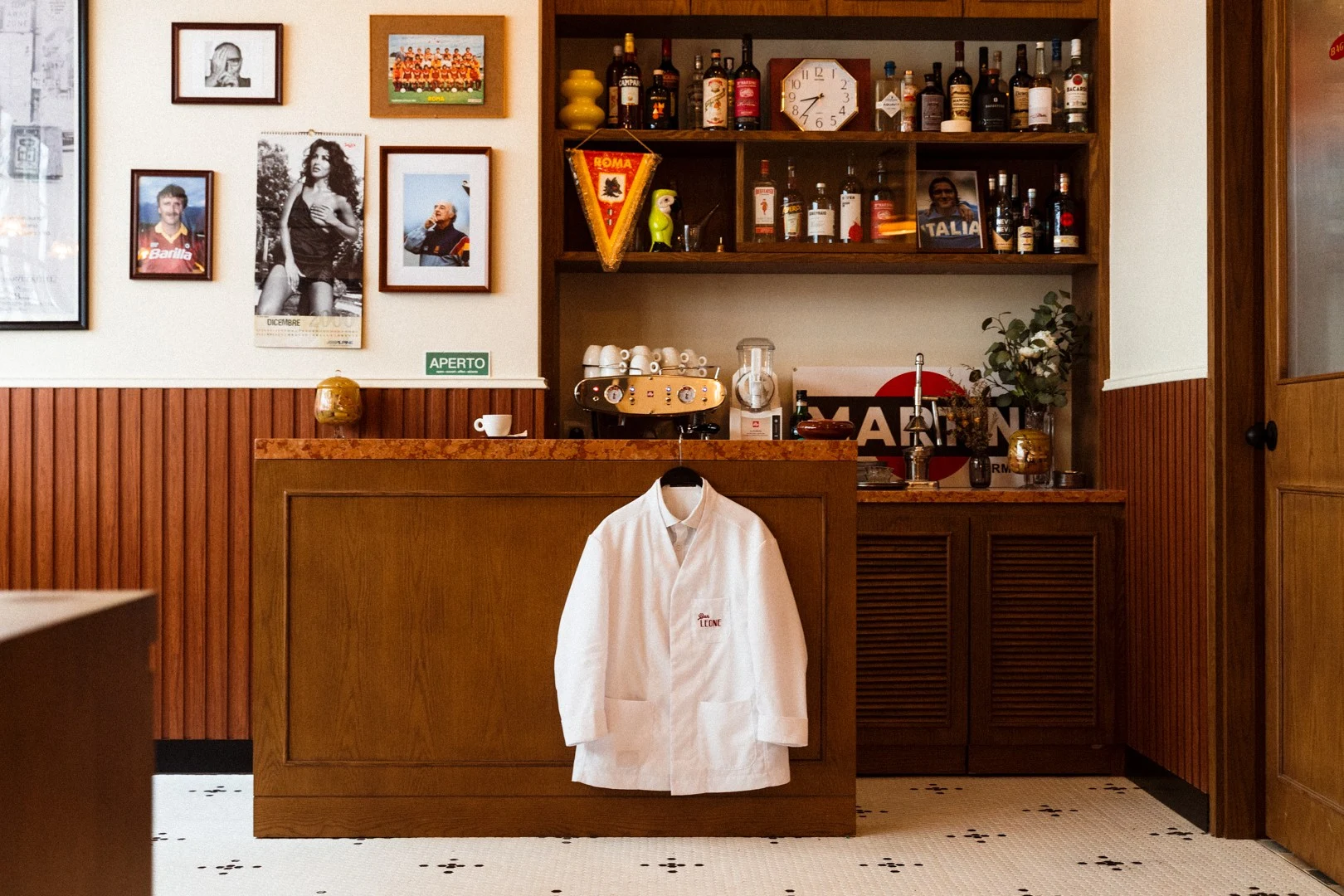
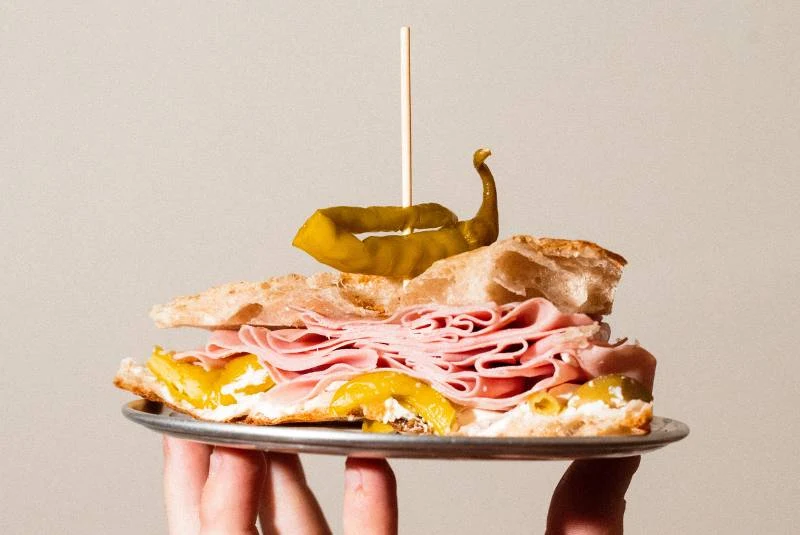
Antinori has set a clear drink language for Bar Leone. The discipline sits in what he leaves visible, and what he chooses not to cover with complexity. Bar Leone serves a mortadella sandwich, and that detail belongs beside the cocktails, not under them.6 The mortadella sandwich pulls the bar toward appetite, lunch counter, corner-room hospitality, and the Italian habit of drinking with something in hand.
Bar Leone has received recognition, and Antinori worked away from the shaking tins before earning his station. He learned service from its underside: glassware, floor pace, waiting, carrying, resetting. The guest reads ease because the maker knows the sequence: reach, build, taste, serve, clear, reset.
Bar Leone's present standing also places Antinori inside a Hong Kong bar field with a high technical ceiling. Nearby, Coa is Jay Khan's basement room on Shin Hing Street,7 and its Paloma de Oaxaca has stayed on the menu since Coa opened.7 Mius is Shelley Tai's Cantonese cocktail salon at Twenty-nine Gough Street,7 and Tai took the Altos Bartenders' Bartender Award.7 In that company, Antinori keeps the craft in view. Use this section as a reading key: compare how each room carries technique, then decide whether you want sensory architecture or a bar that begins with welcome.
Antinori's long way from Rome to Hong Kong
Antinori was born in Rome in 1987.8 He initially enrolled in law school.8
That duration gave him footing for later work behind the bar. A bar back learns the weight of the night in units the menu never names: empty bottles, wet mats, citrus bins, the speed of a rack coming out clean when the line is under strain. A waiter reads the room before the drink arrives. To read Bar Leone properly, start there: "Cocktails for the people" begins with a guest entering a room and a bartender understanding where pressure sits.
The London years gave him named lineage. Antinori spent two years at the American Bar and then two years at the Beaufort Bar.9 He worked under Eric at the Savoy, Chris Moore at the Beaufort Bar, and Ryan Chetiyawardana and Iain Griffiths at Dandelyan.9 In 2015, he joined Ryan Chetiyawardana and Iain Griffiths as head bartender at Dandelyan in the Mondrian hotel.9 Those names matter because they mark different forms of discipline: hotel service, bar theatre, conceptual drink-making, and the ability to keep a program coherent while the room moves around it.
Antinori worked at Dandelyan in London,8 then in 2017 moved to Seoul, South Korea, where he took over as director of the Charles H. Bar at the Four Seasons Hotel.8 He helped relaunch Caprice and open Argo, both within the Four Seasons Hotel in Hong Kong.8 A hotel bar can punish vagueness. It requires service for the collector, the jet-lagged guest, the regular, the diner passing through after service, and the person who wants the house to decide. Antinori's later populism comes from that time on the tools.
Parallel questions appear in Bobby Stuckey's dining-room story, in John Shields's kitchen focus at Smyth, and in Lisa Goodwin-Allen's pass-and-provenance work at Northcote. Antinori's station raises a practical question as much as a craft question: how long does it take before method becomes hospitality? The answer sits in the route, floor work before the pass, then hotel discipline, then a Hong Kong room built for entry.
Antinori's Cocktail Popolari method
That is the clearest statement of Antinori's method now. His drink style keeps bartender technique visible and the system legible.
Antinori's long way to the station makes the rest of the bar useful. A bartender formed that way tends to understand the drink as part of a chain. The build, the handoff, the pace of the room, the guest's first sip, and the reset after the glass leaves all matter. Antinori's apprenticeship shaped Cocktail Popolari as both a service principle and a menu principle.
Bar Leone serves a mortadella sandwich.6 In a cocktail room, a sandwich can do more than fill space between drinks. It lowers the room's shoulders. It points toward the Italian bar as a place of daily use. It also gives the bartender another measure: salt against bitterness, fat against acid, appetite against alcohol. Choose Bar Leone when you want the craft held inside comfort, with food and drink working from the same bench.
Hong Kong's bar scene gives useful context for that choice. Shingo Gokan's menu at GOKAN is built around five senses: sweet, sour, spicy, bitter and savoury, with one cocktail per sense.7 GOKAN's signature is a Watermelon Koffeezz, clarified watermelon juice cut with light-roast coffee.7 That is a different kind of architecture, organized through sensory categories and a named clarification. Antinori's Bar Leone states its premise through access, familiarity, and service memory. Both approaches require discipline; they place the stress in different parts of the program.
Antinori treats an understandable drink as serious. Cocktail Popolari argues against the split between skill and ease. The bartender can train under exacting people, spend years in hotel rooms, work through London and Seoul, help open Hong Kong programs, and still choose a language that the guest can enter without permission. The complicated work happens before the glass arrives.
Justin Shun Wah and the people around Antinori
Antinori co-founded Bar Leone with Justin Shun Wah.4 The public conversation often follows the named bartender, especially when awards arrive. Co-founding fixes responsibility beyond the drink rail. The room, the pace, the food, the welcome, the hires, and the guest's return all belong to the same method. Read Bar Leone as a shared station, with more than one set of hands shaping the room.
Antinori's lineage also includes the people he worked under before Bar Leone. Those names locate him inside a particular school of modern bar work, one where the hotel standard, the London cocktail bar, and the conceptual menu all meet. He joined Chetiyawardana and Griffiths as head bartender at Dandelyan in 2015,9 a post inside a demanding program. Read Bar Leone through those hands, away from the single-bartender myth.
Hong Kong has also become part of Antinori's circle of makers. Argo's beverage manager is Jonathan Gabbay,7 and Argo sits inside the Four Seasons Hotel on Finance Street,7 the hotel world where Antinori's Hong Kong work took shape. Montana was opened by Lorenzo Antinori and Simone Caporale,7 and Montana is at a hundred and eight Hollywood Road.7 Takuma Watanabe was named Altos Bartenders' Bartender.3 A bartender's work is best understood against the hands around him.
How to meet Lorenzo Antinori's work at Bar Leone on Bridges Street
Bar Leone is located at 11-15 Bridges Street, Central, Hong Kong Island.10 The visit format is plain: Bar Leone has a no-reservations policy.5 Antinori's Cocktail Popolari idea appears in the glass, and the mortadella sandwich6 is part of the room's argument about welcome. At Bar Leone, use the food as part of the route into the bar program, rather than as an aside.
Why Lorenzo Antinori belongs in the Worlds 50 Bars 2026 conversation
Antinori's current work makes a disciplined case for approachability without thinning the craft. The path runs from the floor to the station, through hotel bars, London mentors, Seoul responsibility, and Hong Kong openings; the endpoint is a bar that trusts the guest and does not need the drink to announce its difficulty. Cocktail Popolari, "cocktails for the people,"3 is easy to say and hard to sustain. The bartender keeps technique in the hand. The useful lesson is plain: the long way can produce a bar language that feels direct, because the maker has already done the complicated work before the guest arrives. If you follow Antinori now, look for that sequence first: service before spectacle, comfort before explanation, the hand before the claim.
Frequently Asked Questions
How did Lorenzo Antinori build Bar Leone's Cocktail Popolari philosophy?
Bar Leone's philosophy is Cocktail Popolari, meaning "cocktails for the people."3Antinori spent a year to a year and a half working as a bar back and waiter before bartending,1 and that service foundation shaped his approach to accessible craft.
Which London bars shaped Lorenzo Antinori's training before Bar Leone?
Antinori worked under Eric at the Savoy, Chris Moore at the Beaufort Bar, and Ryan Chetiyawardana and Iain Griffiths at Dandelyan.9He spent two years at the American Bar and then two years at the Beaufort Bar.9
What makes Bar Leone's approach different from other Hong Kong cocktail bars?
Bar Leone is built around Cocktail Popolari, "cocktails for the people."3The bar also serves a mortadella sandwich,6 placing food and drink on equal footing in the room's hospitality argument.
Who founded Bar Leone with Lorenzo Antinori?
Lorenzo Antinori co-founded Bar Leone with Justin Shun Wah.4