Made ByWinery


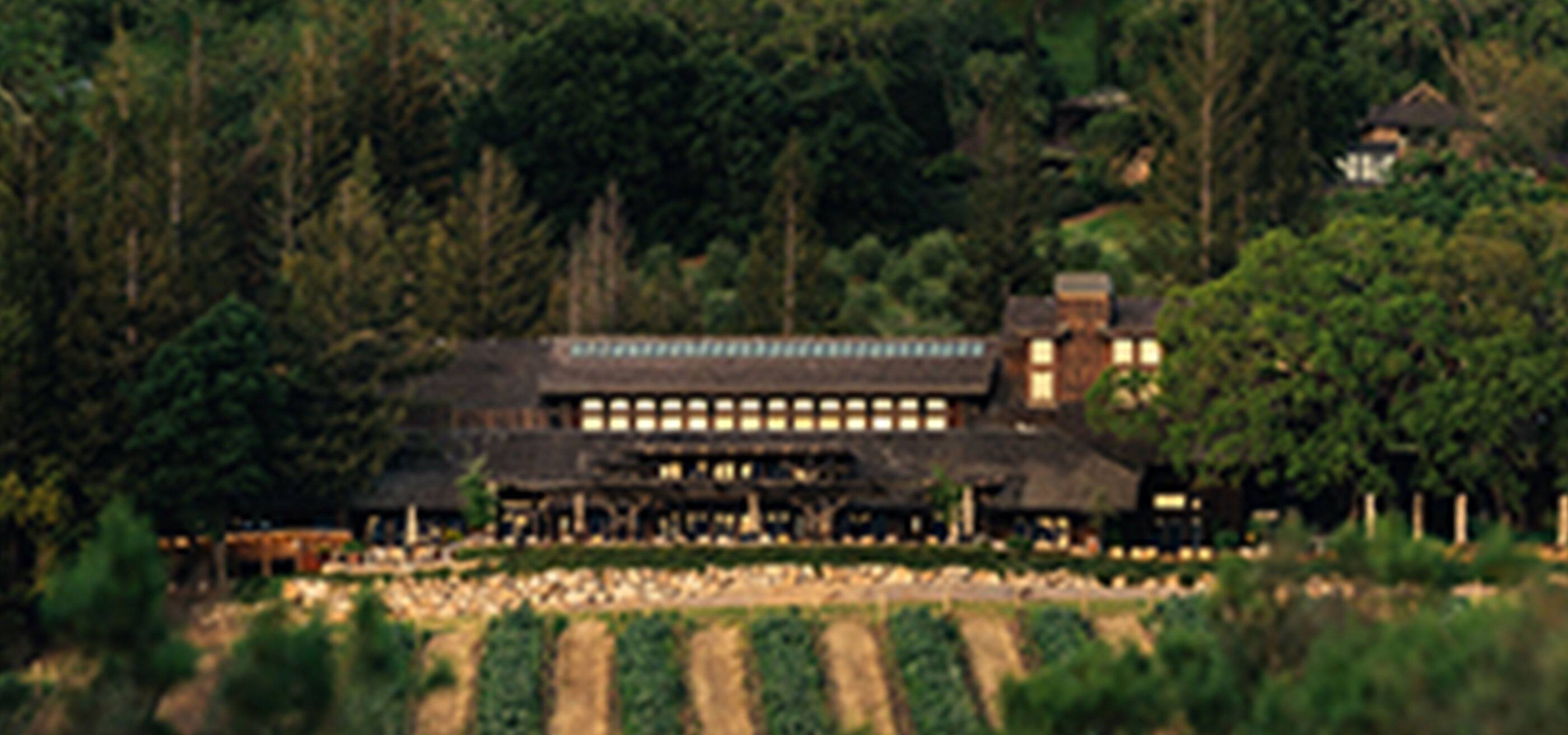
Artesa Vineyards and Winery sits at the southern edge of the Carneros appellation, where rolling hills frame a modernist facility that earned a Pearl 3 Star Prestige rating in 2025. Under winemaker Ana Diogo-Draper, the program has developed a distinct identity within Napa's broader conversation around cool-climate expression. The property has been producing wine since 1989, giving it one of the longer institutional records in the region.
At a glance
- Price
- $$$
- Per person
- $45
- Neighborhood
- Los Carneros
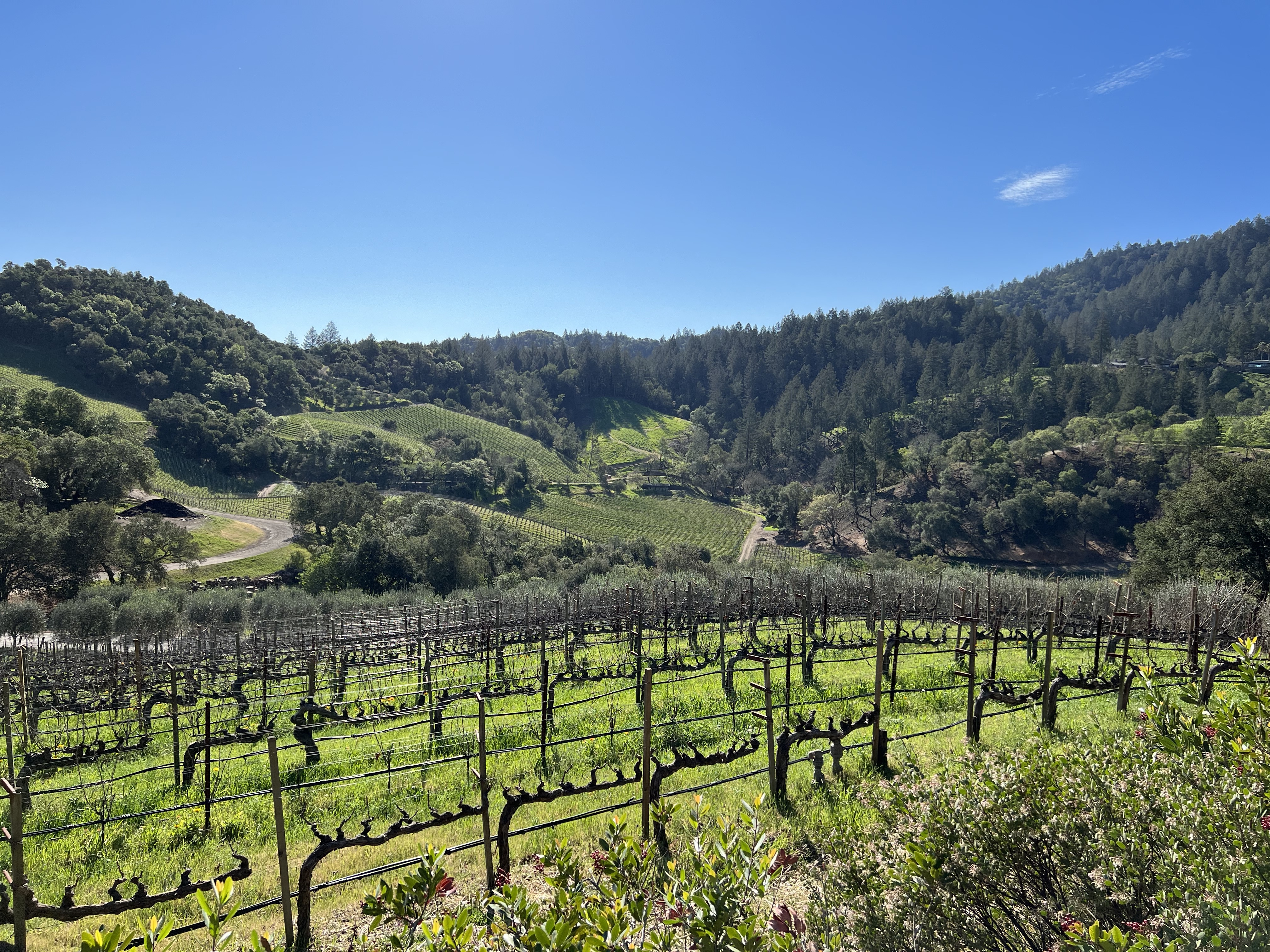
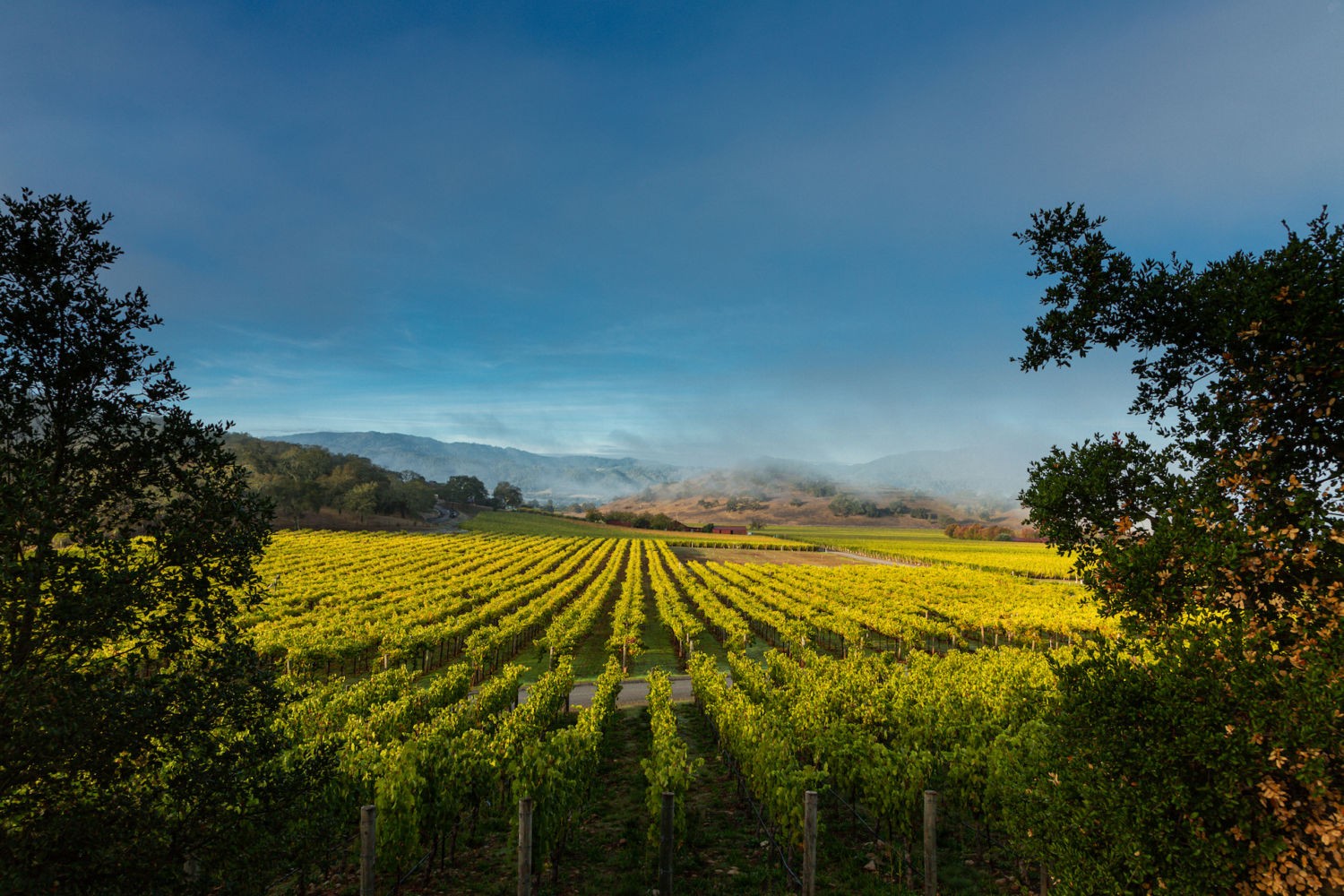
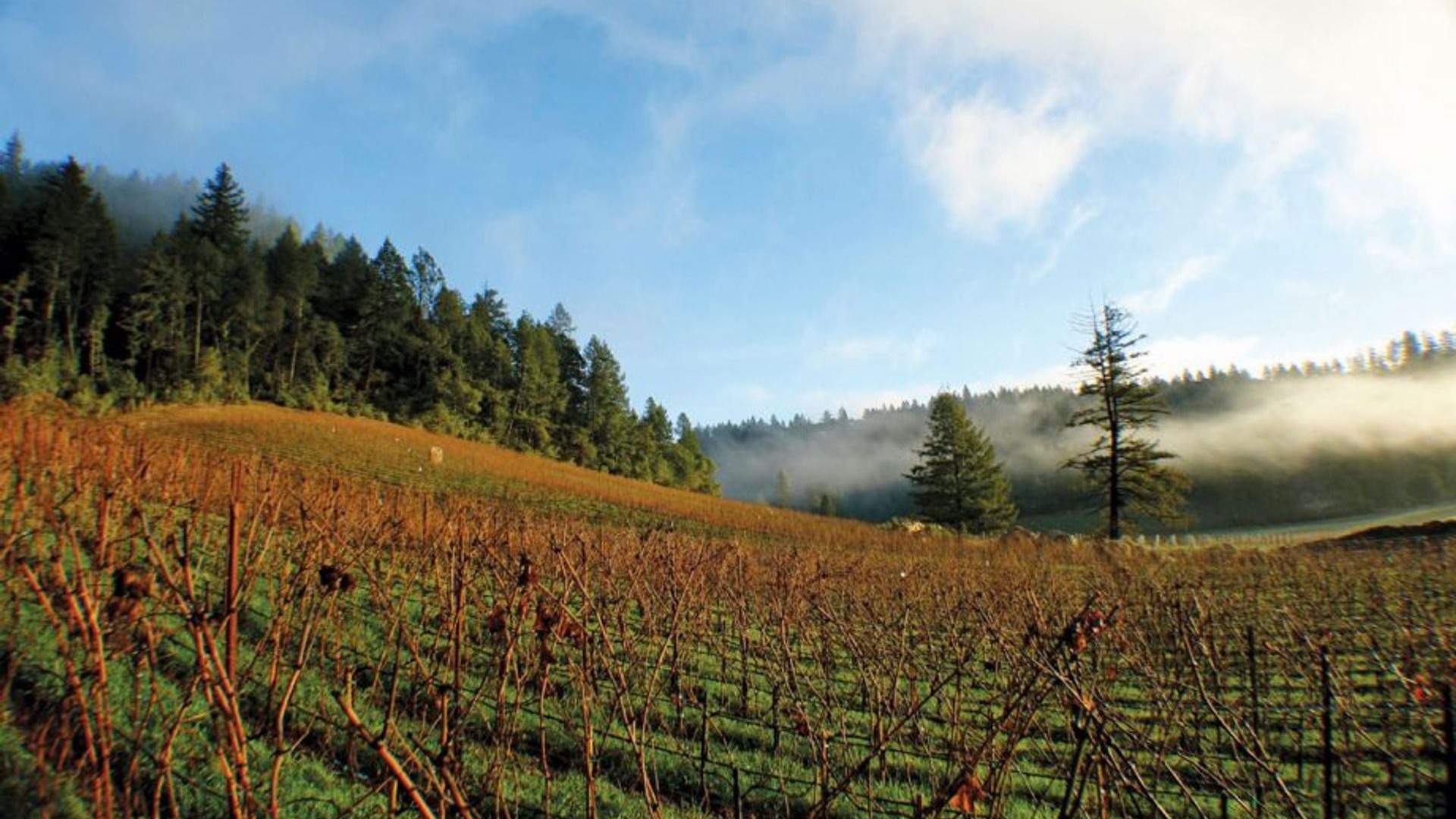
<h2>Where Carneros Cool Climate Meets Architectural Intention</h2><p>The approach to Artesa tells you something before you taste a single wine. The facility sits partially embedded into a hillside at 1345 Henry Rd, Napa, its flat-roofed modernist structure blending into the Carneros terrain in a way that most Napa valley-floor showrooms do not attempt. This is not the grand-chateau formula that defines much of the northern valley. Carneros operates on a different register: lower temperatures, marine influence from San Pablo Bay, and a slower ripening curve that shapes what the wines can become. Any serious conversation about the Artesa program has to start with that geography, because it sets the constraints that make the winemaking choices legible.</p><p>Carneros has historically been Napa's answer to the question of where Pinot Noir and Chardonnay actually belong in a region that built its commercial identity on Cabernet Sauvignon. The appellation straddles Napa and Sonoma counties, and the producers who work within it often self-select as interested in precision over power. Artesa, which released its first vintage in 1989, has been part of that cooler-site conversation for over three decades. That institutional depth matters when assessing where the property sits relative to peers: it is not a recent entrant chasing a trend but a winery with a long record in a specific and demanding terroir. Comparable properties working the cool-climate angle include <a href="https://www.enprimeurclub.com/wineries/ashes-and-diamonds-winery">Ashes and Diamonds Winery</a>, which approaches Napa's identity questions from a mid-century design and restraint-led production angle, and <a href="https://www.enprimeurclub.com/wineries/blackbird-vineyards-napa-winery">Blackbird Vineyards</a>, whose Bordeaux-varietal focus places it in a different but overlapping tier of the Napa conversation.</p><h2>Ana Diogo-Draper and the Winemaking Argument</h2><p>Napa's winemaking community increasingly frames its most interesting debates around site specificity: not what the winemaker believes in the abstract, but what decisions a given site demands. Winemaker Ana Diogo-Draper's work at Artesa fits that framework. Diogo-Draper brings a cross-regional perspective to a program that sits at the convergence of Iberian wine culture and Californian terroir thinking, and that lineage is visible in how the winery positions itself relative to the valley's dominant Cabernet bloc. The credentials here are institutional as much as individual: the 2025 Pearl 3 Star Prestige award, one of the more demanding recognition tiers in the regional assessment framework, signals that the program is operating at a level that warrants serious attention from buyers who track these benchmarks.</p><p>For visitors who treat the tasting visit as education, the winemaking angle provides a useful lens. Cool-climate Carneros production involves trade-offs that warmer-site Napa vineyards simply do not face: acid retention, the management of hang time without overripeness, and the question of how much oak intervention is appropriate when the fruit itself carries more structural tension. These are the kinds of decisions that separate technically proficient wineries from those with genuine point of view. Artesa appears to be navigating those decisions coherently, though the specific tasting notes are best discovered at the counter rather than assumed from credentials.</p><h2>The Food Pairing Program and Hospitality Format</h2><p>Among Napa's premium wineries, the hospitality format has become as contested as the wine program itself. The valley has moved from generic barrel-room tastings toward structured experiences that justify higher visit fees and smaller group capacities. Artesa's positioning within this shift reflects the broader Carneros tendency toward a more considered, less theatrical hospitality register than you find at some of the production-scale estates further north in the valley.</p><p>The food pairing dimension at a cool-climate winery like Artesa carries its own editorial logic. Carneros Pinot Noir and Chardonnay occupy a different pairing range than valley-floor Cabernet: the acidity and relative restraint of the wines make them natural partners for preparations where richness is in the food rather than the glass. The structural relationship between wine and food at this level is not incidental, it is the argument the winemaker is making with every vineyard decision. Properties at this tier, including <a href="https://www.enprimeurclub.com/wineries/del-dotto-estate-winery-and-caves">Del Dotto Estate Winery and Caves</a> with its cave-based experience format and <a href="https://www.enprimeurclub.com/wineries/darioush-winery-napa-winery">Darioush Winery</a> with its Persian-influenced hospitality approach, each demonstrate that the hospitality format can become an extension of the winery's identity argument. Artesa's architectural setting, the hillside integration, the views over the Carneros hills, functions similarly: the environment contextualizes the wine before the pour begins.</p><p>For visitors planning around the food pairing program, timing matters. Carneros mornings tend to be cooler and often foggy, which actually enhances the sense of place for a winery whose wines are shaped by those same marine conditions. Afternoon visits allow the fog to clear and the full range of the site's visual context to become apparent. Artesa is located at 1345 Henry Rd, Napa, which places it at the southern end of Napa proper. <a href="https://www.enprimeurclub.com/wineries/accendo-cellars">Accendo Cellars in St. Helena</a> and <a href="https://www.enprimeurclub.com/wineries/alpha-omega-winery-rutherford-winery">Alpha Omega Winery in Rutherford</a> represent the kind of valley-floor Cabernet-driven properties that create a useful contrast with a Carneros visit.</p><h2>Placing Artesa in the Napa comparable set</h2><p>Napa's premium tier has stratified considerably since 2010. At one end, cult-allocation Cabernet producers with mailing-list waiting periods measured in years. At the other, estate wineries with strong hospitality programs that draw visitors seeking education alongside tasting. Artesa sits in the second category with the added dimension of a cool-climate appellation identity that differentiates it from the valley-floor majority. The 2025 Pearl 3 Star Prestige recognition places it in a smaller comparable set within that second category: not every hospitality-oriented Napa estate achieves that level of formal recognition, and it shapes the visitor profile accordingly.</p><p>Comparison with properties outside Napa also clarifies the positioning. <a href="https://www.enprimeurclub.com/wineries/adelsheim-vineyard-newberg-winery">Adelsheim Vineyard in Newberg</a> and <a href="https://www.enprimeurclub.com/wineries/adelaida-vineyards">Adelaida Vineyards in Paso Robles</a> each operate within cool-climate or elevation-driven production arguments that share methodological DNA with what Artesa is doing in Carneros, even if the varieties and regional identities differ. <a href="https://www.enprimeurclub.com/wineries/alban-vineyards">Alban Vineyards in Arroyo Grande</a> and <a href="https://www.enprimeurclub.com/wineries/alexander-valley-vineyards-geyserville-winery">Alexander Valley Vineyards in Geyserville</a> represent warmer-site California production that provides useful contrast for anyone tracking how geography shapes wine style across the state.</p><p>Within Napa specifically, <a href="https://www.enprimeurclub.com/wineries/clos-du-val">Clos Selene Winery</a> offers another point of reference for how estate producers in the valley balance production identity with visitor experience. The comparison is instructive: different terroir arguments, different hospitality formats, but a shared commitment to placing the wine program at the center of what the visit is about.</p><h2>Planning Your Visit</h2><p>The 1989 first vintage gives Artesa a production history that most California wineries established in the current wave of boutique estate development cannot match. For visitors whose interest runs toward understanding how a winery's style evolves over decades rather than tasting a single moment in time, that history is worth factoring into how you approach the tasting. Artesa is priced at about $45 per person, and reservations are recommended. Reservations are recommended. For international reference points on aged estate production, <a href="https://www.enprimeurclub.com/wineries/achaia-clauss-patras-winery">Achaia Clauss in Patras</a> and <a href="https://www.enprimeurclub.com/wineries/aberlour-aberlour-winery">Aberlour in Aberlour</a> represent estate producers with even longer institutional histories, providing useful context for thinking about what sustained production identity looks like across different wine cultures. Closer to home, <a href="https://www.enprimeurclub.com/wineries/andrew-murray-vineyards">Andrew Murray Vineyards in Los Olivos</a> offers a California point of comparison for estate wineries that have built their identity around a specific varietal argument over time.</p>
Know before you go
- Dress code
- smart_casual
- Reservations
- recommended
- Parking
- on_site_lot
- Payment
- credit_card, debit_card
- Accessibility
- wheelchair_accessible
- Outdoor seating
- Yes
- Groups
- Welcomed
Frequently asked
What awards has Artesa Vineyards and Winery received?
Artesa Vineyards and Winery has received recognition including: Pearl 3 Star Prestige (2025).
Where is Artesa Vineyards and Winery in Napa?
Artesa Vineyards and Winery is located at 1345 Henry Rd, Napa, CA 94559, Napa.
What's the best wine to try at Artesa Vineyards and Winery?
Artesa's position in the Carneros appellation, where marine influence from San Pablo Bay extends the growing season and moderates temperatures, makes Pinot Noir and Chardonnay the most site-expressive choices. Winemaker Ana Diogo-Draper shapes both varieties with a focus on Carneros specificity rather than Napa valley-floor weight. Start with those two before considering the broader portfolio.
What makes Artesa Vineyards and Winery worth visiting?
Three things separate Artesa from the median Napa tasting room: the Carneros terroir argument, the hillside-embedded architecture at 1345 Henry Rd, and the Pearl 3 Star Prestige recognition earned in 2025. Most Napa visitors default to the Silverado Trail corridor; Artesa sits at the southern boundary where the wines make a genuinely different case for what the region produces. The hospitality format is structured around that difference, not around luxury theatre for its own sake.
How hard is it to get in to Artesa Vineyards and Winery?
Artesa does not operate on the allocation or mailing-list model of Napa's most restricted cult producers, so access is considerably more open than that tier. The Pearl 3 Star Prestige award in 2025 has raised its profile, which means booking ahead is sensible, particularly for weekend visits or structured food pairing experiences. Walk-ins remain possible during quieter periods, but a reservation secures your preferred format.
How does Artesa's Carneros appellation position distinguish it from other Napa producers?
Carneros sits at Napa's southern boundary and runs measurably cooler than the valley floor, largely because of fog and wind moving in from San Pablo Bay. That climate profile favors Pinot Noir and Chardonnay over the Cabernet Sauvignon that defines the upper valley's reputation. Under winemaker Ana Diogo-Draper, Artesa's program is built around that distinction, and the Pearl 3 Star Prestige recognition in 2025 reflects the coherence of that approach.
Address
1345 Henry Rd, Napa, CA 94559
Los Carneros · Napa Valley
How it compares
- Cuisine
- Chardonnay, Pinot Noir
- Price
- $$$
- Awards
- 1 recognition
- Notes
- Los Carneros
- Cuisine
- Pinot Noir, Chardonnay
- Price
- $$$
- Awards
- 1 recognition
- Notes
- Carneros
- Cuisine
- Pinot Noir, Chardonnay
- Price
- $$$
- Awards
- 1 recognition
- Notes
- Carneros
- Cuisine
- Petite Sirah, Cabernet Sauvignon
- Price
- $$$
- Awards
- 1 recognition
- Notes
- Stags Leap District
- Cuisine
- Sauvignon Blanc, Chardonnay
- Price
- $$$
- Awards
- 1 recognition
- Notes
- Napa Valley
Materra, Cunat Family Vineyards
- Cuisine
- Merlot, Cabernet Sauvignon
- Price
- $$$
- Awards
- 1 recognition
- Notes
- Oak Knoll District