Made ByRestaurant
Blaise
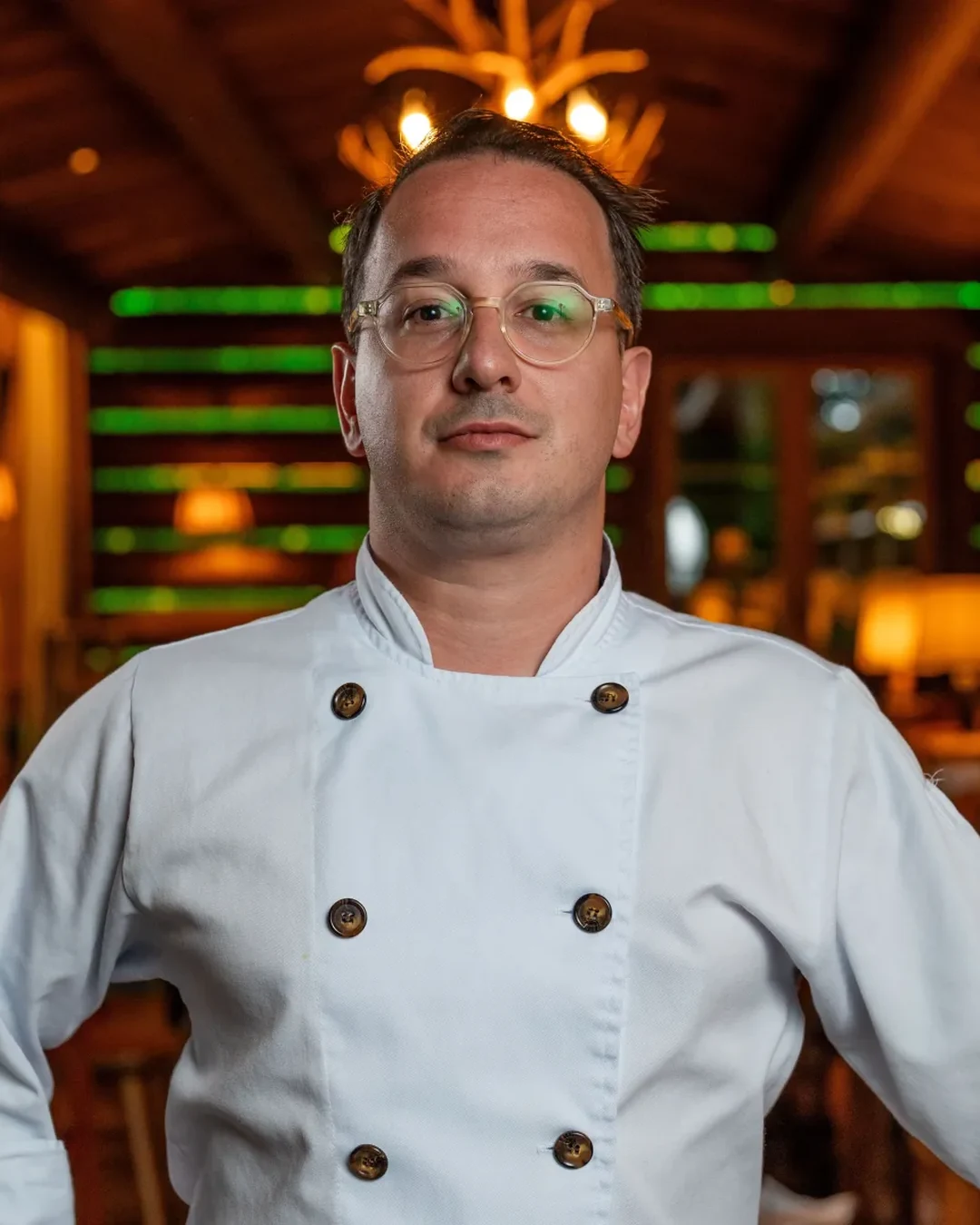
Chef in Residence
Fernando Bouzan
Chef
- 01CuisineFrench with Brazilian Influences
- 02CitySão Paulo, Brazil
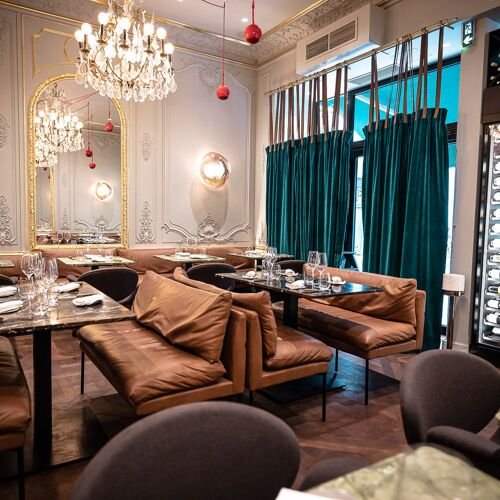
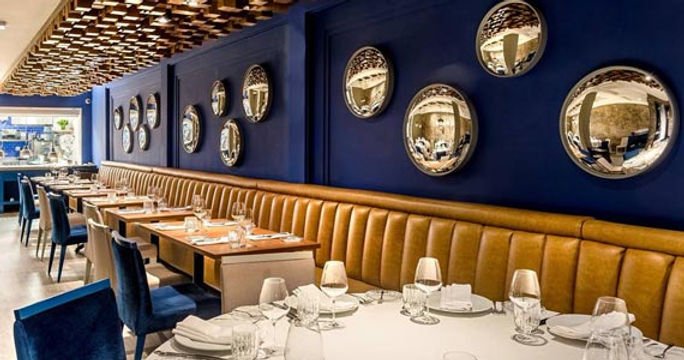
Occupying the historic Maternidade Filomena Matarazzo building in Bela Vista, Blaise holds a 2025 Michelin Plate for French contemporary cooking with a Brazilian inflection. Chef Fernando Bouzan works a menu where classical technique meets local produce, all framed by an interior of volcanic stone, dark timber, and lampshade-lit rooms that reference the Franco-Swiss writer Blaise Cendrars.
At a glance
- Cuisine
- French with Brazilian Influences
- Price
- $$$$
- Per person
- $100
- Hours
- Mon: 7–11:30 PM; Tue: 7–11:30 PM; Wed: 7–11:30 PM; Thu: 7–11:30 PM; Fri: 7–11:30 PM; Sat: 7–11:30 PM; Sun: Closed
- Neighborhood
- Bela Vista
- Rating
- 4.3 (98)
<h2>A Historic Address in Bela Vista</h2><p>The building on Rua Itapeva has been many things over the decades, but its current incarnation as a fine-dining room may be its most considered yet. The Maternidade Filomena Matarazzo in São Paulo's Bela Vista district carries the kind of architectural weight that most restaurants have to manufacture from scratch. The restaurant is Blaise, a French with Brazilian Influences table in São Paulo’s Bela Vista district, priced at $$$$ and recognized with a Michelin Plate in 2025. Exposed timber, Brazilian volcanic stone crystals set into the woodwork, and a lighting scheme built around individual lampshades rather than ambient overhead wash produce an atmosphere closer to a mountain lodge than a formal dining room, a deliberate reference to the cabin interiors associated with the Franco-Swiss writer Blaise Cendrars, whose life and literary voice give the restaurant its name and much of its aesthetic logic.</p><p>This is a detail worth pausing on. In São Paulo's top-tier dining tier, where restaurants at the D.O.M. or <a href="https://www.enprimeurclub.com/restaurants/evvai-sao-paulo-restaurant">Evvai</a> level tend toward sleek, spare interiors, Blaise operates with deliberate rusticity. The warmth is architectural. You notice it before any food arrives.</p><h2>The Booking Experience</h2><p>Blaise sits at the $$$$ price tier, placing it alongside the city's other Michelin-recognised French and contemporary tables rather than the mid-market creative bracket occupied by restaurants like <a href="https://www.enprimeurclub.com/restaurants/mani-sao-paulo-restaurant">Maní</a>. São Paulo's upper dining tier has grown increasingly competitive over the past decade, with A 2025 Michelin Plate situates Blaise in a recognised but sub-starred position, below two-star tables like D.O.M. and Evvai.</p><p>For practical planning purposes, the restaurant's address at R. Itapeva, 435 in Bela Vista places it within easy reach of the central Paulista corridor. Reservations are recommended. A Google rating of 4.3 across 98 reviews provides a reasonable signal of consistency.</p><h2>French Technique, Brazilian Ingredients</h2><p>The broader story of French-inflected fine dining in Brazil is one of long accommodation. Classical French training has shaped São Paulo's kitchen culture for generations, but the most interesting current work happens where that training meets local ingredients rather than simply replicating European precedent. Blaise operates firmly within that tradition. Chef Fernando Bouzan's menu works French technique as the structural grammar, with Brazilian produce and flavour references providing the vocabulary.</p><p>Among the dishes that have drawn attention: braised beef tongue, slow-cooked to a texture described as tender rather than yielding to the point of collapse, served with potato salad and a red wine reduction that keeps the preparation in French register without apology. The jabuticaba sorbet course pairs the small, dark Brazilian berry, native to the Atlantic Forest and rarely seen outside South America, with jam, jelly, and jabuticaba pearls in a crème diplomate base. It is a construction that would make no sense on a Paris menu and complete sense here, using a technique-intensive French dessert format to make an argument about a Brazilian ingredient that deserves more international attention than it typically receives.</p><p>This intersection of tradition and place is not exclusive to Blaise. São Paulo's creative dining scene, documented across tables like <a href="https://www.enprimeurclub.com/restaurants/tuju-sao-paulo-restaurant">Tuju</a> and Maní, consistently returns to the same fundamental question: what does it mean to cook seriously in Brazil without merely importing European formality? Blaise answers it from a specifically French angle, while <a href="https://www.enprimeurclub.com/restaurants/fame-osteria-sao-paulo-restaurant">Fame Osteria</a> explores a parallel question from an Italian one. Neither answer is final, which is part of what keeps the city's dining conversation alive.</p><h2>Where Blaise Sits in São Paulo's Dining Structure</h2><p>French contemporary cooking at the $$$$ level in São Paulo occupies a smaller, more specific niche than it did fifteen years ago. The city's Michelin guide now rewards a wider range of cooking styles, and Brazilian-led creative formats have claimed significant critical territory. Against that context, a French-contemporary table with a Michelin Plate and a clearly defined aesthetic identity represents a deliberate positioning choice. Blaise is not trying to be D.O.M. or to chase the regional-Brazilian brief that drives the most culturally specific work coming out of the city's leading kitchens. It is making a case for French classicism filtered through Brazilian material, a narrower argument, but not a timid one.</p><p>For visitors building a broader picture of Brazil's serious restaurant scene, comparison points beyond São Paulo are useful. <a href="https://www.enprimeurclub.com/restaurants/lasai-rio-de-janeiro-restaurant">Lasai in Rio de Janeiro</a>, <a href="https://www.enprimeurclub.com/restaurants/manu-curitiba-restaurant">Manu in Curitiba</a>, and <a href="https://www.enprimeurclub.com/restaurants/manga-salvador-restaurant">Manga in Salvador</a> each represent distinct regional readings of what fine dining looks like in Brazil, while <a href="https://www.enprimeurclub.com/restaurants/mina-campos-do-jordao-restaurant">Mina in Campos do Jordão</a> and <a href="https://www.enprimeurclub.com/restaurants/orixas-north-restaurant-itacare-restaurant">Orixás | North Restaurant in Itacaré</a> extend that map into the country's more rural registers. For the international angle, <a href="https://www.enprimeurclub.com/restaurants/amber-hong-kong-restaurant">Amber in Hong Kong</a> and <a href="https://www.enprimeurclub.com/restaurants/odette-singapore-restaurant">Odette in Singapore</a> are two of the most rigorous French contemporary tables operating outside Europe, useful reference points if you want to calibrate how Blaise's approach reads against a global comparable set rather than a Brazilian one.</p><p>Closer to home, <a href="https://www.enprimeurclub.com/restaurants/castelo-saint-andrews-gramado-vale-do-bosque-restaurant">Castelo Saint Andrews in Gramado</a> offers a very different kind of European-inflected Brazilian dining, in a regional context far removed from the urban density of Bela Vista. The contrast clarifies what is specifically São Paulo about Blaise: the neighbourhood, the architectural layering, the city's appetite for eating seriously within walking distance of Avenida Paulista.</p><h2>Planning Your Visit</h2><p>Blaise is at R. Itapeva, 435, Bela Vista, São Paulo. At the $$$$ price point, it sits within the same spending bracket as the city's most recognised fine-dining addresses.</p><h2>What Should I Eat at Blaise?</h2><p>Two dishes define the kitchen's argument most clearly. The braised beef tongue, served with potato salad and a red wine sauce, demonstrates Bouzan's command of French bistro classicism applied to a cut that rewards long, careful cooking. The jabuticaba sorbet course is the more distinctly Brazilian construction: jabuticaba jam, jelly, and pearls set inside a crème diplomate base, using the native berry's sharp, dark-fruit flavour to anchor a technically demanding dessert. Order both if the menu allows the choice, since together they articulate the French-Brazilian tension that defines the restaurant's identity more precisely than any single dish does alone.</p>
Know before you go
- Dress code
- smart_casual
- Reservations
- recommended
- Parking
- valet
- Payment
- credit_card
Frequently asked
What does dinner at Blaise typically cost?
Pricing at Blaise is listed as $$$$.
Is Blaise award-winning?
Blaise has received recognition including: Michelin Plate (2025); Occupying the historic Maternidade Filomena Matarazzo building, this restaurant takes its inspiration from the Franco-Swiss writer Braise Cendrars. The interior is similar to a wood cabin (similar to where he is said ….
What should I eat at Blaise?
Two dishes carry the most weight on Bouzan's menu. The braised beef tongue, served with potato salad and a red wine sauce, is the clearest demonstration of classical French technique applied to Brazilian produce. For dessert, the jabuticaba sorbet with jam, jelly, jabuticaba pearls, and crème diplomate draws on a fruit that is native to Brazil and rarely treated with this level of precision in a $$$$ dining context.
Where is Blaise located?
Blaise is located at R. Itapeva, 435 - Bela Vista, São Paulo - SP, 01332-000, Brazil, São Paulo.
Who runs the kitchen at Blaise?
The chef associated with Blaise is Fernando Bouzan.
Address
R. Itapeva, 435 - Bela Vista, São Paulo - SP, 01332-000, Brazil
Bela Vista
How it compares
- Price
- $$$$
- Awards
- Michelin Plate
- Notes
- Vila Bela Vista, French with Brazilian Influences
Les Présidents
- Price
- $$$$
- Awards
- Michelin Plate
- Notes
- Jardim Paulista, Contemporary French Bistro
Chez Claude São Paulo
- Price
- $$$
- Awards
- Michelin Plate
- Notes
- Pinheiros, Franco-Brazilian Bistro
- Price
- $$$$
- Awards
- Michelin Plate
- Notes
- Pinheiros, Modern Japanese Omakase
- Price
- $$$$
- Awards
- —
- Notes
- Pinheiros, Traditional French-Italian Bistro
- Price
- $$$$
- Awards
- Michelin Plate
- Notes
- Pinheiros, Traditional Japanese Sushi and Omakase
In residence
Similar places
Modern Brazilian Amazonian Fine Dining
D.O.M.
São Paulo, Brazil
★★ · 50 Best
Modern Brazilian Fine Dining
Tuju
São Paulo, Brazil
★★★ · 50 Best
Modern Italian-Brazilian Fusion
Evvai
São Paulo, Brazil
★★★ · 50 Best
Modern Brazilian Pork-Centric
A Casa do Porco
São Paulo, Brazil
50 Best
Modern Creative Brazilian
Maní
São Paulo, Brazil
★ · 50 Best
Japanese Omakase
Jun Sakamoto
São Paulo, Brazil
★