- Opinionated About Dining Classical in Europe Ranked #429 · 2025
- Opinionated About Dining Classical in Europe Ranked #259 · 2024
- Opinionated About Dining Classical in Europe Recommended · 2023
The Weight of a Dining Room
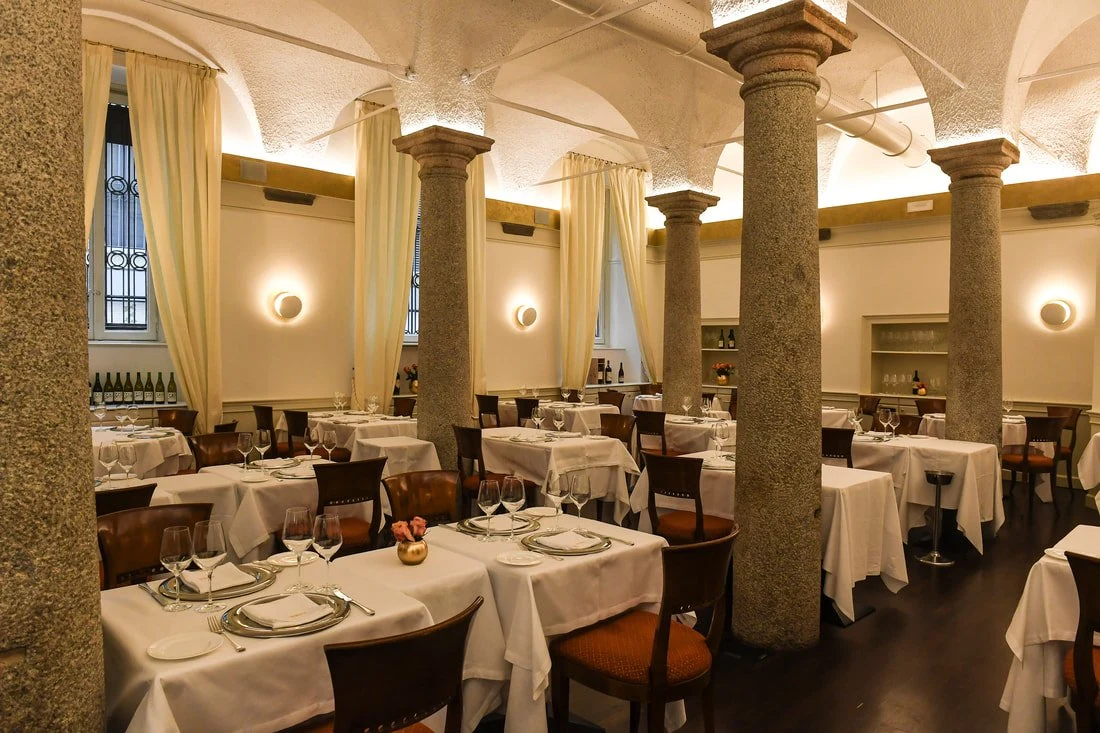
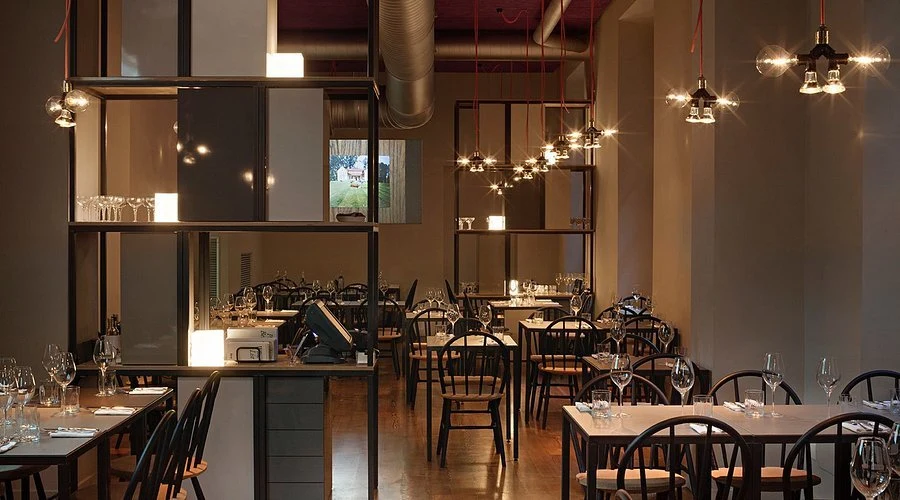
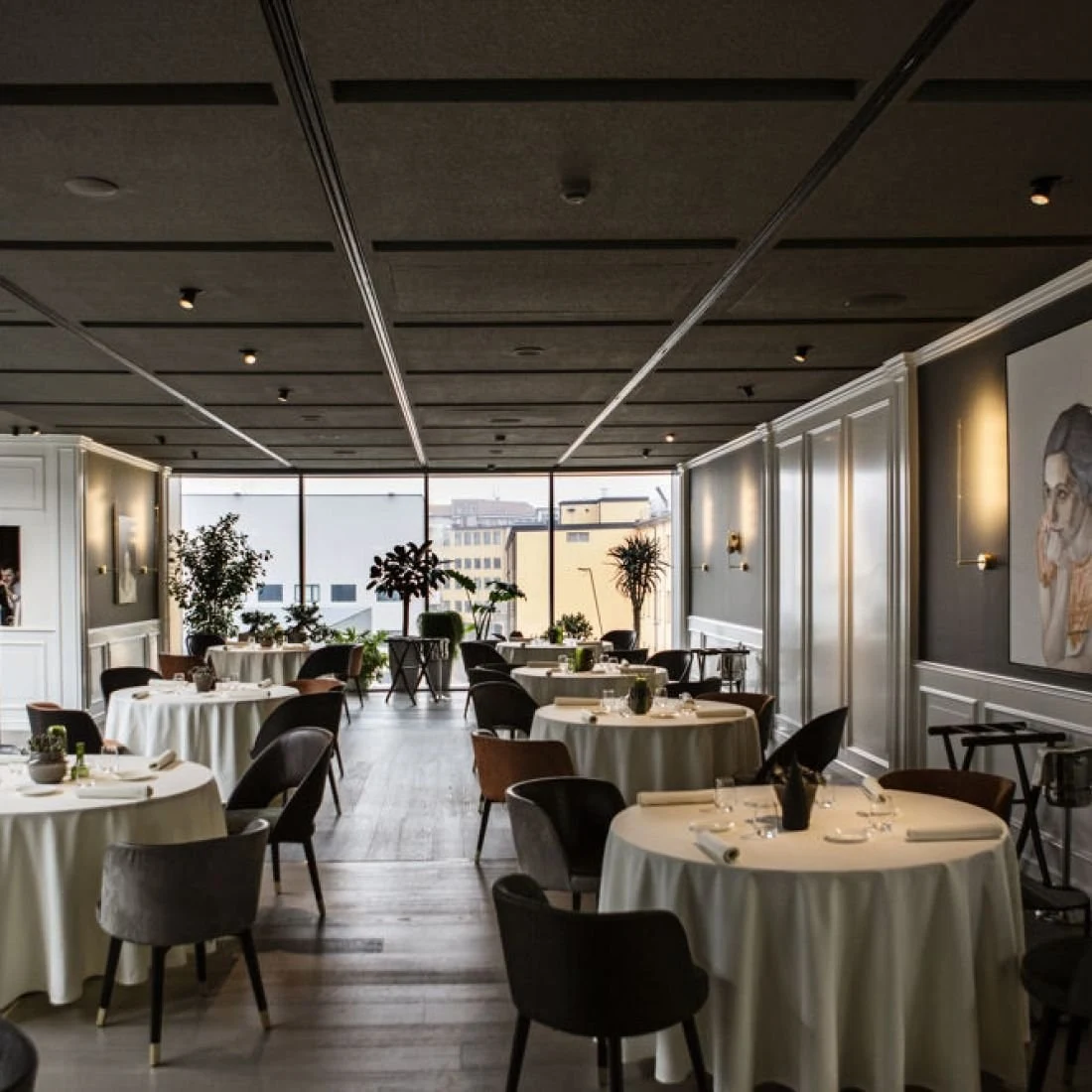
There is a particular atmosphere that only comes with age. At Boeucc, on Corso Monforte in Milan's inner ring, the dining room carries the accumulated gravity of a restaurant that has been operating since 1696, a claim few European addresses can make and fewer can sustain with culinary credibility. The street-level entrance, at the corner of Ronchetti, deposits you into a space where the proportions feel calibrated to a pre-modern sense of occasion: high ceilings, formal table settings, a pace that does not bend to contemporary impatience. Whatever the year, entering feels like a negotiation with a much older version of the city.
Milan's dining scene has fractured significantly over the past decade. On one end, a cluster of technically driven, Michelin-starred operations: Enrico Bartolini at three stars, Seta and Andrea Aprea at two. On the other, a growing field of casual neighbourhood trattorie and modern Italian concepts. Boeucc occupies neither pole. It sits in a third category, classical Milanese, that has contracted sharply as the city's culinary ambitions have skewed either toward innovation or informality. That contraction makes the restaurants still committed to it more significant, not less.
The Sunday letter
Find new places through the people who run them.
Our Sunday email brings you the chefs, winemakers and hoteliers behind our newest stories. See a sample before you subscribe.
See a sample of the Sunday emailOne email a week. Unsubscribe from any issue.
The Classical Milanese Tradition in Context
Classical Milanese cooking is a specific thing. It is not simply northern Italian food, nor is it Piedmontese or Venetian. It centres on a handful of preparations, risotto alla milanese coloured with saffron, osso buco braised with gremolata, cotoletta alla milanese cut thick from the bone and fried in butter, that developed as the city's bourgeois cooking between the 18th and 20th centuries. These are dishes calibrated for a particular social register: prosperous, restrained, technically demanding without being showy. The challenge in executing them today is that their benchmark is fixed. There is no conceptual latitude. A risotto is either right or it is not.
This is the tradition that Boeucc has maintained across multiple generations, and the one that Chef Marco Pasi is responsible for in the present tense. Within this canon, the chef functions less as an auteur and more as a custodian, a distinction that Italian classical cooking treats as a vocation rather than a limitation. The comparison is useful: where contemporaries like Osteria Francescana in Modena have built international reputations on reinterpreting tradition, or Le Calandre in Rubano on formal innovation, restaurants in Boeucc's category hold the line on the unaltered forms. Both are legitimate projects. They attract different readers of Italian cooking.
Recognition and What It Signals
Boeucc's trajectory in the Opinionated About Dining Classical in Europe rankings is worth reading carefully. A recommendation in 2023 became a ranked position at #259 in 2024, then shifted to #429 in 2025. Rankings within a single guide fluctuate for many reasons, shifts in panel composition, the addition of new entries, changes in scoring weight, and a movement from #259 to #429 within a guide that recognises several thousand European restaurants does not, on its own, signal a decline. What the three-year consecutive presence does signal is consistent peer recognition within a category that OAD treats as a distinct discipline. This is not the same comparable set as the Michelin-starred modern Italian tables. It is a group of restaurants evaluated on how well they sustain classical form.
For context, Italy's most recognised classical and traditional restaurants, Dal Pescatore in Runate, Enoteca Pinchiorri in Florence, sit at the upper end of this category, combining classical foundations with wine programmes and service formats of significant depth. Boeucc operates in the same tradition at a more city-focused, accessible register. Within Milan specifically, that positioning is close to singular: few addresses of comparable age and commitment to Milanese cooking remain in active, recognised operation.
Other restaurants in the city's classical or traditional register, Antica Osteria il Ronchettino, Latteria, Bice, each occupy a slightly different slice of the traditional spectrum: osteria informality, neighbourhood trattoria scale, or the internationally known format that Bice has become. Boeucc's specific combination of formal dining room, classical Milanese menu, and multi-century continuity puts it in a narrower band within that group. Il Cairoli and Osteria del Ponte in Trezzano sul Naviglio offer further reference points for readers mapping the city's traditional Italian range.
Planning Your Visit
Boeucc operates Tuesday through Friday for both lunch and dinner, with service running 12:30 to 2:30 in the afternoon and 7:30 to 11:00 in the evening. On Saturdays, only the dinner service is available from 7:30 to 11:00 pm; the restaurant is closed on Sundays and does not operate a Monday service. The lunch windows are worth considering: midday at a restaurant of this formality tends to move at a different pace than the evening, and the Corso Monforte location, in the city's inner eastern ring, near the Porta Venezia area, is accessible by public transport and sits within walking distance of several of Milan's key commercial and cultural addresses.
For comparison with classical European dining at a different scale, Atelier Moessmer Norbert Niederkofler in Brunico and Piazza Duomo in Alba represent the northern Italian premium tier, while Le Bernardin in New York City offers a useful international reference for what sustained classical commitment at high level looks like over decades.
Questions
Frequently asked
Who works at Boeucc?
Made By profiles Marco Pasi (Chef) at Boeucc.
How expensive is Boeucc?
Boeucc is listed at a price level of $$$.
Where is Boeucc and what does it serve?
Boeucc is in Duomo, Milan, serving Traditional Milanese.
The field
How it compares
| Place | Cuisine | Notes | Awards |
|---|---|---|---|
| Boeucc | Traditional Milanese | Duomo, $$$ | · |
| Andrea Aprea | Modern Italian Fine Dining | Milan | Michelin 2 Stars |
| Contraste | Modern Italian Fine Dining | Milan | Michelin 1 Star |
| Dry Milano | Neapolitan Pizza & Cocktails | Milan | · |
| Enrico Bartolini | Modern Italian Fine Dining | Milan | Michelin 3 Stars, World's 50 Best |
| Il Luogo di Aimo e Nadia | Modern Italian Regional | Milan | · |
| Seta | Modern Italian Fine Dining | Milan | Michelin 2 Stars |
In residence
Similar places
Modern Italian Fine Dining
Andrea Aprea
Milan, Italy
★★
Modern Italian Fine Dining
Contraste
Milan, Italy
★
Neapolitan Pizza & Cocktails
Dry Milano
Milan, Italy
Modern Italian Fine Dining
Enrico Bartolini
Milan, Italy
★★★ · 50 Best
Modern Italian Regional
Il Luogo di Aimo e Nadia
Milan, Italy
Modern Italian Fine Dining
Seta
Milan, Italy
★★
The Sunday letter
Get the next Made By story in your inbox.
We send one email every Sunday morning with the places and people we covered that week.
See a sample of the Sunday emailOne email a week. Unsubscribe from any issue.