Brovia is a long-established Barolo producer in Castiglione Falletto, awarded Pearl 2 Star Prestige in 2025, working with Nebbiolo grown across some of the Langhe's most closely studied crus. The estate sits on Via Alba Barolo, the spine road connecting two of Piedmont's most consequential wine villages, and operates as a reference point for the commune's traditional winemaking character.
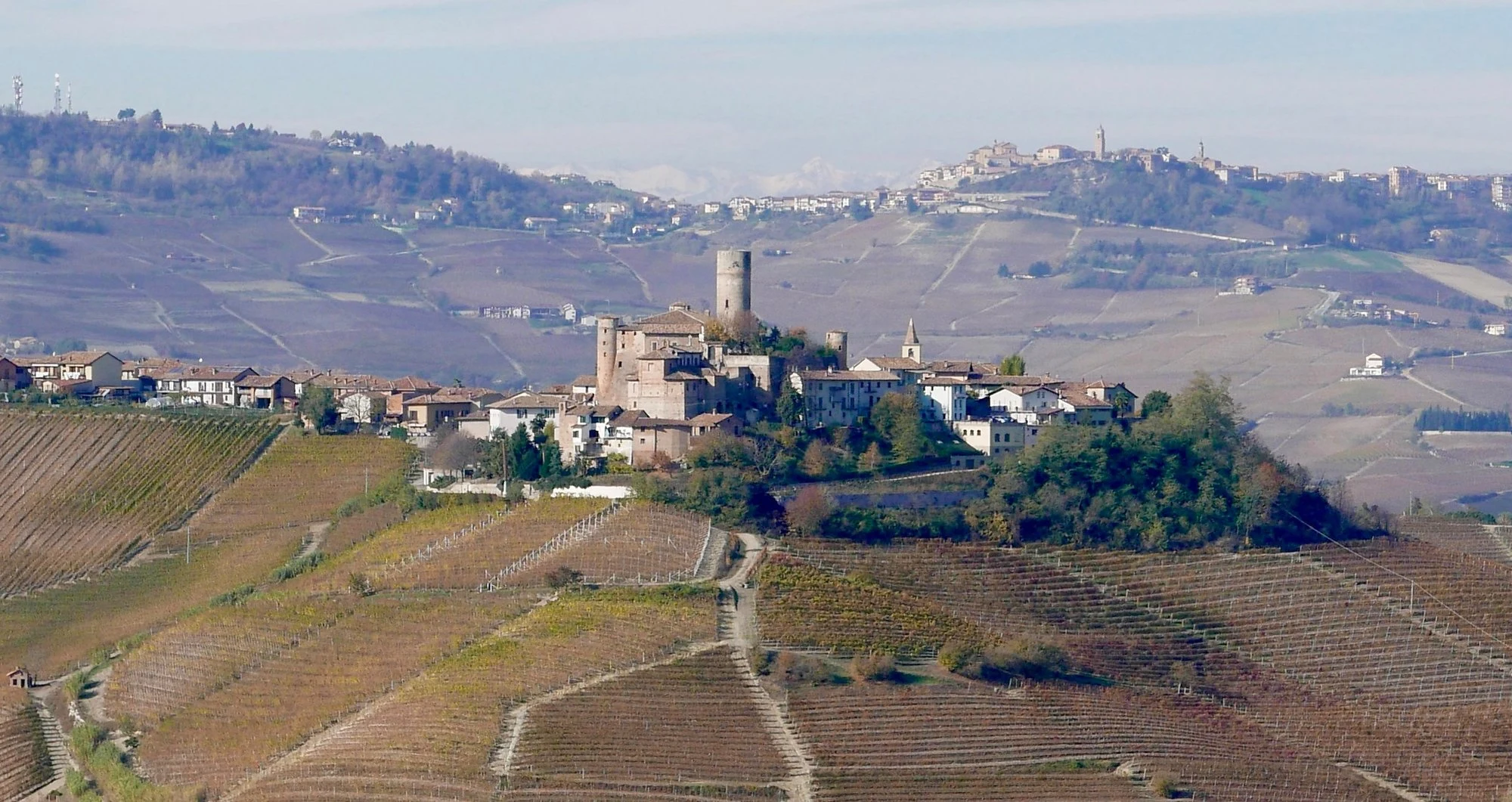
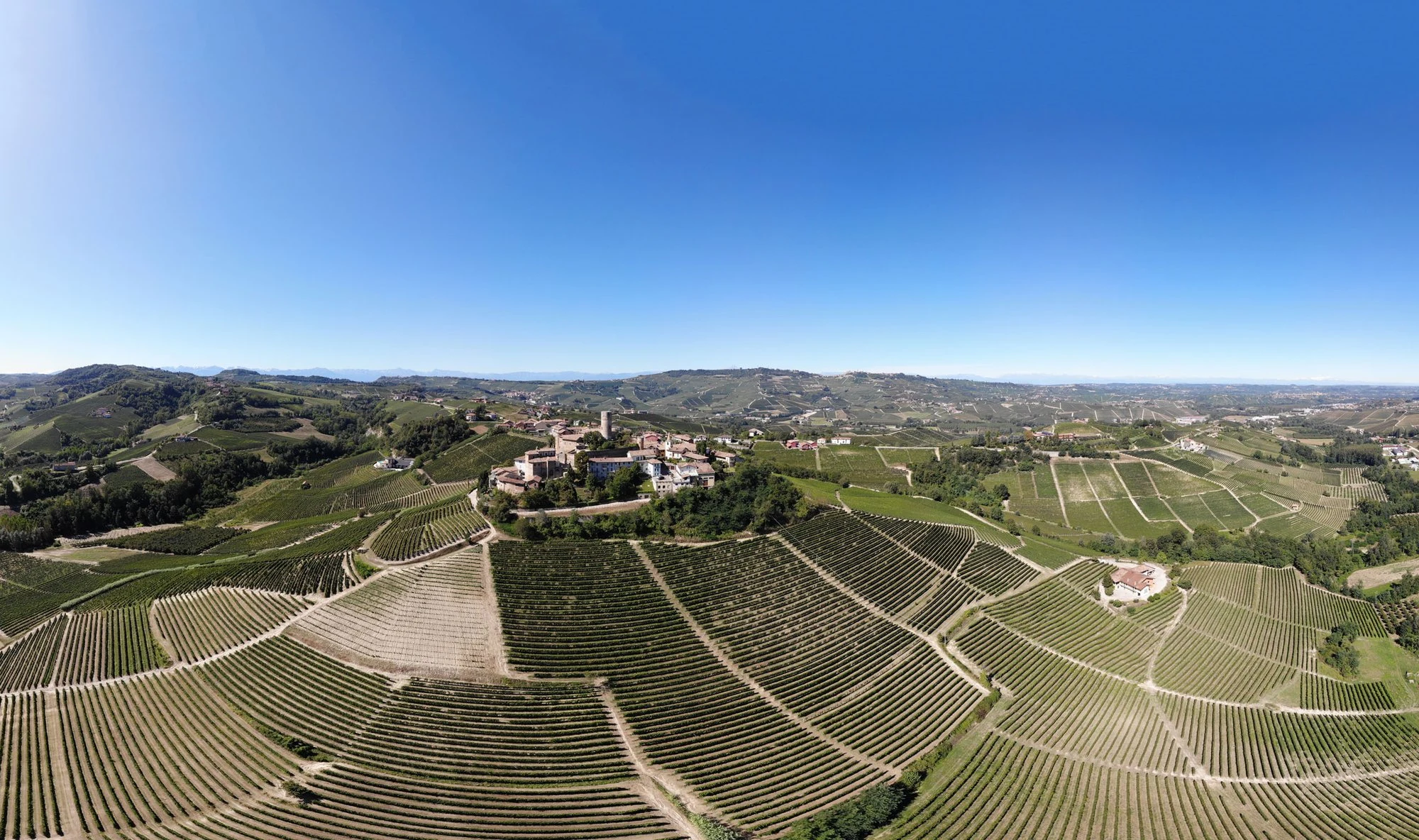
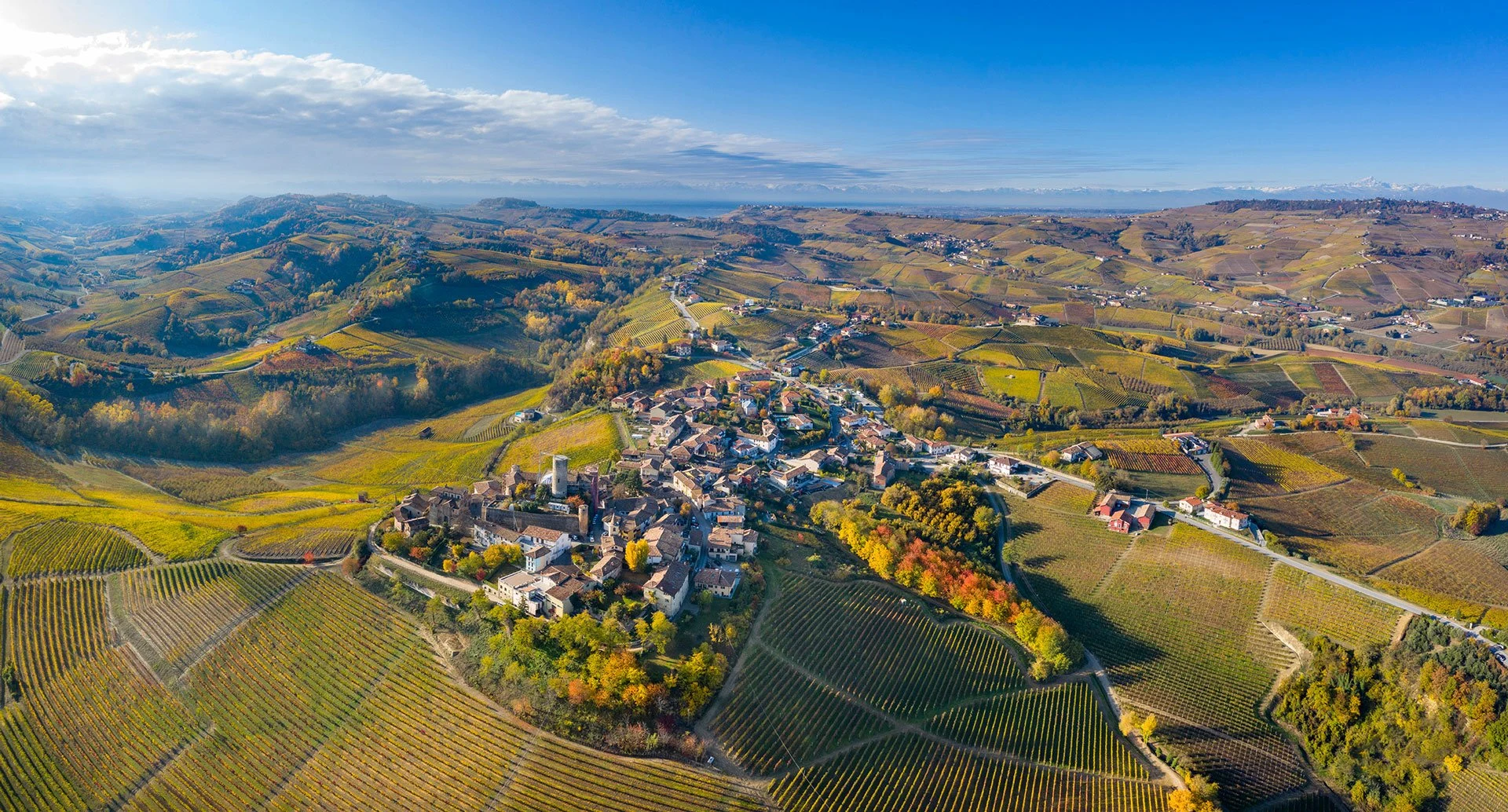
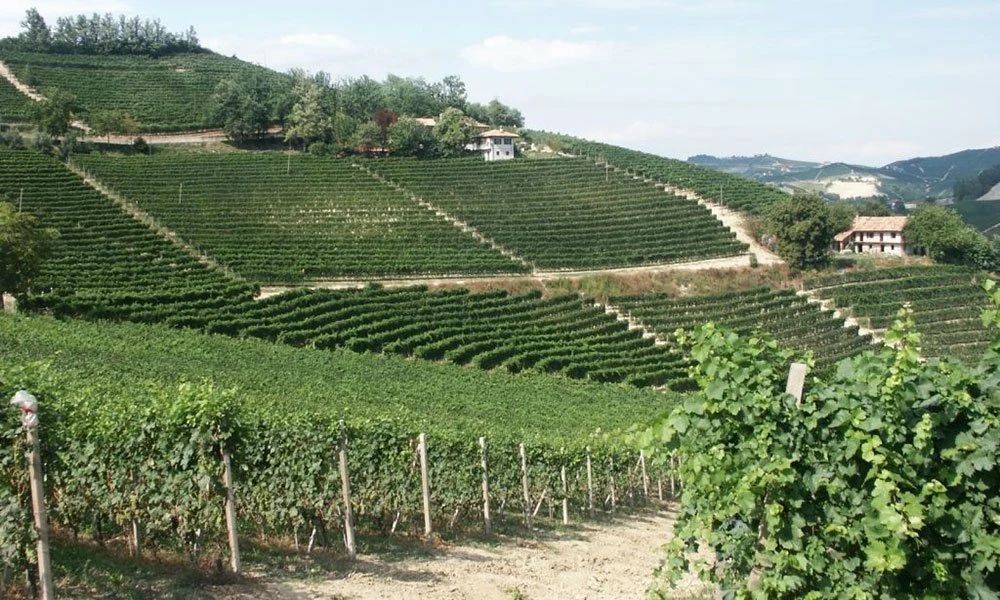
<h2>Where Castiglione Falletto Speaks Through the Glass</h2><p>The road between Alba and Barolo passes through Castiglione Falletto at a ridge that catches the first and last light of the Langhe day. The commune is compact, fewer than 700 residents, a medieval tower visible from the vineyards, but its position on the Tortonian and Helvetian soils of the central Barolo zone gives it a disproportionate claim on serious Nebbiolo. Brovia's address on Via Alba Barolo, the literal connector between these two towns, places it at the heart of this argument. That location is not incidental. In Castiglione Falletto, where the hillside exposures shift within metres and the soil transitions between compact Helvetian limestone and softer Tortonian sand and clay, address tells you something about what ends up in the bottle.</p><p>Castiglione Falletto is the smallest of the Barolo communes by land area, but it produces wine that consistently registers in discussions of mid-zone complexity. The Tortonian soils here tend to yield Nebbiolo with pronounced aromatic lift and relatively approachable tannin structure in youth, while the Helvetian subzones push toward the firmer, more austere profiles associated with Serralunga d'Alba. Brovia works within this dual character, with vineyard holdings that allow the estate to draw on both expressions. Compared to neighbours like <a href="https://www.enprimeurclub.com/wineries/cavallotto-castiglione-falletto-winery">Cavallotto</a>, whose holdings concentrate in the Bricco Boschis monopole, or <a href="https://www.enprimeurclub.com/wineries/vietti-castiglione-falletto-winery">Vietti</a>, whose multi-cru portfolio extends across several communes, Brovia represents a particular strain of Castiglione Falletto identity: rooted in specific sites, attentive to what each growing season adds or subtracts from the underlying terroir signal.</p><h2>Terroir as the Primary Argument</h2><p>Barolo's ongoing conversation about terroir versus winemaking technique is no longer the polarised debate it was in the 1980s and 1990s, when the divide between traditionalists and modernists mapped onto concrete choices about maceration length, oak format, and filtration. The contemporary Langhe has largely settled into a middle ground where producers make their case through vineyard selection and minimal intervention rather than through ideological declaration. What distinguishes estates like Brovia in this context is the consistency with which their wines reflect site rather than house style imposed over it.</p><p>In Castiglione Falletto, the key crus have been documented and debated for decades. Rocche di Castiglione, positioned on the eastern face of the ridge, is among the most discussed single vineyards in the entire Barolo zone, known for producing wines of aromatic precision and structural elegance. The Fiasco and Villero crus carry different weight, Villero particularly recognised for its ability to produce structured, age-worthy Barolo that straddles the commune's two soil typologies. These are not just names on back labels; they represent measurable differences in sun exposure, drainage, and soil depth that express themselves in fermentation and in the glass years later. Estates that have maintained continuous cultivation in these sites through the volatile decades of Barolo's commercial rise carry an advantage that cannot be replicated by newer entrants, however well-capitalised.</p><p>This is the context in which Brovia's 2025 Pearl 2 Star Prestige award carries meaning. The Pearl tier in the the guide framework signals a producer operating at a level of consistent quality and site expression that places it above the category baseline. For a commune like Castiglione Falletto, where the number of estates capable of communicating genuine cru differentiation is smaller than the number claiming to do so, that recognition functions as a positioning signal within the comparable set. <a href="https://www.enprimeurclub.com/wineries/paolo-scavino-castiglione-falletto-winery">Paolo Scavino</a> and Cavallotto each hold their own place in the commune's reputation; Brovia operates alongside them as an estate whose work is evaluated against the rigorous standard the commune has historically demanded.</p><h2>The Langhe in Comparative Frame</h2><p>Understanding Brovia requires placing Castiglione Falletto in the broader map of Italian wine geography. The Barolo zone is one of several premium Italian appellations where the interaction between ancient soil deposits, a specific microclimate, and a single grape variety produces wines of unusual longevity and complexity. The parallel with other Italian prestige zones is instructive: Brunello di Montalcino, where producers like those represented at <a href="https://www.enprimeurclub.com/wineries/lenoteca-banfi">L'Enoteca Banfi in Montalcino</a> translate Sangiovese Grosso through Galestro soils; the Sagrantino tradition of Umbria anchored around estates like <a href="https://www.enprimeurclub.com/wineries/lungarotti-torgiano-winery">Lungarotti in Torgiano</a>; or the Franciacorta zone of Lombardy, where <a href="https://www.enprimeurclub.com/wineries/ca-del-bosco-erbusco-winery">Ca' del Bosco in Erbusco</a> has made a sustained case for sparkling wine terroir in northern Italy. Each of these zones shares a defining feature: the most credible estates are those whose wines, tasted across vintages, trace a consistent soil and climate signature rather than a consistent production signature.</p><p>In Piedmont specifically, that principle is tested by the vintage variation that the Langhe's continental climate imposes. Warm, dry years like 2016 and 2019 are celebrated for producing Nebbiolo of concentration and immediate structure; cooler years like 2014 and 2017 (heat spike notwithstanding) have rewarded producers who understood their sites well enough to adjust harvest timing and extraction accordingly. The Brovia approach, operating from a home base in Garbelletto just outside Castiglione Falletto proper, reflects a long-term reading of these variations rather than a vintage-by-vintage stylistic adjustment. That is precisely the kind of institutional knowledge that distinguishes the commune's generational estates from newer operations, however technically proficient. Producers elsewhere in Italy who have built similar long-term credibility include <a href="https://www.enprimeurclub.com/wineries/aldo-conterno-monforte-dalba-winery">Aldo Conterno in Monforte d'Alba</a> and <a href="https://www.enprimeurclub.com/wineries/castello-di-volpaia-radda-in-chianti-winery">Castello di Volpaia in Radda in Chianti</a>, both of which derive much of their authority from continuous site knowledge accumulated across decades.</p><h2>Planning a Visit</h2><p>Castiglione Falletto is accessible from Alba in under twenty minutes by car, making it a practical stop on a Langhe itinerary that might also include Barolo village, La Morra, or Serralunga. The commune sits on a ridge between the Talloria di Castiglione and the broader Alba valley, and the views from the upper roads over the surrounding Nebbiolo vineyards are among the clearest expressions of why this landscape commands the attention it does. Brovia's address, Via Alba Barolo, 145, in the Garbelletto fraction of Castiglione Falletto, is reachable by the same road that connects the two main towns of the appellation.</p>
Brovia has received recognition including: Pearl 2 Star Prestige (2025).
Brovia is located at via 12060, Via Alba Barolo, 145, 12060 Garbelletto CN, Castiglione Falletto.
Brovia is rooted in Castiglione Falletto, one of Barolo's most geographically complex communes, so the estate's Barolo expressions from this commune's crus are the reference point for the range. Castiglione Falletto sits on a central ridge that bridges the sandier soils of La Morra with the more compact, limestone-rich ground of Serralunga, giving its wines a structural profile that is recognisable across producers. Specific current releases and vineyard designations should be confirmed directly with the estate.
Brovia holds a Pearl 2 Star Prestige rating for 2025, placing it among a select tier of Langhe producers recognised for sustained quality and site fidelity. The draw is the address itself: Via Alba Barolo in Garbelletto puts the estate directly on the corridor that connects Alba to the Barolo commune, with Castiglione Falletto's ridge vineyards on the doorstep. For visitors mapping the Barolo zone, this is a geographically instructive stop as much as a tasting destination.
No booking contact or website is listed in current records for Brovia, so the most reliable approach is to reach out through the local consorzio del Barolo or a Langhe-based travel specialist who maintains direct producer relationships. Given the Pearl 2 Star Prestige standing, allocation and visit availability are likely limited, and advance planning of several weeks is advisable for any Langhe itinerary that includes Castiglione Falletto.
via 12060, Via Alba Barolo, 145, 12060 Garbelletto CN
Castiglione Falletto