- Falstaff Winery - Listed · 2026
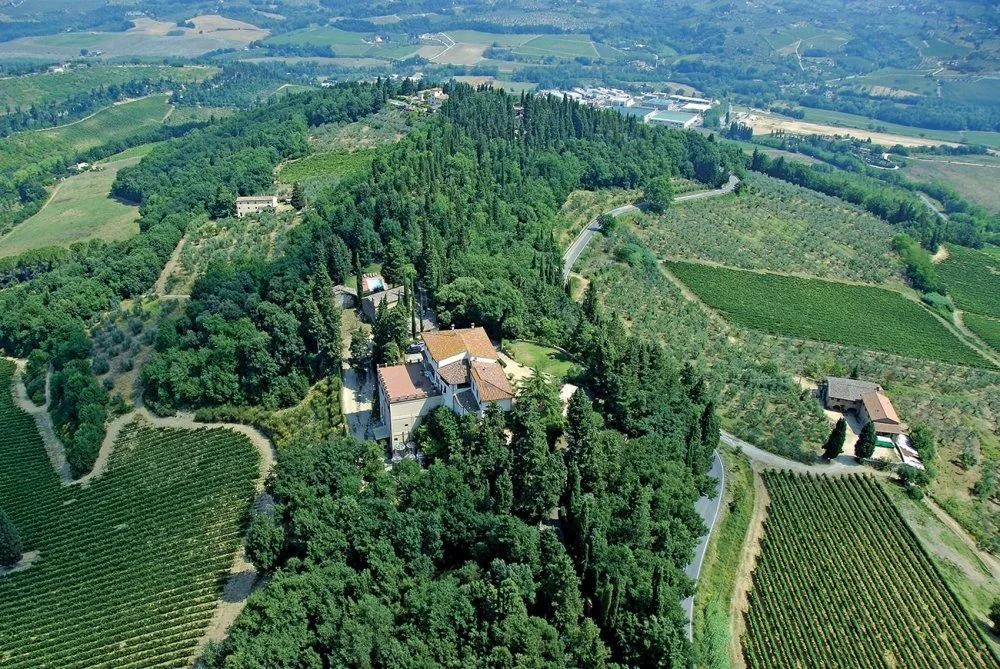
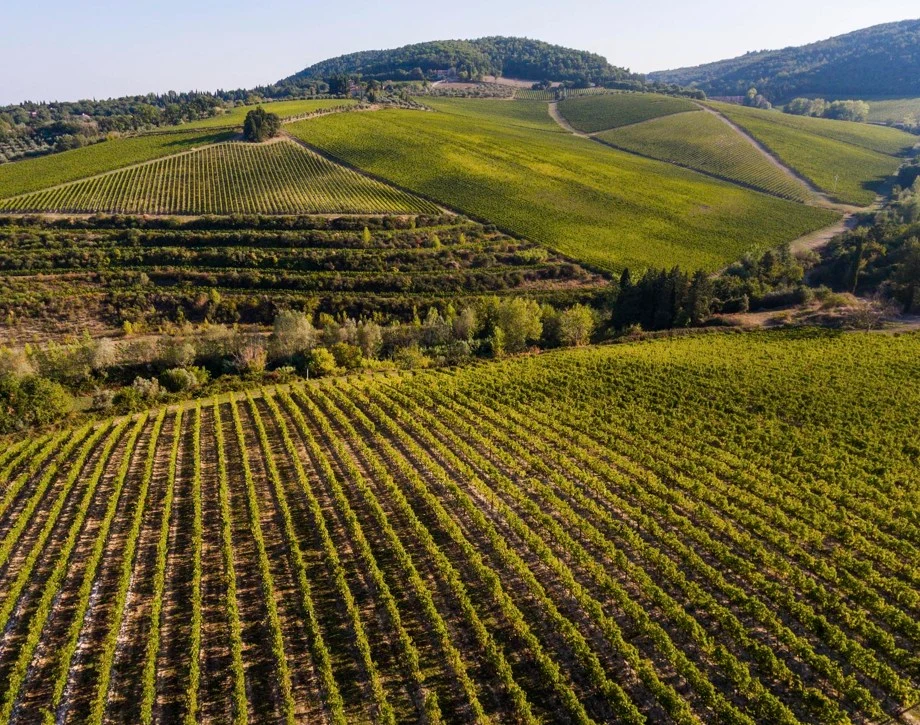
Approaching a hilltop wine estate in San Casciano in Val di Pesa, the first cue is agricultural rather than theatrical: vineyards, garden views, farmhouse scale, and the slower tempo of a working Tuscan property. Castelvecchio belongs to the Chianti Colli Fiorentini side of Tuscany, where Sangiovese is not an abstract regional badge but a practical argument between altitude, limestone, hand work, and restraint in yield.
The estate’s appeal sits in that land-first register. This is not the grand-cellar version of Tuscan wine tourism built around spectacle; it is closer to the farmhouse model, where the tasting makes sense only after the visitor understands the slope, the soil, and the farming. Founded in 1960, Castelvecchio now works as a medium-sized family estate of about 73 hectares, with 32 hectares under vine and production around 100,000 bottles a year. Those numbers matter: large enough to show range, small enough for the visit to retain a personal scale.
The Sunday letter
Find new places through the people who run them.
Our Sunday email brings you the chefs, winemakers and hoteliers behind our newest stories. See a sample before you subscribe.
See a sample of the Sunday emailOne email a week. Unsubscribe from any issue.
Chianti Colli Fiorentini through altitude, limestone, and low yields
Chianti Colli Fiorentini is often read as a Florence-adjacent chapter of Chianti, but the better lens is structural. The denomination gained DOC status in 1967 and DOCG status in 1984, and its strongest wines tend to depend on Sangiovese grown with enough elevation and drainage to keep freshness intact. Castelvecchio’s vineyards sit at roughly 250–350 meters, on Pliocene soils with pebbly limestone, marl, and sandstone. That combination gives the estate a clear territorial script: Sangiovese remains central, while Cabernet Sauvignon, Petit Verdot, Canaiolo Nero, and Malvasia Nera broaden the register without turning the place into an international-variety showcase.
The vineyard work reinforces that point. The newer plantings run at 6,000 vines per hectare, older vineyards at 4,000, with estate-grown fruit and low yields around one kilo of grapes per plant. Green harvest work in August and natural grass regeneration push the estate toward concentration without abandoning the rural grammar of Chianti. Organic viticulture has shaped the production philosophy since 2013, and the estate also carries a carbon-neutral certification from NatureOffice. In a region where sustainability claims can blur into lifestyle language, the specific farming choices here are the useful evidence.
Cellar technique serve the vineyard rather than dominate it. Fermentation takes place in temperature-controlled stainless steel, while barrique aging is part of the maturation program. Luca D’Attoma is named as winemaker, a credential that gives the blending work professional weight, but the stronger editorial point is not authorship. It is the estate’s position within a Tuscan tradition that increasingly asks family wineries to combine organic farming, clean cellar control, and a clear appellation identity without losing the rougher agricultural texture that made the area worth visiting in the first place.
A tasting format built around land rather than performance
The visit format follows the same logic. Tastings may include standard, premium, tour-and-tasting, and private formats, with Italian and English available. The listed tour duration is 90 minutes, which is enough time for the estate context to register: vineyards, cellars, the old villa setting, and the way the wine range maps onto the property’s farming decisions. The experience is better understood as wine education in a rural key than as a luxury tasting-room production.
The portfolio gives the tasting its practical shape. Still red wines lead the conversation, as expected in Chianti Colli Fiorentini, but the estate also works across still white, rosé, and dessert styles. Sangiovese provides the local spine; international varieties are present but do not erase the Tuscan frame. That matters for visitors building a day around the area: a tasting here is less about chasing rare labels and more about reading how a specific hill, mixed exposures, and a family estate scale translate across the glass.
Food pairing is part of the experience, and the atmosphere is explicitly casual. Noise stays conversational, outdoor seating is available, dogs are allowed, and the setting suits romantic getaways, small group outings, wine education, and solo exploration. Children are not the natural audience. The strongest fit is the traveler who wants the vineyard and cellar to explain the wine, not a polished room that is anywhere.
How to place it within a San Casciano wine day
San Casciano in Val di Pesa rewards slow planning because its wineries, restaurants, stays, and rural roads work better as a sequence than as isolated stops. Use our full San Casciano in Val di Pesa wineries guide to build the wine side first, then add meals from our full San Casciano in Val di Pesa restaurants guide, stays from our full San Casciano in Val di Pesa hotels guide, aperitivo planning from our full San Casciano in Val di Pesa bars guide, and non-wine programming through our full San Casciano in Val di Pesa experiences guide.
For readers mapping the immediate wine scene, nearby San Casciano pages such as Baciate Me, Capaccioli - Poggio Niccolini, Castelli del Grevepesa, Compagnia del Vino, and Corzano e Paterno help frame how many different versions of Tuscan hospitality operate inside the same municipality.
The broader European wine map is useful when the question shifts from Chianti to travel style. Pages including 3GP SRL in Treviso, 47 Anno Domini in Trebaseleghe, A Mano Wine in Noci, »der Steiner« Hans Steiner in Podersdorf am See, and & Handwein in Mannheim show how tasting formats change across regions, from farm estates to urban or cross-border wine addresses.
The editorial read is clear: Castelvecchio is strongest for travelers who want Chianti Colli Fiorentini explained through land and farming rather than ceremony. Its scale, organic approach, hilltop vineyards, and Sangiovese-led identity make the visit a grounded Tuscan tasting rather than a generic countryside stop.
Questions
Frequently asked
Who works at Castelvecchio?
Made By profiles Luca D’Attoma (Winemaker) at Castelvecchio.
How expensive is Castelvecchio?
Castelvecchio is listed at a price level of $$.
The field
How it compares
| Place | Notes |
|---|---|
| Castelvecchio | San Pancrazio, $$ |
| Cigliano | San Casciano in Val di Pesa |
| Massanera | San Casciano in Val di Pesa |
| Podere Poggio a Campoli | San Casciano in Val di Pesa |
| Solaia (Marchesi Antinori) | San Casciano in Val di Pesa |
| Tenuta Tignanello | San Casciano in Val di Pesa |
| Terre di Perseto | San Casciano in Val di Pesa |
In residence
Similar places
Cigliano
San Casciano in Val di Pesa, Italy
Massanera
San Casciano in Val di Pesa, Italy
Podere Poggio a Campoli
San Casciano in Val di Pesa, Italy
Solaia (Marchesi Antinori)
San Casciano in Val di Pesa, Italy
Tenuta Tignanello
San Casciano in Val di Pesa, Italy
Terre di Perseto
San Casciano in Val di Pesa, Italy
The Sunday letter
Get the next Made By story in your inbox.
We send one email every Sunday morning with the places and people we covered that week.
See a sample of the Sunday emailOne email a week. Unsubscribe from any issue.