Cova Montenapoleone
In Residence
Eduardo Gadda
Chef
- 01CuisineHistoric Milanese pastry shop, café & restaurant
- 02CityMilan, Italy
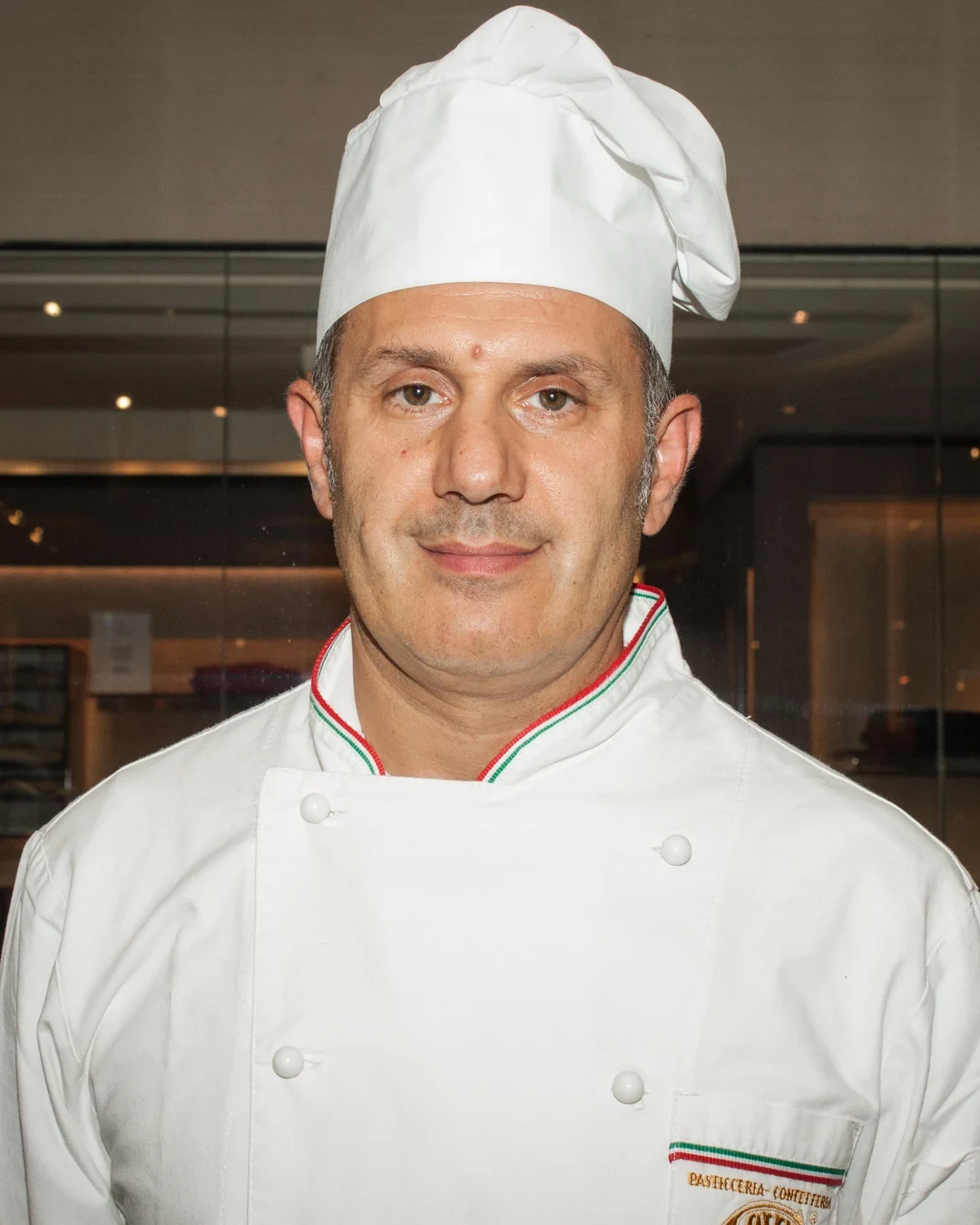
Eduardo Gadda, Chef at Cova Montenapoleone in Milan, keeps Panettone Cova and the house’s pastry tradition in motion.
- Opinionated About Dining Cheap Eats in Europe Highly Recommended · 2026
- Opinionated About Dining Newly Added European Restaurants · 2026
Fresh eggs for a guarded dough
Fresh free-range eggs are where Eduardo Gadda, Chef at Cova Montenapoleone in Milan, begins his account of flavor. He speaks of natural products to be expressed, not covered, which is a plain way to describe a demanding station. At this address on Via Montenapoleone, his work sits inside a house founded in 1817 and still organized around pastry, coffee, tea, wine, cocktails, and a restaurant service that runs by the old Milanese rhythm of the day. Gadda’s own sentence for the task is direct: "I want the COVA tradition to continue." Continuity here does not mean leaving a recipe behind glass. It means handling it often enough that the hand still knows what the label cannot say.
The central inheritance is Panettone Cova, tied by the house to a guarded recipe of more than 200 years. Gadda’s role is both kitchen and pastry discipline: assuring the functioning of the historic boutique, coordinating brigades, and carrying the methods that the brand teaches beyond Milan. Since 2021, he has also served as Cova’s Virtuoso representative for LVMH Métiers d’Excellence, a title that places the bench work within a broader language of métiers and transmission. The named predecessors and mentors behind his own formation are not made public by the house, so the lineage that can be stated is institutional rather than biographical: Antonio Cova’s founding date, the Montenapoleone flagship, and the pastry tradition Gadda keeps in motion.
A classic revised without losing its frame
The program at Cova is not a single plate or a single service. It is a counter, a café, a restaurant, an enoteca, a confectionery bench, and a seasonal gift table sharing one set of standards. Panettone carries the heaviest weight, but the same method extends through tiramisu, petit pasticcini, brioche, breakfast pastries, chocolate, custom cakes, and Milanese dishes such as saffron risotto and cutlet. The format is à la carte, with small plates and an all-day cadence rather than a fixed tasting sequence.
Gadda’s clearest technique appears in the way he revisits known forms. In 2019, Il bonet rivisitato appeared under his name as pastry chef of Pasticceria Cova Montenapoleone 1917. He has also described a revisited zabaione composed with Marsala wine aged in barrels for 30 months, a detail that gives the dessert its architecture before any decoration begins. In 2025, a heart-shaped Sacher for Valentine’s Day carried his touch at Cova in Istanbul. In Hong Kong, a nano cake collection developed with Chef Chiu and the local team reduced the scale to palm-sized cakes for “Me Time.” The places change. The governing gesture stays close: start from a classic, keep the proportions legible, and let revision enter through ingredient, sequence, and scale.
The counter inside the fashion district
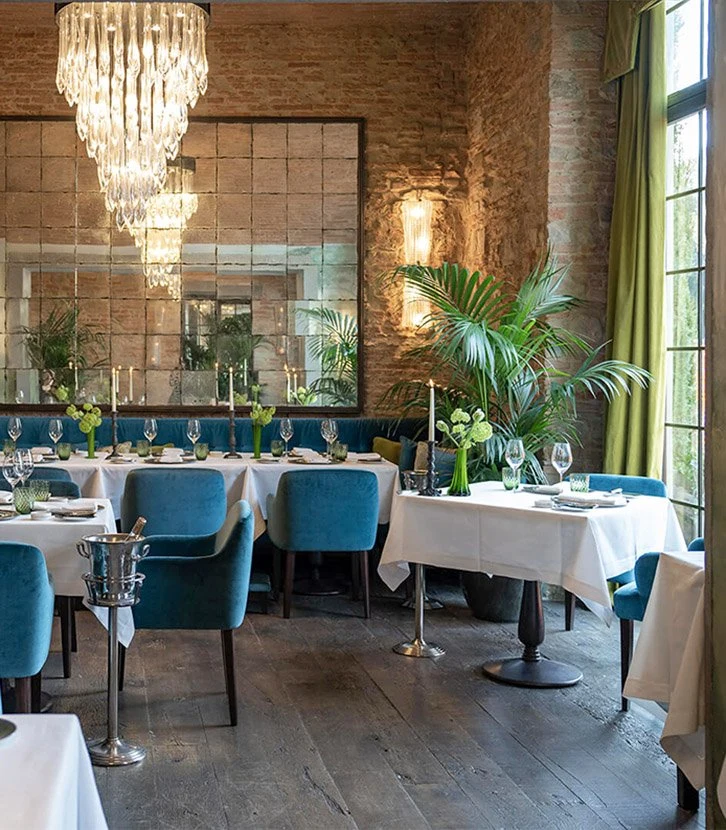
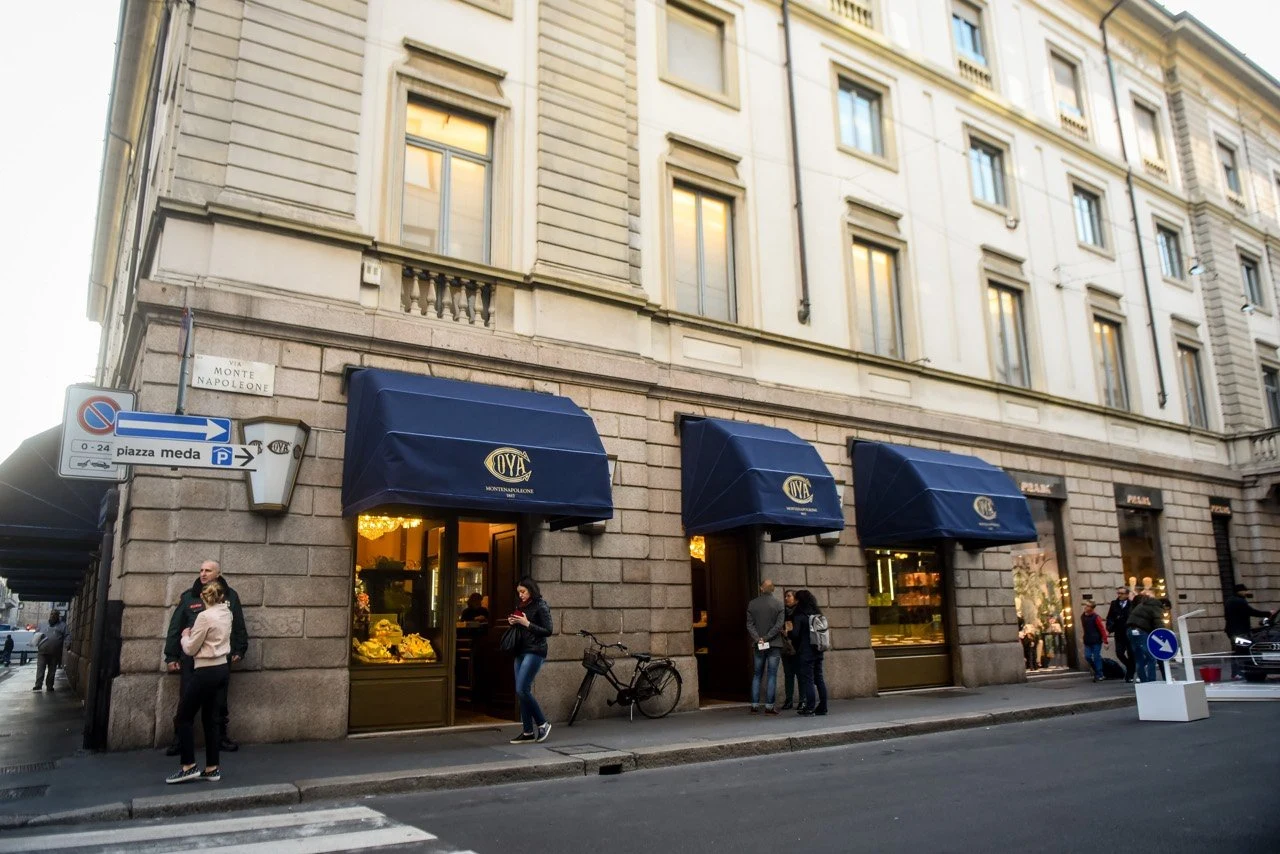
The room has the polish of a Milanese salon rather than the hush of a temple. Crystal chandeliers, old-world fittings, and the fashion-district crowd give the café its surface, but the work pulls the eye back to the counter. Pastry here has to read from several distances: a wrapped panettone for the street, a petit pasticcino taken with coffee, a cake ordered for a celebration, a plate carried through the room at lunch.
Because the venue is also a shop, the bench never disappears fully behind the pass. Packaging, chocolates, coffee, tea, wine, and pastry cases keep production visible in fragments. The restaurant layer adds saffron risotto and cutlet to the same day, anchoring the place in Milan rather than turning it into a neutral luxury café. Gadda’s task is to keep those fragments aligned, so Panettone Cova and a cup of coffee still feel like parts of the same house.
Questions
Frequently asked
Who oversees the kitchen and pastry work at Cova Montenapoleone?
Eduardo Gadda is the chef at Cova Montenapoleone in Milan, where he keeps the house’s pastry tradition in motion and also coordinates the brigades and the functioning of the historic boutique.
What is Cova Montenapoleone known for?
The house is centred on Panettone Cova, a signature tied to a guarded recipe of more than 200 years, and its pastry offer also includes tiramisu, petit pasticcini, brioche, breakfast pastries, chocolate, and custom cakes.
What kind of place is it?
Cova Montenapoleone is a historic Milanese pastry shop, café, and restaurant that also includes an enoteca, with an all-day à la carte format rather than a fixed tasting menu.
What can be ordered from the restaurant side?
The restaurant service includes Milanese dishes such as saffron risotto and cutlet, alongside the pastry and café counter.
What should be known before booking?
Reservations are recommended, the dress code is smart casual, and street parking is listed.
The field
How it compares
| Place | Cuisine | Notes | Awards |
|---|---|---|---|
| Cova Montenapoleone | Historic Milanese pastry shop, café & restaurant | Quadrilatero della Moda, $$$$ | · |
| Andrea Aprea | Modern Italian Fine Dining | Milan | Michelin 2 Stars |
| Dry Milano | Neapolitan Pizza & Cocktails | Milan | · |
| Enrico Bartolini | Modern Italian Fine Dining | Milan | Michelin 3 Stars, World's 50 Best |
| Il Luogo di Aimo e Nadia | Modern Italian Regional | Milan | · |
| Seta | Modern Italian Fine Dining | Milan | Michelin 2 Stars |
| Verso Capitaneo | Modern Italian Fine Dining | Milan | Michelin 2 Stars |
In residence
Similar places
Modern Italian Fine Dining
Andrea Aprea
Milan, Italy
★★
Neapolitan Pizza & Cocktails
Dry Milano
Milan, Italy
Modern Italian Fine Dining
Enrico Bartolini
Milan, Italy
★★★ · 50 Best
Modern Italian Regional
Il Luogo di Aimo e Nadia
Milan, Italy
Modern Italian Fine Dining
Seta
Milan, Italy
★★
Modern Italian Fine Dining
Verso Capitaneo
Milan, Italy
★★