De Watergeus
- 01CuisineModern European Fine Dining
- 02CityNoorden, Netherlands
Menus turn every two weeks
- Michelin Bib Gourmand · Michelin Guide
- Michelin Bib Gourmand · 2025
- Michelin Bib Gourmand · 2024
Market rhythm at the pass
The menu changes every two weeks at De Watergeus in Noorden, where the pass works to the market rather than a fixed script, and Chef Bas holds the kitchen alongside Annemarike in a house they have run long enough to take a personal break for their fiftieth birthdays in October 2025. The restaurant sits at Simon van Capelweg 10, close to the Nieuwkoopse Plassen, and the kitchen’s public face is seasonal, local, and measured: salmon mousse with herb vinaigrette, ripe olives and pickled cucumber; crisp asparagus when the season allows it; local fish prepared with enough restraint to let the water nearby feel relevant without turning the plate into scenery.
The work here is stewardship of a restaurant whose format moves between à la carte, tasting menu, and set menu. The house is family-run in character, with a formal style of service, yet the cooking described by the guide is grounded in good quality and good value, the terms that sit behind its Bib Gourmand. The kitchen states its own method plainly: classic cooking methods joined to generosity and a modern reading of texture, so a plate stays balanced while covering a wide range. What that asks for is pressure rather than ornament: a small room, a quiet setting, a repeatable standard, service after service.
Two weeks between one menu and the next
The kitchen’s discipline is clearest in the menu cycle. Every two weeks, De Watergeus adjusts to what the season and market bring, keeping the structure flexible enough for chef’s choice menus, smaller courses, and alternatives from the card. That rhythm suits a lakeside restaurant better than a fixed signature list. The ingredients can move with weather, supply, and the fish available close to home.
The published dishes point toward classic technique with modern texture rather than novelty. Salmon mousse carries herb vinaigrette for lift, olives for salt and depth, pickled cucumber for acidity. Asparagus arrives crisp. Local fish appears as a recurring anchor, often in preparations that let the cooking carry the plate without crowding it. The beverage program follows the same temper: a curated wine list, cava in the frame, wines available by the glass or bottle, and half-glass pours used for pairing with longer menus. Nothing in that arrangement needs spectacle. It asks for timing, tasting, and a hand steady enough to change the menu without losing the house line.
Natural light over the room
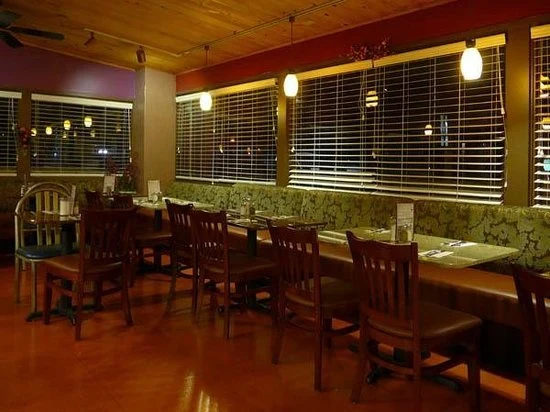
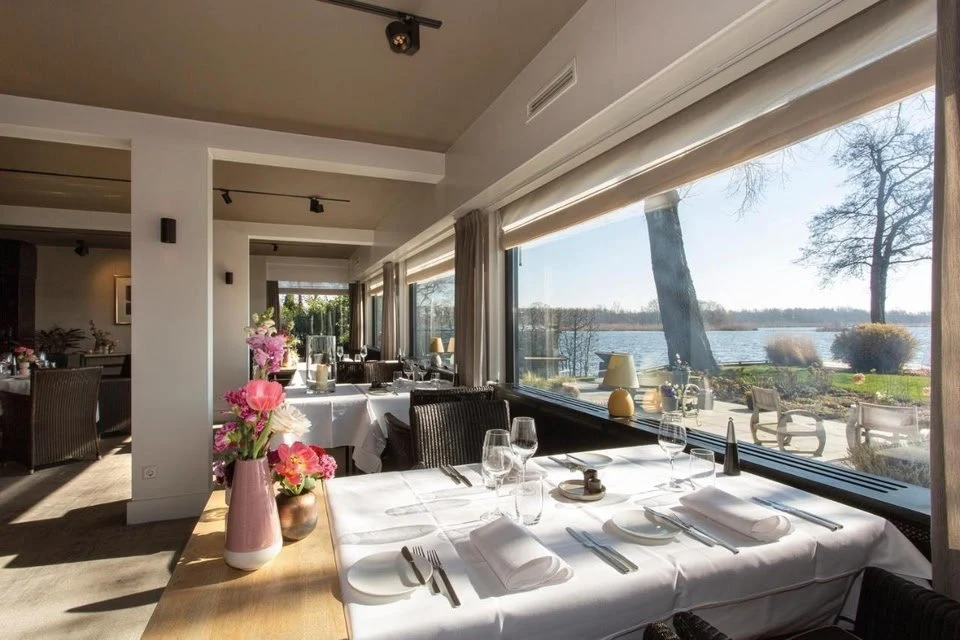
The room is a refurbished country house with broad views over the Nieuwkoopse Plassen. Water is not a backdrop here so much as a working condition: it slows the room, throws light across the tables, and makes the dining feel closer to the landscape that supplies part of the kitchen’s point of view. The atmosphere is quiet, with refined interiors, garden surroundings, and the sort of attentive service that suits a small-capacity restaurant.
There are 11 rooms in the house, and the restaurant shares that sense of lodging without becoming secondary to it. Lunch and dinner can move from the pass to the window with little interruption in tone. On warmer days, the lakeside terrace changes the texture of service, bringing the same plates closer to the water. The counterpoint is simple: polished cooking, a country-house room, and a view that does not have to be explained.
What the house keeps repeating
De Watergeus matters most when it holds its scale. The restaurant is not built around one theatrical dish or a single public lineage; it is built around recurrence, the two-week menu turn, the local fish, the salmon mousse, the glass poured to meet the course. If the kitchen keeps its conviction, the next plate to understand here will likely be the one shaped by that same market rhythm at Simon van Capelweg 10.
Questions
Frequently asked
Who runs the kitchen at De Watergeus?
Chef Bas holds the kitchen alongside Annemarike, and the restaurant is described as family-run in character.
What kind of menu does De Watergeus serve?
The menu changes every two weeks and follows the season and the market. The format moves between à la carte, tasting menu, and set menu, with smaller courses and alternatives from the card.
What is the food known for here?
The cooking centres on seasonal, local dishes such as salmon mousse with herb vinaigrette, crisp asparagus when the season allows it, and local fish prepared with restraint.
What recognition does De Watergeus hold?
De Watergeus holds a Michelin Bib Gourmand, with the guide describing the cooking as good quality and good value.
What should visitors know about booking and the setting?
Reservations are recommended. The restaurant is in a refurbished country house on the Nieuwkoopse Plassen, with quiet surroundings, refined interiors, garden views, and an on-site car park.
The field
How it compares
| Place | Cuisine | Notes | Awards |
|---|---|---|---|
| De Watergeus | Modern European Fine Dining | Noorden, $$$ | · |
| Artichoke | Modern European Fine Dining | Amersham | Michelin 1 Star |
| Elystan Street | Modern European Fine Dining | London | Michelin 1 Star |
| JAN | Modern European Fine Dining | Munich | Michelin 3 Stars, World's 50 Best |
| Lakeside | Modern European Fine Dining | Hamburg | Michelin 2 Stars |
| NOA Chef’s Hall | Modern European Fine Dining | Tallinn | Michelin 1 Star |
| Vila Joya | Modern European Fine Dining | Albufeira | Michelin 2 Stars, World's 50 Best |
Similar places
Modern European Fine Dining
Artichoke
Amersham, United Kingdom
★
Modern European Fine Dining
Elystan Street
London, United Kingdom
★
Modern European Fine Dining
JAN
Munich, Germany
★★★ · 50 Best
Modern European Fine Dining
Lakeside
Hamburg, Germany
★★
Modern European Fine Dining
NOA Chef’s Hall
Tallinn, Estonia
★
Modern European Fine Dining
Vila Joya
Albufeira, Portugal
★★ · 50 Best