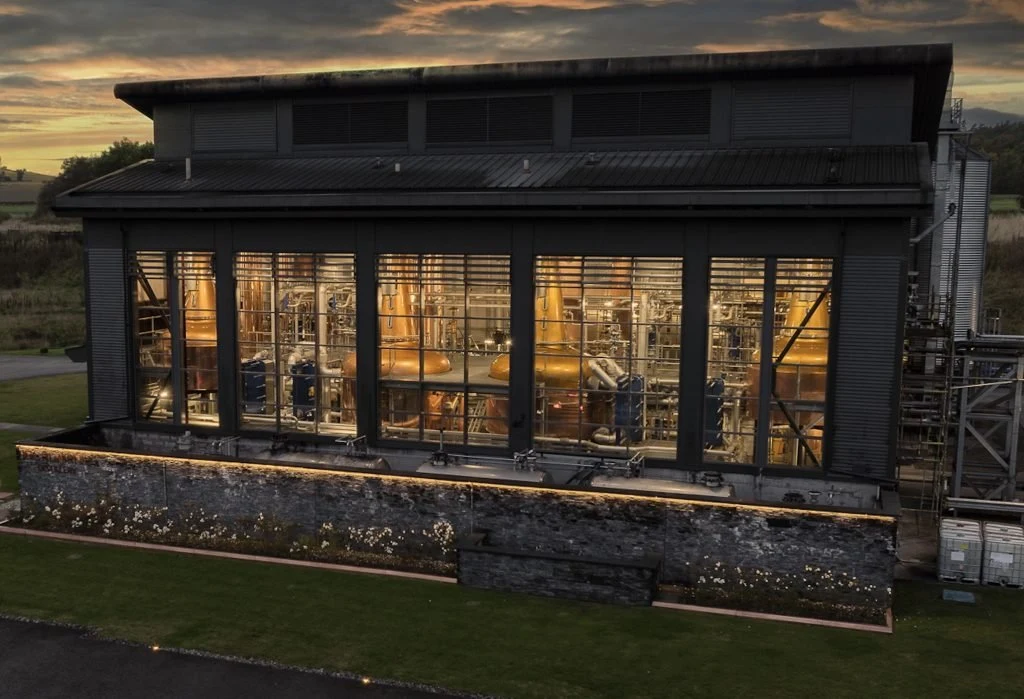
Destilería Pisco Mistral sits in the Elqui Valley at Paihuano, one of Chile's defining pisco-producing zones, where altitude and extreme sun concentrate the Muscat grapes behind the country's national spirit. Recognised with a Pearl 2 Star Prestige award in 2025, the distillery operates as both a production facility and a visitor destination. It is among the most formally recognised pisco experiences in the region.
The Elqui Valley does not ease you in. The road from La Serena climbs through increasingly arid terrain, the Andes closing in on both sides, the sky so clear and the air so dry that the light feels qualitatively different from anywhere at sea level. By the time you reach Paihuano, roughly 110 kilometres from the coast, you are in one of Chile's most extreme agricultural zones: almost no rain, intense UV radiation, and a diurnal temperature swing that can exceed 20°C between afternoon and midnight. These are not comfortable conditions for most crops. For Muscat grapes destined for pisco, they are close to ideal.
Destilería Pisco Mistral occupies this territory at address D-485 20980, Paihuano, in the Coquimbo region. The distillery sits at the centre of what pisco production at altitude actually means. The Elqui Valley carries the denomination, and the Mistral name connects directly to Gabriela Mistral, the Nobel Prize-winning poet born in nearby Vicuña, whose identity is woven into the valley's cultural self-image. That lineage gives the site a weight that newer craft distilleries in the region are still accumulating.
Pisco produced in Chile's northern valleys competes on a different register from Peruvian pisco, and within Chile itself there is a clear hierarchy between valley-floor production and high-altitude estate distilling. The Elqui Valley, alongside the nearby Limarí, represents the premium tier of Chilean production, where Muscat-family grapes, Moscatel de Alejandría, Moscatel Rosada, Pedro Jiménez, develop aromatic intensity that lower-altitude growing cannot replicate. The altitude here runs between roughly 1,200 and 2,000 metres across the valley's productive zones, placing it in a category that Chilean pisco's official designations reward with the classifications Especial, Reservado, and Gran Pisco, differentiated by minimum alcohol content at distillation.
For visitors arriving with a wine-country frame of reference, the production logic is worth understanding before the tasting begins. Unlike wine, pisco is distilled, which means the grape's aromatic profile is concentrated and then transformed by the still. The dominant style in the Elqui Valley tends toward aromatic transparency: the Muscat character comes through cleanly, without the heavy oak influence that defines aged spirits in other traditions. What the valley's terroir contributes survives that process in a way that lower-altitude fruit often does not. This is why geography matters here not merely as scenery but as a production variable with measurable consequences for the glass.
For a regional comparison that shows how Chilean producers are working across very different climatic conditions, Viña Falernia in Vicuña operates just down the valley and offers a useful reference point for how Elqui altitude expresses itself across different producers. Further south, operations like Viña De Martino in Isla de Maipo and Viña Casa Silva in San Fernando illustrate how radically different Chile's wine and spirits geography becomes once you move south of the Norte Chico.
Destilería Pisco Mistral holds a Pearl 2 Star Prestige award for 2025. In a category where formal international recognition has historically trailed behind wine, any sustained award signal is worth reading carefully. The 2 Star Prestige tier indicates a property assessed against premium-tier criteria, not just baseline production quality. For pisco specifically, where the premium segment is still consolidating its identity for international audiences, that kind of external validation functions as a positioning signal: this is where the category's upper bracket is being defined.
The comparison set for a property at this recognition level is not the general Chilean wine circuit. Operations like El Gobernador (Miguel Torres Chile) in Curicó and Viña Seña in Panquehue occupy different appellations and grape traditions entirely. Within the pisco category itself, the closer regional peer is Pisco Alto del Carmen Distillery in Huasco, which operates in the adjacent Huasco Valley under different altitude and varietal conditions. The contrast between the two sites illustrates how much production geography shapes the character of Chilean pisco even within a geographically concentrated denomination.
Pisco Elqui as a destination has developed a visitor infrastructure that reflects the valley's dual identity: an active agricultural production zone and a draw for travellers interested in astronomy (the Elqui Valley sits within one of the world's lowest light-pollution corridors) and Chilean food culture. Distillery visits in this context are less like winery day trips in the Central Valley and more like purposeful excursions that reward visitors who arrive with some baseline knowledge of what they are about to taste.
The Mistral distillery's location at Paihuano places it toward the upper end of the valley's visitor circuit, past the town of Pisco Elqui itself. That positioning matters: the drive is part of the experience, with the valley narrowing and the landscape becoming more dramatic as you ascend. Visitors who time their arrival for mid-morning avoid both the coastal fog that sometimes lingers at lower elevations and the intense afternoon heat that can make outdoor spaces uncomfortable in summer months (December through February in the Southern Hemisphere).
The nearby Fundo Los Nichos represents a different production approach within the same geographic zone and makes for a logical complement to a Mistral visit on the same day.
The global spirits industry's interest in terroir-driven production has expanded well beyond Scotch whisky and Cognac. Producers as different as Aberlour in Scotland and Accendo Cellars in St. Helena operate under the logic that place is a primary quality variable, not a marketing afterthought. Chilean pisco, particularly from the Elqui Valley, fits neatly into that argument: the valley's extreme conditions are not incidental to the spirit's character. They are the mechanism by which its aromatic intensity is produced.
That argument is strengthened when a producer carries formal recognition at the Pearl 2 Star Prestige level. For visitors arriving from wine-literate backgrounds, the comparison worth making is not pisco vs. wine but high-altitude, terroir-specific distillation vs. generic production. The Elqui Valley, at its upper end, makes that case with some force. Other well-regarded Chilean operations further south, including Viña Undurraga in Talagante, Viña Valdivieso in Lontué, Viña MontGras in Palmilla, Viña Ventisquero in Santiago, and Viña Santa Rita in Buin, each operate under fundamentally different soil and climate conditions that illustrate just how geographically diverse Chilean production has become.
Destilería Pisco Mistral is located at D-485 20980, Paihuano, Coquimbo. Reservations are essential, so confirm plans directly before travel. The valley is most accessible from La Serena, which has the closest commercial airport with regular connections to Santiago. The drive from La Serena into the upper valley takes approximately 90 minutes depending on road conditions.
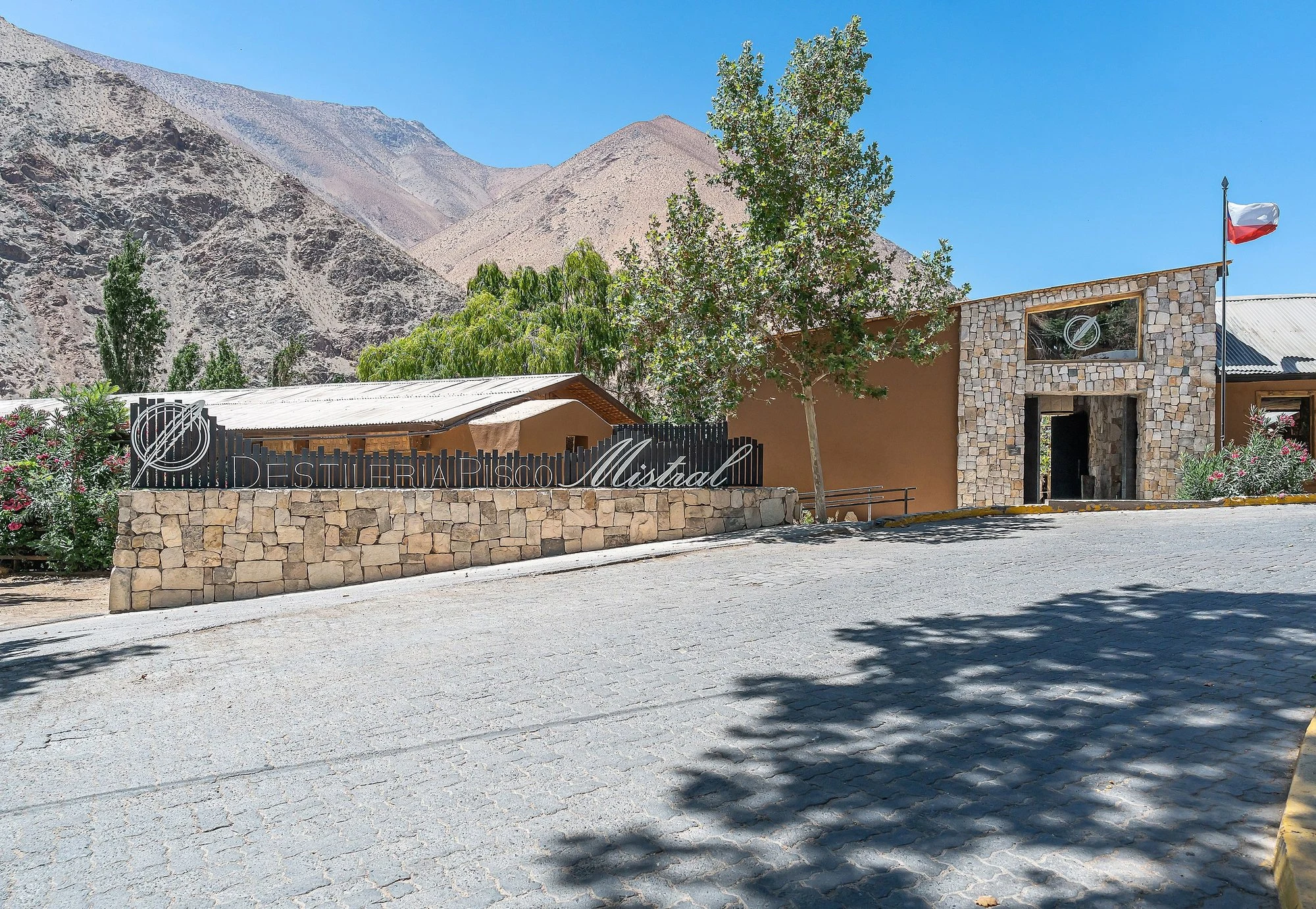
The distillery sits at Paihuano in the upper Elqui Valley, where the terrain is arid, the Andes press in from both sides, and the light is particularly intense at this altitude. The setting functions as context for the spirit itself: extreme solar radiation and low rainfall are not incidental to the visit, they are the production conditions. This is an agricultural production site that has developed a visitor dimension, so the atmosphere leans operational rather than theatrical.
Destilería Pisco Mistral is located at D-485 20980, Paihuano, Coquimbo, Pisco Elqui.
Destilería Pisco Mistral has received recognition including: Pearl 2 Star Prestige (2025).
The Elqui Valley's production identity is anchored in Muscat-family grapes, particularly Moscatel de Alejandría, which carries pronounced floral and stone-fruit character into the distillate. At a distillery holding a Pearl 2 Star Prestige award for 2025, the portfolio is likely to include expressions that reflect altitude differentiation and varietal specificity rather than a single standard bottling. Ask specifically about single-variety or reserve expressions when visiting.
The combination of geographic specificity and formal recognition gives the visit more substance than general Elqui Valley tourism. Destilería Pisco Mistral earned a Pearl 2 Star Prestige award in 2025, placing it among the formally recognised producers in a category where international acknowledgment has been slower to develop than in comparable spirits regions. Pisco Elqui itself is the only Chilean town to carry the denomination's name, which adds a layer of provenance that the distillery is positioned to articulate directly.
Booking requirements are not confirmed in publicly available records for Destilería Pisco Mistral, so contacting the distillery directly before travelling to Paihuano is advisable. The Elqui Valley's visitor infrastructure is active but spread across a narrow road corridor, and arrival without confirmed access to a tasting or tour could mean a wasted journey from La Serena.
Pisco Elqui sits in the Paihuano commune at the upper end of the Elqui Valley, giving Mistral access to altitude conditions that differ measurably from lower-valley or Limarí Valley operations. The town is the only settlement in Chile to carry the pisco denomination in its name, a designation formalised by the Chilean government. Destilería Pisco Mistral's Pearl 2 Star Prestige recognition in 2025 signals that the elevation and terroir specificity are translating into formal quality distinction within the category.
D-485 20980, Paihuano, Coquimbo
Destilería Pisco Mistral
Fundo Los Nichos
Doña Josefa de Elqui (Pisco)
Destilería Kappa
Pisco Control C
Viña Tabalí