Dum Pukht
In Residence
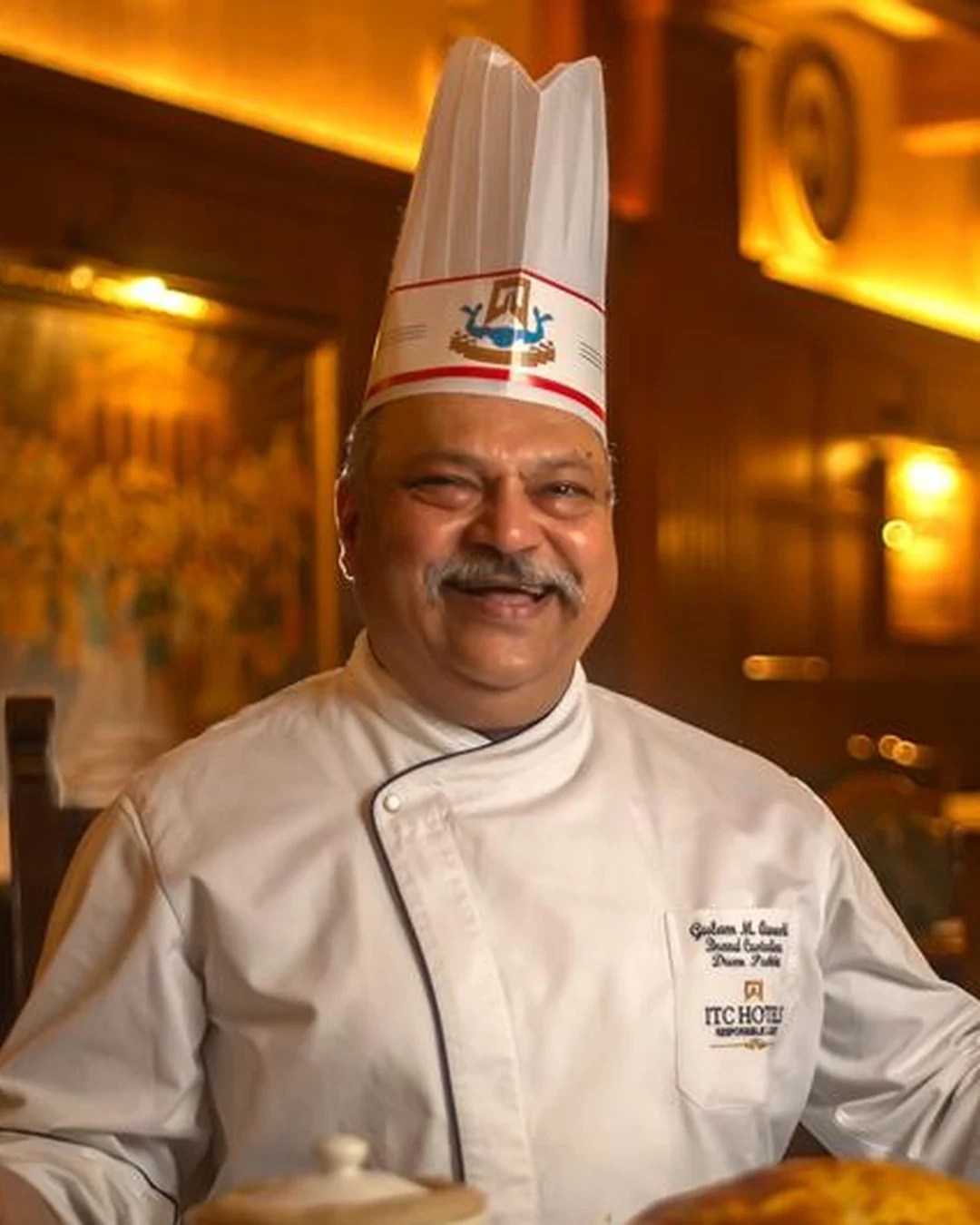
Ghulum Qureshi
Chef
- 01CuisineAwadhi Dum Pukht Fine Dining
- 02CityNew Delhi, India
- 03RecognitionWorld's 50 Best — No. 89
- World's 50 Best · #89 · World's 50 Best Restaurants
- La Liste Top Restaurants: 79pts · 2026
- Opinionated About Dining Top Restaurants in Asia Recommended · 2026
- La Liste Top Restaurants: 83pts · 2025
- World's 50 Best Asia's Best Restaurants #89 · 2025
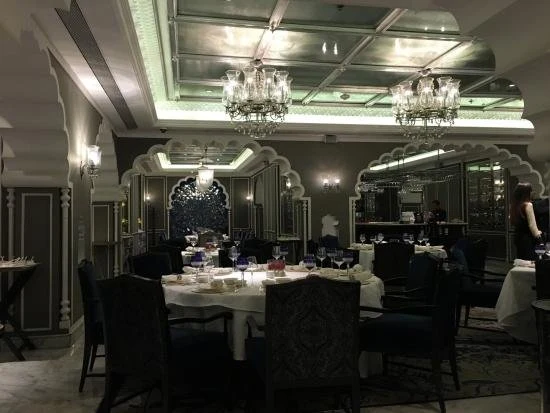
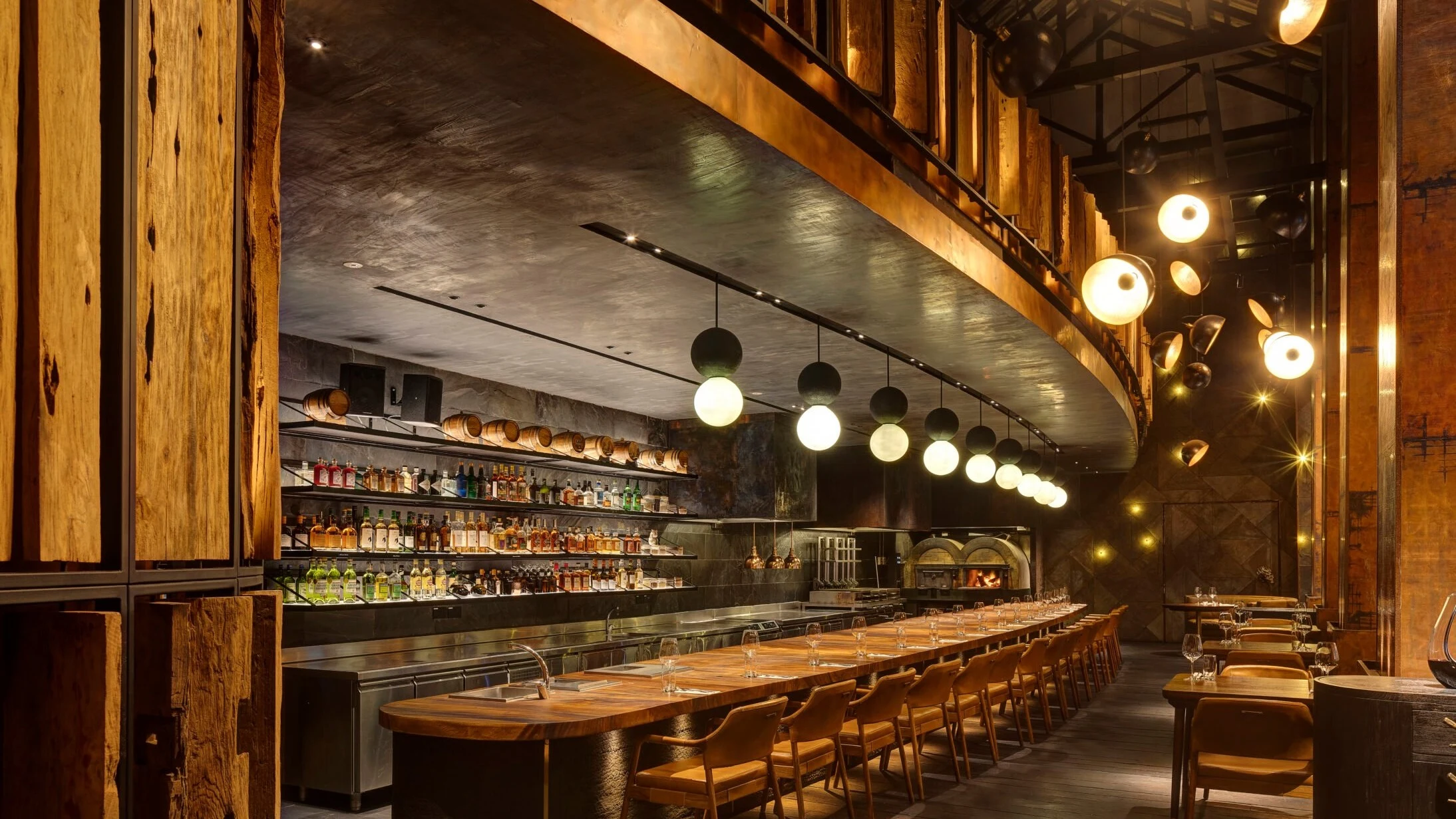
Dum Pukht is an Awadhi fine-dining restaurant at ITC Maurya in New Delhi, ranked No. 89 in Asia's 50 Best Restaurants in 2025. The approach through the hotel lobby transitions into a room where lighting is low, fabrics are layered, and the kitchen's intentions are communicated through a quiet formality.
The Dum Tradition and What It Actually Means
Dum cooking is one of the more misunderstood techniques in Indian culinary history. The name refers to a specific method, not a flavour profile: meat, rice, or vegetables are placed in a handi (a heavy, round-bottomed pot), sealed with a flour or pastry lid, and placed over or under gentle heat so that steam builds inside and the contents cook entirely within their own atmosphere. No evaporation, no direct flame contact, no intervention. The Awadhi courts of Lucknow refined this approach across centuries, partly because the controlled environment allowed elaborate spice compositions to develop without the high-heat volatility of open-flame cooking. The result is a texture and depth that direct-heat methods cannot replicate, and it is this tradition that defines the kitchen here rather than the broader category of tandoor cooking with which many diners conflate it.
The Sunday letter
Find new places through the people who run them.
Our Sunday email brings you the chefs, winemakers and hoteliers behind our newest stories. See a sample before you subscribe.
See a sample of the Sunday emailOne email a week. Unsubscribe from any issue.
The distinction matters editorially because it places the restaurant in a different competitive position from the city's famous clay-oven-forward addresses. Bukhara, also within ITC Maurya, is the city's most recognised expression of frontier-style tandoor cooking, where radiant heat and marinades long enough to be measured in days define the approach. Dum Pukht's argument is elsewhere entirely: it is the Awadhi court as a counter-tradition to open-fire cooking, a method that prioritises restraint and enclosure over char and smoke.
Where Flame Defers to Steam
Understanding the editorial angle here requires separating two distinct Indian cooking philosophies that the tandoor tends to overshadow. Tandoor cooking, as practised in the clay-oven tradition from the Punjab to the northern plains, relies on radiant heat at temperatures that can reach over 480 degrees Celsius. The physics are direct: moisture escapes quickly, surfaces caramelise or char, and the technique rewards bold marinades that can survive that intensity. The results are immediate and demonstrable at the table: a naan that puffs and blisters, a tikka that arrives with visible colour from the fired clay. That cooking is performative in the leading sense, and Delhi's dining culture has embraced it at every price point, from the roadside dhaba to the five-star grill counter.
Dum cooking refuses that logic. The sealed environment means nothing escapes, which is why the spice architecture in Awadhi food is built differently, with more subtlety, more aromatics in the background, and a tendency toward long-cooked lamb and whole spices that might taste raw or harsh under direct heat. The pastry seal on the handi is broken at the table at some establishments, releasing a puff of steam that briefly carries the entire composition in aromatic form before the food itself appears. This is not theatre for its own sake; it is a functional consequence of a technique that has been sealed since the cooking began.
Chef Ghulum Qureshi has been associated with this kitchen through its most recognised period, and the lineage he represents connects the restaurant's food to Lucknowi court traditions rather than to the tandoor schools that dominate the city's premium Indian dining in other quarters. That association acts as a credential here in the same way that a Burgundy apprenticeship functions in a French wine context: it positions the cuisine within a specific regional school and implies a set of inherited values around restraint, spice balance, and long-cooked complexity.
Where Dum Pukht Sits in Delhi's Upper Tier
Delhi's premium Indian dining tier has diversified considerably. Indian Accent operates within a modern interpretation framework, drawing on Indian ingredients and techniques while building plates around a contemporary idiom. Inja explores Indo-Japanese cross-reference. Varq, also at the Taj Mahal hotel, works within an international-meets-Indian format. Dum Pukht's position in this field is as the canonical classical house: not a reinterpretation, not a fusion departure, but the Awadhi tradition rendered at hotel-dining scale with four decades of continuity behind it.
The awards record supports that positioning with measurable data. In 2025, the restaurant appeared at number 89 on the World's 50 Best Asia's Leading Restaurants list. A 4.5 rating across more than 1,200 Google reviews adds a practical layer of validation.
For comparison across India's broader fine-dining register, Avartana in Chennai applies a similarly disciplined single-region logic to South Indian cuisine, while Adaa at Falaknuma Palace in Hyderabad works within Nizami culinary heritage in a comparable palace-dining register. The Indian fine-dining picture extends to Farmlore in Bangalore and, at a different altitude altogether, to internationally positioned outposts like Trèsind Studio in Dubai and Opheem in Birmingham, both of which pursue modern Indian formats with strong awards profiles of their own.
Planning a Visit
The ITC Maurya address on Sardar Patel Marg sits within the Diplomatic Enclave in Chanakyapuri. Advance reservations are essential, and the room suits business entertainment and special-occasion dining.
For those moving through India, Americano in Mumbai, Naar in Kasauli, Baan Thai in Kolkata, and Bomras in Anjuna represent different regional registers worth considering alongside the Delhi itinerary.
Questions
Frequently asked
What recognition does Dum Pukht hold?
Dum Pukht holds a place on the World's 50 Best list at number 89.
Who works at Dum Pukht?
Made By profiles Ghulum Qureshi (Chef) at Dum Pukht.
How expensive is Dum Pukht?
Dum Pukht is listed at a price level of $$$$.
Where is Dum Pukht and what does it serve?
Dum Pukht is in Chanakyapuri, New Delhi, serving Awadhi Dum Pukht Fine Dining.
The field
How it compares
| Place | Awards | Cuisine | Notes |
|---|---|---|---|
| Dum Pukht | World's 50 Best #89 | Awadhi Dum Pukht Fine Dining | Chanakyapuri, $$$$ |
| 8 1/2 Otto e Mezzo Bombana (Hong Kong) | Michelin 3 Stars, World's 50 Best | 3 Michelin-Star Italian Fine Dining | Hong Kong |
| Bukhara | World's 50 Best | North West Frontier Tandoori | New Delhi |
| Burnt Ends | Michelin 1 Star, World's 50 Best | Modern Australian Barbecue | Singapore |
| Fu He Hui | Michelin 2 Stars, World's 50 Best | Modern Seasonal Vegetarian Fine Dining | Shanghai |
| Inja | World's 50 Best | Indian-Japanese Fusion | New Delhi |
| Sazenka | Michelin 3 Stars, World's 50 Best | Modern Chinese Fine Dining | Tokyo |
In residence
Similar places
3 Michelin-Star Italian Fine Dining
8 1/2 Otto e Mezzo Bombana (Hong Kong)
Hong Kong, Hong Kong
★★★ · 50 Best
North West Frontier Tandoori
Bukhara
New Delhi, India
50 Best
Modern Australian Barbecue
Burnt Ends
Singapore, Singapore
★ · 50 Best
Modern Seasonal Vegetarian Fine Dining
Fu He Hui
Shanghai, China
★★ · 50 Best
Indian-Japanese Fusion
Inja
New Delhi, India
50 Best
Modern Chinese Fine Dining
Sazenka
Tokyo, Japan
★★★ · 50 Best
The Sunday letter
Get the next Made By story in your inbox.
We send one email every Sunday morning with the places and people we covered that week.
See a sample of the Sunday emailOne email a week. Unsubscribe from any issue.