El Obrero
- 01CuisineClassic Argentine Parrilla Bodegón
- 02CityBuenos Aires, Argentina
A Dining Room That Refuses to Modernise
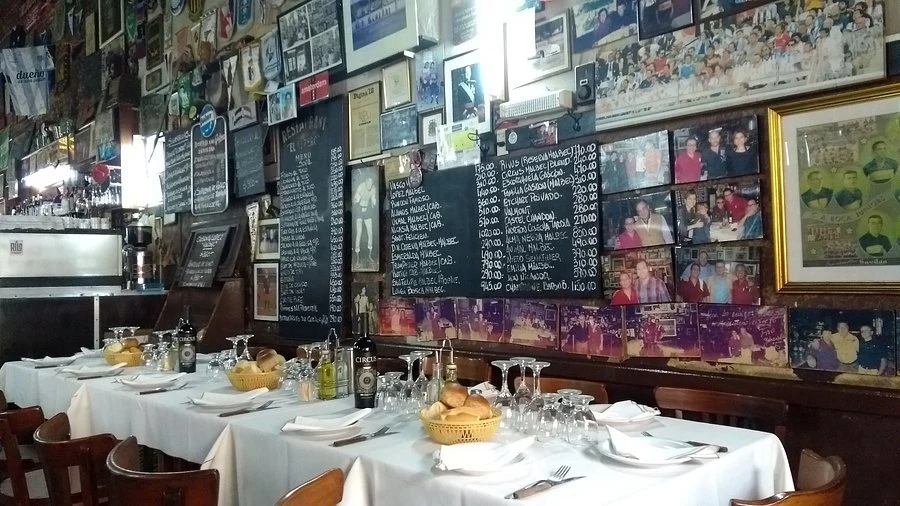
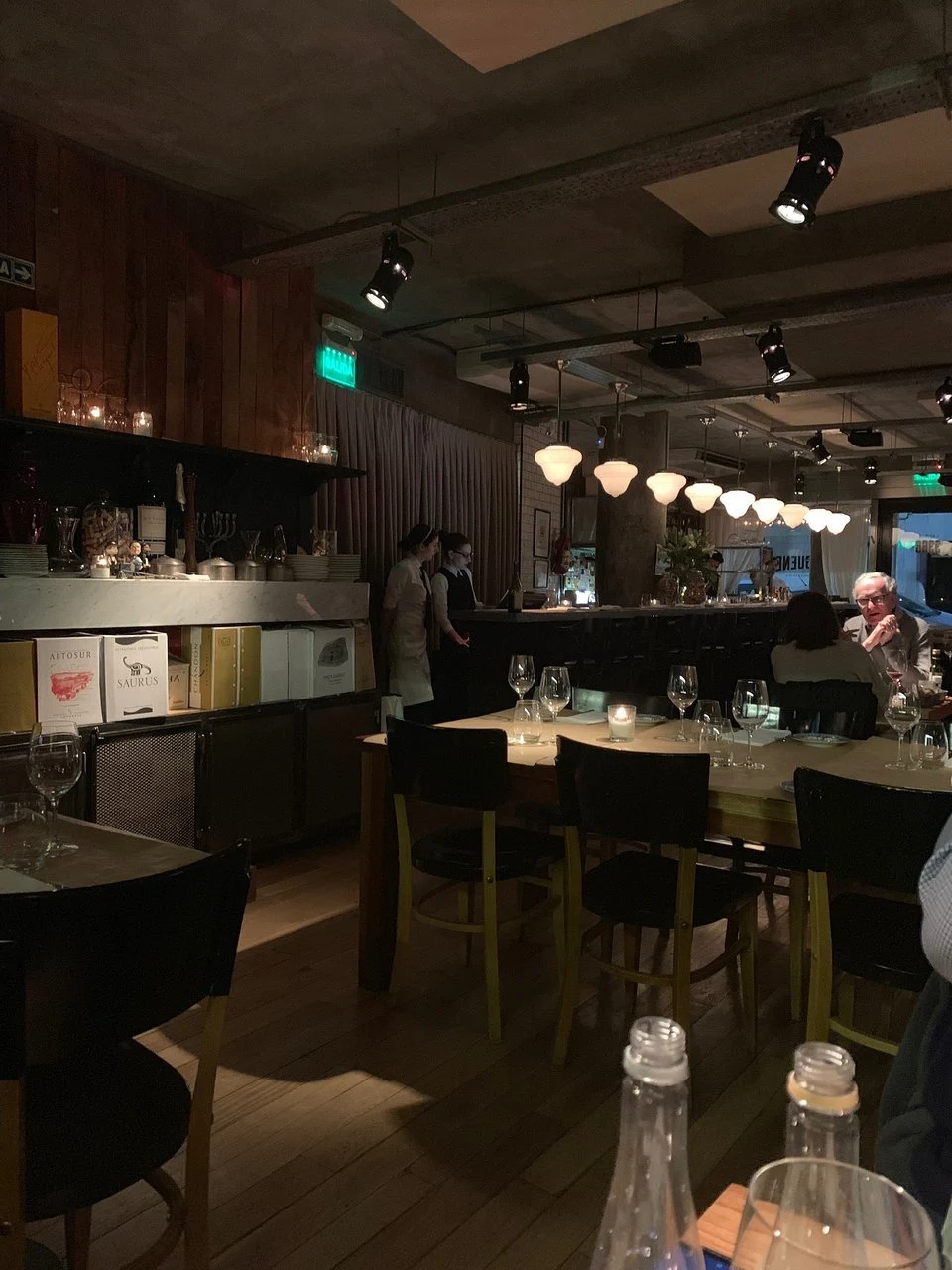
Buenos Aires has spent the last two decades sorting its restaurant stock into competing camps: the tasting-menu modernists of Palermo and Recoleta, the celebrity parrillas stacking reservations months out, and a shrinking number of places that simply have not changed. El Obrero, on Agustín R. Caffarena in La Boca, belongs firmly to the last group. The room reads less as a design choice than as accumulated time: tiled walls, wooden furniture worn smooth by decades of use, photographs and pennants from Boca Juniors on every available surface. This is not a curated aesthetic. It is what happens when a neighbourhood canteen survives long enough to become its own archive.
La Boca itself shapes what dining here feels like. The barrio retains a working-class grain that the tourist strip along Caminito barely conceals. Walk a few blocks from the painted houses and the streets quiet down fast. El Obrero sits in that quieter zone, which is part of why the room has preserved its character while venues closer to the waterfront have renovated toward a more legible hospitality product. The physical container here is the argument: this is what a Buenos Aires bodegón looked like before the design industry discovered the category.
The Sunday letter
Find new places through the people who run them.
Our Sunday email brings you the chefs, winemakers and hoteliers behind our newest stories. See a sample before you subscribe.
See a sample of the Sunday emailOne email a week. Unsubscribe from any issue.
The Bodegón Tradition and Where El Obrero Sits Within It
The bodegón as a format has a specific logic in Buenos Aires. These are canteen-style establishments, typically family-run, serving grilled meats and pasta at prices that reflect the neighbourhood rather than the hospitality market. They predate the current fine-dining infrastructure by generations. Most of the original stock has either closed, been absorbed into higher price brackets, or been reimagined as nostalgic concepts for a wealthier clientele. El Obrero is one of the few that holds its original position without performing it.
Compare it to the steakhouse tier where Don Julio operates at the top of the market with a wine list running to thousands of references, or the modernist bracket occupied by Aramburu and Trescha, and El Obrero is clearly operating at a different register entirely. It is closer in spirit to Anafe or neighbourhood-anchored spots like El Preferido de Palermo, but with a deeper claim to an unmodified tradition.
What the Space Communicates
The seating arrangement at El Obrero follows the logic of the bodegón: shared tables are the norm during busy service, and the room fills quickly with a mix of local regulars, workers from the port district, and visitors who have done enough research to find Caffarena 64 rather than defaulting to the tourist circuit. The football memorabilia is not decorative in the way that a theme restaurant uses it. Boca Juniors' stadium, La Bombonera, is a short walk away, and the club has been the neighbourhood's primary cultural institution for over a century. The relationship between the team and this dining room is geographic and generational, not branded.
That attention has not shifted the format. The chairs are still the same chairs. The menu is still handwritten or printed on single sheets. This kind of institutional inertia is rarer than it sounds: most places with a similar reputation in comparable cities have eventually softened their edges toward an easier hospitality product. This one has not.
The Grill and the Menu Register
Traditional parrilla cooking is the foundation. In a city where Crizia positions Argentine produce within a contemporary frame, El Obrero stays close to the original template: beef cuts cooked over open fire, offal options that remain standard rather than specialist, and pasta that reflects the Italian immigration wave that shaped Buenos Aires's food culture through the late nineteenth and early twentieth centuries. The pasta and the grill coexisting on the same menu is a Buenos Aires signature, and the bodegón tradition is where that combination is most intact.
The wine offer follows the same logic. Argentina's premium wine story has moved toward high-altitude single-vineyard bottlings from Mendoza, the kind of program you find at places like Azafrán in Mendoza or lodge properties such as Cavas Wine Lodge and Entre Cielos. El Obrero's list is shorter and more practical: house wine by the jug is common in this format, and the selection reflects the neighbourhood's price expectations rather than the collector market.
Planning a Visit
El Obrero is at Agustín R. Caffarena 64 in La Boca, which requires a deliberate trip rather than a casual walk-by. The neighbourhood is navigable by taxi or rideshare from central Buenos Aires, and the venue's location away from the Caminito tourist zone means arriving with an address rather than relying on foot traffic. Tables at busy periods fill quickly, so arriving early or during off-peak hours is the practical approach.
For travellers building a wider Argentina itinerary, the range of experiences available extends well beyond Buenos Aires. Properties like Awasi Iguazu and estancia dining at La Bamba de Areco represent entirely different registers of Argentine hospitality. Restaurants like Los Talas del Entrerriano or Las Balsas in Villa La Angostura show how regional cooking plays out beyond the capital. El Obrero sits near one end of that spectrum: the end where price, décor, and format have stayed closest to the original template.
Questions
Frequently asked
How expensive is El Obrero?
El Obrero is listed at a price level of $$.
Where is El Obrero and what does it serve?
El Obrero is in La Boca, Buenos Aires, serving Classic Argentine Parrilla Bodegón.
The field
How it compares
| Place | Cuisine | Notes | Awards |
|---|---|---|---|
| El Obrero | Classic Argentine Parrilla Bodegón | La Boca, $$ | · |
| Aramburu | Modern Argentine Haute Cuisine | Buenos Aires | Michelin 2 Stars, World's 50 Best |
| Crizia | Contemporary Argentine Seafood | Buenos Aires | Michelin 1 Star, World's 50 Best |
| Don Julio | Argentinian Parrilla Steakhouse | Buenos Aires | Michelin 1 Star, World's 50 Best |
| Elena | Contemporary Argentinian Steakhouse | Buenos Aires | · |
| Mishiguene | Modern Jewish Immigrant Cuisine | Buenos Aires | World's 50 Best |
| Trescha | Modern Argentine Fine Dining | Buenos Aires | Michelin 1 Star, World's 50 Best |
Similar places
Modern Argentine Haute Cuisine
Aramburu
Buenos Aires, Argentina
★★ · 50 Best
Contemporary Argentine Seafood
Crizia
Buenos Aires, Argentina
★ · 50 Best
Argentinian Parrilla Steakhouse
Don Julio
Buenos Aires, Argentina
★ · 50 Best
Contemporary Argentinian Steakhouse
Elena
Buenos Aires, Argentina
Modern Jewish Immigrant Cuisine
Mishiguene
Buenos Aires, Argentina
50 Best
Modern Argentine Fine Dining
Trescha
Buenos Aires, Argentina
★ · 50 Best

The Sunday letter
Get the next Made By story in your inbox.
We send one email every Sunday morning with the places and people we covered that week.
See a sample of the Sunday emailOne email a week. Unsubscribe from any issue.