Ivy's Nyonya Cuisine
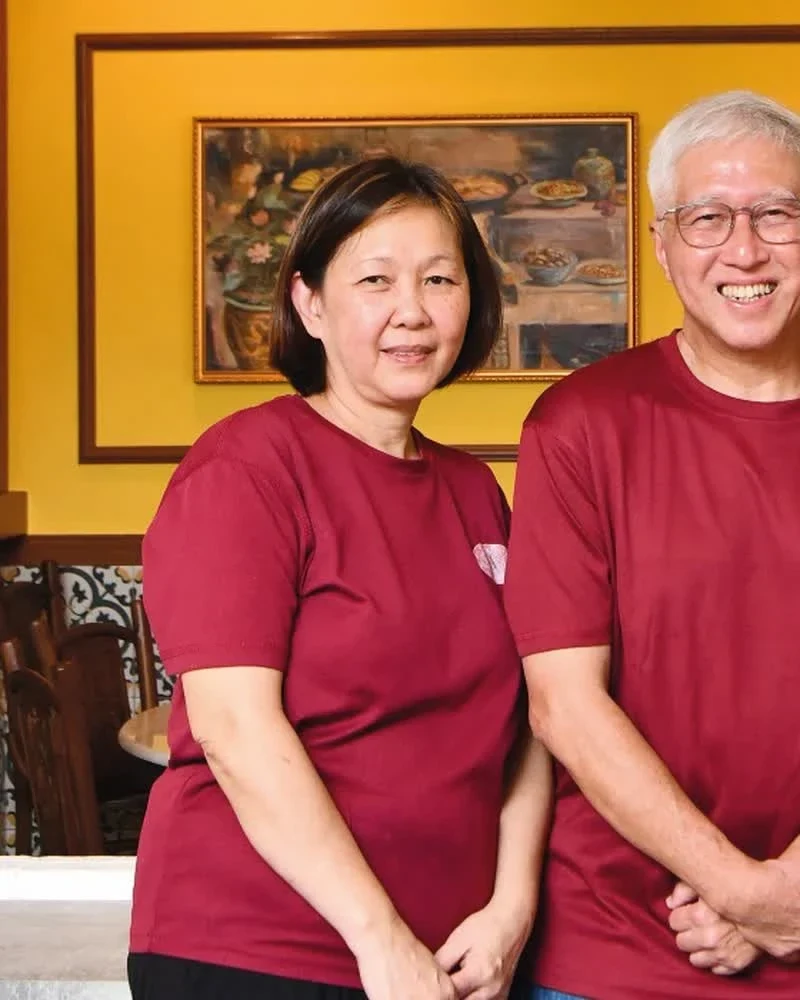
In Residence
Ivy Tan
Chef
- 01CuisineAuthentic Peranakan Nyonya Cuisine
- 02CityGeorge Town, Malaysia
- Michelin Bib Gourmand · Michelin Guide
- Michelin Bib Gourmand · 2026
- Michelin Bib Gourmand · 2025
- Michelin Bib Gourmand · 2024
Where George Town's Peranakan Table Holds Its Ground
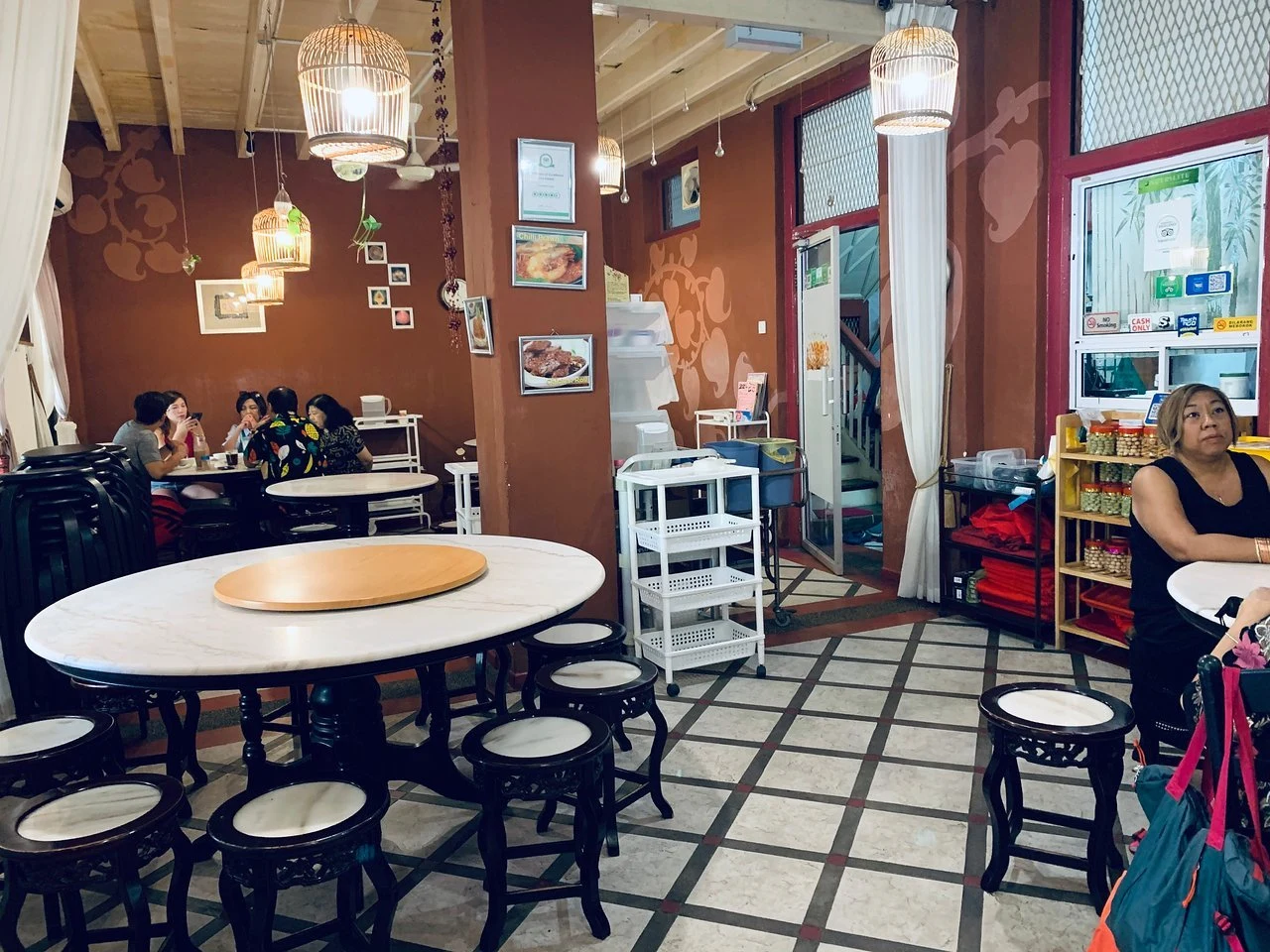
Ivy's Nyonya Cuisine is a restaurant in George Town, recognised with three awards and priced around $18 per person. Jalan Kedah sits a few minutes' walk from the heritage shophouse corridor most visitors photograph but rarely leave. The street has the lived-in quality of a working neighbourhood, provision shops, parked motorcycles, residents who treat the block as their own. It is exactly the kind of address where Peranakan cooking at this level tends to survive longest, away from the footfall premiums that push menus toward safer, blander versions of themselves. When Ivy's Nyonya Cuisine relocated in 2024 to a larger room along this stretch, the move felt consistent with that logic: more space, no concessions on the food.
George Town's position in the Peranakan culinary conversation is distinct from Singapore's. Where the city-state has developed a tier of restaurants treating Nyonya cooking as fine-dining material, see Candlenut, Pangium, or Indocafé for that register, Penang has largely kept the tradition inside smaller, family-run formats where the recipes are personal property and the room is secondary. Ivy's sits squarely in that tradition, but with the Michelin Bib Gourmand recognition to confirm what regulars have long known: the cooking here clears a standard that has nothing to do with tablecloths or plating architecture.
The Sunday letter
Find new places through the people who run them.
Our Sunday email brings you the chefs, winemakers and hoteliers behind our newest stories. See a sample before you subscribe.
See a sample of the Sunday emailOne email a week. Unsubscribe from any issue.
The Peranakan Technique Inside a Simple Room
Nyonya cooking, the cuisine of Straits Chinese communities whose foodways blended Southern Chinese domestic techniques with Malay spice vocabulary, is among the most labour-intensive of Southeast Asia's hybrid traditions. The rempah, the hand-pounded spice paste that underlies most dishes, requires real time and knowledge to build correctly. Commercial shortcuts show immediately in texture and in the balance between heat, aromatics, and fat. What distinguishes the serious operators in George Town from those serving a tourist approximation is precisely this: whether the base work is done by hand and by memory, or by formula and convenience.
Kapitan chicken curry, one of the dishes the sharing set menus here are built around, is a useful measure. The Peranakan version diverges from both Malay and Indian curry traditions in its use of coconut milk for body rather than soupy volume, and in a rempah that typically incorporates candlenut, galangal, and dried chillies in a ratio that produces intensity without direct heat. Getting that balance right over fifteen-plus years of service, across a change of venue, is a form of consistency that Michelin's Bib Gourmand category recognises serious cooking at a price point that keeps the dish within reach of diners seeking value. The $$ pricing holds here, placing Ivy's in the same accessible bracket as Auntie Gaik Lean's Old School Eatery, which holds a Michelin star and occupies a different but overlapping position in George Town's Peranakan comparable set.
Joo Hoo Char and the Logic of the Sharing Format
The other anchor dish on the set menus, Joo Hoo Char, represents a different dimension of Nyonya technique. The dish, spicy stir-fried mixed vegetables with dried cuttlefish in chilli paste, operates as a texture exercise as much as a flavour one. The dried cuttlefish adds a maritime chew that would read as difficult in the wrong hands; here it integrates into the vegetable base and the paste's heat as intended, the kind of outcome that comes from cooking the same dish repeatedly over years rather than from technical improvisation.
The sharing set menu format is well-suited to Peranakan cooking, which was always designed as a table-wide proposition rather than an individual plate exercise. Ordering through the set structure here makes sense practically and conceptually: it mirrors how the food was meant to be eaten, and it ensures the kitchen sends out dishes in a sequence that reflects what works together. For first-time visitors to this style of cooking, it removes the decision problem that comes with an unfamiliar menu. For regulars, it delivers the dishes that have earned the restaurant's following without negotiation.
The Family-Run Format as a Competitive Advantage
George Town has a cluster of Peranakan addresses worth mapping against each other. Bibik's Kitchen and Richard Rivalee represent different points on the formality and format spectrum, while Ceki approaches the cuisine from a more contemporary angle. Flower Mulan covers different culinary territory but shares the neighbourhood's working-restaurant register. What sets Ivy's apart within this set is not the size of the room or the ambition of the presentation, but the tenure and the structure of its operation. Over fifteen years, with husband-and-wife roles divided between kitchen and floor, the restaurant has developed the kind of institutional memory that is genuinely difficult to replicate. The recipes have not changed between the old venue and the new one, which is worth noting in a category where expansion and change of address frequently signal a dilution of what made a place worth visiting in the first place.
Across the wider regional picture, the contrast with Singapore's Peranakan scene is instructive. 328 Katong Laksa and Chilli Padi in Joo Chiat occupy a more casual, hawker-adjacent register in Singapore, while Candlenut and Pangium operate at fine-dining prices. George Town's version of this spectrum tends to sit in the middle: family-run, mid-price, serious about the food. Ivy's is the clearest current expression of that positioning. For a broader regional comparison across Malaysia, Bee See Heong in Seberang Perai and The Planters at The Danna in Langkawi show how traditional and contemporary registers coexist across the country, while Dewakan in Kuala Lumpur demonstrates how far indigenous Malaysian ingredients have travelled in the fine-dining context.
Planning Your Visit
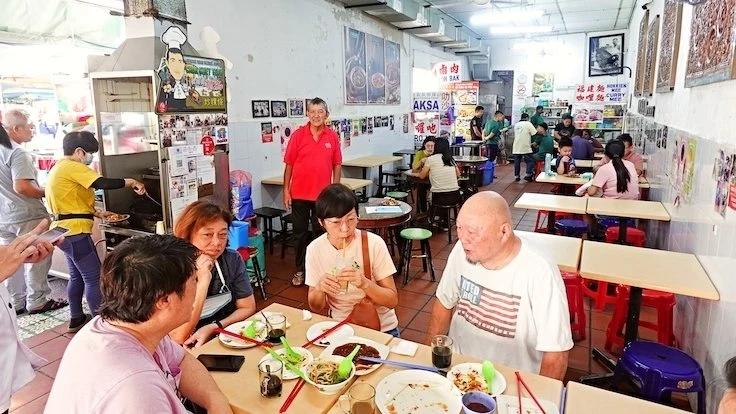
Ivy's Nyonya Cuisine is at 100 to 104 Jalan Kedah in George Town, a walkable distance from the UNESCO heritage zone but sufficiently removed from the tourist-heavy stretch of Armenian Street to feel like a neighbourhood choice rather than a sightseeing stop. The 2024 move to a larger room has improved capacity, but reservations remain recommended, particularly for evenings and weekends. The $$ price point makes it accessible without qualification; the sharing set menus are the practical route in, built around the kitchen's strongest dishes.
Questions
Frequently asked
What recognition does Ivy's Nyonya Cuisine hold?
Ivy's Nyonya Cuisine holds a Michelin Bib Gourmand.
Who works at Ivy's Nyonya Cuisine?
Made By profiles Ivy Tan (Chef) at Ivy's Nyonya Cuisine.
How expensive is Ivy's Nyonya Cuisine?
Ivy's Nyonya Cuisine is listed at a price level of $$.
Where is Ivy's Nyonya Cuisine and what does it serve?
Ivy's Nyonya Cuisine is in George Town, George Town, serving Authentic Peranakan Nyonya Cuisine.
The field
How it compares
| Place | Cuisine | Notes | Awards |
|---|---|---|---|
| Ivy's Nyonya Cuisine | Authentic Peranakan Nyonya Cuisine | George Town, $$ | · |
| Au Jardin | Modern European with Local Accents | George Town | Michelin 1 Star, World's 50 Best |
| Firewood | Modern Grill Steakhouse | George Town | · |
| Gēn | Modern Malaysian Tasting Menu | George Town | World's 50 Best |
| Lum Lai Duck Meat Koay Teow Th'ng | Teochew Duck Meat Koay Teow Th'ng | George Town | · |
| Penang Road Famous Jin Kor Char Kuey Teow | Teochew Char Kuey Teow | George Town | · |
| Sister Yao’s Char Koay Kak | Teochew Char Koay Kak | George Town | · |
In residence
Similar places
Modern European with Local Accents
Au Jardin
George Town, Malaysia
★ · 50 Best
Modern Grill Steakhouse
Firewood
George Town, Malaysia
Modern Malaysian Tasting Menu
Gēn
George Town, Malaysia
50 Best
Teochew Duck Meat Koay Teow Th'ng
Lum Lai Duck Meat Koay Teow Th'ng
George Town, Malaysia
Teochew Char Kuey Teow
Penang Road Famous Jin Kor Char Kuey Teow
George Town, Malaysia
Teochew Char Koay Kak
Sister Yao’s Char Koay Kak
George Town, Malaysia
The Sunday letter
Get the next Made By story in your inbox.
We send one email every Sunday morning with the places and people we covered that week.
See a sample of the Sunday emailOne email a week. Unsubscribe from any issue.