Made ByDistillery Tasting Room
Kanellopoulos Distillery
- 01CityPatras, Greece
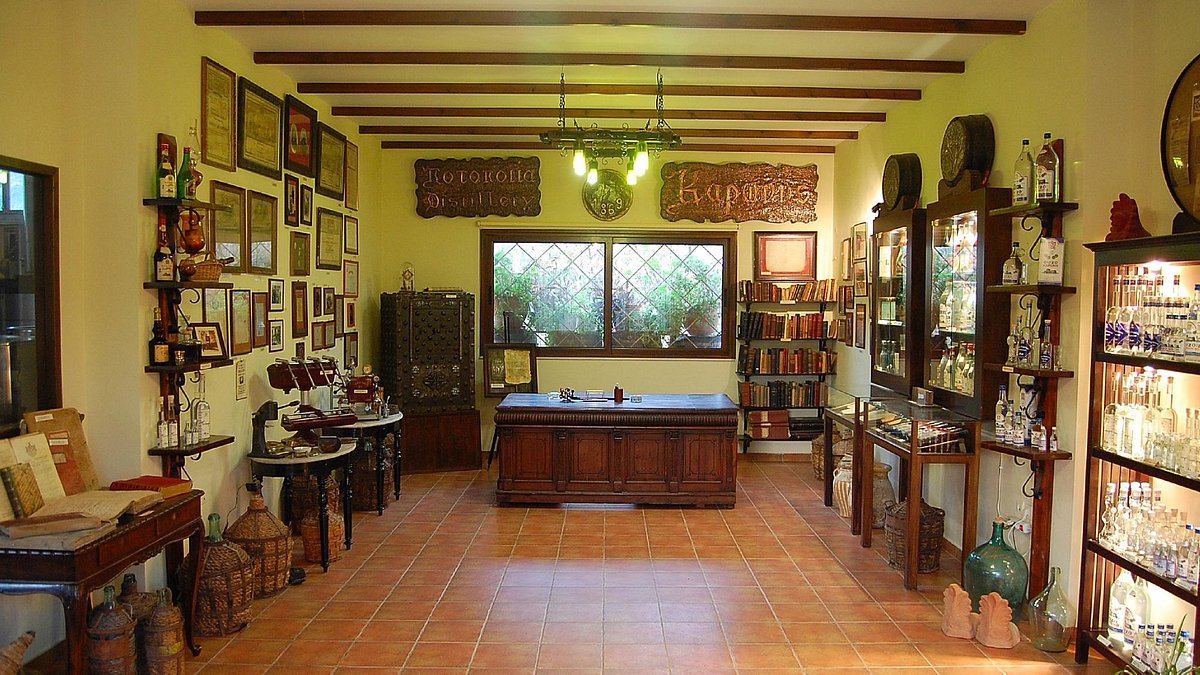
Kanellopoulos Distillery in Patras holds a Pearl 1 Star Prestige (2025), placing it among a small tier of recognised producers in a city that has shaped Greek spirits and wine culture for generations. Located on Glafkou 102 in central Patras, it operates within a distilling tradition that stretches back through the region's tsipouro and tentoura heritage, offering visitors a grounded encounter with Peloponnesian craft production.
At a glance
- Hours
- Mon: 9 AM–5 PM; Tue: 9 AM–5 PM; Wed: 9 AM–5 PM; Thu: 9 AM–5 PM; Fri: 9 AM–5 PM; Sat: Closed; Sun: Closed
- Rating
- 5.0 (31)
Patras and the Spirits Tradition That Shaped It
The port city of Patras has always been a place where things pass through and leave a mark.Trade routes, Venetian occupation, the carnival tradition that still draws crowds each winter, all of it has contributed to a city with a distinct relationship to fermentation, distillation, and the rituals around both.The regional spirits culture here is not a recent boutique phenomenon.It runs through the fabric of the place, from the cinnamon-forward tentoura liqueur that distinguishes Patras from every other Greek city, to the grape pomace tsipouro distilled across the Peloponnese.Against that backdrop, Kanellopoulos Distillery on Glafkou 102 occupies a position that reflects the seriousness of the local tradition rather than simply referencing it.
The address sits in central Patras, a city where the distinction between producer and neighbourhood is often thin.The urban distilleries and small-scale producers here are not separated from daily life by industrial zones or rural distance.They exist in the same streets where people eat, drink, and move through their days.That proximity shapes the character of what gets made, and how it gets encountered.
What the Pearl 1 Star Prestige Recognition Signals
Kanellopoulos Distillery received a 5.0 Google rating based on 31 reviews in 2025.In the context of Patras specifically, where several distilleries operate across a range of formats and ambitions, this kind of recognition functions as a differentiator.The city has a cluster of active producers, each with distinct approaches to the region's inherited spirit forms.Against that field, a 2025 prestige rating indicates that Kanellopoulos has reached a production and presentation standard that separates it from the broader pool.
For visitors approaching Patras as a spirits destination, that rating is a useful navigational tool.
The Physical Approach: Glafkou Street and What It Tells You
Arriving at Glafkou 102 places you in a part of Patras that carries the textures of a working city rather than a curated tourist zone.The streets around the central port area have a functional density to them, commerce, residences, and production spaces sharing the same blocks.For a distillery, this kind of setting is not incidental.The relationship between a spirit and its place of origin is shaped partly by environment, and an urban distillery in a port city with a long trading history is making something in a specific context, not a vacuum.
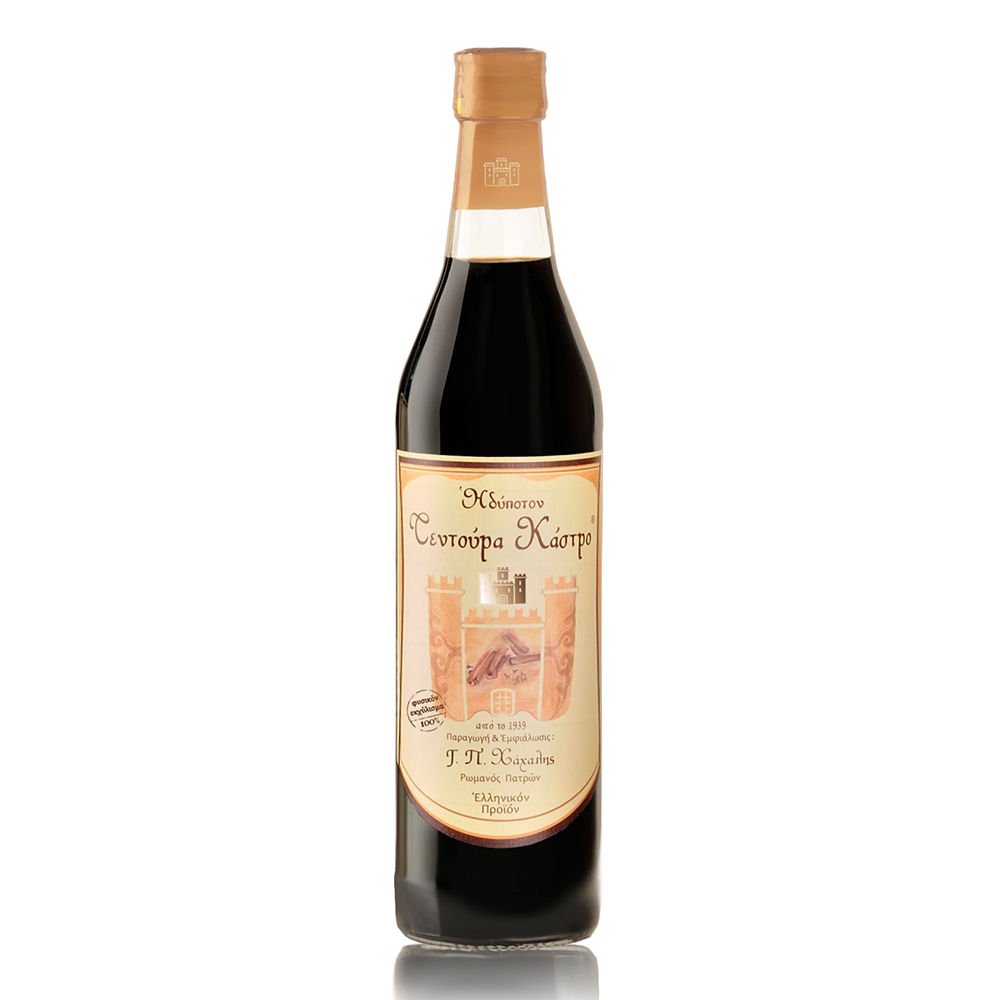
The tentoura tradition in particular is inseparable from Patras.This cinnamon-based liqueur, made from grape spirit and spices, has been produced here for centuries and remains so specific to the city that it rarely appears with the same character anywhere else in Greece.Any distillery operating out of Patras inherits that association, whether it makes tentoura directly or works in adjacent spirit categories.The question of how a producer relates to that inheritance is part of what makes visiting Patras distilleries worthwhile.
Patras in the Wider Greek Spirits and Wine Map
Patras sits within a region that functions as one of Greece's more complex production zones.The Peloponnese stretches south from the city through wine country with substantial range: Nemea to the east, where Agiorgitiko dominates; Mantinia further south, where Moschofilero produces aromatic whites; and the coastal zones where grape-based spirits have been made for as long as wine itself.The relationship between wine production and distillation in this part of Greece is structural rather than coincidental.Pomace distillation follows harvest; excess fruit becomes tsipouro; local spice traditions produce liqueurs.It is a connected ecosystem.
Beyond Patras, that ecosystem extends across Greek wine regions with significant depth. Alpha Estate in Amyntaio represents the northern Macedonian expression of Greek viticulture, while producers like Anatolikos Vineyards in Xanthi and Akrathos Newlands Winery in Panagia extend the map into Thrace and Halkidiki respectively.For visitors building a broader Greek wine and spirits itinerary, Patras functions as the Peloponnesian anchor point within that wider geography.
Within Patras itself, the wine side of the picture is covered by established names. Achaia Clauss remains the city's most historically significant wine producer, with a winery and visitor operation that has shaped regional wine culture since the nineteenth century. Antonopoulos Vineyards represents a more recent generation of quality-focused production in the same area.The distillery scene, including Kanellopoulos, runs parallel to that wine culture rather than in competition with it.
Planning Your Visit
For visitors whose interests extend beyond Patras, the surrounding region rewards day trips. Abraam's Vineyards in Komninades lies within the broader Peloponnesian wine zone, and Acra Winery in Nemea is reachable for those willing to drive east toward the Nemea PDO.
Direct visits typically work best when arranged in advance through local inquiry or through accommodation contacts in the city centre.The Glafkou 102 address provides a fixed reference point for those approaching on foot from the port area or the central plateia.
Further Afield: Greek and International Producers in Context
For readers building a broader context around Peloponnesian and Greek production, the EP Club database covers producers across a wide geographic range. Aoton Winery in Peania operates near Athens in Attica, while Aiolos Winery in Palaio Faliro represents coastal Attica production.For those with interest in comparing Greek craft production against international benchmarks, properties such as Aberlour in Aberlour and Accendo Cellars in St. Helena provide reference points in Scotch whisky and Napa Valley wine respectively, illustrating how different traditions handle the relationship between place, production method, and recognition.
Kanellopoulos Distillery's recognition places it in a recognisable tier within a city whose distilling history runs considerably deeper than any single producer's story.That is the appropriate frame for understanding what a visit here involves: not an encounter with a novelty, but contact with a tradition that has been refining itself, in these streets, for a very long time.
Frequently asked
Where do I go for Kanellopoulos Distillery?
Kanellopoulos Distillery is located at Glafkou 102, Patra 263 32, Greece, Patras.
Is Kanellopoulos Distillery award-winning?
Kanellopoulos Distillery has received recognition including: Pearl 1 Star Prestige (2025).
What wines should I try at Kanellopoulos Distillery?
Kanellopoulos is a spirits producer, not a winery, so wine is not the focus here. Given its location in Patras, the regional context points toward tentoura, the cinnamon-inflected grape spirit historically associated with the city. The distillery's Pearl 1 Star Prestige recognition in 2025 suggests a production standard worth exploring on site, where staff can direct you to current offerings.
What is Kanellopoulos Distillery known for?
Kanellopoulos Distillery is a spirits producer based at Glafkou 102 in Patras, a port city with a long association with tentoura and other grape-based spirits rooted in Venetian-era trade. In 2025, it received a Pearl 1 Star Prestige rating, placing it within a curated tier of recognised Greek producers. That recognition positions it alongside producers noted for quality and regional authenticity rather than industrial scale.
What's the best way to book Kanellopoulos Distillery?
No website or phone number is currently listed for the distillery. The address is Glafkou 102, Patras 263 32, which places it in a working district of the city rather than a tourist-facing zone. Arriving in person or making contact through local hospitality networks in Patras is the most direct route to arranging a visit.
Address
Glafkou 102, Patra 263 32, Greece
How it compares
Kanellopoulos Distillery
- Notes
- Winery
- Price
- —
Spyropoulos Distillery
- Notes
- Winery
- Price
- —
Loukatos Distillery
- Notes
- Patras, Mavrodaphne
- Price
- $$
Aromas Distillery
- Notes
- Winery
- Price
- —
Pilavas Distillery
- Notes
- Akteo, Patras
- Price
- $$
Antonopoulos Vineyards
- Notes
- Vasiliko, Achaia, Roditis, Malagousia
- Price
- $$