Kategna Restaurant
- 01CuisineTraditional Ethiopian
- 02CityAddis Ababa, Ethiopia
From the people index
Recommended by
One trusted voice points here.

Where Addis Ababa Eats Without Apology
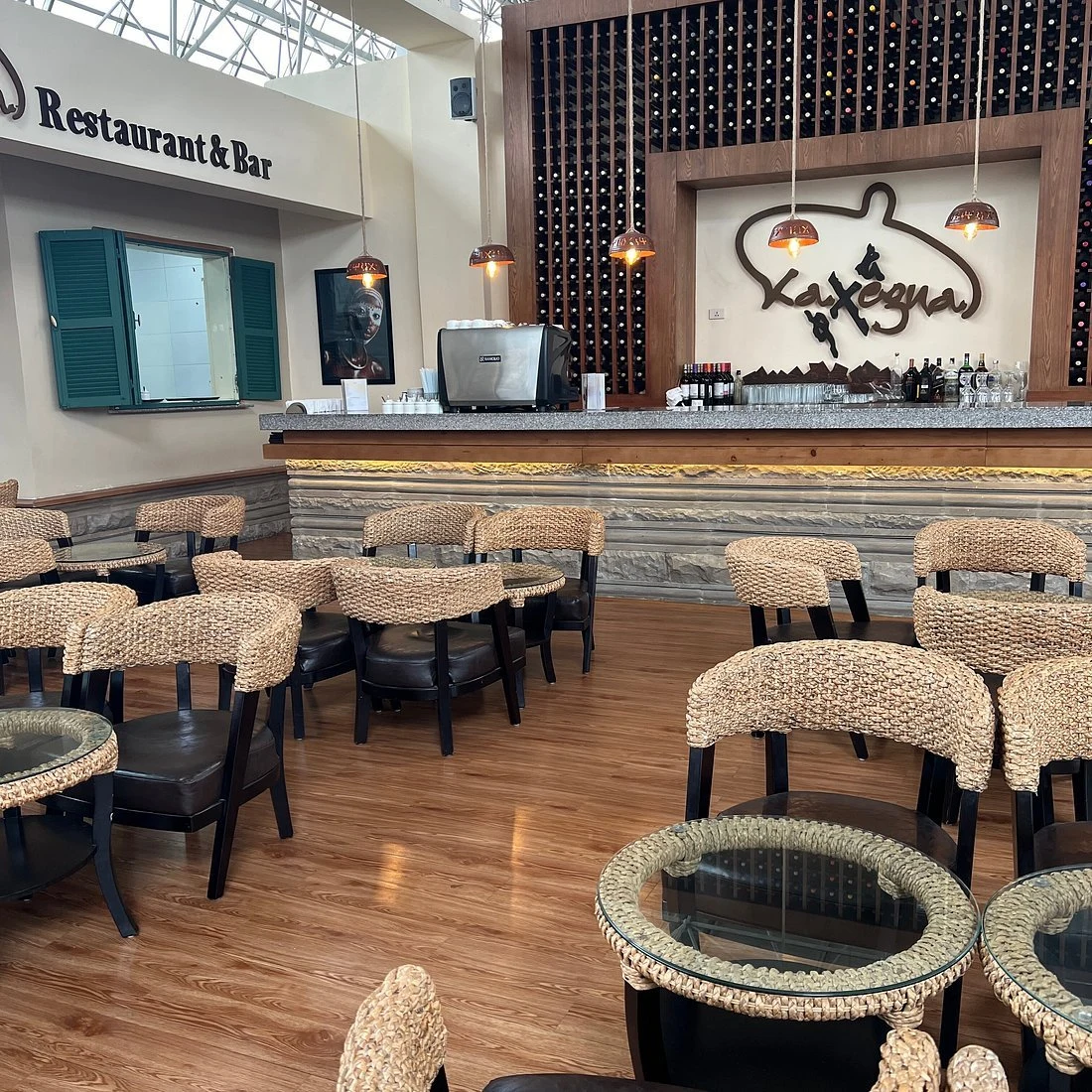
Cameroon Street sits in a part of Addis Ababa where the city's appetite for its own food asserts itself without deference to imported formats. The restaurants along this stretch do not position themselves as introductions to Ethiopian cuisine for the uninitiated; they position themselves as the thing itself. Kategna Restaurant operates in that register. Walking toward it, the cues are familiar to anyone who has spent time in Ethiopian dining rooms: the low murmur of Amharic conversation, the particular warmth that comes from a kitchen working injera at volume, and the faint sourness that signals fermentation underway. These are not ambient effects engineered for effect. They are the byproduct of a kitchen doing what Ethiopian kitchens do.
The Ingredient Logic Behind Ethiopian Highland Cooking
To understand what Kategna serves, it helps to understand what Ethiopian cooking demands at the sourcing level. The cuisine is built around a handful of ingredients that have no meaningful substitutes: teff, the ancient grain that forms the base of injera; berbere, the spice blend whose complexity varies by region and household; niter kibbeh, the spiced clarified butter that carries flavor through most of the major dishes; and a rotating cast of legumes and vegetables that form the backbone of fasting cuisine. Ethiopia's Orthodox Christian calendar mandates fasting on over 200 days per year, which means plant-based cooking is not a contemporary wellness choice here, it is a centuries-old culinary tradition with its own sophisticated internal logic.
Teff itself is worth pausing on. The grain is native to the Ethiopian highlands and has been cultivated there for millennia. It ferments into injera's characteristic sour, spongy texture, which functions simultaneously as plate, utensil, and bread. The quality of teff, and the duration and conditions of fermentation, determine the quality of the injera, and in a cuisine where injera underpins every meal, that sourcing decision cascades through the entire dining experience. Restaurants in Addis Ababa that take this seriously source carefully and ferment on-site; those that do not show it in the flatness of the bread's flavor.
Berbere, equally, is not a single fixed product. The spice blend draws on chili, fenugreek, coriander, rue, ajwain, and several other components whose proportions shift by maker and region. In Gondar, the blend tends toward earthier notes; in Addis, versions can run hotter. The restaurant scene in the capital has grown to include establishments across a wide range of seriousness about these distinctions, from kitchens that grind and blend their own to those working from commercial product. The gap in the final dish is detectable. For context on how similar ingredient-sourcing commitments play out at the highest level of global fine dining, it is instructive to look at places like Atelier Moessmer Norbert Niederkofler in Brunico or Dal Pescatore in Runate, where the integrity of regional ingredients is treated as the primary editorial statement. The principle is the same even when the cuisine and context differ entirely.
Kategna in Context: The Addis Ethiopian Restaurant Scene
Addis Ababa's Ethiopian restaurant sector is not monolithic. It divides roughly into three tiers: cultural performance venues oriented toward tourist trade, neighborhood kitchens serving working Addis at low price points, and a middle-to-upper tier of addresses that serve the city's professional class and a more engaged international visitor. Yod Abyssinia and 2000 Cultural Ethiopian Restaurant occupy more explicitly experiential positions, with traditional music and dance woven into the offering. The Kitchen and The Oriental tilt toward international formats. Kategna sits differently: its identity is grounded in the food rather than the performance surrounding it, which places it in a comparable set defined by cooking seriousness rather than setting spectacle.
That positioning matters for how to read it. The Ethiopian restaurant scene globally, from London to Washington D.C. to Nairobi, tends to be evaluated by diaspora communities according to sourcing fidelity: does the injera taste the way it should, does the wot carry the right layered depth, does the tibs arrive with the char and spice balance that signals care. In Addis itself, the standard is set by what the city's own population demands, which is a stricter measure than most tourist-facing international versions. A restaurant like Kategna answers to that local standard, which is a different accountability than serving as an introduction to the cuisine.
Beyond the capital, the regional diversity of Ethiopian cooking is worth noting for anyone whose frame of reference is limited to Addis. Four Sisters Restaurant in Gondar represents the cooking of the northern highlands, where beef preparation techniques and spice profiles diverge noticeably from the Addis norm. Tasty Cafe in Harar reflects the eastern city's distinct culinary character, shaped by Somali, Oromo, and Arab trade influences. These regional variations make Ethiopia one of the more internally diverse food cultures on the continent, and Addis-based restaurants represent just one node in that wider system.
Planning a Visit to Kategna
Kategna Restaurant is located on Cameroon Street in Addis Ababa. Given the volume of travelers now moving through the city for both business and tourism, popular restaurants in this tier of the market can fill quickly on weekend evenings. Arriving earlier in the evening or on weekday nights generally provides more flexibility. Current booking methods, hours, and pricing are best confirmed directly at the venue or through our full Addis Ababa restaurants guide, which covers the broader dining picture across the city's neighborhoods.
Ethiopian dining has a communal logic that shapes how meals unfold. Dishes arrive together on a single large injera-lined platter rather than sequentially, and eating with the right hand from a shared surface is standard practice. Visitors unfamiliar with this format should know it is not an affectation but the functional architecture of the cuisine. At restaurants that take the tradition seriously, the platter sequence and portion construction are considered as carefully as course structure at a tasting-menu restaurant, an observation that holds whether the setting is Addis Ababa or a kitchen like Atomix in New York City, where sequencing and presentation carry equivalent weight in a different culinary tradition.
The Sunday letter
Get new places like Kategna Restaurant every Sunday.
One email a week with the restaurants, bars and hotels we have just written up, and the people who run them.
One email a week. Unsubscribe from any issue.
Questions
Frequently asked
How expensive is Kategna Restaurant?
Kategna Restaurant is listed at a price level of $$.
Where is Kategna Restaurant and what does it serve?
Kategna Restaurant is in Bole Medhanialem, Addis Ababa, serving Traditional Ethiopian.
The field
How it compares
| Place | Cuisine | Notes | Awards |
|---|---|---|---|
| Kategna Restaurant | Traditional Ethiopian | Bole Medhanialem, $$ | · |
| Addison | Modern California Fusion Fine Dining | San Diego | Michelin 3 Stars, World's 50 Best |
| Den | Modern Japanese Kaiseki | Tokyo | Michelin 2 Stars, World's 50 Best |
| Gabriel Kreuther | Modern Alsatian-French Fine Dining | New York City | Michelin 2 Stars |
| Le Taillevent | Classic and Modern French Fine Dining | Paris | Michelin 2 Stars, World's 50 Best |
| Martin Berasategui | Modern Basque Fine Dining | Lasarte - Oria | Michelin 3 Stars, World's 50 Best |
| Saison | Modern Fire-Forward Fine Dining | San Francisco | Michelin 2 Stars, World's 50 Best |
Similar places
Modern California Fusion Fine Dining
Addison
San Diego, United States
★★★ · 50 Best
Modern Japanese Kaiseki
Den
Tokyo, Japan
★★ · 50 Best
Modern Alsatian-French Fine Dining
Gabriel Kreuther
New York City, United States
★★
Classic and Modern French Fine Dining
Le Taillevent
Paris, France
★★ · 50 Best
Modern Basque Fine Dining
Martin Berasategui
Lasarte - Oria, Spain
★★★ · 50 Best
Modern Fire-Forward Fine Dining
Saison
San Francisco, United States
★★ · 50 Best
The Sunday letter
Get the next Made By story in your inbox.
We send one email every Sunday morning with the places and people we covered that week.
One email a week. Unsubscribe from any issue.