Kyubey
- 01CuisineTraditional Japanese Omakase Sushi
- 02CityTokyo, Japan
Gunkan-maki shaped at the counter
- Opinionated About Dining Top Restaurants in Japan Recommended · 2026
- La Liste Top Restaurants: 91pts · 2026
- La Liste Top Restaurants: 92pts · 2025
- Opinionated About Dining Top Restaurants in Japan Ranked #295 · 2025
- Opinionated About Dining Top Restaurants in Japan Ranked #257 · 2024
- Opinionated About Dining Top Restaurants in Japan Highly Recommended · 2023
Rice, fish, timing, restraint
The rice reaches the counter piece by piece as Yosuke Imada, chef at Kyubey in Ginza, Tokyo, Japan, holds the house line on sushi. His work belongs to a family bench. Hisaji Imada founded the restaurant in 1935 after leaving Akita for Tokyo at age 16, then spending 10 years as an apprentice at Misuji in Kobikicho. Yosuke Imada was born in March 1945, began as a part-time restaurant worker at Kyubey, went to Kobe in 1964 as a sushi trainee, and returned to Kyubey as an apprentice before becoming head chef.
That route matters because Kyubey is not built around a single flourish at the pass. The standard is repetition, the quiet correction of rice, fish, pressure, and pace across service. Imada’s own sentence for the work is plain: “The only things that are important are employees and customers, the two things money can’t buy.” At the counter, that means the chef reads the diner without loosening the method. The omakase remains orthodox, formal, and close to the hand.
The Sunday letter
Find new places through the people who run them.
Our Sunday email brings you the chefs, winemakers and hoteliers behind our newest stories. See a sample before you subscribe.
See a sample of the Sunday emailOne email a week. Unsubscribe from any issue.
The roll that held soft toppings
Kyubey’s place in Edomae sushi rests on a specific solution to a material problem. Soft toppings such as uni and ikura did not sit easily on formed rice; they collapsed before the mouth. Hisaji Imada answered with Gunkan-maki, wrapping rice in seaweed so the topping could be carried cleanly. Peers mocked the shape at first, and the press called it bizarre, but the method stayed because it worked.
The program still follows the discipline of the counter. Chefs select seasonal seafood for omakase, moving through white fish, toro, uni, unagi, and other pieces according to the day’s supply and the diner in front of them. The house is known for neta set against seasoned shari, for cutting that keeps texture intact, and for a style that lets fish, temperature, and timing do most of the talking. Kyubey’s chefs are said to train for 12 years before serving customers, a length of apprenticeship that explains the evenness of the pass more than any printed claim could.
Five floors, one counter at a time
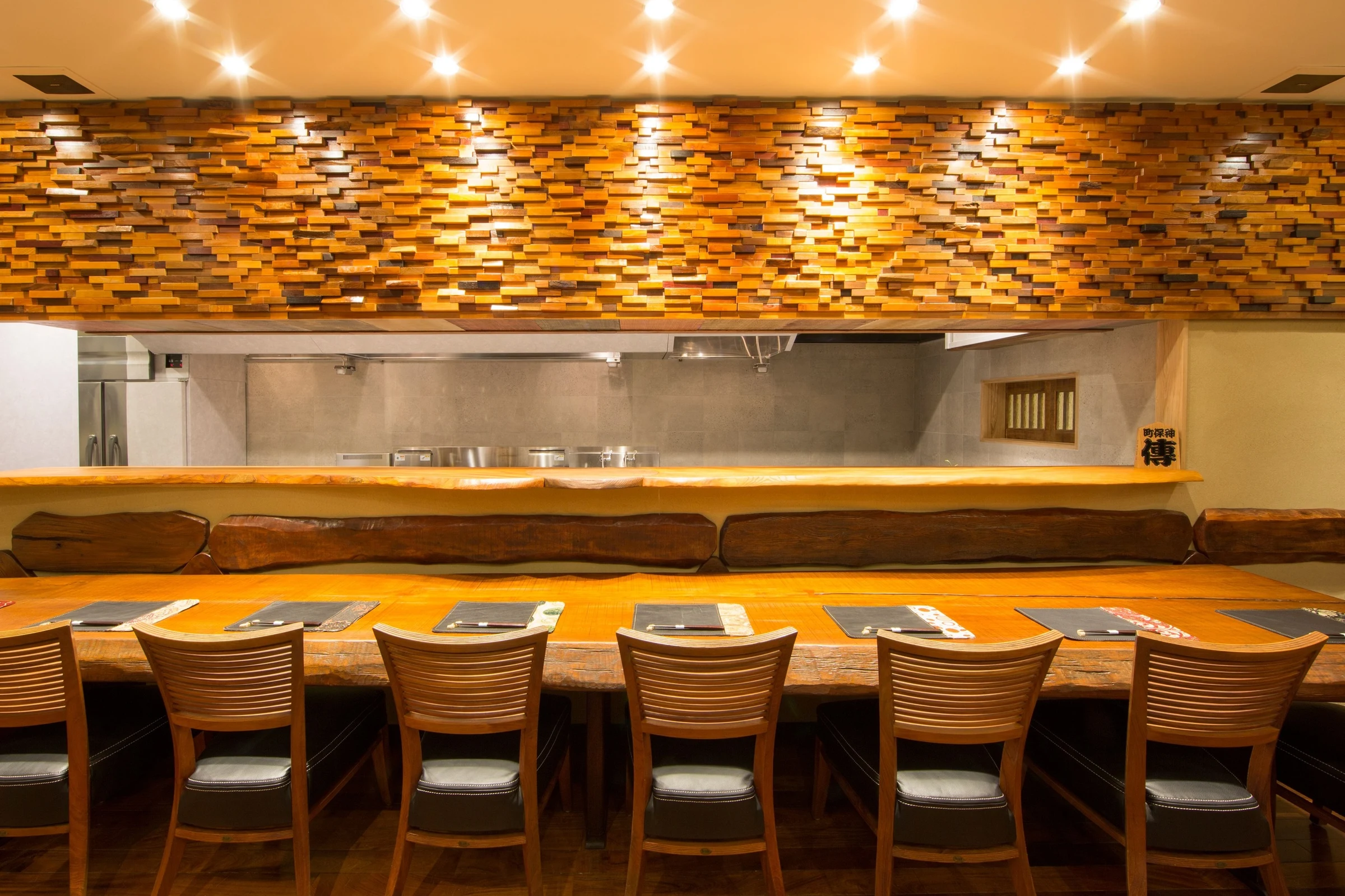
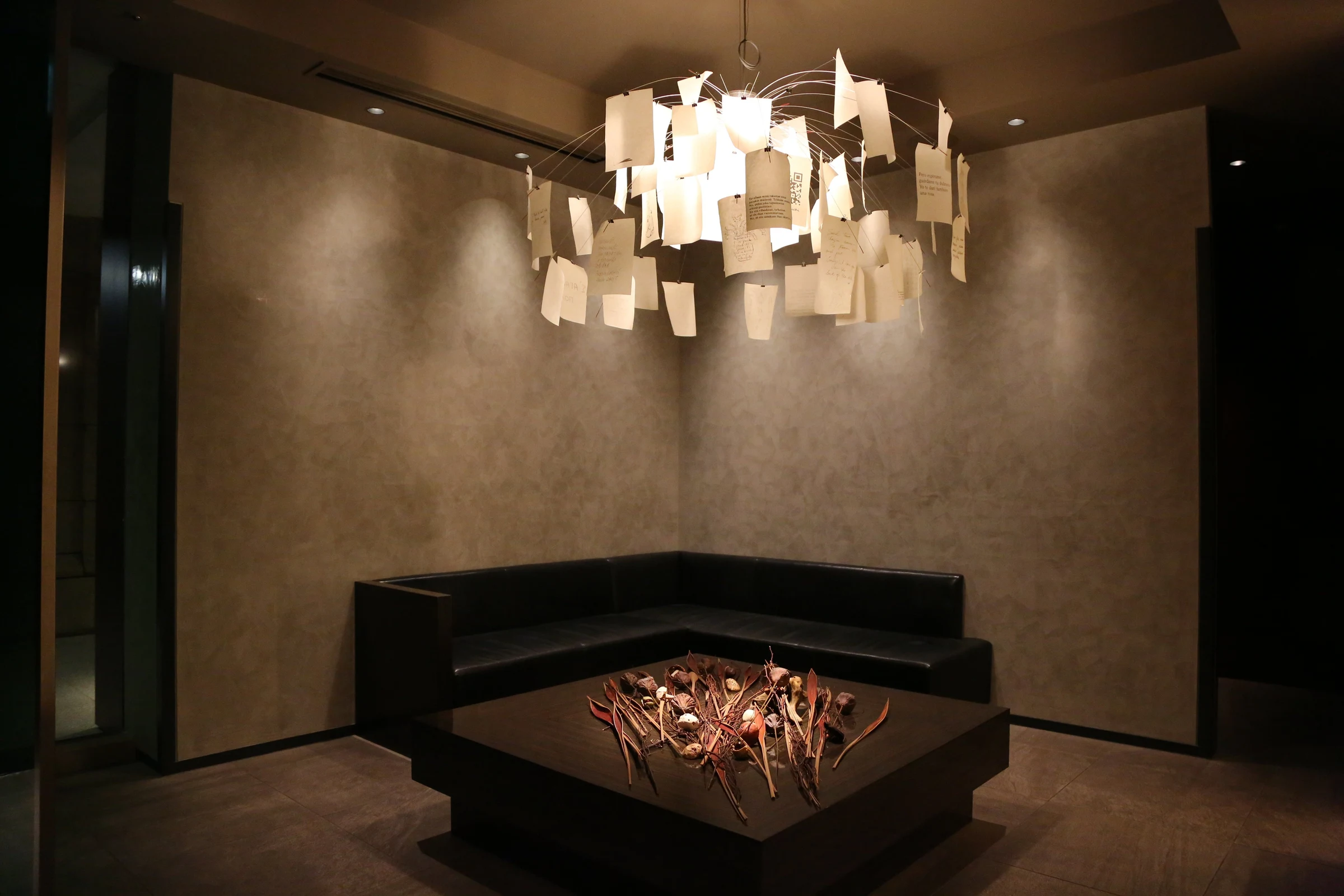
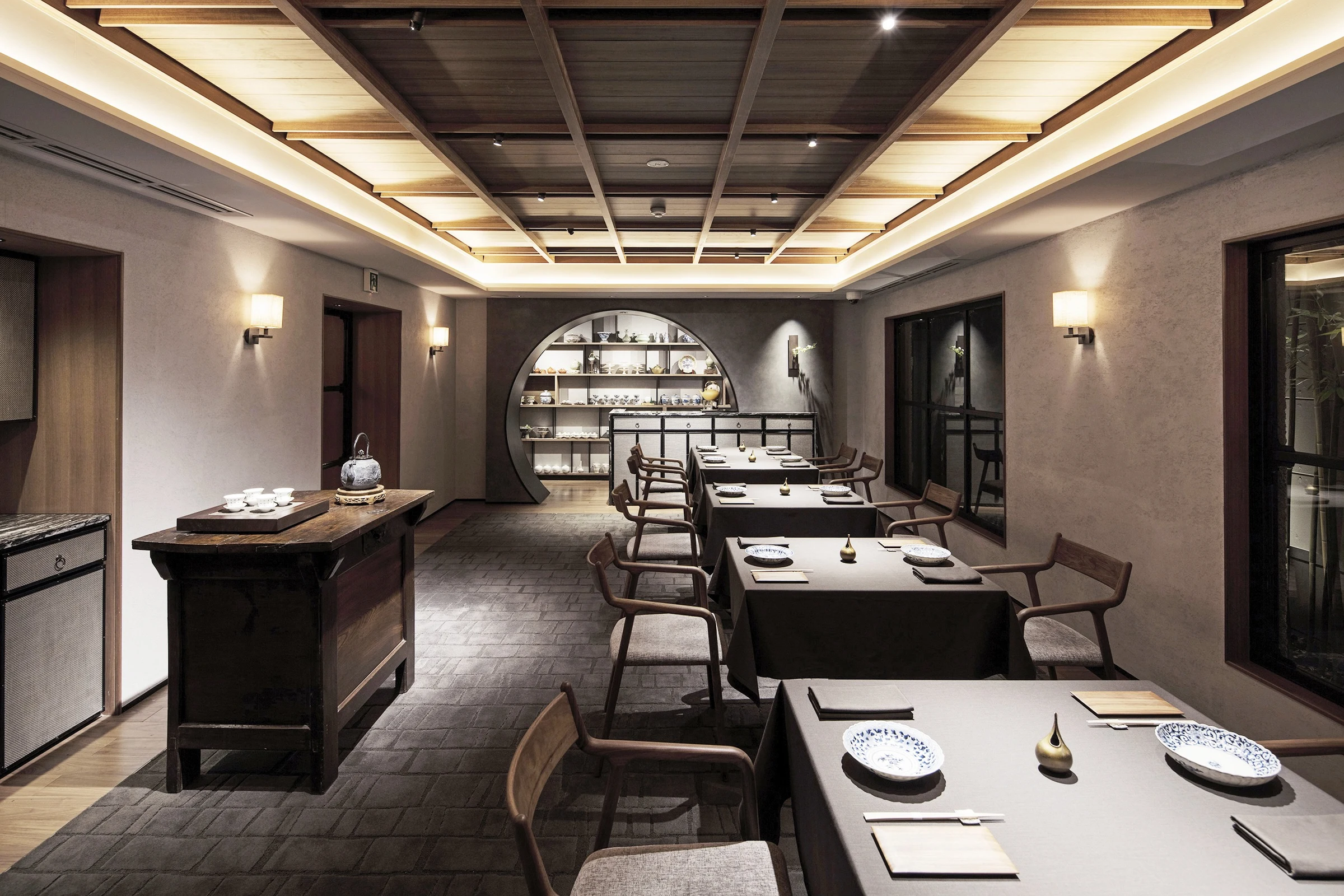
The main restaurant sits at Ginza 8-chome, but the room never reads as a large hall. Kyubey works vertically, with five floors and a single sushi bar on each floor, about 12 seats and 2 chefs to a counter. The scale allows movement; the counter keeps the work near. Diners watch the hands form each piece, hear the small exchange between chef and guest, and stay within the quiet pressure of formal counter dining.
The house has modern sukiya-style architecture and divides attention. Each bar becomes its own station. The sake and tea support the meal without taking the room away from fish. Service stays courteous and direct, with Imada known for greeting guests and keeping the hospitality close to the craft. The last impression is not volume, but proximity: shari, nori, uni, and the chef’s hand at Kyubey’s Ginza 8-chome counter.
Questions
Frequently asked
What kind of sushi does Kyubey serve?
Kyubey serves traditional Japanese omakase sushi with an Edomae focus. The menu follows the day’s supply, moving through seasonal seafood such as white fish, toro, uni, unagi, and other pieces according to the diner in front of the chef.
Who is the chef at Kyubey?
Yosuke Imada is the chef at Kyubey in Ginza. He began as a part-time restaurant worker at Kyubey, trained in Kobe in 1964 as a sushi trainee, returned as an apprentice, and later became head chef.
What is Kyubey known for?
The restaurant is known for its disciplined counter style, seasoned shari, careful cutting, and the use of gunkan-maki. Hisaji Imada founded Kyubey in 1935, and the house remains closely tied to that family line and to Edomae sushi.
How does booking work at Kyubey?
Reservations are essential and are made directly. The dress code is smart casual.
When is Kyubey open?
Kyubey is closed on Monday and Sunday. It opens Tuesday to Saturday from 11:30 AM to 2 PM and again from 5 PM to 10 PM.
The field
How it compares
| Place | Cuisine | Notes | Awards |
|---|---|---|---|
| Kyubey | Traditional Japanese Omakase Sushi | Chūō, $$$$ | · |
| Den | Modern Japanese Kaiseki | Tokyo | Michelin 2 Stars, World's 50 Best |
| Florilège | Modern French-Japanese Plant-Based Fine Dining | Tokyo | Michelin 2 Stars, World's 50 Best |
| Narisawa | Modern Japanese Satoyama Fine Dining | Tokyo | Michelin 2 Stars, World's 50 Best |
| Quintessence | Modern French Fine Dining | Tokyo | Michelin 3 Stars |
| Sazenka | Modern Chinese Fine Dining | Tokyo | Michelin 3 Stars, World's 50 Best |
| Sézanne | Modern French Fine Dining | Tokyo | Michelin 3 Stars, World's 50 Best |
Similar places
Modern Japanese Kaiseki
Den
Tokyo, Japan
★★ · 50 Best
Modern French-Japanese Plant-Based Fine Dining
Florilège
Tokyo, Japan
★★ · 50 Best
Modern Japanese Satoyama Fine Dining
Narisawa
Tokyo, Japan
★★ · 50 Best
Modern French Fine Dining
Quintessence
Tokyo, Japan
★★★
Modern Chinese Fine Dining
Sazenka
Tokyo, Japan
★★★ · 50 Best
Modern French Fine Dining
Sézanne
Tokyo, Japan
★★★ · 50 Best
The Sunday letter
Get the next Made By story in your inbox.
We send one email every Sunday morning with the places and people we covered that week.
See a sample of the Sunday emailOne email a week. Unsubscribe from any issue.