La Balmesina

In Residence
Alessandro Zangrossi
Chef
- 01CuisineModern Neapolitan Pizza
- 02CityBarcelona, Spain
- 50 Top Pizza Europe #17 · 2026
- 50 Top Pizza World #87 · 2026
- Macarfi 7.2 Food Rating · 2026
- 50 Top Pizza World Best Pizza #70 · 2025
Long-Fermentation Pizza in the Upper Eixample: Where the Dough Does the Work
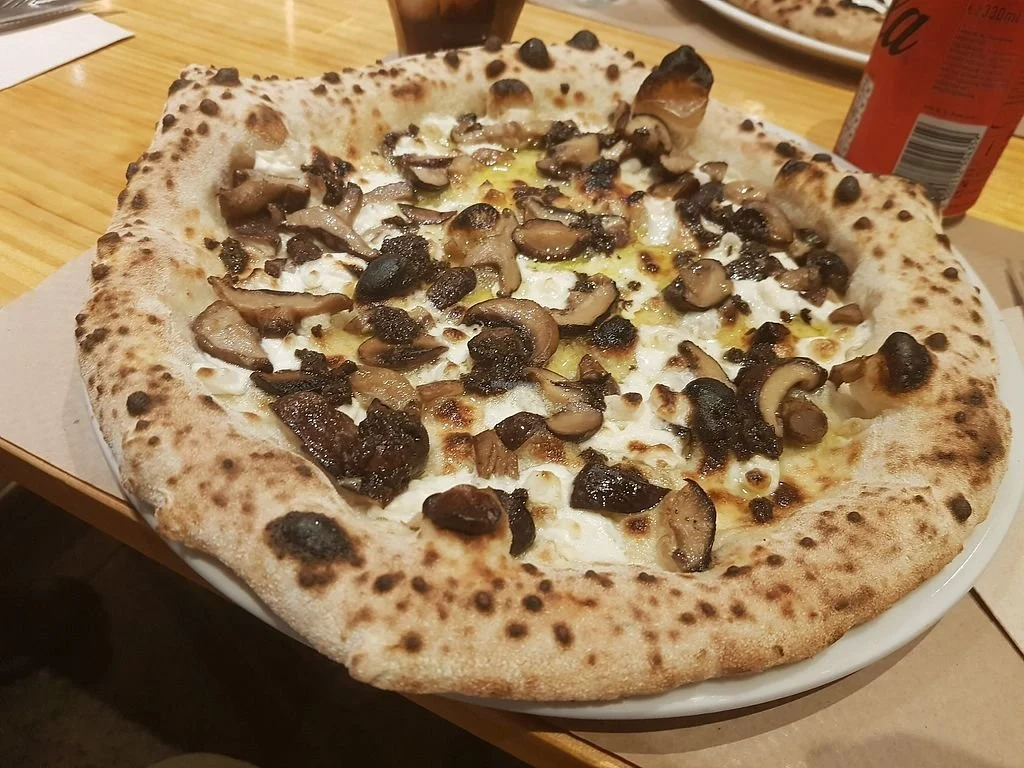
La Balmesina is a modern Neapolitan pizza restaurant in Barcelona, on Carrer de Balmes in Sarrià-Sant Gervasi, with a 4.6 Google rating and a casual, reservation-recommended setup. The room fills for lunch and again for dinner, without variation. That consistency is itself a form of editorial statement about what the kitchen is producing. The room fills for lunch and again for dinner, without variation. That consistency is itself a form of editorial statement about what the kitchen is producing.
Barcelona's pizza scene has developed more seriously over the past decade than the city's global culinary reputation might suggest. While the headline conversation circles around the Michelin-starred creative restaurants, Disfrutar, Cocina Hermanos Torres, ABaC, Lasarte, and Enigma, a quieter, more technical shift has been happening at street level. A generation of operators brought serious fermentation thinking to pizza, treating dough not as a neutral base but as the primary technical achievement.
The Sunday letter
Find new places through the people who run them.
Our Sunday email brings you the chefs, winemakers and hoteliers behind our newest stories. See a sample before you subscribe.
See a sample of the Sunday emailOne email a week. Unsubscribe from any issue.
The Fermentation Argument: Biga, Whole Flour, Seventy-Two Hours
The method here is specific and worth understanding as a category signal, not just a house quirk. The kitchen uses a biga preferment, an Italian indirect-dough technique in which a portion of flour, water, and yeast ferments separately before being incorporated into the final mix. Combined with a total fermentation window of at least 72 hours, the process produces a dough with a complex, slightly acidic flavour profile and a cellular structure that holds air during baking rather than compressing into density.
The flour choice reinforces the commitment. All flours are whole and ecological, with Catalan-produced grain included in the blend. That sourcing decision connects the pizza tradition to a local agricultural logic that places La Balmesina alongside the broader movement in Spanish gastronomy toward regional provenance. It is the same territorial thinking applied here to a pizza format.
Result on the plate is a base with what the kitchen describes as excellent digestibility. The crust is light, with structural integrity at the rim but no thickness for its own sake. Whether you notice the technique explicitly or simply find yourself finishing more of the pizza than you expected, the fermentation work is present in the eating.
Ingredients as Editorial Choices
Toppings at La Balmesina read as a sourcing argument. Artisanal Julius ham, Pinullet stracchino from an urban dairy in the immediate neighbourhood, and vegan cheeses from Vacka: each supplier is chosen with the same deliberateness applied to the dough. This matters because it positions the kitchen outside the standard pizzeria calculus of imported Italian ingredients used to signal authenticity. The sourcing here is local and specific, which is a different, and in many respects more interesting, claim to make.
Manel pizza, topped with Cantabrian anchovies, black olives, and onions, is the most frequently cited dish from the menu. Cantabrian anchovies occupy the premium tier of Spanish salt-cured fish, with the leading examples coming from the Cantabrian coast and carrying a flavour intensity that puts them in a different category from supermarket alternatives. Pairing them with the mild bitterness of cured olives and the sweetness of cooked onion on a fermented base that can absorb rather than compete with strong flavours is a sound technical decision.
Desserts are made in-house, with the tiramisú receiving particular attention. In a dining room where the pizza is the primary focus, the effort applied to finishing the meal suggests a kitchen that treats every course as an extension of the same seriousness.
The Room and the Service Model
The dining room moves quickly. La Balmesina operates across both a lunch service, which includes a business menu format, and a full dinner service, and the pace reflects that dual function. Efficient turnover in a full room is not incidental here; it is the operating model that makes the kitchen's ambition accessible at a neighbourhood price point.
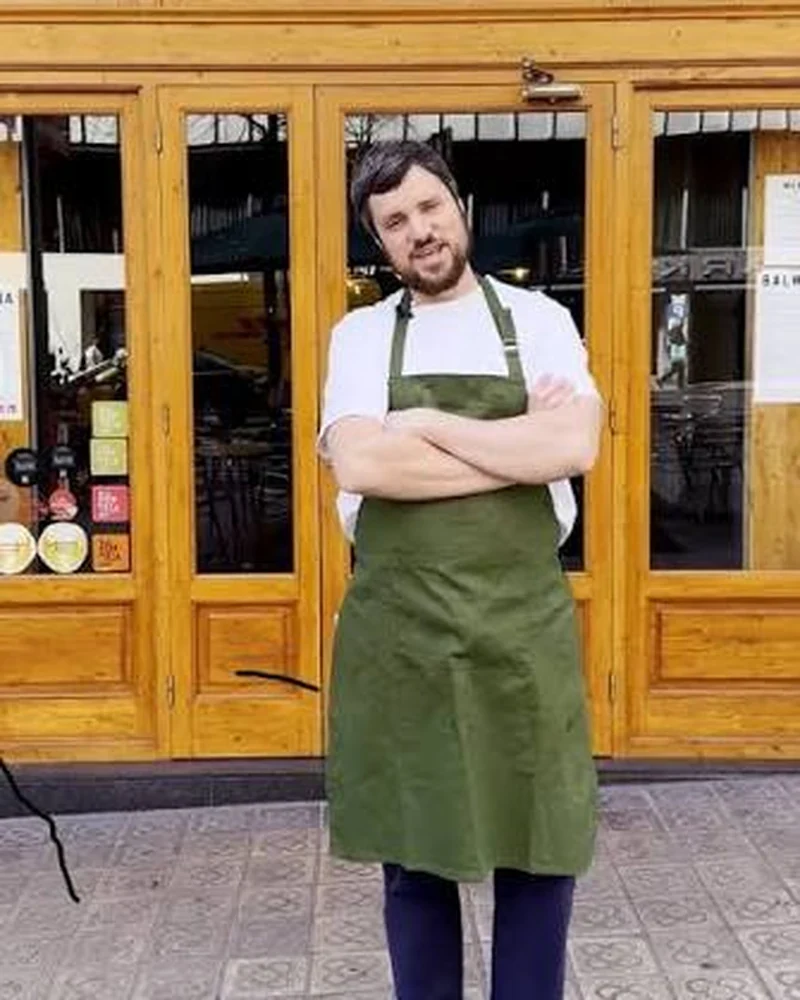
Service is described as competent and specific: staff can advise on both the food menu and the drinks list without deferring or generalising. The drinks programme covers craft beers and natural wines across Spain and Italy. The chef team, Massimo Morbi and Alessandro Zangrossi, bring Italian technical training into a Barcelona context, which suits a kitchen that works from an Italian preferment tradition while sourcing locally in Catalonia.
For context on how this Italian-Italian trained approach to a single format can operate at the highest levels elsewhere, the precision-driven kitchens at Le Bernardin in New York City or the fermentation-forward thinking visible at Atomix in New York City show how deep technical commitment to a defined format can build sustained reputations. La Balmesina operates in a different price register and format, but the underlying logic is similar: a narrow focus executed with accumulated skill over time.
Questions
Frequently asked
Who works at La Balmesina?
Made By profiles Alessandro Zangrossi (Chef) and Massimo Morbi (Chef) at La Balmesina.
How expensive is La Balmesina?
La Balmesina is listed at a price level of $$.
Where is La Balmesina and what does it serve?
La Balmesina is in Sant Gervasi - Galvany, Barcelona, serving Modern Neapolitan Pizza.
The field
How it compares
| Place | Cuisine | Notes | Awards |
|---|---|---|---|
| La Balmesina | Modern Neapolitan Pizza | Sant Gervasi - Galvany, $$ | · |
| ABaC | Modern Catalan Fine Dining | Barcelona | Michelin 3 Stars |
| Alkimia | Modern Catalan Fine Dining | Barcelona | Michelin 1 Star |
| Cocina Hermanos Torres | Modern Spanish Fine Dining | Barcelona | Michelin 3 Stars, World's 50 Best |
| Disfrutar | Avant-Garde Catalan Fine Dining | Barcelona | Michelin 3 Stars, World's 50 Best |
| Lasarte | Modern Basque-Mediterranean Fine Dining | Barcelona | Michelin 3 Stars |
| Moments | Modern Catalan Fine Dining | Barcelona | Michelin 1 Star |
In residence
Similar places
Modern Catalan Fine Dining
ABaC
Barcelona, Spain
★★★
Modern Catalan Fine Dining
Alkimia
Barcelona, Spain
★
Modern Spanish Fine Dining
Cocina Hermanos Torres
Barcelona, Spain
★★★ · 50 Best
Avant-Garde Catalan Fine Dining
Disfrutar
Barcelona, Spain
★★★ · 50 Best
Modern Basque-Mediterranean Fine Dining
Lasarte
Barcelona, Spain
★★★
Modern Catalan Fine Dining
Moments
Barcelona, Spain
★
The Sunday letter
Get the next Made By story in your inbox.
We send one email every Sunday morning with the places and people we covered that week.
See a sample of the Sunday emailOne email a week. Unsubscribe from any issue.