Lurrak
In Residence
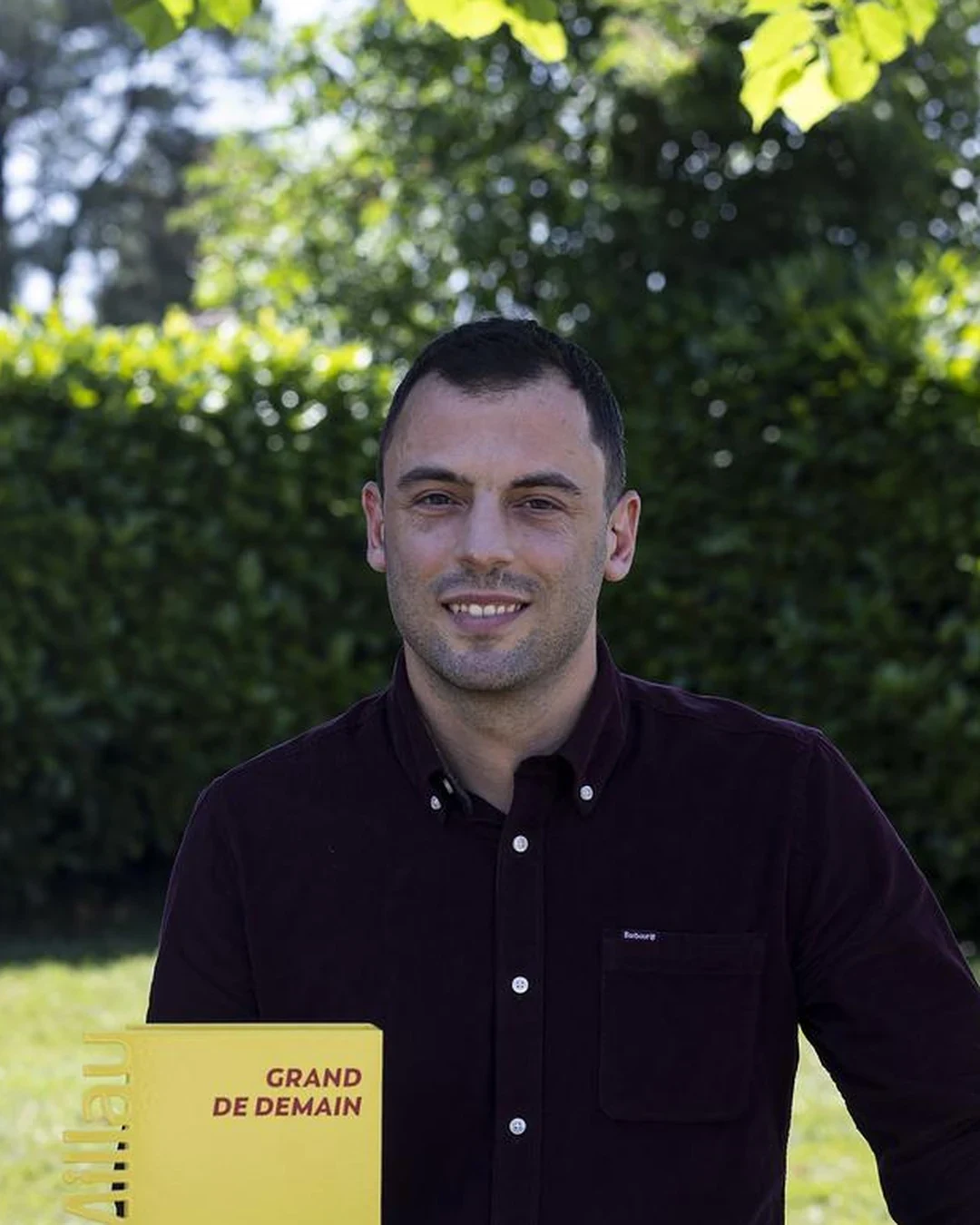
Romain Goyeneche
Chef
- 01CuisineModern French with Basque Regional Focus
- 02CityArbonne, France
Basque produce, preserved with precision
- Star Wine List · 2026
- Michelin Plate · 2025
- Gault & Millau Remarkable Restaurant: 15pts · 2025
- Michelin Plate · 2024
Local economy at the pass
The decision begins with flavour. Lurrak in Arbonne works in a modern French register with a Basque centre of gravity, keeping tradition close enough to answer to it. Romain Goyeneche is the executive chef and, as of the 2026 Gault&Millau review, the sole operator, after opening the house with Paul Chauvet. His cooking is creative and accessible, built on regional produce and sophisticated plant work rather than on a decorative idea of place.
The formation behind that is specific. Goyeneche spent significant time at David Toutain’s two-Michelin-star restaurant in Paris, where precise, flavour-forward cooking is the house language, and a stint in Copenhagen left the Scandinavian habits that now show in pickling and fermenting. Sourcing is named rather than gestured at: Manech pork from the Belaun co-op in Aldudes, with fruit and vegetables drawn from the region around the restaurant. At Lurrak, the more useful facts are the ones on the bench: plants, fish, pork, fruit, acidity, jus, smoke, preservation.
The Sunday letter
Find new places through the people who run them.
Our Sunday email brings you the chefs, winemakers and hoteliers behind our newest stories. See a sample before you subscribe.
See a sample of the Sunday emailOne email a week. Unsubscribe from any issue.
Preserved citron, pork jus, tomato water
The program at Lurrak moves through a tasting-menu format, with surprise sequences rather than a fixed à la carte grammar. The kitchen has worked with courses such as Rose de Berne tomato with preserved citron, pickled red cabbage, lemony marigold, basil, sea beans, and tomato-raspberry-agastache water. The point is not complication for its own sake; it is how preservation sharpens ripe produce and gives the plate a second register.
Manech pork loin has appeared with romanesco broccoli, pan-fried onions, jus de viande, and organic Ennéartz bread. Kintoa bacon has gone into a dashi with candied carrots and carrot caramel. Sar de ligne has been paired with Landes kiwi, citron, hazelnuts, and radish. Poularde Duplantier has carried squash mousseline, chestnut, roasted quince, and hazelnut crumble. The Scandinavian influence comes through in pickling, fermenting, and the habit of letting vegetables hold the architecture of a dish. Basque produce supplies the weight; acidity and preservation give it lift.
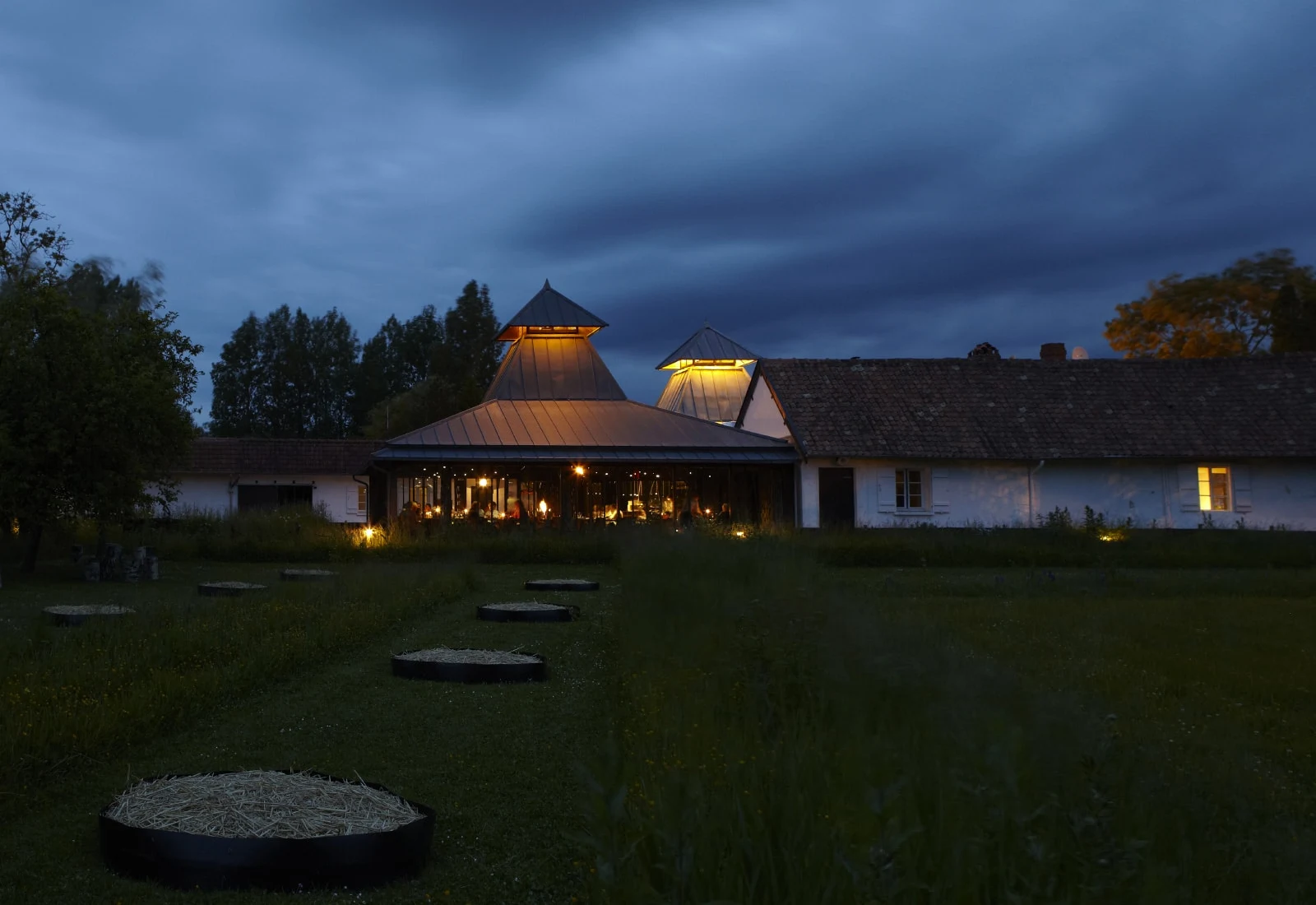
A former pelota court in light wood
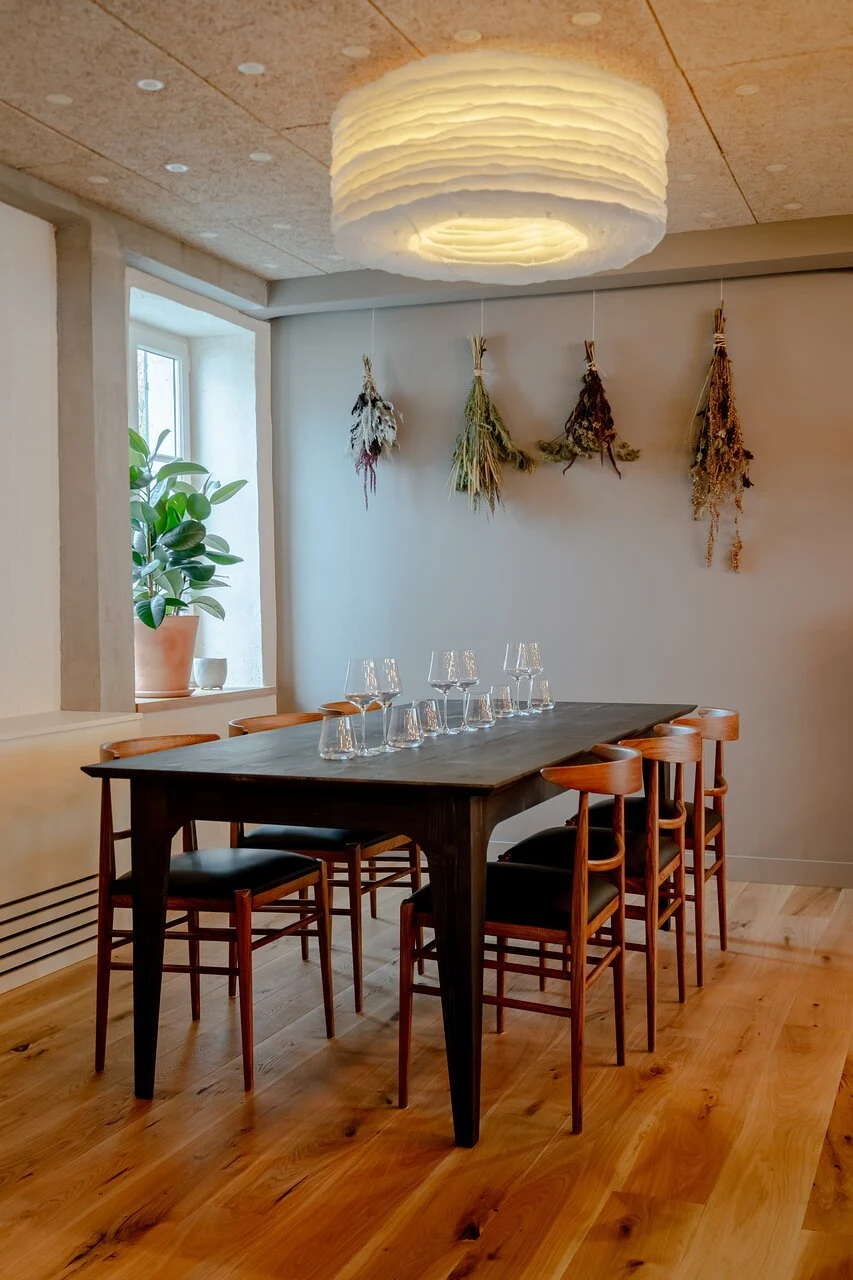
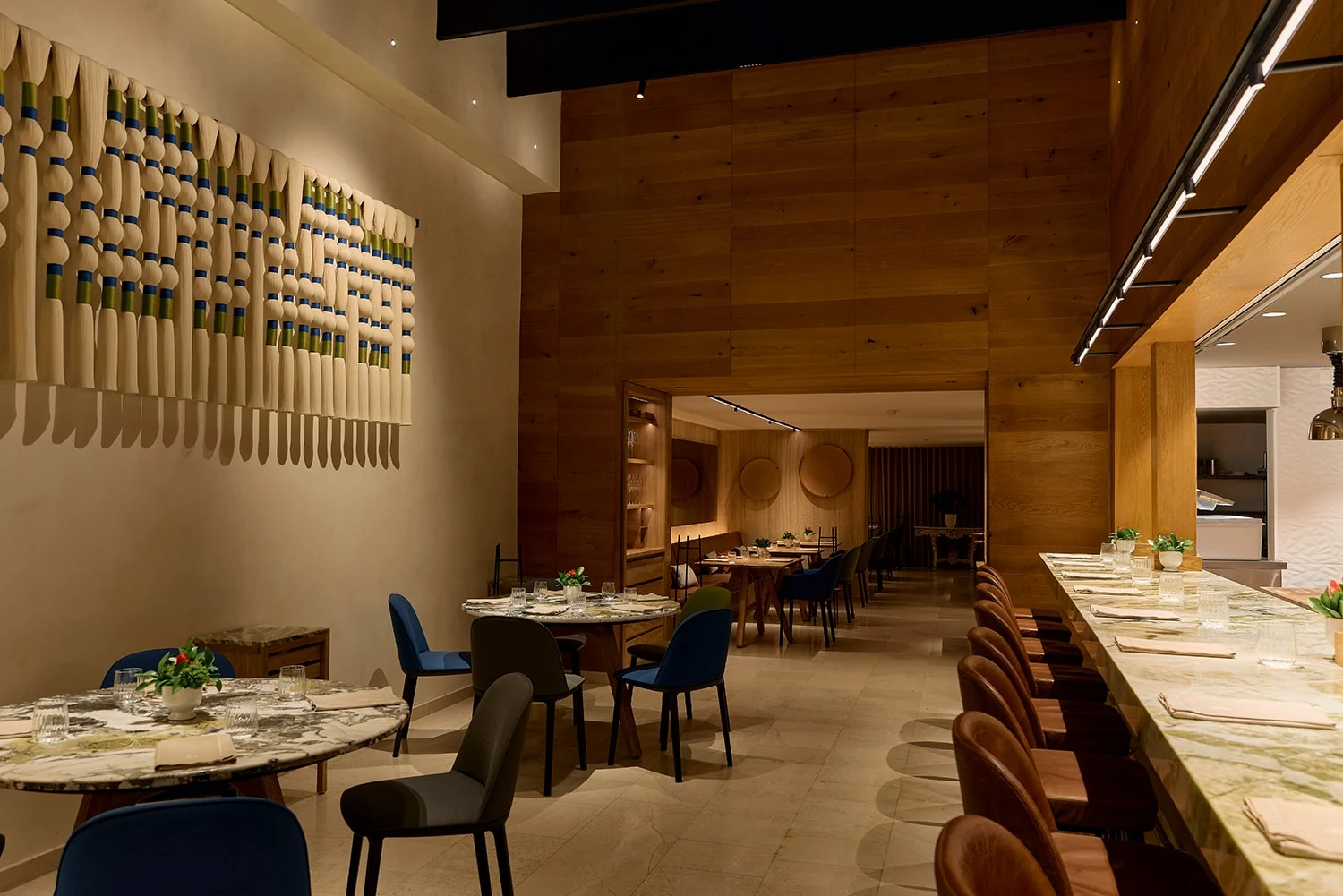
The room holds the old shell without treating it as theatre. Lurrak occupies a traditional Basque building from the 1900s at 8 Route du Bourg, formerly a pelota court, now softened with taupe walls, light wood, and a windowed open kitchen. The pass is visible, which changes the tempo of the meal: plates leave the hands in view, and the room reads the work before it reaches the table. Soft lighting keeps the space calm. Tables sit with enough air around them for conversation, and the small scale helps the kitchen remain present without turning service into performance. The countryside sits close to the dining room, but the interior is not rustic. It is cleaner than that, more disciplined, with the warmth coming from proportion, light, and the movement of the station.
The cellar follows the same discipline
The wine program has earned a White Star from Star Wine List in August 2024, and the cellar reaches beyond the immediate region without losing the local thread. Irouléguy appears beside Bergerac, Spain, Italy, and Hungary, with natural and living wines carrying much of the accent. Xingolei Irouléguy from Bixente Indart and Blizzard Bergerac blanc from Château Lestignac give the list its working vocabulary, and a cabernet franc from the Loire widens it without breaking the thread. The close attention belongs to the pairing between glass and plate, especially where preserved citron, tomato water, Manech pork, or Kintoa bacon dashi need a wine that can meet salt, fruit, and fat without flattening them. For now, the concrete thing to follow is already in the room: the windowed open kitchen and the next plate of Rose de Berne tomato.
Questions
Frequently asked
What kind of restaurant is Lurrak?
Lurrak is a restaurant in Arbonne that works in a modern French register with a Basque regional focus. Its cooking is built around regional produce, plants, preservation, and a tasting-menu format.
Who is in the kitchen at Lurrak?
Romain Goyeneche is the executive chef and, as of the 2026 Gault&Millau review, the sole operator. He opened the house with Paul Chauvet.
What does the menu format look like?
The kitchen works through a tasting-menu format rather than a fixed à la carte menu. Dishes have included Rose de Berne tomato with preserved citron and pickled red cabbage, Manech pork loin with romanesco broccoli and jus de viande, and Sar de ligne with Landes kiwi and hazelnuts.
What recognition does the wine list hold?
The wine program received a White Star from Star Wine List in August 2024. The cellar includes Irouléguy alongside wines from Bergerac, Spain, Italy, and Hungary.
What should be known before booking a table?
Reservations are recommended. The dress code is smart casual, and the restaurant is open for lunch and dinner on Monday and from Thursday through Sunday, with Tuesday and Wednesday closed.
The field
How it compares
| Place | Cuisine | Notes | Awards |
|---|---|---|---|
| Lurrak | Modern French with Basque Regional Focus | Arbonne, $$$ | · |
| Burnt Ends | Modern Australian Barbecue | Singapore | Michelin 1 Star, World's 50 Best |
| Frantzén | Modern Nordic Fusion with Japanese Influences | Stockholm | Michelin 3 Stars, World's 50 Best |
| Jordnær | Modern Nordic Seafood Fine Dining | Gentofte | Michelin 3 Stars, World's 50 Best |
| La Grenouillère | Contemporary French Terroir | La Madelaine-sous-Montreuil | Michelin 2 Stars, World's 50 Best |
| Quintonil | Modern Mexican Fine Dining | Mexico City | Michelin 2 Stars, World's 50 Best |
| Saison | Modern Fire-Forward Fine Dining | San Francisco | Michelin 2 Stars, World's 50 Best |
In residence
Similar places
Modern Australian Barbecue
Burnt Ends
Singapore, Singapore
★ · 50 Best
Modern Nordic Fusion with Japanese Influences
Frantzén
Stockholm, Sweden
★★★ · 50 Best
Modern Nordic Seafood Fine Dining
Jordnær
Gentofte, Denmark
★★★ · 50 Best
Contemporary French Terroir
La Grenouillère
La Madelaine-sous-Montreuil, France
★★ · 50 Best
Modern Mexican Fine Dining
Quintonil
Mexico City, Mexico
★★ · 50 Best
Modern Fire-Forward Fine Dining
Saison
San Francisco, United States
★★ · 50 Best
The Sunday letter
Get the next Made By story in your inbox.
We send one email every Sunday morning with the places and people we covered that week.
See a sample of the Sunday emailOne email a week. Unsubscribe from any issue.