Sanuki noodles cut before service
- Opinionated About Dining Cheap Eats in North America Recommended · 2026
- Opinionated About Dining Casual in North America Ranked #743 · 2025
- Opinionated About Dining Cheap Eats in North America Ranked #402 · 2025
- Opinionated About Dining Casual in North America Ranked #758 · 2024
- Opinionated About Dining Cheap Eats in North America Ranked #372 · 2024
- Opinionated About Dining Casual in North America Recommended · 2023
Flour, water, time, sequence
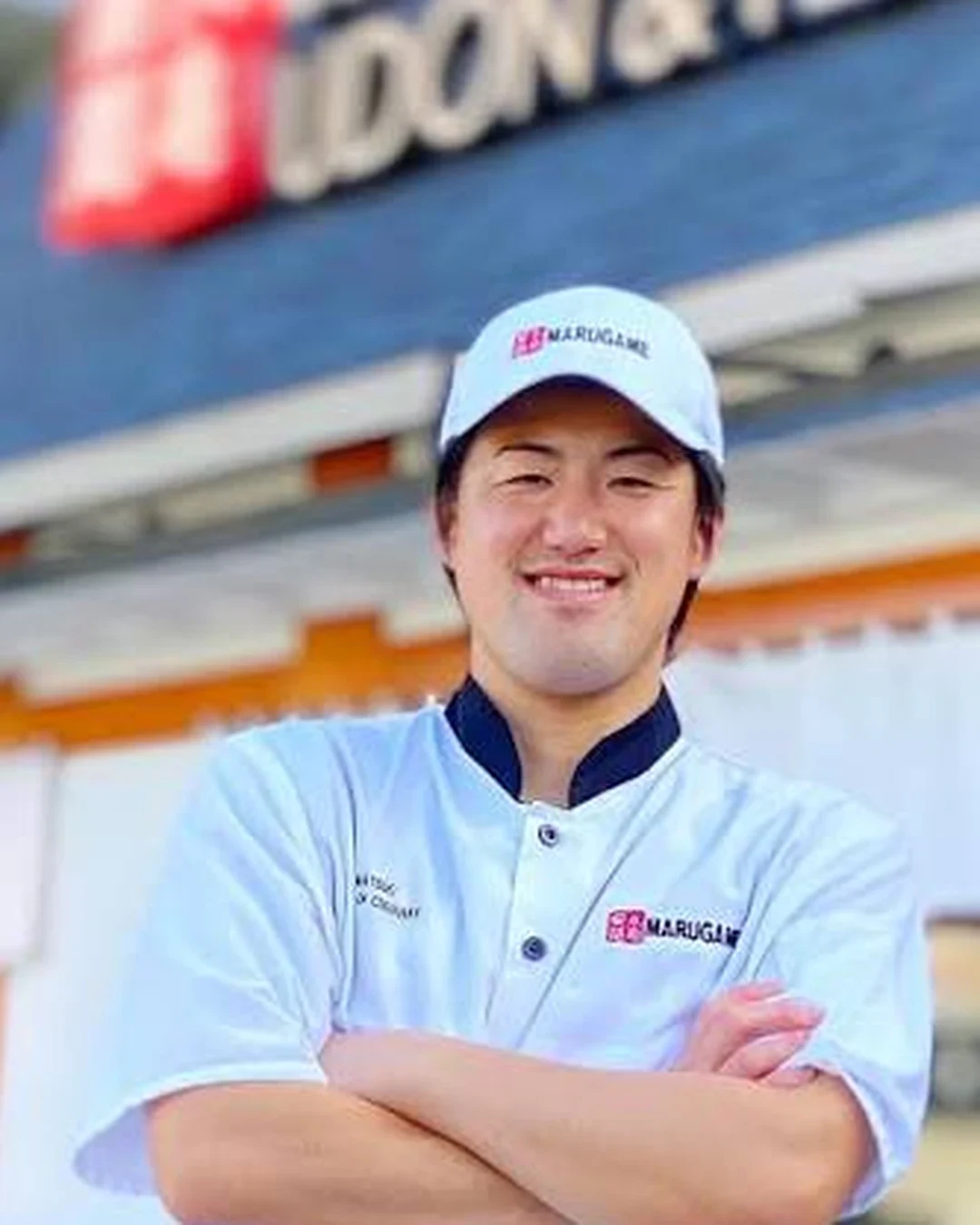
Noodles move from kneading to aging to the boil under Aki Matsuo, Chef at Marugame Udon in Downtown LA, Los Angeles. His wider role with Marugame Udon USA is Director of Culinary, a post built less around authorship than control: imported flour, water, rest, pressure, cut, heat. The Downtown LA counter at The Bloc belongs to that discipline. Guests see the dough handled in stages, then watch thick Sanuki-style udon pass into the boilers before the bowl is built in front of them.
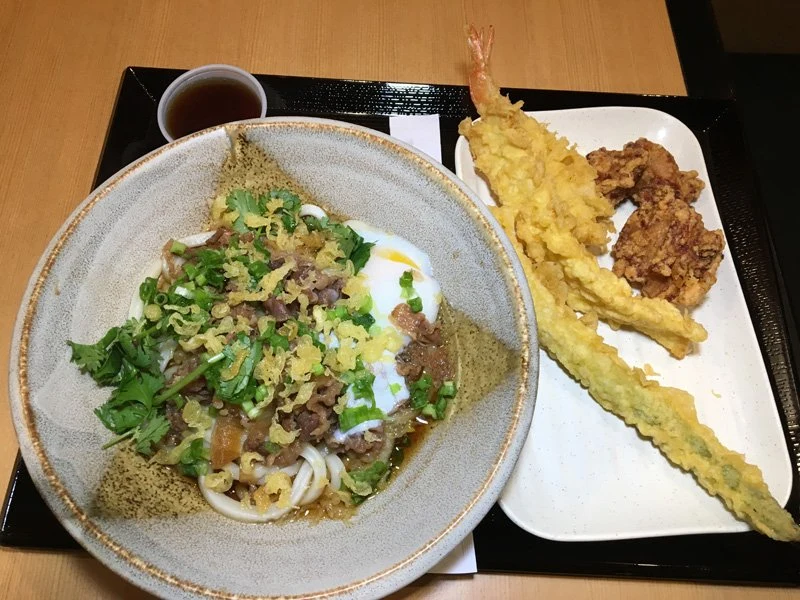
Matsuo’s known signature is Nikutama Udon, a bowl that places specially selected sweet beef and egg against the noodle rather than over it. The point is not ornament. It is sequence. The noodle has to carry chew and warmth before the beef adds depth, and the egg has to enrich the bowl without dulling the clean line of the broth or sauce. In this model, the maker’s hand shows through repeatability. The same gesture has to hold when the line is quiet and when the room is full.
The Sunday letter
Find new places through the people who run them.
Our Sunday email brings you the chefs, winemakers and hoteliers behind our newest stories. See a sample before you subscribe.
See a sample of the Sunday emailOne email a week. Unsubscribe from any issue.
Sanuki method in a cafeteria line
The program is built on Sanuki-style udon, the thicker wheat noodle associated with Kagawa prefecture and, by name, Marugame. At this address the method stays visible: noodles are kneaded from imported flour, aged in a climate-controlled environment, rolled, cut, then boiled before service. Machines, boilers, and hinged knives are part of the room’s grammar, not hidden equipment. They let the kitchen keep pace while still making the process legible from the counter.
The menu follows the same modular order. A bowl begins with hot or cold udon, then moves through preparations such as Kake, Curry Udon, Beef Udon, Bukkake, Kama-Age, Beef-Tsuke, Mentai Kamatama, and Nikutama. Tempura sits alongside, fried for vegetables, seafood, chicken, tamagoyaki, and croquettes, with the condiment bar finishing the pass in small decisions: green onions, tempura flakes, wasabi, cilantro, sauces. The architecture suits volume because each choice has a station, and each station has a task.
The counter keeps the tempo
The room is bright and cafeteria-like, with trays moving in a clear line from noodle station to tempura to condiments. It is a practical space, but not an anonymous one. The open kitchen gives the bench-side view its force: dough becomes strand, strand becomes bowl, bowl becomes lunch without leaving the guest’s sight. During peak service the energy rises quickly. The sound is the sound of boilers, tongs, trays, orders called, and people making their choices while the next batch of noodles comes up.
That visibility is the house’s strongest argument. Marugame Udon operates at a global scale, with more than 1,000 restaurants worldwide, yet the Downtown LA room still asks the guest to look at the method. The close work remains plain: Nikutama, Beef Udon, Tempura Combo, a ladle of broth, a cut noodle, a tray held at the counter.
Questions
Frequently asked
What is Marugame Udon known for?
Marugame Udon in Downtown LA serves Sanuki-style udon, with the noodle-making process kept visible from the counter. The dough is kneaded, aged, rolled, cut, and boiled in view before the bowl is built.
What is the signature bowl here?
Aki Matsuo’s known signature is Nikutama Udon. It places specially selected sweet beef and egg against the noodle, with the focus kept on sequence rather than ornament.
How does ordering work?
The room is set up as a counter service line. Guests move from the noodle station to tempura and then to the condiment bar, choosing from items such as green onions, tempura flakes, wasabi, cilantro, and sauces.
What else is on the menu besides udon?
Tempura is part of the menu, with vegetables, seafood, chicken, tamagoyaki, and croquettes listed among the options. The menu also includes Beef Udon, Curry Udon, Bukkake, Kama-Age, Beef-Tsuke, and Mentai Kamatama.
Is it a walk-in place, and what should visitors expect to pay?
Marugame Udon is walk-in friendly and has a price tier of $. The approximate cost per person is $15.
The field
How it compares
| Place | Cuisine | Notes | Awards |
|---|---|---|---|
| Marugame Udon | Sanuki-Style Udon | Financial District, $ | · |
| Hayato | Traditional Japanese Kaiseki | Los Angeles | Michelin 2 Stars |
| Holbox | Modern Mexican Seafood | Los Angeles | Michelin 1 Star, World's 50 Best |
| Kato | Modern Taiwanese Fine Dining | Los Angeles | Michelin 2 Stars, World's 50 Best |
| Mélisse | California-French Fine Dining | Los Angeles | Michelin 2 Stars |
| Providence | Modern Seafood Fine Dining | Los Angeles | Michelin 3 Stars, World's 50 Best |
| Somni | Modern Spanish Fine Dining | Los Angeles | Michelin 3 Stars, World's 50 Best |
In residence
Similar places
Traditional Japanese Kaiseki
Hayato
Los Angeles, United States
★★
Modern Mexican Seafood
Holbox
Los Angeles, United States
★ · 50 Best
Modern Taiwanese Fine Dining
Kato
Los Angeles, United States
★★ · 50 Best
California-French Fine Dining
Mélisse
Los Angeles, United States
★★
Modern Seafood Fine Dining
Providence
Los Angeles, United States
★★★ · 50 Best
Modern Spanish Fine Dining
Somni
Los Angeles, United States
★★★ · 50 Best
The Sunday letter
Get the next Made By story in your inbox.
We send one email every Sunday morning with the places and people we covered that week.
See a sample of the Sunday emailOne email a week. Unsubscribe from any issue.