Restaurant Aladdin
- 01CuisineClassic French
- 02CityTokyo, Japan
Game kept at the pass
- Opinionated About Dining Top Restaurants in Japan Recommended · 2026
- Tabelog 100 #17: 3.8pts · 2025
- Opinionated About Dining Top Restaurants in Japan Recommended · 2023
Authorship at the pass
At the pass, Koichi Hashimoto holds the chef and owner role at Restaurant Aladdin in Hiroo, Tokyo, with the menu tied to his hands. The position matters because it gathers the earlier parts of his formation into one room: training at El Bulli, training at Martin Berasategui, and leadership as head chef at Mandarin Oriental Tokyo's Tapas Molecular Bar. Those kitchens gave him a working grammar of control, pressure, and experiment, but Aladdin is where the sentence belongs to him.
Hashimoto's work here reads as classic French through a cook who has spent time around technical kitchens without letting technique become decoration. The restaurant's known dish, Orouka roast, sits in that line: game handled with the steadiness French cooking asks of the station, not treated as spectacle. As chef and owner, Hashimoto carries the standard from inside the operation. The menu, the pass, and the room answer to the same name.
Game, wine, and the old discipline
The program at Restaurant Aladdin is built around traditional French method, with game as the clearest signal of the house. Orouka roast gives the kitchen its center of gravity. It asks for judgment before flourish: the cut, the heat, the resting, the sauce work, the moment when the plate leaves the pass. What stays visible is the choice itself. Hashimoto keeps game on the table in a city where French cooking often moves toward lightness, polish, or novelty.
The wine program is described simply as curated, which suits the scale of the room. There is no need to turn the cellar into a performance. The bottles exist to meet the food, particularly the deeper register of roast meat and sauce, and the service style remains formal without becoming loud. Hashimoto's earlier training helps explain the restraint. At El Bulli and Martin Berasategui, technique carried invention; here, the older discipline carries the meal.
Red velvet, white cloth, quiet service
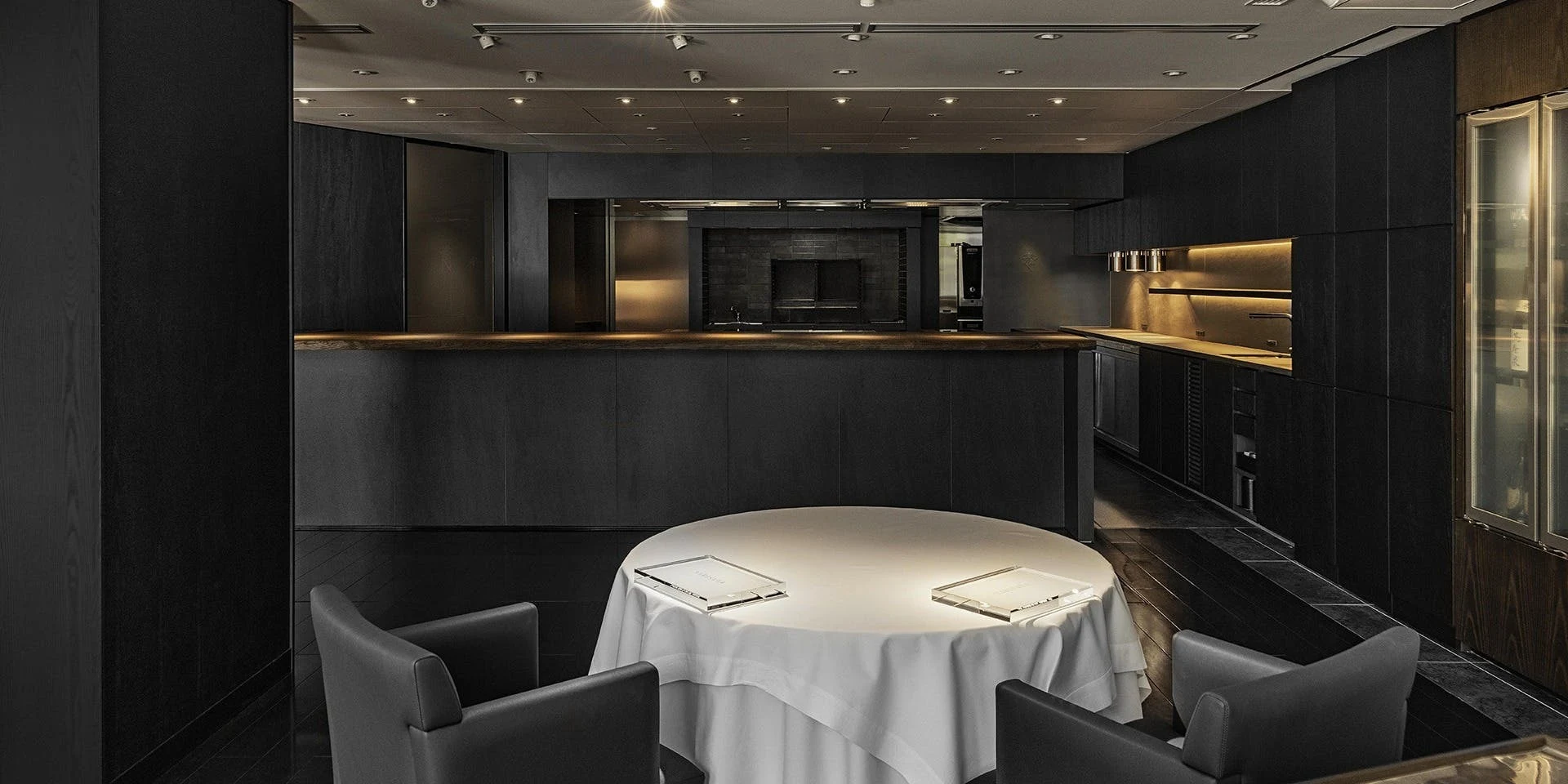
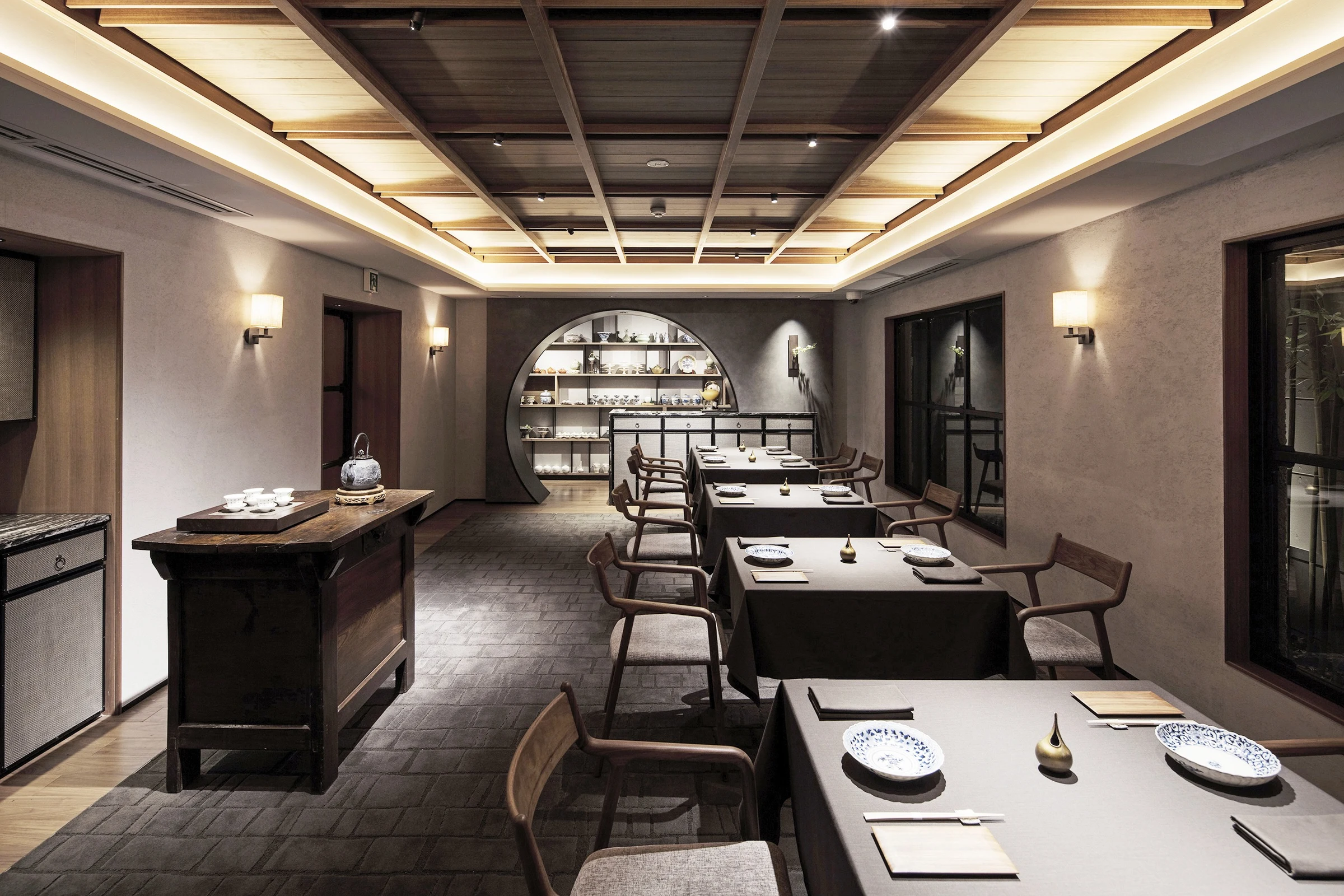
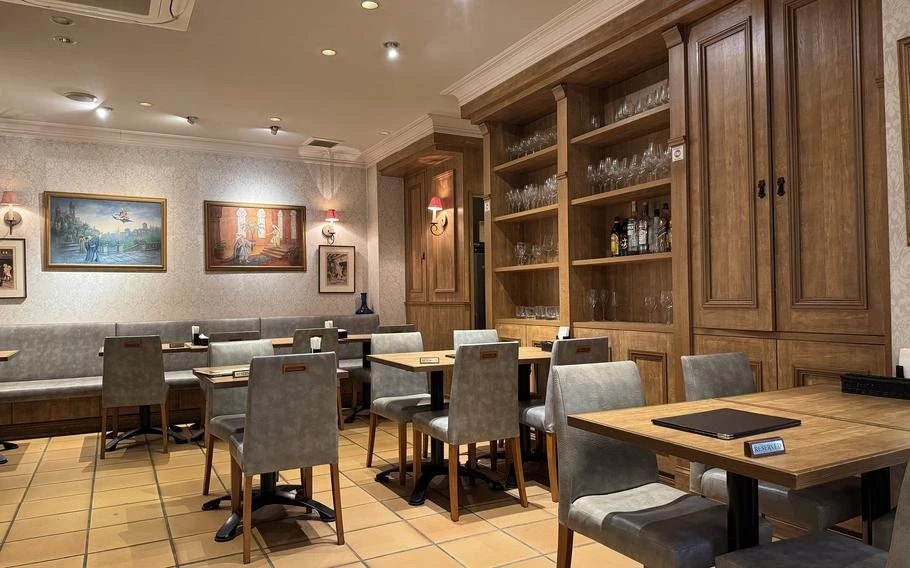
The room gives the work a close, considered frame. Red velvet chairs sit against pure white tablecloths, and the atmosphere stays quiet enough for the pass to feel near even when it is out of view. It is a cozy restaurant rather than a grand dining room, with a classical mood that gently holds the room together and keeps attention on the plate, the glass, and the steady pace of service.
That scale matters for Hashimoto's authorship. In a large hotel kitchen, command travels through layers. At Restaurant Aladdin, the line between decision and execution is shorter. The room is elegant, romantic, and intimate, but those words only matter because they support the craft rather than cover it. The close work here is the roast, the sauce, the service rhythm, and the white cloth beneath Orouka roast.
Questions
Frequently asked
Who cooks at Restaurant Aladdin?
Koichi Hashimoto is the chef and owner at Restaurant Aladdin in Hiroo, Tokyo.
What kind of cooking is served here?
The restaurant serves classic French cooking, with game as its clearest signal.
What is the dish the kitchen is known for?
Orouka roast is the venue’s signature dish and sits at the centre of the menu.
What is the dining room like?
The room is described as cozy, elegant, romantic, and intimate, with red velvet chairs, white tablecloths, and a quiet atmosphere.
Is booking recommended?
Reservations are recommended at Restaurant Aladdin.
The field
How it compares
| Place | Cuisine | Notes | Awards |
|---|---|---|---|
| Restaurant Aladdin | Classic French | Shibuya, $$$ | · |
| Den | Modern Japanese Kaiseki | Tokyo | Michelin 2 Stars, World's 50 Best |
| Florilège | Modern French-Japanese Plant-Based Fine Dining | Tokyo | Michelin 2 Stars, World's 50 Best |
| Narisawa | Modern Japanese Satoyama Fine Dining | Tokyo | Michelin 2 Stars, World's 50 Best |
| Quintessence | Modern French Fine Dining | Tokyo | Michelin 3 Stars |
| Sazenka | Modern Chinese Fine Dining | Tokyo | Michelin 3 Stars, World's 50 Best |
| Sézanne | Modern French Fine Dining | Tokyo | Michelin 3 Stars, World's 50 Best |
Similar places
Modern Japanese Kaiseki
Den
Tokyo, Japan
★★ · 50 Best
Modern French-Japanese Plant-Based Fine Dining
Florilège
Tokyo, Japan
★★ · 50 Best
Modern Japanese Satoyama Fine Dining
Narisawa
Tokyo, Japan
★★ · 50 Best
Modern French Fine Dining
Quintessence
Tokyo, Japan
★★★
Modern Chinese Fine Dining
Sazenka
Tokyo, Japan
★★★ · 50 Best
Modern French Fine Dining
Sézanne
Tokyo, Japan
★★★ · 50 Best