
- Michelin Bib Gourmand · Michelin Guide
- Star Wine List · 2026
- White Guide Denmark Restaurants - Masters Level · 2026
- Opinionated About Dining Casual in Europe Ranked #37 · 2026
- Michelin Bib Gourmand · 2026
- Michelin Bib Gourmand · 2025
- We're Smart World 3 Radishes · 2025
- Michelin Bib Gourmand · 2024
- Opinionated About Dining Casual in Europe Ranked #20 · 2024
- Opinionated About Dining Casual in Europe Ranked #11 · 2023
Rye, Ferment, and the Case for Denmark's Oldest Meal
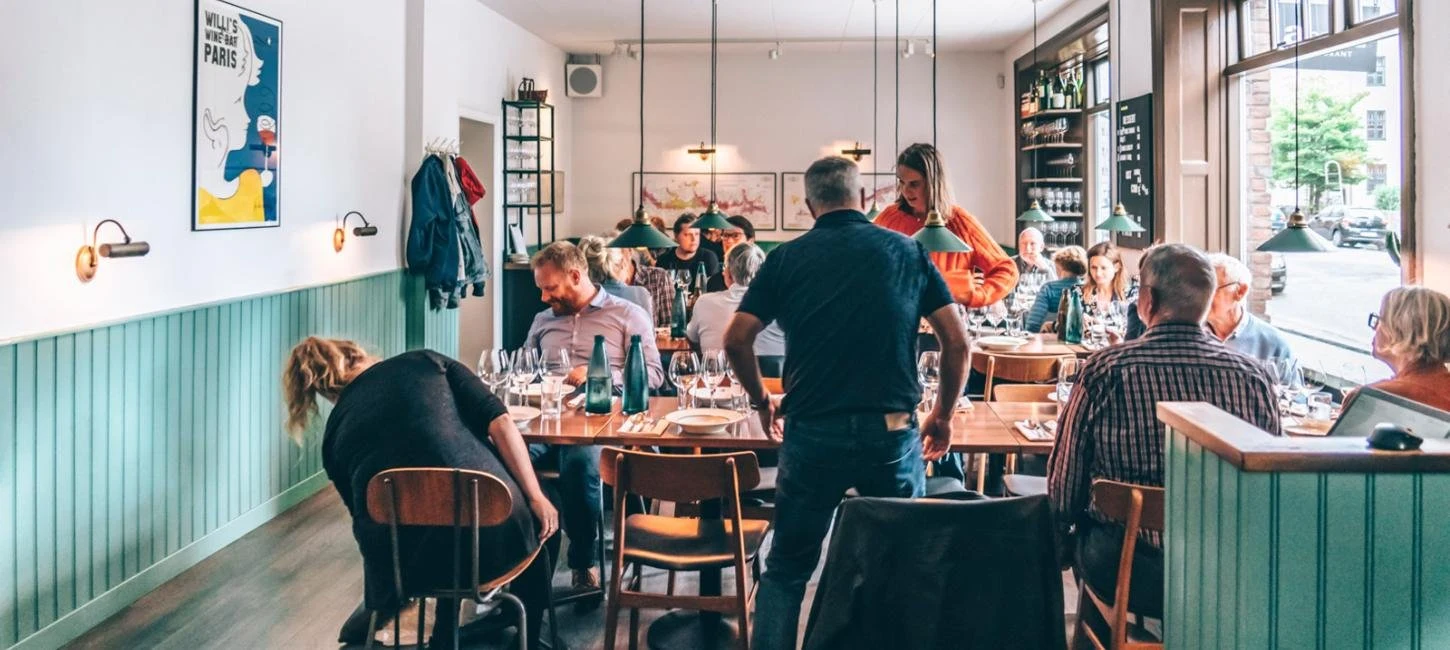
Walk down Rømersgade on a weekday lunch and you will find Copenhagen doing what it has done for centuries: sitting down to smørrebrød. The open-faced rye bread sandwich is not a trend or a revival. It is the structural backbone of Danish lunch culture, carried forward from a time when dense, fermented rugbrød was both practical sustenance and a canvas for whatever the season offered. What changes, generation by generation, is who is doing the carrying and what they bring to it. At Selma, that question gets an answer in a compact, wine-focused room at Rømersgade 20 in Copenhagen, where modern Danish smørrebrød meets a focused wine list and a price point around $70 per person.
Copenhagen's restaurant conversation tends to gravitate toward its tasting-menu tier. Geranium, Noma, Alchemist, and Koan occupy the city's upper bracket, where multi-course formats and €€€€ pricing reflect a global audience as much as a local one. Selma operates in a different register entirely, with a moderate price tier that is increasingly hard to find among the city's more decorated addresses. That affordability, combined with two consecutive Michelin Bib Gourmand awards (2024 and 2025), positions it as one of the clearer arguments for eating well in Copenhagen without the advance planning and expense that the top-table circuit demands.
The Sunday letter
Find new places through the people who run them.
Our Sunday email brings you the chefs, winemakers and hoteliers behind our newest stories. See a sample before you subscribe.
See a sample of the Sunday emailOne email a week. Unsubscribe from any issue.
What Smørrebrød Actually Asks of a Kitchen
The smørrebrød tradition is deceptively demanding. The format restricts invention to a narrow field: a single slice of rye bread, a spread, and toppings drawn from a familiar vocabulary of cured fish, pickled vegetables, cold meats, and dairy. The rye itself sets parameters. Rugbrød is dense, slightly acidic from its long fermentation, and nutritionally dense in a way that lighter bread simply is not. The sourness of the bread shapes every ingredient placed on top of it, which means the sourcing decisions that go into the toppings carry real consequence.
Herring remains the essential test of any smørrebrød kitchen. The fish appears in the awards data alongside black currant, chives, horseradish, and cress, a combination that works because each element either amplifies or counters the brine and fat of the fish. Black currant introduces a sharp, dark-fruited acidity; horseradish cuts through fat with heat; cress adds bitterness at the finish. Nothing in that combination is incidental. A second preparation pairs shrimp with wild garlic, kefir, lime, and sourdough, ingredients that shift the register toward a more ferment-forward profile while staying within the tradition's core logic of contrasting textures and acidity levels.
The sourcing logic behind both preparations reflects a broader pattern in Copenhagen's ingredient-driven kitchens. Wild garlic is a seasonal, foraged ingredient with a limited window; kefir and sourdough are fermented products that trace a direct line to the same preservation culture that produced rugbrød in the first place. These are not decorative additions. They reflect the Danish instinct, sharpened over the past two decades by the wider New Nordic movement, to treat fermentation and seasonality as primary constraints rather than optional choices.
The Wine Bar Half of the Equation
The White Star recognition from Star Wine List places Selma on a short list of Copenhagen addresses where the wine program warrants independent attention. For a smørrebrød and lunch-format venue in the single price tier, that recognition is notable. The awards data references local beer on tap alongside the wine list, which suggests a dual approach common to Copenhagen's more casual wine bars: the list accommodates committed drinkers, while beer remains the default pairing for those who want something direct with their midday food.
Natural and low-intervention wines pair intuitively with smørrebrød's fermented base. The acidic, slightly tannic character of many natural whites and orange wines mirrors the sourdough qualities of rugbrød in a way that conventional winemaking tends not to. Venues that have built their wine programs around this logic, rather than simply stocking a conventional list, have found a loyal Copenhagen audience among the city's food community. Selma's wine recognition suggests it sits in that cohort.
Opinionated About Dining and What the Rankings Signal
Opinionated About Dining's Casual Europe list is a peer-voted survey weighted toward the opinions of food professionals and serious restaurant-goers rather than a broad public vote. Ranking 11th in 2023 and 20th in 2024 places Selma inside a competitive field of European casual dining addresses, in company with venues across multiple countries. For a rye-bread wine bar at a single price point, that placement is a calibration tool: it tells you that the quality-to-format ratio here is taken seriously by people whose reference points extend well beyond Copenhagen.
The Michelin Bib Gourmand, held in both 2024 and 2025, reinforces the same point from a different direction. The Bib category specifically recognises good food at moderate prices, which makes it a more useful signal for Selma than a star would be. Stars imply a service and format ambition that smørrebrød by definition does not pursue. The Bib says this kitchen is doing something worth the detour, and it will not require a formal occasion to justify the visit.
When and How to Visit
Selma runs a split schedule that separates its lunch and evening identities. Lunch runs Monday and Wednesday through Sunday from 11:30am to 4pm, with Tuesday closed entirely. Evening service on Wednesday through Saturday runs from 6:30pm to 11pm. The hours reflect the smørrebrød tradition's natural rhythm: lunch is the primary event, and the evening sittings represent a secondary offer for those who want the same kitchen in a different part of the day.
Denmark's dining circuit extends well beyond Copenhagen: Jordnær in Gentofte, Frederikshøj in Aarhus, Henne Kirkeby Kro in Henne, Alimentum in Aalborg, ARO in Odense, and Domæne in Herning each represent different points on the country's current dining map. For international comparison, the Bib Gourmand tier at Selma sits in a different competitive set from tasting-menu destinations like Le Bernardin in New York City or Atomix, but the underlying commitment to a defined culinary tradition executed with precision is a shared quality across all three. And for those exploring Copenhagen's own tasting-menu tier, Kadeau offers a useful counterpoint to Selma's format: the same seasonal and preservation instincts, scaled up to a full omakase-style commitment.
Know Before You Go
- Address: Rømersgade 20, 1362 København, Denmark
- Cuisine: Smørrebrød and Wine Bar
- Price range: € (single tier, accessible pricing)
- Lunch hours: Monday, Wednesday–Sunday 11:30am–4:00pm
- Dinner hours: Wednesday–Saturday 6:30pm–11:00pm
- Closed: Tuesday
- Awards: Michelin Bib Gourmand 2024 and 2025; OAD Casual Europe #11 (2023), #20 (2024); Star Wine List White Star (2025)
- Google rating: 4.4 from 1,225 reviews
What Is the Signature Dish at Selma?
The smørrebrød preparations cited in Selma's awards record give the clearest picture available. Herring with black currant, chives, horseradish, and cress represents the kitchen's approach to the most tested format in the Danish repertoire, using tart fruit and sharp aromatics to work with the fish's natural brine rather than against it. The shrimp preparation, with wild garlic, kefir, lime, and sourdough, shows the same sourcing logic applied to a lighter, more ferment-forward combination. Chef Magnus Pettersson's approach across both preparations is consistent: seasonal and foraged ingredients used for their functional acidity or textural contrast, not for decoration. The Michelin Bib Gourmand in both 2024 and 2025 confirms that what emerges from this logic is cooking worth tracking.
Questions
Frequently asked
What recognition does Selma hold?
Selma holds a Michelin Bib Gourmand.
Who works at Selma?
Made By profiles Magnus Pettersson (Chef) at Selma.
How expensive is Selma?
Selma is listed at a price level of $$$.
Where is Selma and what does it serve?
Selma is in Indre By, Copenhagen, serving Modern Danish Smørrebrød.
The field
How it compares
| Place | Cuisine | Notes | Awards |
|---|---|---|---|
| Selma | Modern Danish Smørrebrød | Indre By, $$$ | · |
| Alchemist | Avant-Garde Molecular Gastronomy with Social Commentary | Copenhagen | Michelin 2 Stars, World's 50 Best |
| Geranium | Modern New Nordic Pescatarian | Copenhagen | Michelin 3 Stars, World's 50 Best |
| Kadeau | New Nordic Cuisine | Copenhagen | Michelin 3 Stars, World's 50 Best |
| Kong Hans Kælder | Classic French Fine Dining | Copenhagen | Michelin 2 Stars |
| Noma | New Nordic Fine Dining | Copenhagen | Michelin 3 Stars, World's 50 Best |
| Søllerød Kro | Modern French Fine Dining | Copenhagen | Michelin 1 Star |
In residence
Similar places
Avant-Garde Molecular Gastronomy with Social Commentary
Alchemist
Copenhagen, Denmark
★★ · 50 Best
Modern New Nordic Pescatarian
Geranium
Copenhagen, Denmark
★★★ · 50 Best
New Nordic Cuisine
Kadeau
Copenhagen, Denmark
★★★ · 50 Best
Classic French Fine Dining
Kong Hans Kælder
Copenhagen, Denmark
★★
New Nordic Fine Dining
Noma
Copenhagen, Denmark
★★★ · 50 Best
Modern French Fine Dining
Søllerød Kro
Copenhagen, Denmark
★



The Sunday letter
Get the next Made By story in your inbox.
We send one email every Sunday morning with the places and people we covered that week.
See a sample of the Sunday emailOne email a week. Unsubscribe from any issue.