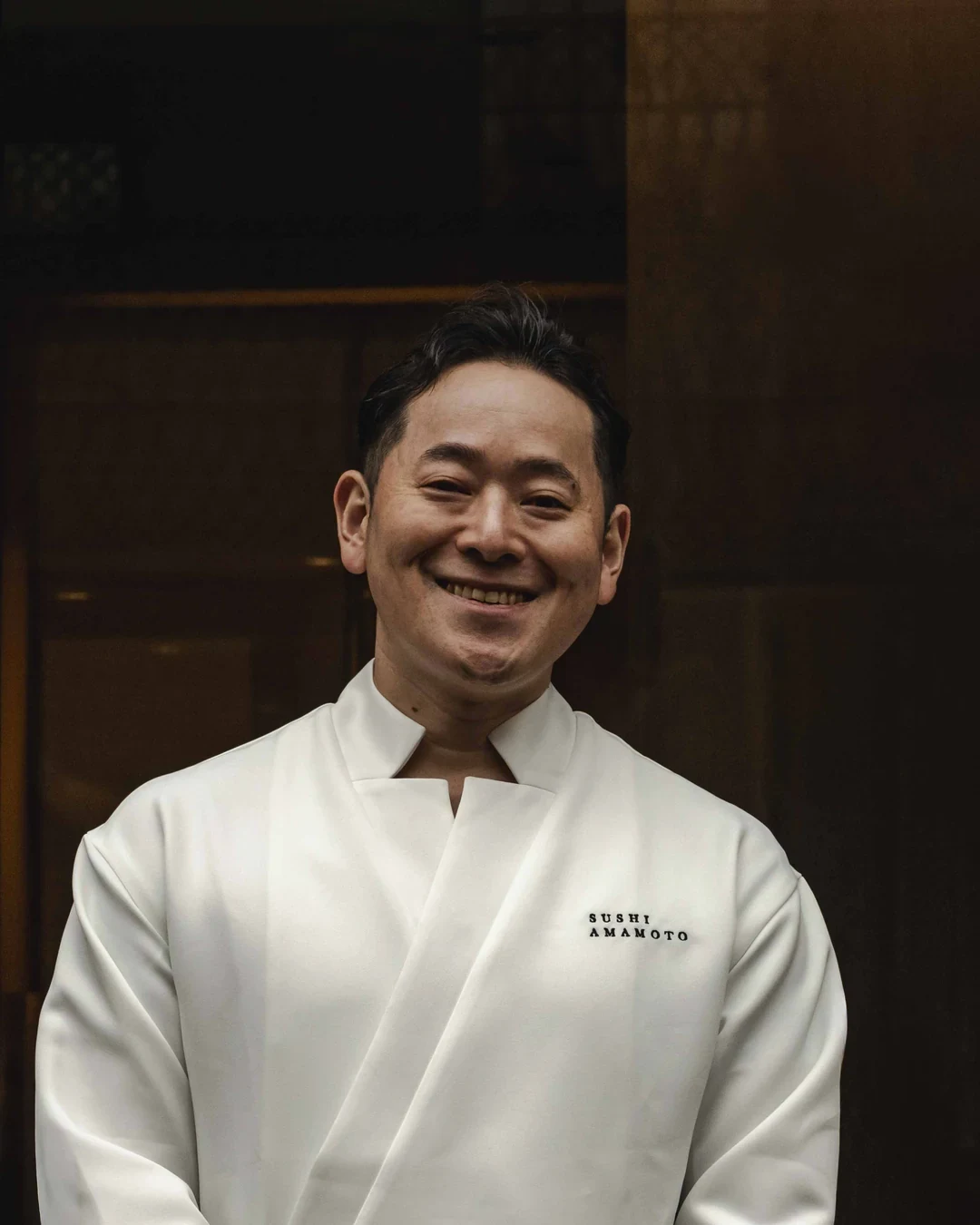
Shogo Amamoto, chef and owner of Sushi Amamoto in Taipei, works Edomae sushi through Kyushu fish and Nagano spring-water rice.
- Opinionated About Dining Top Restaurants in Asia Recommended · 2026
Rice set before the cut
Rice meets fish at the counter under Shogo Amamoto, chef and owner of Sushi Amamoto in Taipei, Taiwan, with each piece held to the Edomae frame he carried from training into ownership. Shogo Amamoto entered Japanese kitchen craft as an apprentice at Kogyoku in Fukuoka, where repetition and watching mattered as much as instruction. He later helped launch Kogyoku’s Taiwan outpost, a move that asked the same discipline to travel without loosening. Since 2015, he has set the terms at Sushi Amamoto in Taipei, no longer only working inside a house method, but deciding the rhythm of one. That distinction matters at a sushi counter. The chef controls the pass, the rice, the pace between courses, the pressure of the hand, and the silence around a piece before it is eaten. In 2026, Amamoto also became Executive Chef de Patron at Sushi Amamoto in London, but the Taipei restaurant remains the address where his ownership first took form. The lineage is spare and legible: Fukuoka apprenticeship, Taiwan launch work, then his own bench in Taipei.
Edomae held to a measured tempo
The named method here is Edomae-style sushi, used as structure rather than decoration. At Sushi Amamoto, the omakase commonly runs 20 to 22 courses, with around 12 pieces of nigiri, so the meal depends on sequence as much as individual cut. Seasonal fish comes primarily from Kyushu, a sourcing choice that keeps the work tied to Japanese waters even as the counter sits in Taipei. The rice is prepared with natural spring water from Nagano, a detail that belongs to the foundation of the meal rather than its surface. The restaurant is also known for trout oshizushi, pressed in the Osaka manner, and grilled handmade mochi finished with N25 caviar and nori. Those dishes sit around the nigiri, not instead of it. Each piece asks for a controlled exchange between temperature, seasoning, knife work, and the chef’s hand. The discipline is not theatrical. It is a series of small decisions made in public, course by course, until the method has nowhere to hide.
A counter built for close work
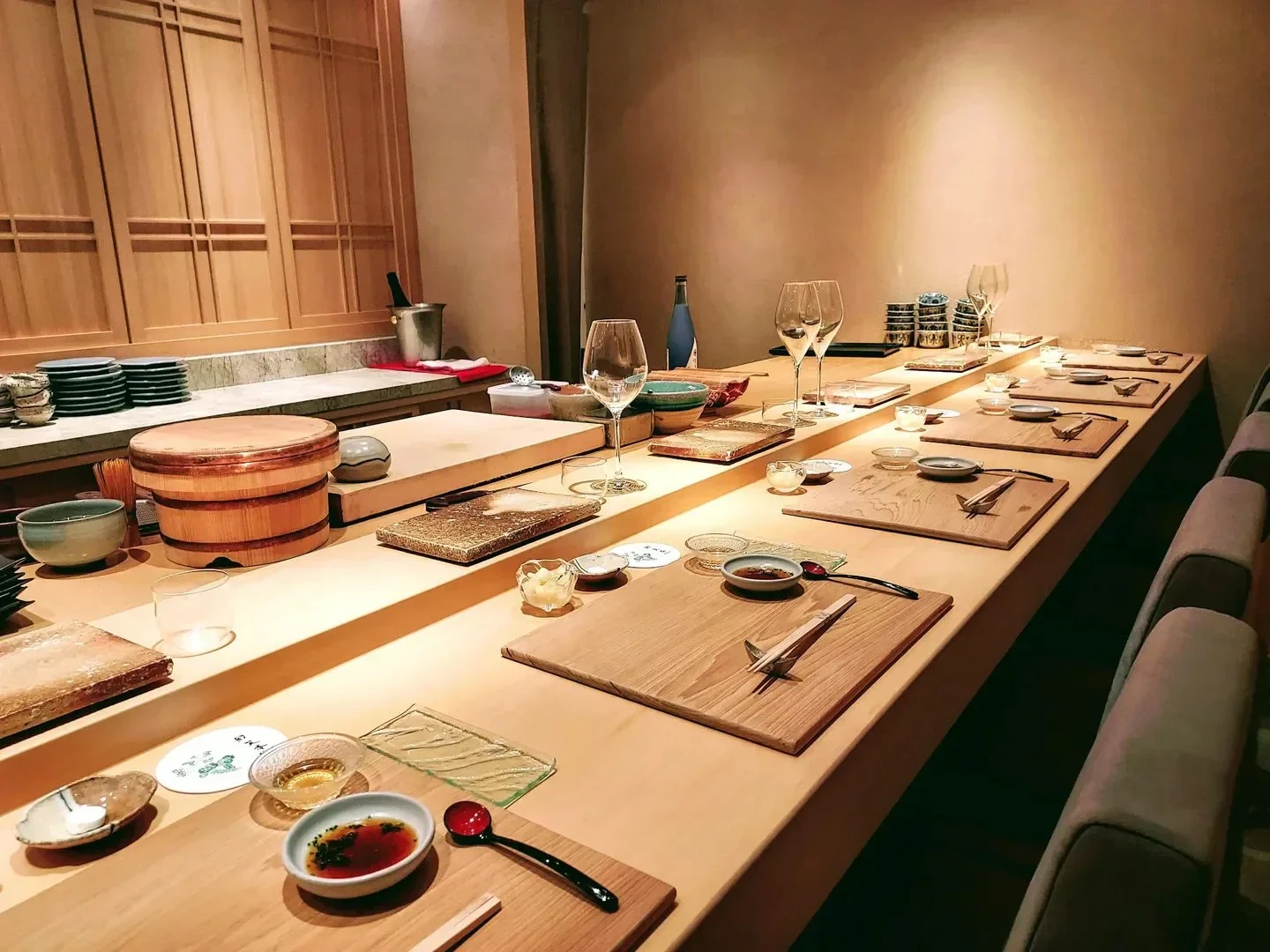
The room is narrow in its attention. Guests sit at a wood sushi counter, often described as cypress or oak, with slate and wood surfaces, noren curtains, and little daylight competing with the bench. The setting allows the hand to remain visible without turning the chef into a performer. At a counter of 12 to 16 seats, a misplaced pause travels. So does a clean one. The pass becomes the room’s clock: rice formed, fish laid down, a plate set forward, then cleared. In that scale, service does not need volume to have weight. The most useful view is bench-side, where the diner can see how Amamoto’s Edomae vocabulary moves from prep into gesture.
The Taipei station remains the anchor
Amamoto’s 2026 London role gives the house a second platform, but it does not erase the station he built in Taipei. The work to follow is already in motion: one chef carrying the same standard between two cities, with Taipei as the address where his ownership has been tested since 2015. Endings here do not need a flourish. They return to the counter, to Kyushu fish, Nagano water, and Shogo Amamoto’s hand at Sushi Amamoto.
Questions
Frequently asked
Who is behind Sushi Amamoto?
Sushi Amamoto in Taipei is run by chef and owner Shogo Amamoto. He trained as an apprentice at Kogyoku in Fukuoka before helping launch Kogyoku’s Taiwan outpost, and he has set the terms at Sushi Amamoto since 2015.
What kind of sushi does the restaurant serve?
The restaurant works within Edomae-style sushi. The omakase commonly runs 20 to 22 courses and includes around 12 pieces of nigiri.
Where does the fish and rice come from?
Seasonal fish comes primarily from Kyushu, and the rice is prepared with natural spring water from Nagano.
What is the dining room like?
Guests sit at a wood sushi counter, often described as cypress or oak, with slate and wood surfaces, noren curtains, and little daylight. The counter has 12 to 16 seats.
Is there a dish the restaurant is known for beyond nigiri?
Sushi Amamoto is also known for trout oshizushi in the Osaka manner and grilled handmade mochi finished with N25 caviar and nori.
The field
How it compares
| Place | Cuisine | Awards | Notes |
|---|---|---|---|
| Sushi Amamoto | Sushi | · | · |
| L'Atelier de Joël Robuchon (Taipei) / 侯布雄法式餐廳 | Modern French Fine Dining | Michelin 2 Stars | Taipei |
| Le Palais | Fine Dining Cantonese | Michelin 3 Stars | Taipei |
| logy | Modern Japanese-Taiwanese Fusion Omakase | Michelin 2 Stars, World's 50 Best | Taipei |
| Mume | Modern Taiwanese-European Fusion | World's 50 Best | Taipei |
| Silks House | Refined Cantonese | World's 50 Best | Taipei |
| Taïrroir | Taiwanese-French Fusion Fine Dining | Michelin 3 Stars | Taipei |
In residence
Similar places
Modern French Fine Dining
L'Atelier de Joël Robuchon (Taipei) / 侯布雄法式餐廳
Taipei, Taiwan
★★
Fine Dining Cantonese
Le Palais
Taipei, Taiwan
★★★
Modern Japanese-Taiwanese Fusion Omakase
logy
Taipei, Taiwan
★★ · 50 Best
Modern Taiwanese-European Fusion
Mume
Taipei, Taiwan
50 Best
Refined Cantonese
Silks House
Taipei, Taiwan
50 Best
Taiwanese-French Fusion Fine Dining
Taïrroir
Taipei, Taiwan
★★★