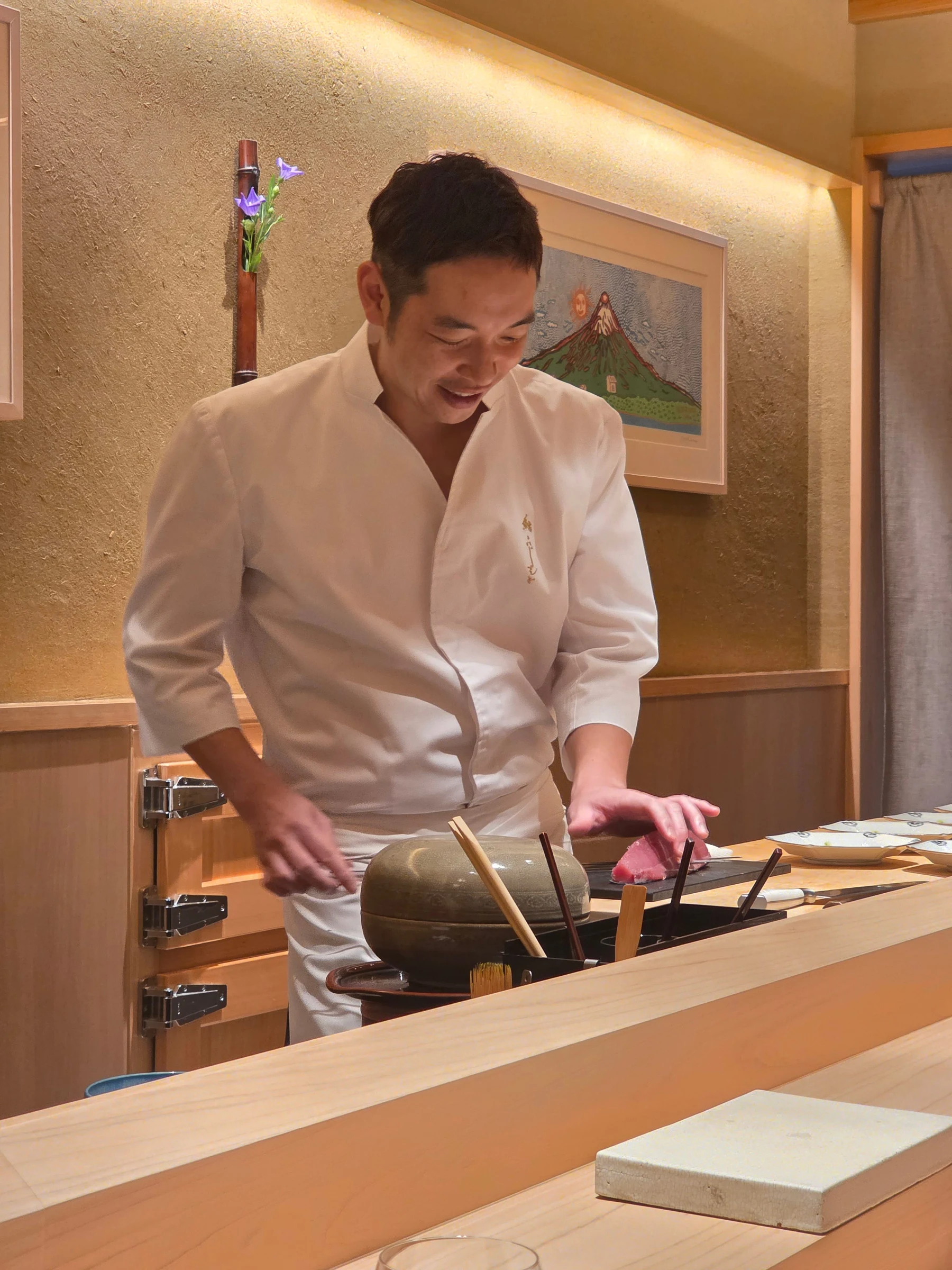
Takashi Saito shapes Edomae sushi as chef at Sushi Saito in Tokyo, where warm shari and seasonal fish set the counter’s pace.
- Opinionated About Dining Top Restaurants in Japan Ranked #3 · 2026
Warm shari at the counter
Warm shari meets the fish before the hand closes around it, a small pressure held for only as long as the rice allows. Takashi Saito works as chef at Sushi Saito in Tokyo, keeping the counter focused on Edomae-style sushi and the restraint it asks of the maker. His training at Ginza Kyubey set the discipline early: precision, repetition, and attention to variables that can vanish from view once the piece reaches the guest. At this station, those lessons return in the rice, the cut, the sequence of otsumami, and the pause between one piece and the next.
Saito has spoken plainly about rice as a point of origin. “I come from Chiba, where the shari (sushi rice) has sugar added to it and is less refined.” The line matters because Sushi Saito reads through a different grammar: red vinegar rice, served warm, seasoned for clarity rather than sweetness, carrying fish without softening its edges. The work is not theatrical. It depends on how the hand measures pressure, how long the topping waits, and how quickly the nigiri leaves the bench-side for the counter.
Edomae by temperature and timing
The program begins with otsumami, then moves into a run of seasonal nigiri, often described as 15-20 pieces. That shape gives Saito room to set the appetite before rice takes over. Kombu-marinated bluefish, toro, uni on warm rice with yuzu zest, anago, tiger prawn, horse mackerel, bonito, squid, and tuna in akami, chutoro, and otoro forms have all appeared in accounts of the meal. The sequence is not a catalogue; it is a way of controlling temperature, texture, and salt across the pass.
The rice draws from Akita and Nagano prefectures, seasoned with spring water and a custom vinegar blend. Toyosu Market supplies the daily fish. Those facts do not explain the method by themselves, but they show where the margins sit: grain, water, vinegar, heat, knife, hand. Saito’s earlier line, “I used to think that sushi was cold,” becomes useful here. At Sushi Saito, warmth is not comfort. It is a technical condition, held long enough for rice and fish to meet at the same point.
A hinoki counter with no extra noise
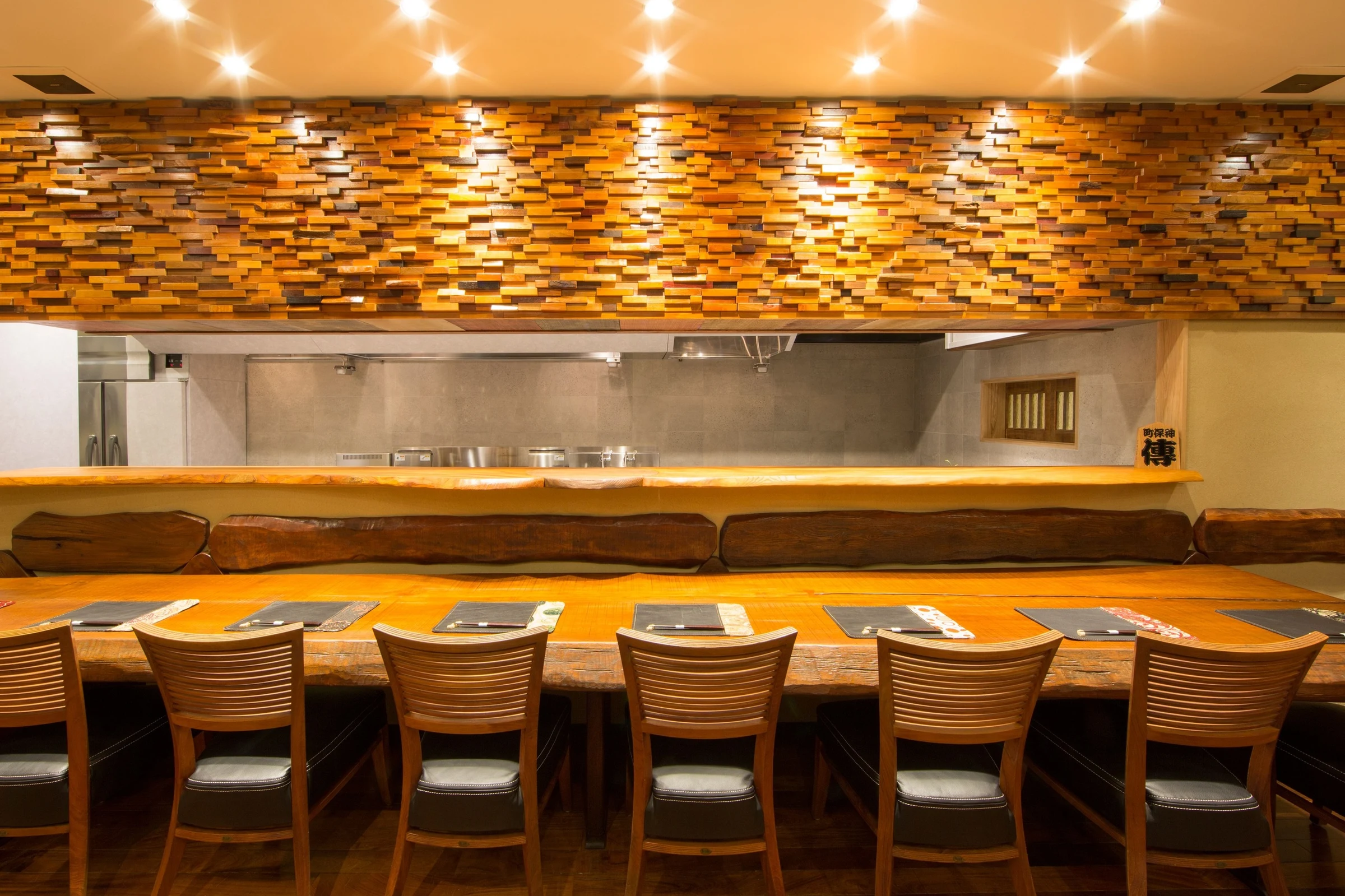
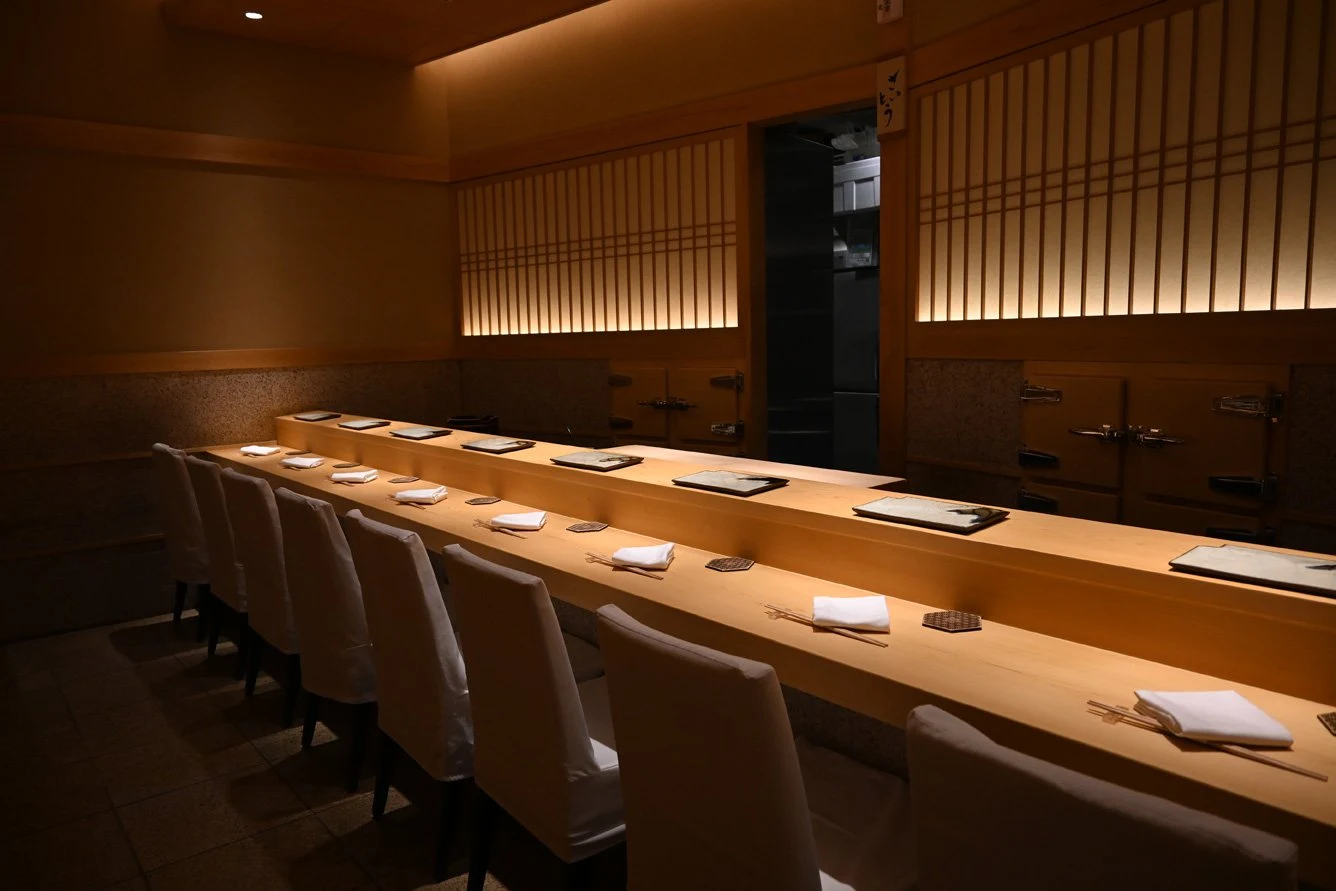
The room sits on the first floor of Ark Hills South Tower in Roppongi, Minato City, where the address gives little away from the outside. Inside, the counter is hinoki, with eight to nine seats arranged close enough for the work to remain visible without being explained. The setting is spare, quiet, and lit to keep the attention on the bench. There is no need for the room to compete with the rice.
Saito is known at the counter for a warmer manner than the severe image often attached to high sushi in Tokyo. That ease does not loosen the discipline. It changes the air around it. The guest sees the sequence as service, but the maker still works inside a narrow band of timing: fish cut, rice held, piece shaped, passed across while the temperature remains where he wants it.
The old rules held close
Sushi Saito moved to its current Roppongi location in February 2014, and the craft there has stayed bound to a traditional Edomae argument: preserve, season, cut, warm, and serve before the point passes. Takashi Saito works the counter at Sushi Saito in Tokyo, keeping Edomae-style sushi at the center.
There is no need to force a future onto a counter built on repetition. The next movement is the next piece, and it still depends on Saito’s warm red-vinegar shari.
Questions
Frequently asked
Who cooks at Sushi Saito?
Takashi Saito works as chef at Sushi Saito in Tokyo.
What kind of sushi does Sushi Saito serve?
The counter focuses on Edomae-style sushi, with the meal beginning with otsumami and then moving into a run of seasonal nigiri.
What is the rice like at Sushi Saito?
The shari is served warm and seasoned with red vinegar for clarity rather than sweetness. It is described as warm shari at the counter, with the rice and fish meeting before the hand closes around it.
Where does the fish come from?
Toyosu Market supplies the daily fish.
What is the dining room like?
The room is on the first floor of Ark Hills South Tower in Roppongi, Minato City. It has a hinoki counter with eight to nine seats, and the setting is spare and quiet.
The field
How it compares
| Place | Cuisine | Awards | Notes |
|---|---|---|---|
| Sushi Saito | Sushi | · | · |
| Den | Modern Japanese Kaiseki | Michelin 2 Stars, World's 50 Best | Tokyo |
| Florilège | Modern French-Japanese Plant-Based Fine Dining | Michelin 2 Stars, World's 50 Best | Tokyo |
| Narisawa | Modern Japanese Satoyama Fine Dining | Michelin 2 Stars, World's 50 Best | Tokyo |
| Quintessence | Modern French Fine Dining | Michelin 3 Stars | Tokyo |
| Sazenka | Modern Chinese Fine Dining | Michelin 3 Stars, World's 50 Best | Tokyo |
| Sézanne | French | Michelin 3 Stars, World's 50 Best | Tokyo |
In residence
Similar places
Modern Japanese Kaiseki
Den
Tokyo, Japan
★★ · 50 Best
Modern French-Japanese Plant-Based Fine Dining
Florilège
Tokyo, Japan
★★ · 50 Best
Modern Japanese Satoyama Fine Dining
Narisawa
Tokyo, Japan
★★ · 50 Best
Modern French Fine Dining
Quintessence
Tokyo, Japan
★★★
Modern Chinese Fine Dining
Sazenka
Tokyo, Japan
★★★ · 50 Best
French
Sézanne
Tokyo, Japan
★★★ · 50 Best