Made ByRestaurant

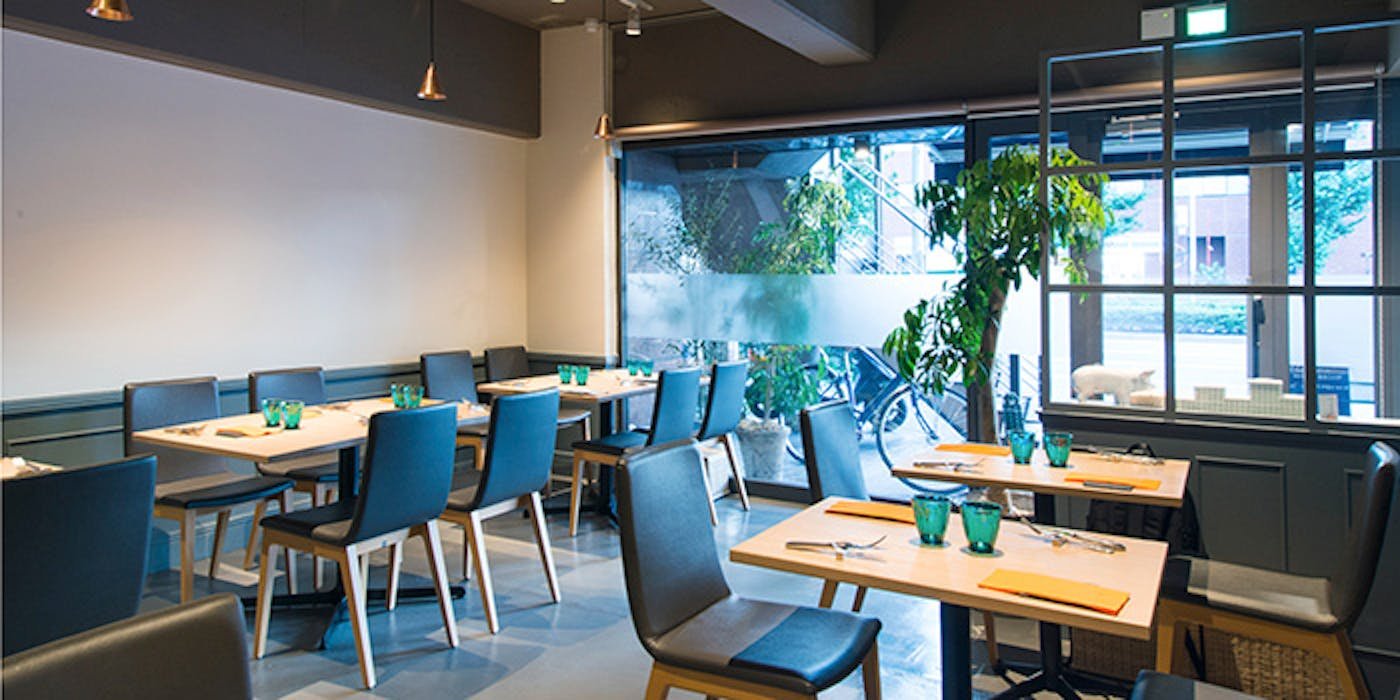
A Michelin Bib Gourmand-recognised neo-bistro in Minamiazabu, T'astous brings the cooking tradition of southwestern France, foie gras, black truffle, the Périgord and Quercy pantry, to a Tokyo dining room that reads more like a chic Paris side-street address than a Japanese city. Chef Alexis Ayala trained in the south of France, and the restaurant's name derives from the Cahors dialect word for a black-truffle canapé.
- Michelin Bib Gourmand
At a glance
- Cuisine
- French Neo-Bistro
- Price
- $$$
- Per person
- $60
- Hours
- Mon: 6–10:30 PM; Tue: 6–10:30 PM; Wed: 6–10:30 PM; Thu: 11:30 AM–2:30 PM, 6–10:30 PM; Fri: 11:30 AM–2:30 PM, 6–10:30 PM; Sat: 11:30 AM–2:30 PM, 6–10:30 PM; Sun: Closed
- Neighborhood
- Minato
- Rating
- 4.5 (115)
<h2>The Case for Regional French Cooking in Tokyo</h2><p>Tokyo's French restaurant scene has long operated at two distinct registers: the formal, multi-starred houses, <a href="https://www.enprimeurclub.com/restaurants/leffervescence-tokyo-restaurant">L'Effervescence</a>, <a href="https://www.enprimeurclub.com/restaurants/sezanne-tokyo-restaurant">Sézanne</a>, <a href="https://www.enprimeurclub.com/restaurants/esquisse-tokyo-restaurant">ESqUISSE</a>, <a href="https://www.enprimeurclub.com/restaurants/florilege">Florilège</a>, and <a href="https://www.enprimeurclub.com/restaurants/chateau-restaurant-joel-robuchon-tokyo-restaurant">Château Restaurant Joël Robuchon</a> among them, and the tier below, where the cooking is serious but the formality is not. The latter category has grown more interesting over the past decade, as chefs trained in the French regions rather than Paris kitchens have brought what French critics call <em>cuisine de terroir</em> to a city that has absorbed and refined nearly every European culinary tradition it has encountered. T'astous, in the Minamiazabu district of Minato, is a restaurant serving French Neo-Bistro cuisine in Tokyo at a price of about $60 per person.</p><p>The Bib Gourmand is a useful frame here. Unlike starred recognition, which tends to reward technical ambition and presentation scale, it identifies places where the cooking-to-value ratio draws inspector attention. At the ¥¥ price range, T'astous positions itself against a comparable set of neighbourhood-focused European restaurants in Tokyo rather than against the city's formal French dining tier. That positioning shapes everything: the format, the atmosphere, the menu logic.</p><h2>Southwest France as a Culinary Reference Point</h2><p>The cooking tradition that T'astous draws from is specific and well-defined. Southwestern France, the arc running from Bordeaux south through the Gascon heartland and east into the Quercy around Cahors, is among France's most ingredient-driven regions. Foie gras, duck confit, black truffles from the limestone plateaux of the Périgord and Quercy: these are not garnishes in this tradition but the primary argument of the plate. The region is less given to elaborate technique than to a frank confidence in raw material quality. A well-sourced black truffle, shaved generously and served at the right temperature, requires almost nothing else. That philosophy, when transported to Tokyo, sits in interesting tension with a Japanese culinary culture that shares the same reverence for ingredient primacy but expresses it through entirely different preparations.</p><p>T'astous's name makes its allegiances explicit. <em>T'astous</em> is the Cahors dialect term for a black-truffle canapé, a regional word for a regional preparation rooted in the Lot valley. Naming a Tokyo restaurant after a dialect term from one of France's least internationally famous wine and food regions is a statement of culinary positioning: this is not generic French, and it is not Parisian. It is the cooking of a specific place, carried by a chef who trained there and has chosen to frame his Tokyo address through that specific inheritance.</p><h2>The Neo-Bistro Format and What It Implies</h2><p>Neo-bistro format, which T'astous occupies, emerged in Paris over the 2010s as a response to the perceived rigidity of formal French restaurant culture. Its defining characteristics are a relaxed dining room, a focused menu without the ceremony of multi-course tasting formats, cooking that draws heavily on regional and seasonal sourcing, and pricing that sits below the starred tier. Cities from Copenhagen to Seoul developed their own versions. Tokyo's interpretation tends to be tighter in execution and more exacting in product selection than many European equivalents, a reflection of the standards Japanese dining culture imposes across all price points.</p><p>T'astous's Minamiazabu address fits this format well. The neighbourhood, in the southern part of Minato ward, carries a residential-international character distinct from the denser restaurant precincts of Roppongi to the north or Ebisu further west. It is a district that supports the kind of low-key, repeat-visit restaurant that the neo-bistro format depends on: a local following that books regularly rather than a tourist circuit that books once. That dynamic tends to produce menus with more cooking confidence and less crowd-pleasing compromise.</p><h2>Chef Alexis Ayala and the Southwest France Training Line</h2><p>Chef credentials in this context function as geographic and culinary signals. Chef Alexis Ayala trained in the south of France, a fact that locates his formation within the specific regional tradition the restaurant references. That training record aligns T'astous with a broader pattern visible in Japanese French cooking: chefs who studied in the French regions rather than Paris or Lyon often bring a more ingredient-direct approach, less invested in architectural presentation and more focused on the authority of the central product. Whether foie gras or black truffle, the southwest French tradition rewards that approach and penalises over-complication.</p><p>For the diner, this means the menu follows the seasons of the French southwest as much as it does the Tokyo calendar. Truffle season in the Périgord runs roughly December through March; foie gras is available year-round but prepared differently across seasons. A restaurant with this culinary lineage tends to structure its menu around these rhythms even when operating 10,000 kilometres from the source.</p><h2>Where T'astous Sits in Tokyo's French Dining Order</h2><p>Positioning T'astous against comparable French restaurants clarifies the value proposition. Against the ¥¥¥¥ French houses, including places like <a href="https://www.enprimeurclub.com/restaurants/leffervescence-tokyo-restaurant">L'Effervescence</a> and <a href="https://www.enprimeurclub.com/restaurants/esquisse-tokyo-restaurant">ESqUISSE</a>, it competes on authenticity of regional reference rather than technical ambition or tasting menu architecture. Against casual European restaurants in the same price bracket, it competes on the specificity and quality of its core ingredients. The 2024 Bib Gourmand places it above the undifferentiated mid-tier, confirmed by inspectors who apply the same standards globally.</p><p>Tokyo's broader dining context is worth noting for visitors calibrating expectations. The city's French restaurant concentration is among the highest outside France itself, and competition across all price tiers is considerable. A Michelin Bib Gourmand in Tokyo is not awarded in a thin field. The recognition carries more weight here than it would in a smaller city with fewer serious competitors. For dining in other Japanese cities, EP Club also covers <a href="https://www.enprimeurclub.com/restaurants/hajime-osaka-restaurant">HAJIME in Osaka</a>, <a href="https://www.enprimeurclub.com/restaurants/gion-sasaki-kyoto-restaurant">Gion Sasaki in Kyoto</a>, <a href="https://www.enprimeurclub.com/restaurants/akordu-nara-restaurant">akordu in Nara</a>, <a href="https://www.enprimeurclub.com/restaurants/goh-fukuoka-restaurant">Goh in Fukuoka</a>, <a href="https://www.enprimeurclub.com/restaurants/1000-yokohama-restaurant">1000 in Yokohama</a>, and <a href="https://www.enprimeurclub.com/restaurants/6-okinawa-restaurant">6 in Okinawa</a>. For French cooking of this regional tradition beyond Japan, <a href="https://www.enprimeurclub.com/restaurants/hotel-de-ville-crissier-crissier-restaurant">Hotel de Ville Crissier in Crissier</a> and <a href="https://www.enprimeurclub.com/restaurants/les-amis-singapore-restaurant">Les Amis in Singapore</a> offer instructive comparisons in different markets.</p><h2>Planning Your Visit</h2><p>T'astous is located at 2 Chome-5-21 Minamiazabu, Minato, Tokyo, on the ground floor of the Maruzen Building. The address is in a residential section of Minato ward, accessible via the Hiroo station area. The ¥¥ price range positions it as an accessible entry point into serious French cooking in Tokyo. Google review data shows a 4.5 rating from 108 reviews, consistent with a neighbourhood restaurant that earns repeat visits rather than one-time destination traffic. Booking is recommended.</p><p>At a glance: 4.5/5 on Google (115 reviews) | About $60 per person | Minamiazabu, Minato, Tokyo | French Neo-Bistro</p><h2 id="cuisine">FAQ: What Is the Signature Dish at T'astous?</h2><p>The restaurant's name answers this question directly. <em>T'astous</em> refers to a black-truffle canapé in the Cahors dialect, and black truffle is the central ingredient reference throughout the menu. The southwest France training of Chef <a href="#chef">Alexis Ayala</a> also places foie gras at the core of the cooking, given its centrality to the Gascon and Périgord culinary tradition. These two ingredients, truffle and foie gras, function as the kitchen's primary reference points rather than as luxury additions to a more neutral base. As confirmed by the 2024 Michelin <a href="#awards">Bib Gourmand</a> recognition, the kitchen handles them with sufficient authority to earn inspector notice at this price tier.</p>
Know before you go
- Dress code
- smart_casual
- Reservations
- recommended
- Payment
- credit_card
- Outdoor seating
- Yes
- Children
- Welcomed
Frequently asked
What's T'astous known for in terms of accolades?
T'astous has received recognition including: T’astous presents as a ‘neo-bistro’, the sort of chic bistro you might find in Paris. Regional cooking arranged for a modern sensibility. The chef trained in the south of France, so he excels with foie gras and truffles that are this region….
What's the signature dish at T'astous?
The restaurant's name says it directly: T'astous is the word for a black-truffle canapé in the Cahors dialect of southwestern France. Black truffle anchors the cooking here, alongside foie gras, both of which are defining products of the Gascony and Périgord traditions that Chef Alexis Ayala trained within. The Michelin Bib Gourmand recognition in 2024 affirms that this regional specificity translates at ¥¥ price levels rather than only in the multi-starred register.
What should I budget for a meal at T'astous?
Pricing at T'astous is listed as ¥¥.
What's T'astous's location?
T'astous is located at Japan, 〒106-0047 Tokyo, Minato City, Minamiazabu, 2 Chome−5−21 丸善ビル 1F, Tokyo.
Address
Japan, 〒106-0047 Tokyo, Minato City, Minamiazabu, 2 Chome−5−21 丸善ビル 1F
Minato
How it compares
- Cuisine
- French Neo-Bistro
- Price
- $$$
- Awards
- Michelin Bib Gourmand
- Notes
- Minato
- Cuisine
- Modern French Bistro & Café
- Price
- $$$
- Awards
- Michelin Plate
- Notes
- Shibuya
- Cuisine
- Classic French Pork Cuisine
- Price
- $$$
- Awards
- Michelin Plate
- Notes
- Minato
- Cuisine
- Classic French with Japanese Elements
- Price
- $$$
- Awards
- Michelin Plate
- Notes
- Chūō
- Cuisine
- Modern French
- Price
- $$$
- Awards
- Michelin Plate
- Notes
- Shibuya
- Cuisine
- Casual French Bistro
- Price
- $$$
- Awards
- Michelin Bib Gourmand
- Notes
- Taitō
In residence
Similar places
French
Sézanne
Tokyo, Japan
★★★ · 50 Best
Modern Chinese Fine Dining
Sazenka
Tokyo, Japan
★★★ · 50 Best
Modern Japanese Satoyama Fine Dining
Narisawa
Tokyo, Japan
★★ · 50 Best
Modern French-Japanese Plant-Based Fine Dining
Florilège
Tokyo, Japan
★★ · 50 Best
Modern Japanese Kaiseki
Den
Tokyo, Japan
★★ · 50 Best
Modern French Fine Dining
Quintessence
Tokyo, Japan
★★★