Made ByRestaurant
The Pizza Bar on 38th
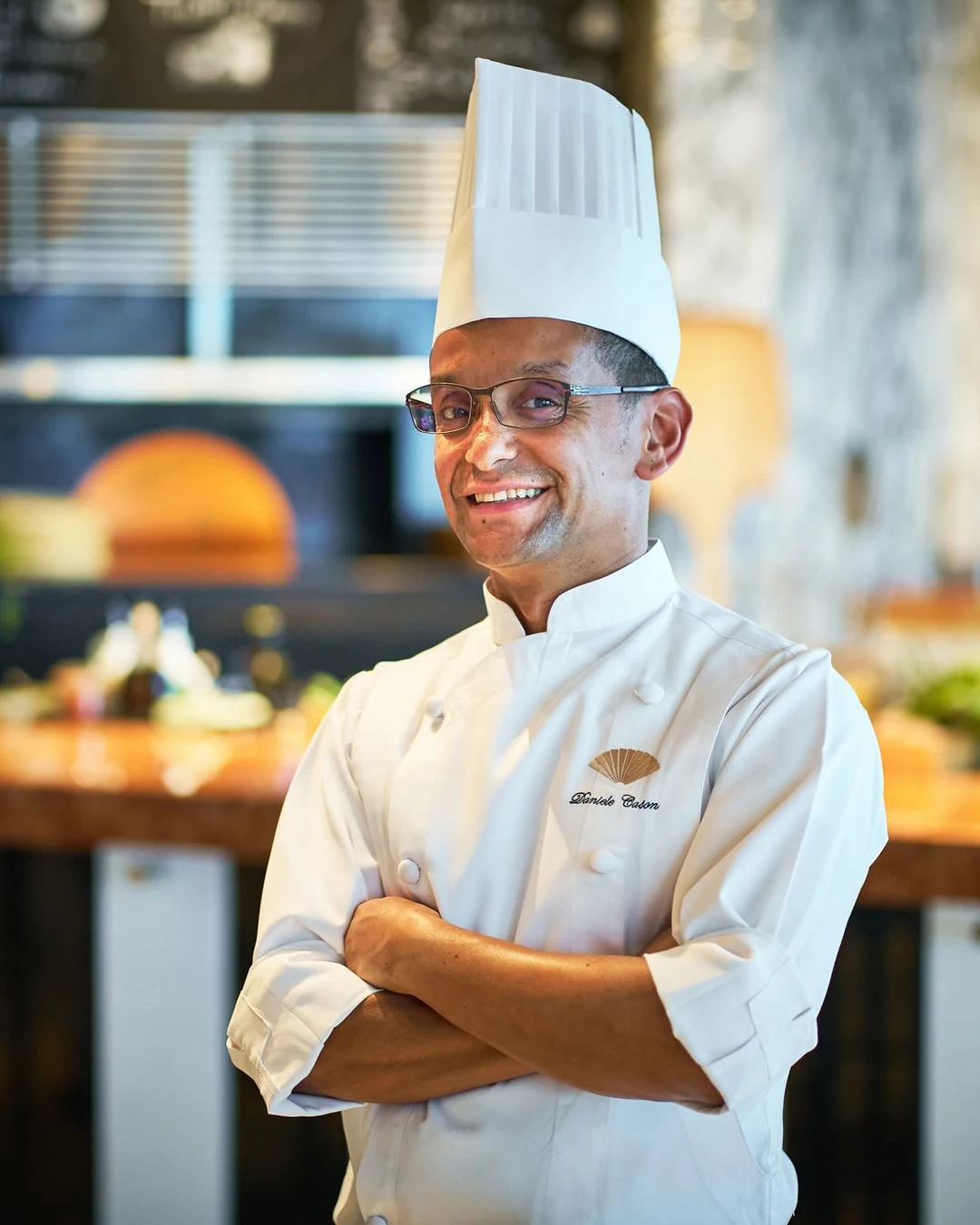
Chef in Residence
Daniele Cason
Chef
- 01CuisineArtisanal Neapolitan Pizza Omakase
- 02CityTokyo, Japan
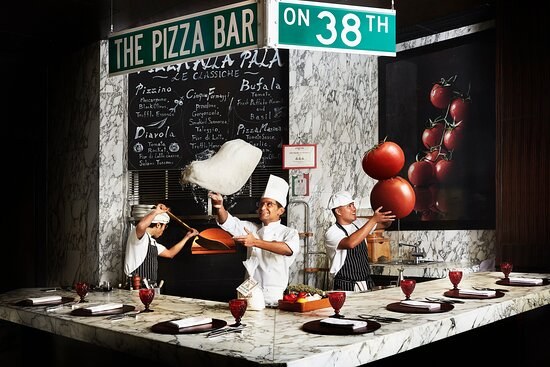
Occupying just eight counter seats on the 38th floor of the Mandarin Oriental Nihonbashi, The Pizza Bar on 38th applies omakase discipline to Roman-style pizza, running a prix fixe format through eight successive slices. Ranked #11 in the Opinionated About Dining Casual Japan list for 2025 and holding a Michelin Plate, it sits in a narrow tier of Tokyo dining that treats pizza as a serious tasting format rather than a casual proposition.
At a glance
- Cuisine
- Artisanal Neapolitan Pizza Omakase
- Price
- $$$$
- Per person
- $95
- Hours
- Mon: 11:30 AM–3 PM, 5:30–10 PM; Tue: 11:30 AM–3 PM, 5:30–10 PM; Wed: 11:30 AM–3 PM, 5:30–10 PM; Thu: 11:30 AM–3 PM, 5:30–10 PM; Fri: 11:30 AM–3 PM, 5:30–10 PM; Sat: 11:30 AM–3 PM, 5:30–10 PM; Sun: 11:30 AM–3 PM, 5:30–10 PM
- Neighborhood
- Chuo
- Rating
- 4.4 (454)
<h2>The Case for Making This Your One Mandatory Booking in Tokyo</h2><p>Tokyo has a documented habit of importing a cuisine, stripping it to first principles, and rebuilding it under the discipline of Japanese craft culture. The city has done this with French technique, with Neapolitan pizza, with New York-style bagels. What makes the 38th floor of the Mandarin Oriental Nihonbashi worth your reservation is not novelty for its own sake, but the logical conclusion of that process applied to a format, the omakase counter, that Tokyo already executes with more precision than almost anywhere on earth. It is a reservation-only counter on the 38th floor of Mandarin Oriental Tokyo in Chuo City, Tokyo, serving artisanal Neapolitan pizza omakase at about $95 per person.</p><h2>Counter Format and the Architecture of the Room</h2><p>The physical reality shapes everything. Eight seats arranged at a counter on the 38th floor means that sightlines, scale, and sound operate at an register closer to <a href="https://www.enprimeurclub.com/restaurants/harutaka-tokyo-restaurant">Harutaka</a> or any serious sushi-ya than to a conventional pizzeria. The room's elevation above Nihonbashi places the city's grid below and at a remove, which changes the acoustics as much as the view, the ambient din of street-level dining is replaced by a controlled stillness that lets you hear the crust as it's cut. There are no walk-ins, no shared tables, no incidental noise from a pass. All eight diners start simultaneously, which is the structural decision that makes the prix fixe format coherent: two pizzas emerge from the oven, each divided into four slices, so every guest receives a matching portion of every variation. The sequence continues through eight pizza tastings in total, framed by a vegetable-based welcome course and a dessert, borrowing the arc of a kaiseki menu and applying it to a cuisine whose default register is the opposite of contemplative.</p><h2>The Sensory Logic of the Format</h2><p>Roman-style pizza baked in rounds, served in sequence at a counter, the sensory experience this creates is worth describing in structural terms, because the format is not incidental to the flavour. Organic Italian wheat, hydrated to a high ratio and given an extended rest before baking, produces a crust with distinct textural layers: a bite that resists briefly on the outside and then opens into something softer and more yielding within. The smell of a freshly cut slice across an eight-seat counter carries further than it would at a four-leading in a larger room. Each successive pizza arrives at a different temperature from the last, which means the experience of the meal involves reading slight variations in crust char, topping set, and ingredient release, the kind of attention that a seated counter enforces but a conventional dining room rarely requires.</p><p>The ingredient sourcing divides between Japanese producers, primarily small-scale, and Italian imports for the components where the provenance cannot be approximated domestically. The menu changes with ingredient seasonality, which, in practice, means the pizza you eat in autumn will differ materially from the one served in spring, a rhythm that aligns the kitchen with the same seasonal logic governing the kaiseki houses and sushi counters a few floors below in Tokyo's restaurant hierarchy. Chef Daniele Cason, from Rome, oversees the kitchen; his provenance matters here as a credential situating the style within Roman tradition rather than Neapolitan or New York lineages. For comparisons within the Neapolitan canon, <a href="https://www.enprimeurclub.com/restaurants/ciro-cascella-30-naples-restaurant">3.0 Ciro Cascella</a> and <a href="https://www.enprimeurclub.com/restaurants/50-kalo-naples-restaurant">50 Kalò</a> in Naples represent the source tradition against which Tokyo's interpretation reads most clearly.</p><h2>Where It Sits in Tokyo's Dining Hierarchy</h2><p>Tokyo's upper tier of restaurants is heavily weighted toward French and Japanese formats. The city's most-discussed counters, kaiseki rooms like <a href="https://www.enprimeurclub.com/restaurants/ryugin">RyuGin</a>, French tasting menus at <a href="https://www.enprimeurclub.com/restaurants/leffervescence-tokyo-restaurant">L'Effervescence</a> and <a href="https://www.enprimeurclub.com/restaurants/sezanne-tokyo-restaurant">Sézanne</a>, or innovative formats like <a href="https://www.enprimeurclub.com/restaurants/crony-tokyo-restaurant">Crony</a>, operate at the ¥¥¥¥ price tier. The Pizza Bar on 38th occupies ¥¥¥, which places it in a distinct bracket: more expensive than the city's casual pizza options but within the venue's $95 per person price point. That gap makes it accessible to a different audience from the full-evening commitment of a multi-Michelin counter while still requiring a planning horizon and a degree of intention that casual dining does not.</p><p>Recognition across multiple frameworks confirms its position. The Opinionated About Dining Casual Japan ranking has placed it at #14 (2023), #16 (2024), and #11 (2025), a consistent upward trajectory across three years. The Michelin Plate (2025) and Pearl Recommended designation add two separate critical endorsements to that. Among the city's broader dining scene, the combination of consistent ranking movement and cross-framework recognition places it among the stronger-performing casual-tier venues in the city.</p><p>For readers building a wider Japan itinerary, comparable precision-driven counter formats operate across the country: <a href="https://www.enprimeurclub.com/restaurants/hajime-osaka-restaurant">HAJIME in Osaka</a>, <a href="https://www.enprimeurclub.com/restaurants/gion-sasaki-kyoto-restaurant">Gion Sasaki in Kyoto</a>, <a href="https://www.enprimeurclub.com/restaurants/akordu-nara-restaurant">akordu in Nara</a>, <a href="https://www.enprimeurclub.com/restaurants/goh-fukuoka-restaurant">Goh in Fukuoka</a>, <a href="https://www.enprimeurclub.com/restaurants/1000-yokohama-restaurant">1000 in Yokohama</a>, and <a href="https://www.enprimeurclub.com/restaurants/6-okinawa-restaurant">6 in Okinawa</a> each operate within their own regional dining traditions, but share the counter-format discipline that makes this tier of Japanese dining function as it does.</p><h2>Planning Your Visit</h2><p>The address is Mandarin Oriental Tokyo, 2 Chome-1-1 Nihonbashimuromachi, Chuo City, the 38th floor of the hotel, accessible through the lobby. Nihonbashi sits between Tokyo Station and the Ginza corridor, well-served by multiple subway lines, and the hotel itself is a practical base for exploring either area; The Google rating of 4.4 across 454 reviews is consistent with the recognition profile. Advance reservations are essential: with a fixed seating of eight, availability runs tight, and the popularity the venue has accumulated across three years of OAD recognition means the booking window should be treated as seriously as any major Tokyo counter. The prix fixe format removes the question of what to order, the kitchen sequences the menu, accommodates allergies and intolerances, and the drink list draws from the Mandarin Oriental's hotel programme.</p>
Know before you go
- Dress code
- smart_casual
- Reservations
- essential
- Parking
- valet
- Payment
- credit_card, cash
- Accessibility
- elevator
Frequently asked
Is The Pizza Bar on 38th better for a quiet night or a lively one?
The format settles that question before you arrive. Eight seats, a synchronized start time, and a prix-fixe sequence modelled on a sushi counter produce an atmosphere closer to a kaiseki room than a pizzeria. Conversation happens, but the room's scale and the structured pacing keep energy measured rather than convivial. It ranked #11 on Opinionated About Dining Casual Japan in 2025, which signals peer recognition for exactly this kind of composed, counter-led dining.
What kind of recognition has The Pizza Bar on 38th received?
The Pizza Bar on 38th has received recognition including: As the name suggests, food is served at a counter, which seats just eight. Prix fixe is made possible by starting each seating at the same time. A succession of different pizzas are baked, then cut into eight, allowing diners to enjoy a sli….
What should I order at The Pizza Bar on 38th?
There is no à la carte menu. Chef Daniele Cason runs a fixed omakase sequence: eight pizza tastings in total, with two Roman-style rounds baked at a time, each cut into eight slices so every guest receives one of each. A vegetable-based welcome course and dessert frame the meal. The menu rotates with seasonality, so the specific pizzas on any given night depend on the current ingredients, sourced primarily from small Japanese producers with select items imported from Italy.
What price level is The Pizza Bar on 38th?
Pricing at The Pizza Bar on 38th is listed as ¥¥¥.
How do I find The Pizza Bar on 38th?
The Pizza Bar on 38th is located at 2 Chome-1-1 Nihonbashimuromachi, Chuo City, Tokyo 103-8328, Japan, Tokyo.
Is The Pizza Bar on 38th chef-led?
The chef associated with The Pizza Bar on 38th is Daniele Cason.
Address
2 Chome-1-1 Nihonbashimuromachi, Chuo City, Tokyo 103-8328, Japan
Chuo
How it compares
- Notes
- Chūō, Artisanal Neapolitan Pizza Omakase
- Price
- $$$$
- Notes
- Minato, New Italian
- Price
- $$$$
- Notes
- Minato, Nationwide Italian with Japanese Seafood
- Price
- $$$$
- Notes
- Shibuya, Parma Italian Fine Dining
- Price
- $$$$
- Notes
- Minato, Modern Italian with Japanese Seasonal Ingredients
- Price
- $$$$
- Notes
- Minato, Modern Italian with Japanese influences
- Price
- $$$$
In residence
Similar places
French
Sézanne
Tokyo, Japan
★★★ · 50 Best
Modern Chinese Fine Dining
Sazenka
Tokyo, Japan
★★★ · 50 Best
Modern Japanese Satoyama Fine Dining
Narisawa
Tokyo, Japan
★★ · 50 Best
Modern French-Japanese Plant-Based Fine Dining
Florilège
Tokyo, Japan
★★ · 50 Best
Modern Japanese Kaiseki
Den
Tokyo, Japan
★★ · 50 Best
Modern French Fine Dining
Quintessence
Tokyo, Japan
★★★