Weingut Jean Stodden operates from the Ahr Valley village of Rech, a region where Spätburgunder grown on volcanic slate and greywacke soils produces some of Germany's most structurally serious red wines. Holder of a Pearl 2 Star Prestige rating in 2025, the estate sits within a peer group defined by precision and terroir fidelity rather than volume. Visiting requires planning, but rewards it.
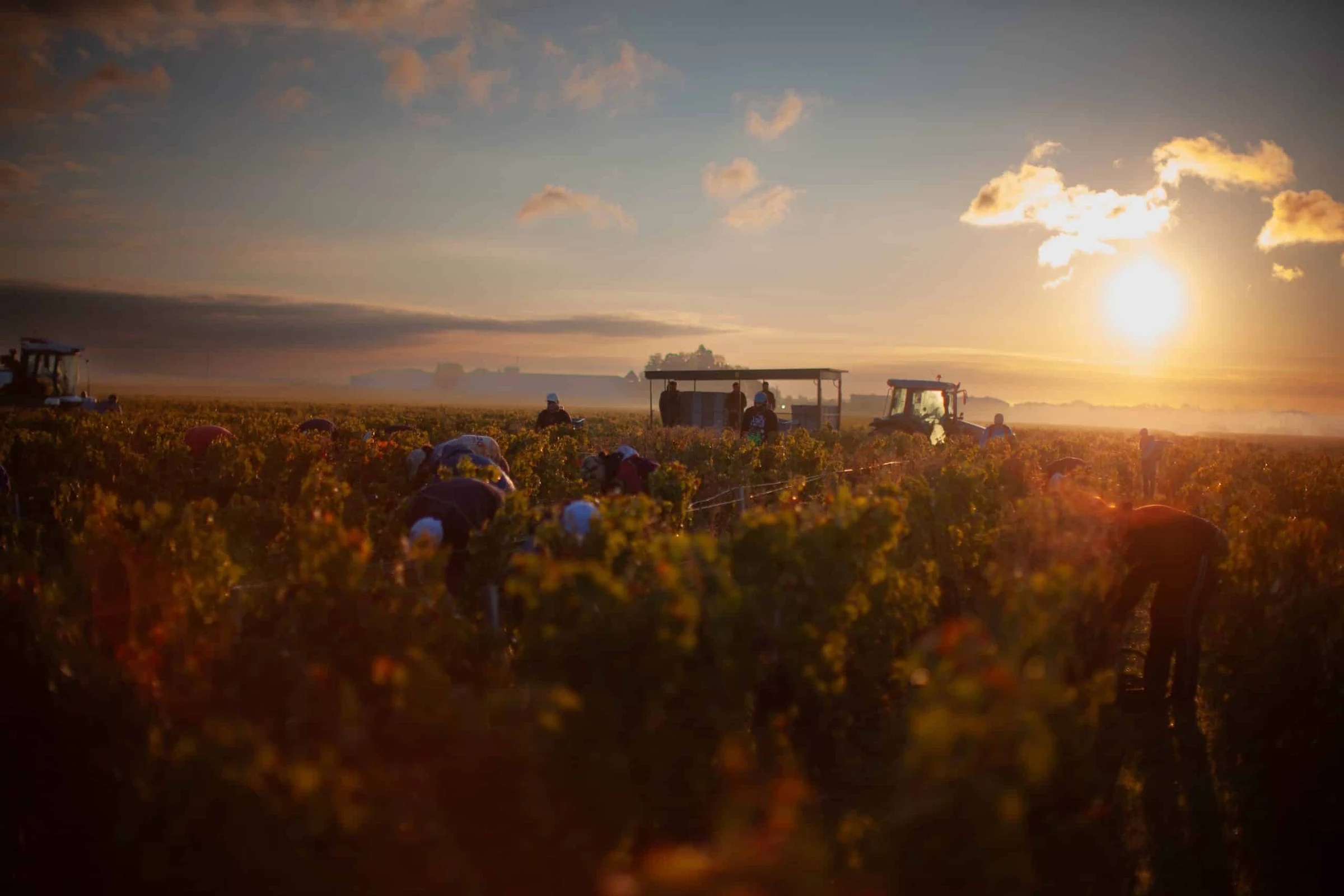
<h2>Where the Ahr's Slate Speaks in Red</h2><p>The Ahr Valley arrives as a surprise to most visitors approaching from the Rhine. The road narrows, the valley walls steepen, and vineyards planted on near-vertical slopes of dark volcanic slate and greywacke appear with a drama that feels disproportionate to the region's modest scale. Rech sits partway along this corridor, a village small enough to cross on foot in minutes, where the address on Rotweinstraße, Red Wine Road, announces without ambiguity what the valley considers its primary language. Weingut Jean Stodden stands on this road, and the wines made here are shaped by the same geology that defines the Ahr's most compelling sites.</p><p>The Ahr is Germany's northernmost significant red wine region, and that positioning matters enormously to what ends up in the glass. Cool nights, a river that moderates extremes, and south-facing slopes that collect every available hour of sunlight create conditions where Spätburgunder, Germany's name for Pinot Noir, achieves a combination of ripeness and acidity that warmer climates can rarely replicate. The slate and greywacke soils drain efficiently, stress the vines constructively, and contribute a mineral tension that runs through the wines like a structural thread. That geological signature is not a marketing abstraction here; it is traceable in the wines themselves.</p><h2>A 2025 Pearl 2 Star Prestige Rating in Context</h2><p>Weingut Jean Stodden is associated with a Pearl 2 Star Prestige mention for 2025, and its focus remains on Ahr Spätburgunder from slate sites. Among Ahr producers, that kind of sustained recognition is not incidental. The valley counts relatively few estates operating at this level, and those that do tend to share a commitment to low yields on difficult terrain rather than any particular production philosophy. In the broader map of German fine wine, the Ahr remains a smaller chapter than the Mosel or the Pfalz, but within that chapter, Stodden occupies a well-defined position.</p><p>The Ahr is almost exclusively judged on the quality of its Spätburgunder, making the evaluation criteria tighter and the comparative field smaller.</p><h2>Geology as the Working Ingredient</h2><p>Ahr Spätburgunder from sites with significant slate content reads differently in the glass from red Burgundy and from Pinot grown on the Pfalz's sandstone or limestone. The mineral component is more insistent, the fruit profile tends toward dark cherry and dried herb rather than fresh strawberry, and the tannin structure often carries a fine, almost granular texture shaped by the volcanic rock the roots work through. These are not wines built for early, obvious pleasure; they reward patience and benefit from being served with enough time to open in the glass.</p><p>The Ahr's greywacke, a metamorphic sedimentary rock found across key sections of the valley, adds another layer to this geological conversation. Greywacke retains heat during the day and releases it gradually at night, helping fruit development in a climate where growing-season warmth is always at a premium. The combination of this thermal property with the drainage efficiency of slate creates a microenvironmental balance that serious Ahr estates have long understood as their competitive advantage over larger, better-known German regions. Stodden's position on the Rotweinstraße places it within this geological context directly, not by accident of address but by the nature of the sites it works.</p><p>For comparison, Riesling estates in Germany's Rheingau, such as <a href="https://www.enprimeurclub.com/wineries/kloster-eberbach-eltville-winery">Kloster Eberbach in Eltville</a> and <a href="https://www.enprimeurclub.com/wineries/weingut-georg-breuer-rudesheim-am-rhein-winery">Weingut Georg Breuer in Rüdesheim am Rhein</a>, work with quartzite and phyllite soils that produce their own mineral signatures, but in a white wine context where the expression is more familiar to international markets. The Ahr's red wine terroir remains less traveled territory for most wine drinkers, which is part of what makes the serious estates here worth seeking out rather than skipping in favor of better-publicized regions.</p><h2>The Ahr Among Germany's Premium Red Wine Producers</h2><p>German fine wine conversation is still dominated internationally by white varieties, and Riesling from the Mosel or Rheingau tends to get the majority of critical oxygen. Estates like <a href="https://www.enprimeurclub.com/wineries/weingut-fritz-haag-brauneberg-winery">Weingut Fritz Haag in Brauneberg</a>, <a href="https://www.enprimeurclub.com/wineries/weingut-grans-fassian-leiwen-winery">Weingut Grans-Fassian in Leiwen</a>, and <a href="https://www.enprimeurclub.com/wineries/weingut-bassermann-jordan-deidesheim-winery">Weingut Bassermann-Jordan in Deidesheim</a> represent the established Riesling prestige tier that most collectors think of first. The Ahr's serious red wine producers, Stodden among them, operate in a different and more specialized conversation.</p><p>That specialization has consequences for how the wines circulate. Ahr production volumes are small by any measure, the valley's total planted area is a fraction of the Mosel's, and wines from the leading estates tend to be allocated rather than widely available at retail. Buyers looking for Ahr Spätburgunder at the prestige tier often deal directly with producers rather than finding bottles in general trade. This is worth knowing before planning a visit. Other German estates operating at comparable prestige levels with allocation-driven distribution models include <a href="https://www.enprimeurclub.com/wineries/weingut-battenfeld-spanier-hohen-sulzen-winery">Weingut Battenfeld-Spanier in Hohen-Sülzen</a> and <a href="https://www.enprimeurclub.com/wineries/weingut-allendorf-oestrich-winkel-winery">Weingut Allendorf in Oestrich-Winkel</a>.</p><p>Institutions with longer histories in German wine, such as <a href="https://www.enprimeurclub.com/wineries/weingut-burgerspital-zum-heiligen-geist-wurzburg-winery">Weingut Bürgerspital zum Heiligen Geist in Würzburg</a>, operate at larger scales and across broader variety portfolios. Stodden's profile is narrower and more focused, which in the current fine wine market tends to be a mark of seriousness rather than limitation.</p><h2>Planning a Visit to Rech</h2><p>Rech is accessible from Bonn in under an hour by road, and the Ahr Valley as a whole is compact enough to visit multiple producers in a single day if planned carefully. The valley's single-track wine road means that timing matters, weekend visits in autumn, when the vineyards are at their most photogenic and harvest draws wine tourists from across the region, will require patience with traffic and advance arrangements with estates. Contacting Weingut Jean Stodden directly before visiting is advisable, as appointments are required.</p><p>The Ahr Valley's compact geography also means that serious wine travelers can usefully combine a visit here with exploration of other German fine wine regions within a few days' drive. The Mosel lies directly to the south and west, making it a logical pairing itinerary. For those coming from further afield, the international connections through Cologne Bonn Airport provide a practical entry point to this corner of western Germany.</p>
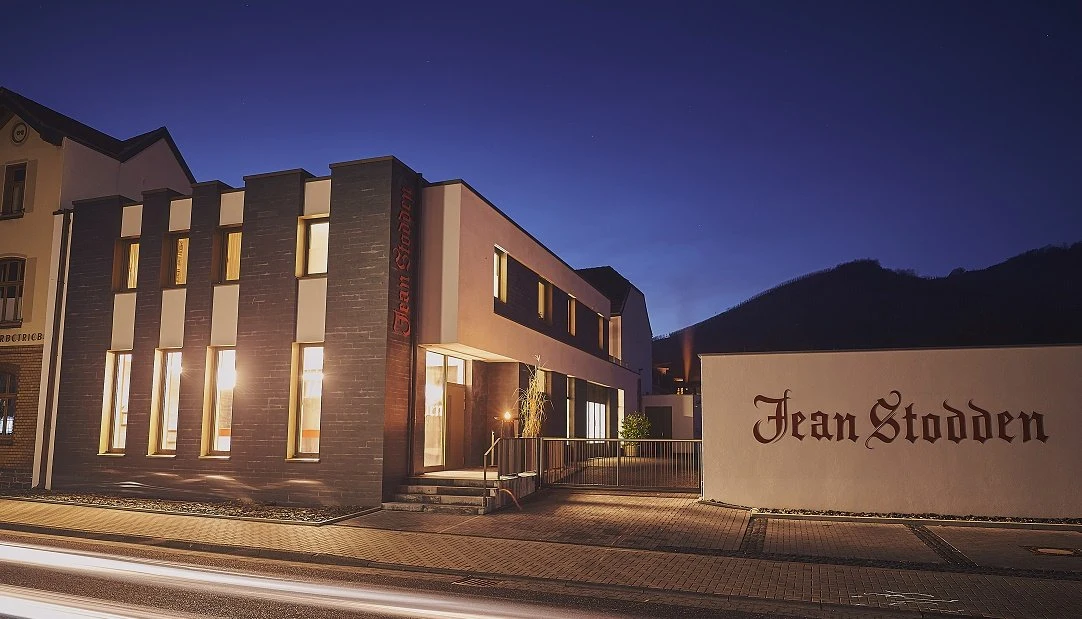
The estate sits on Rotweinstraße 7 in Rech, a village at the heart of the Ahr Valley where the valley walls close in and vineyards run steeply up slate-covered slopes. It is a working wine estate in a compact rural valley accessible from Bonn in under an hour, with the surrounding Rotweinstraße corridor placing it among the Ahr's most concentrated stretch of red wine producers. The Pearl 2 Star Prestige rating for 2025 signals this is not a casual tasting-room stop but a producer taken seriously at the quality level.
Weingut Jean Stodden has received recognition including: Pearl 2 Star Prestige (2025).
Spätburgunder is the central reference point at any serious Ahr producer, and Jean Stodden's Pearl 2 Star Prestige recognition for 2025 confirms the estate is working at a level where the slate-site wines carry the most weight. The Ahr's volcanic and devonian slate geology produces Pinot Noir with a mineral tension that differs from both Burgundy and the sandier Pfalz expressions, making the terroir-specific bottlings the logical starting point for any visit.
Weingut Jean Stodden is located at Rotweinstraße 7, 53506 Rech, Rech.
Rotweinstraße 7, 53506 Rech
Rech
Winzergenossenschaft Mayschoss-Altenahr