Weissenhaus Private Nature Luxury Resort
- 01CuisineClassical French Fine Dining with Modern Interpretation
- 02CityWeissenhaus, Germany
- Relais Chateaux Award · 2025
Where the Baltic Shore Meets Fine Dining Ambition
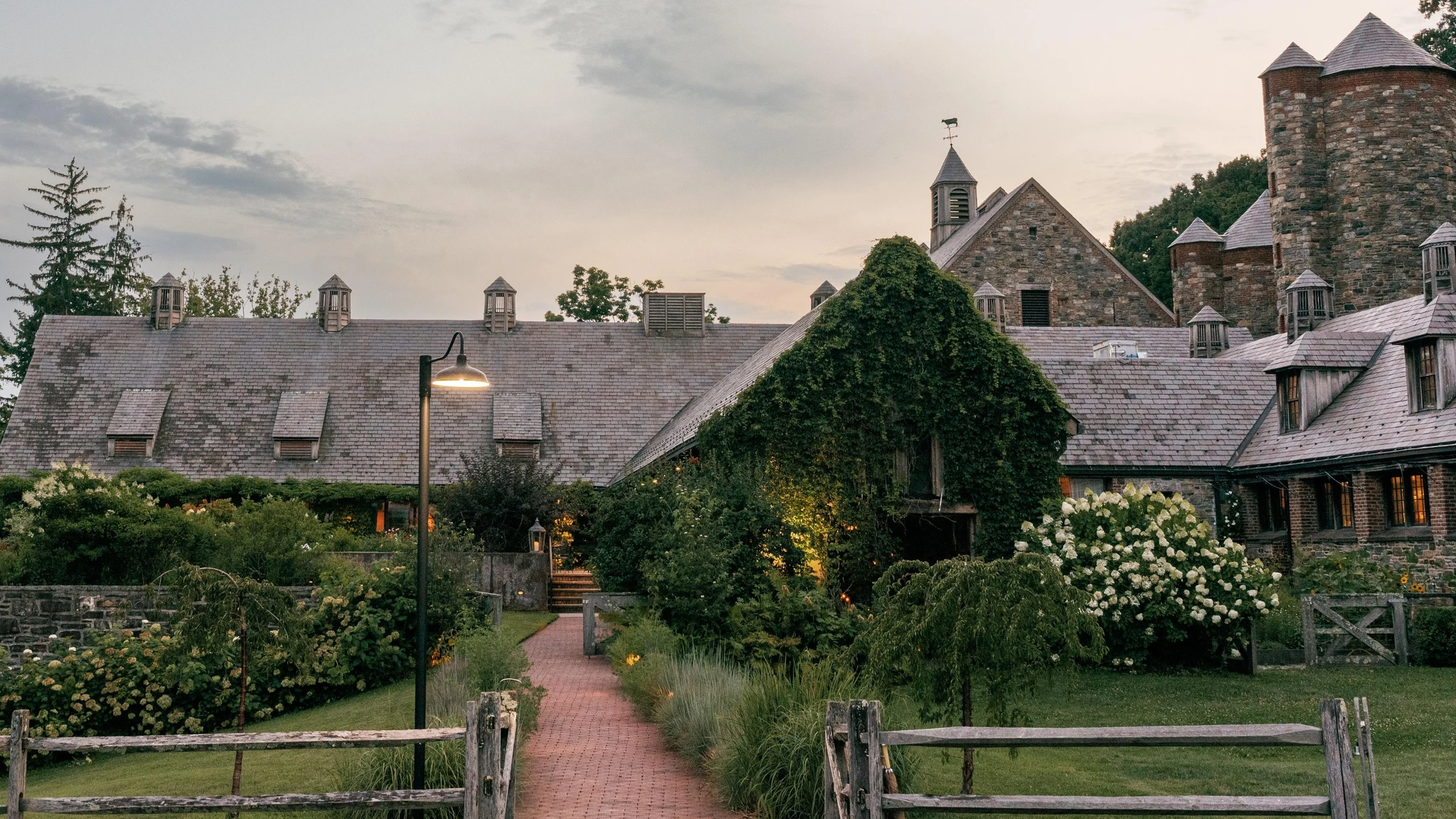
Weissenhaus Private Nature Luxury Resort is a restaurant in Wangels, Germany, led by chef Christian Scharrer, with a price tier of 4 and an estimated cost of $150 per person. The approach to Weissenhaus sets the frame for everything that follows. A long private drive cuts through 185 acres of grounds before the château comes into view, the Baltic coast audible before it is visible. This is not a city restaurant that happens to have rooms, nor a spa hotel that appended a tasting menu as an afterthought. The estate format, Relais & Châteaux-affiliated, anchored by a two-mile stretch of private beach, places serious cooking inside a naturalistic context that shapes how the food is read and experienced. Northern Germany has no shortage of scenic coastline, but a property that combines this scale of grounds with two Michelin stars in 2025 is a rarer proposition.
That rarity matters when placing Weissenhaus in its competitive context. Germany's leading fine dining addresses tend to cluster in recognisable patterns: hotel restaurants attached to historic spa towns, as with Schwarzwaldstube in Baiersbronn, or ambitious urban rooms like JAN in Munich and CODA Dessert Dining in Berlin. The Baltic north is a different proposition: lower population density, a food culture more rooted in smoked fish and coastal produce than in classic brigade tradition, and a guest base that arrives by design rather than by proximity. Weissenhaus operates in that context, which means its Michelin recognition carries a different weight than it would in Hamburg or Munich.
Christian Scharrer and the Logic of Northern German Fine Dining
Chef Christian Scharrer's role at Weissenhaus connects to a broader pattern in German fine dining: highly trained chefs anchoring destination properties outside major cities, where the estate or resort setting is as much part of the offer as the kitchen itself. Scharrer's position at a two-star level in 2025 places him in a peer group that includes addresses like Aqua in Wolfsburg and Restaurant Haerlin in Hamburg, both of which operate within hotel or destination contexts. What distinguishes the Weissenhaus position is the degree to which the surrounding landscape functions as both larder and aesthetic backdrop. The cuisine is classified as German Nature, a framing that signals proximity cooking grounded in the estate's own grounds and the coastal environment rather than a primarily classical French framework.
This matters in practical terms. Germany's multi-starred kitchens have historically leaned toward the classical French influence visible in houses like Vendôme in Bergisch Gladbach or Waldhotel Sonnora in Dreis. A nature-led, regionally anchored approach at two-star level is a less crowded position and one that aligns with the estate format more coherently than a classically French tasting menu would.
The Estate Format: What It Means for the Stay
Relais & Châteaux membership carries specific expectations around hospitality density and property character. Properties in this collection are assessed on food, welcome, and the quality of the physical environment, and Weissenhaus earns its place through the combination of château architecture, 185-acre grounds, and a private Baltic beach stretching two miles. This is an estate in the older European sense: enough space to lose the feeling of a conventional hotel while maintaining the infrastructure of one. For guests arriving from Hamburg (approximately 120 kilometres southwest) or from Berlin (roughly 300 kilometres southeast), the transition from urban density to coastal estate requires a deliberate journey, which is, in part, the point.
The Relais & Châteaux affiliation also contextualises the fine dining operation. At properties in this collection, the restaurant and the accommodation are designed to function as a unified offer rather than separate profit centres. Guests stay to eat, and eat to justify the stay. This integration is more common in France and Italy, where estate-style hotel restaurants have a longer tradition; in Germany, properties operating at this level of food-and-accommodation coherence are a smaller cohort. In that sense, Weissenhaus shares more conceptual ground with a Burgundy domaine hotel than with a conventional German business hotel that happens to house a Michelin-starred room.
Placing the Two-Star in the German Fine Dining Map
For context on what two Michelin stars means within Germany's current fine dining hierarchy, it is worth noting that the country's most decorated addresses, places like Victor's Fine Dining by christian bau in Perl or Schanz in Piesport, tend to operate at the intersection of destination setting and deep culinary craft. A two-star rating at an estate property in Schleswig-Holstein places Weissenhaus in that same destination-dining tier rather than the urban competitive set. The relevant comparison is not a Hamburg neighbourhood restaurant but rather a small number of German hotel restaurants where the decision to eat requires a decision to travel, and the cooking has to justify both.
That comparable set is geographically dispersed: the Mosel wine country, the Black Forest, the Bavarian Alps. A Baltic coast address in northern Schleswig-Holstein represents one of the less-travelled fine dining coordinates in Germany, which gives Weissenhaus a distinct position within that destination tier. For readers familiar with estate restaurants elsewhere in Europe, the useful analogues are properties where coastal or forested settings and serious cooking reinforce each other, the approach is structurally closer to certain Nordic estate addresses than to the urban German fine dining scene.
For Those Considering the Visit
Bookings and enquiries go through the Weissenhaus website at weissenhaus.de or via the Relais & Châteaux contact at weissenhaus@relaischateaux.com. The telephone number is +49 4382 92620. Given the combination of Michelin recognition and Relais & Châteaux affiliation, advanced planning is advisable: properties at this level and of this size tend to book up during summer coastal season, when the Baltic beach is at its most accessible.
Readers interested in comparing this coastal estate model with urban German fine dining destinations can also consult our coverage of ES:SENZ in Grassau and Bagatelle in Trier, or look further afield to Le Bernardin in New York City and Atomix in New York City for reference points on how destination fine dining operates in high-competition markets.
Questions
Frequently asked
How expensive is Weissenhaus Private Nature Luxury Resort?
Weissenhaus Private Nature Luxury Resort is listed at a price level of $$$$.
Where is Weissenhaus Private Nature Luxury Resort and what does it serve?
Weissenhaus Private Nature Luxury Resort is in Wangels, Weissenhaus, serving Classical French Fine Dining with Modern Interpretation.
The field
How it compares
| Place | Cuisine | Notes | Awards |
|---|---|---|---|
| Weissenhaus Private Nature Luxury Resort | Classical French Fine Dining with Modern Interpretation | Wangels, $$$$ | · |
| Blue Hill at Stone Barns | Farm-to-Table Fine Dining | Tarrytown | Michelin 2 Stars, World's 50 Best |
| Emeril’s | Modern Creole-Cajun Fine Dining | New Orleans | Michelin 2 Stars, World's 50 Best |
| Hélène Darroze at The Connaught | Three Michelin-Star Modern French Fine Dining | London | Michelin 3 Stars |
| Le Bernardin | French Seafood Fine Dining | New York City | Michelin 3 Stars, World's 50 Best |
| Le Taillevent | Classic and Modern French Fine Dining | Paris | Michelin 2 Stars, World's 50 Best |
| Per Se | French Fine Dining Tasting Menu | New York City | Michelin 3 Stars, World's 50 Best |
Similar places
Farm-to-Table Fine Dining
Blue Hill at Stone Barns
Tarrytown, United States
★★ · 50 Best
Modern Creole-Cajun Fine Dining
Emeril’s
New Orleans, United States
★★ · 50 Best
Three Michelin-Star Modern French Fine Dining
Hélène Darroze at The Connaught
London, United Kingdom
★★★
French Seafood Fine Dining
Le Bernardin
New York City, United States
★★★ · 50 Best
Classic and Modern French Fine Dining
Le Taillevent
Paris, France
★★ · 50 Best
French Fine Dining Tasting Menu
Per Se
New York City, United States
★★★ · 50 Best