Made ByRestaurant
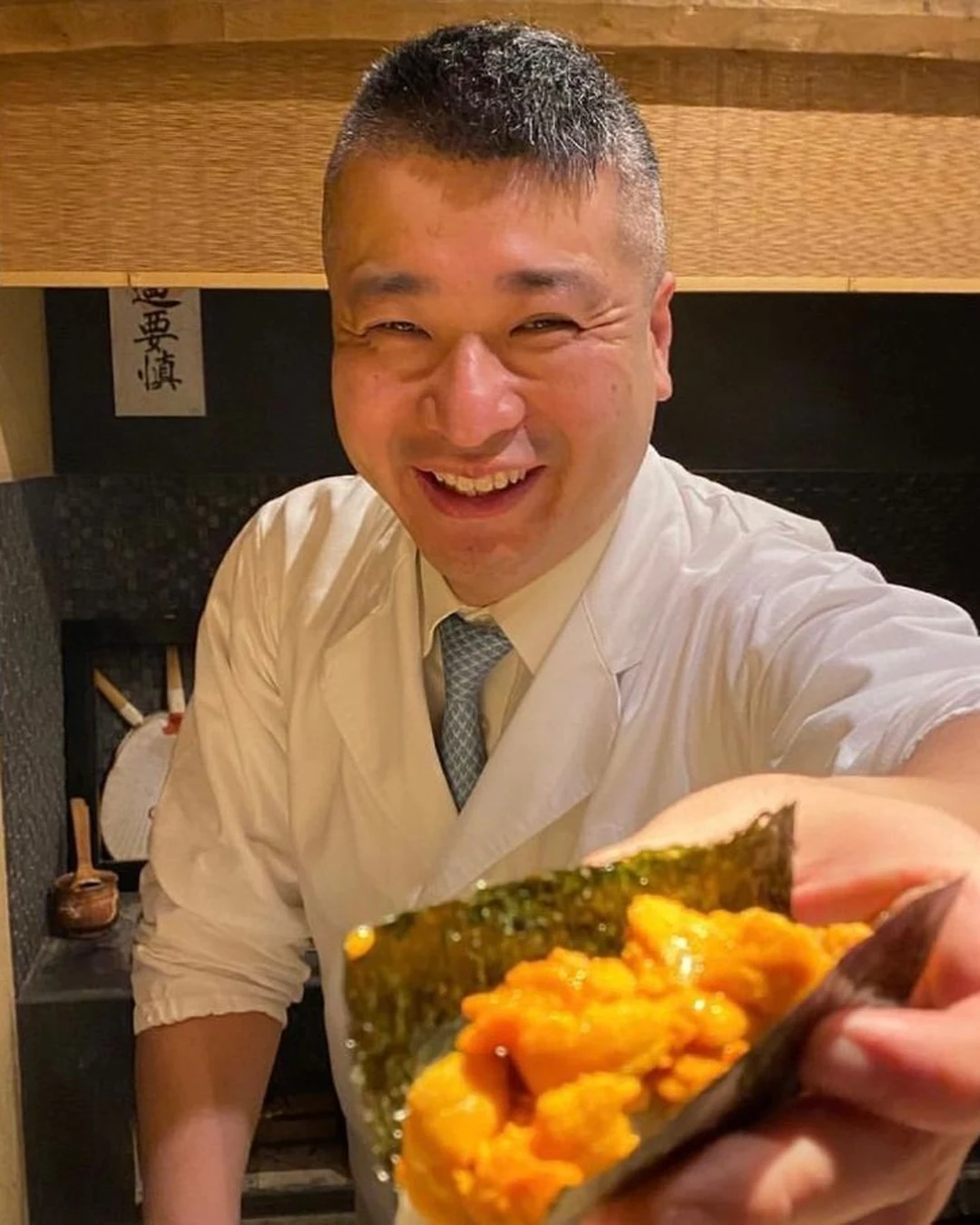
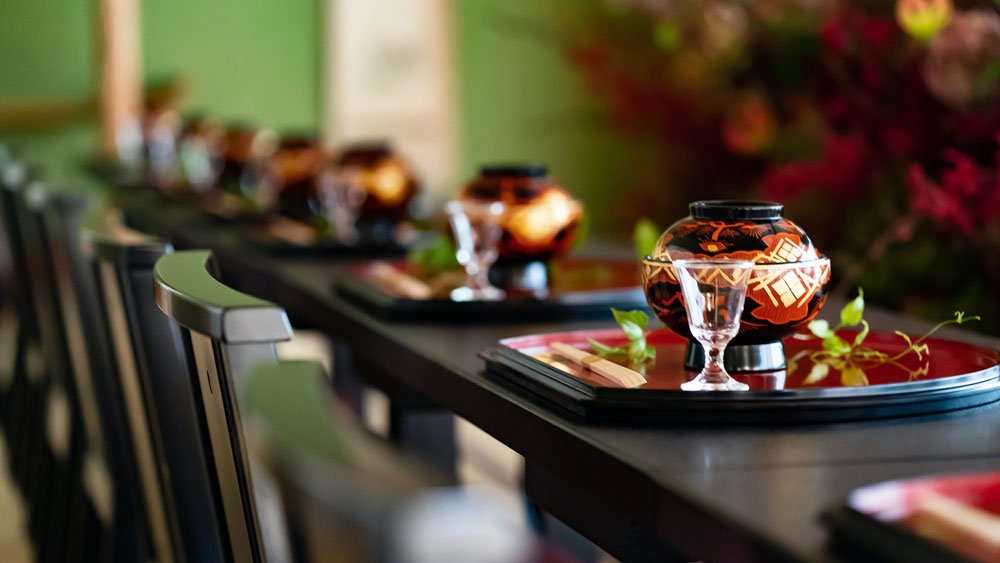
Takahiro Yamagishi, chef at Yamagishi in Kaga, keeps a kaiseki room shaped by sequence, season, and the hand.
At a glance
- Cuisine
- Kaiseki
The owner-chef keeps the sequence in hand
The courses move by season under Takahiro Yamagishi, chef at Yamagishi in Kaga, where kaiseki asks for timing before display. His public career is rooted in the Yamagishi name: he worked as a sushi chef at Tominokoji Yamagishi in Kyoto before taking the owner-chef role there in 2015, a continuity of bench, counter, and room rather than a clean break between houses. At Yamagishi, the same kind of responsibility sits in the title chef. The pass has to hold the sequence, the room has to receive it without strain, and each plate has to arrive at the moment its temperature, cut, and fragrance still make sense.
Yamagishi’s training reaches outside the kitchen as well. He is a professor of the Saga Goryu ikebana school, and that matters in a kaiseki room because placement is never just garnish. Space, season, vessel, and interval are part of the method. The discipline of flower arrangement does not make the cooking ornamental; it gives the hand another grammar for proportion. His named signature, the uni hotdog, shows the other side of that control: a direct piece of food, legible at once, carried by a kitchen otherwise built on sequence and restraint.
Kaiseki measured by interval
The program here is kaiseki, which means the kitchen works less like a menu of choices than a progression of decisions. A clear soup depends on extraction and restraint; sashimi depends on the cut and the moment it leaves the knife; rice asks the room to wait for it rather than the other way around. Those gestures are not decorative. They are the structure of the meal.
Yamagishi’s known work in the Yamagishi kitchens gives useful clues to the discipline: seasonality, dashi, antique vessels, and the language of cha-kaiseki appear around the group’s Kyoto practice, where the meal is often described as a run of about a dozen courses. That absence should not be filled with invented lineage. What can be said is narrower and sturdier: the place is a kaiseki restaurant under Yamagishi’s name, and the craft belongs to a chef whose public signature sits between sushi practice, owner-chef oversight, ikebana training, and a single dish of sea urchin set into an unexpected form.
The room waits for the pass
A kaiseki room changes when the pass begins to move. Conversation lowers by degrees. The counter becomes a working edge between the hands and the guest, not a stage. Vessels arrive with space around them, so the eye reads ceramic, lacquer, broth, fish, leaf, and steam before the chopsticks do their work. In that kind of service, quiet is not atmosphere added later. It is part of the timing.
Kaga gives the restaurant a different frame from Kyoto, closer in name to hot springs, craft, and the slower hospitality of Ishikawa. Yamagishi is there, not a borrowed city story. What carries across is the discipline of the station: a chef with the Yamagishi name on the door, a kaiseki sequence to keep in order, and the uni hotdog as the concrete marker of Takahiro Yamagishi’s hand.
Address
Japan, 〒922-0816 Ishikawa, Kaga, Daishoji Higashimachi, 2 Chome−24
In residence
Similar places
Japanese-influenced Californian Kaiseki
Single Thread Farm
Healdsburg, United States
★★★ · 50 Best
French Seafood Fine Dining
Le Bernardin
New York City, United States
★★★ · 50 Best
Modern Korean Tasting Menu
Atomix
New York City, United States
★★ · 50 Best
French
Sézanne
Tokyo, Japan
★★★ · 50 Best
Modern Seafood Fine Dining
Providence
Los Angeles, United States
★★★ · 50 Best
Contemporary Plant-Based Fine Dining
Eleven Madison Park
New York City, United States
★★★ · 50 Best