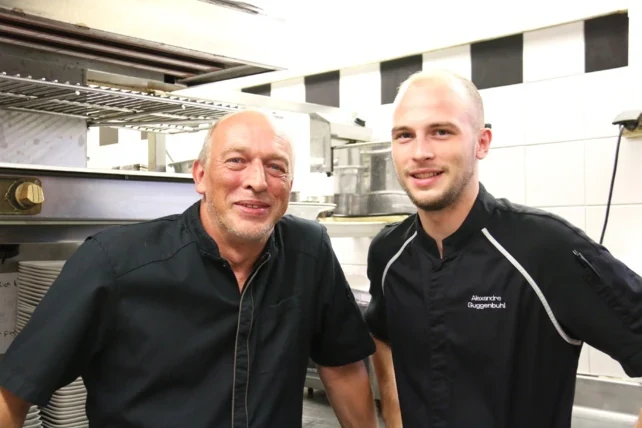
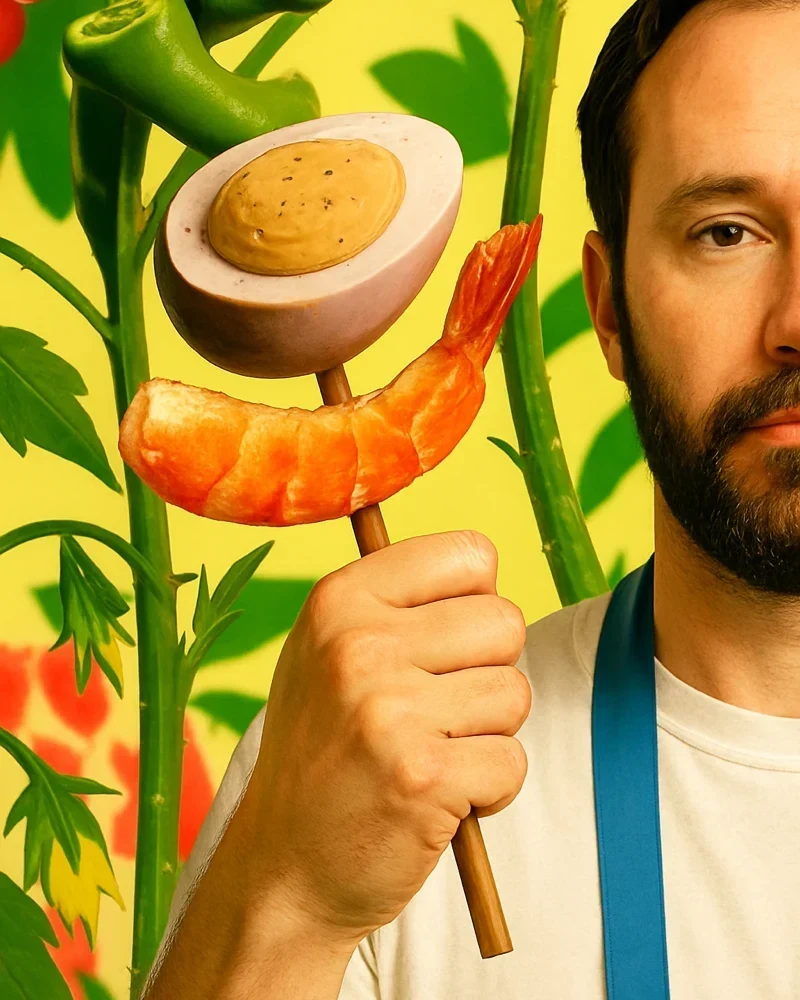
Portrait of Alexandre Guggenbuhl
i. Biography
Chef de cuisine work at La Taverne Alsacienne in Ingersheim, France, has defined Alexandre Guggenbuhl’s public practice since 2014. The cooking is Modern Cuisine anchored in Alsatian cuisine: regional flavors kept legible, then tightened through composition and technique rather than treated as museum pieces. The plate language works with texture, balance, and regional character. Fish, foie gras, saffron, potato, and risotto structures appear as working materials in a controlled vocabulary. The result stays recognizably Alsatian while using a contemporary register: composed, polished, and tied to place.
The Sunday letter
Read Made By's new profiles every Sunday.
Meet the chefs, winemakers and sommeliers behind the places we cover. See a sample below before you subscribe.
See a sample of the Sunday emailOne email a week. Unsubscribe from any issue.
The Climb
Chef de cuisine work at La Taverne Alsacienne in Ingersheim (68) gave Alexandre Guggenbuhl a direct framework for cooking within Alsatian expectations. The post set him inside a region where comfort, generosity, and precision can sit together, and where regional reference has to be handled with both clarity and discipline. The continuity matters more than the biography. In Guggenbuhl’s work, tradition and invention are not staged as opposites; they are made to operate on the same plate. The role of Chef de cuisine functions as an organizing discipline: local in reference, refined in execution, and measured in its modernity.
Today
Since 2014, the Chef de cuisine role at the restaurant in Ingersheim, France, has placed Guggenbuhl’s specialty in Alsatian cuisine within a refined, contemporary frame. Traditional regional flavors are brought together with inventive techniques, without losing their identity or becoming static. In 2025, the dining experience at the restaurant highlighted that balance as culinary artistry: Alsatian in reference, contemporary in handling. Regional ingredients and forms are treated as material for careful interpretation, producing dishes that read as both local and composed. The working vocabulary includes fish, foie gras, saffron, potato, and risotto structures. Tradition and technique are not separated; they are set beside each other and made to carry the dish. Saffron d'Alsace can supply a regional note, potato risotto can rework comfort, and a fish course can hold the clarity of a modern composition. The effect is articulation rather than excess: each element assigned a job, each reference shaped with intent.
Career - Chef de cuisine — La Taverne Alsacienne, Ingersheim (68)
Signature
Signature dishes include Cabillaud. In Guggenbuhl’s cooking, the dish fits a larger pattern: a clear central idea, refined construction, and room for Alsatian accents to define the frame.
Recognition
One signature work is *Cabillaud, moules, salicornes et risotto de pommes de terre*, presented as a recipe by the Alsatian chef from the Ingersheim restaurant. Cod, mussels, samphire, and potato risotto are arranged in a regional-modern composition. The dish uses sea-sweetness, saline brightness, and the mellow depth of potato with the restraint of a kitchen built around balance. Also in 2025, *La Lotte au safran d'Alsace risotto au parmesan* paired monkfish with Alsace saffron and parmesan risotto. The dish marks Guggenbuhl’s terrain clearly: Alsatian flavor, measured technique, and construction over ornament.
FAQ What is Alexandre Guggenbuhl's current role? Alexandre Guggenbuhl is Chef de cuisine. What is Alexandre Guggenbuhl known for? Alsatian cuisine at La Taverne Alsacienne.
The Sunday letter
Get the next Made By profile in your inbox.
We send one email every Sunday morning with the people we profiled that week.
See a sample of the Sunday emailOne email a week. Unsubscribe from any issue.