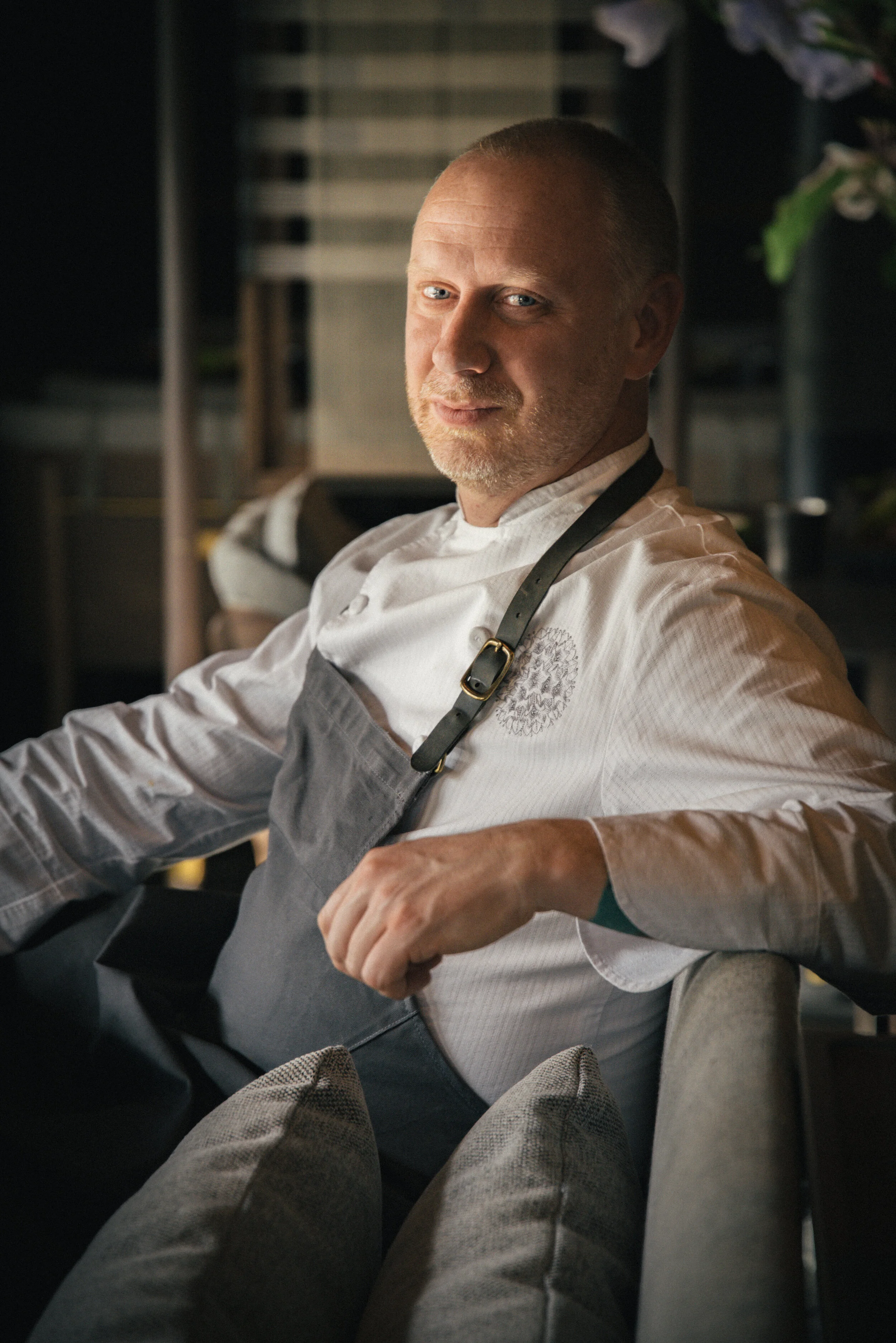
Chef
Angel Leon
- Discipline
- Chef
- Based in
- Chiclana de la Frontera, Spain
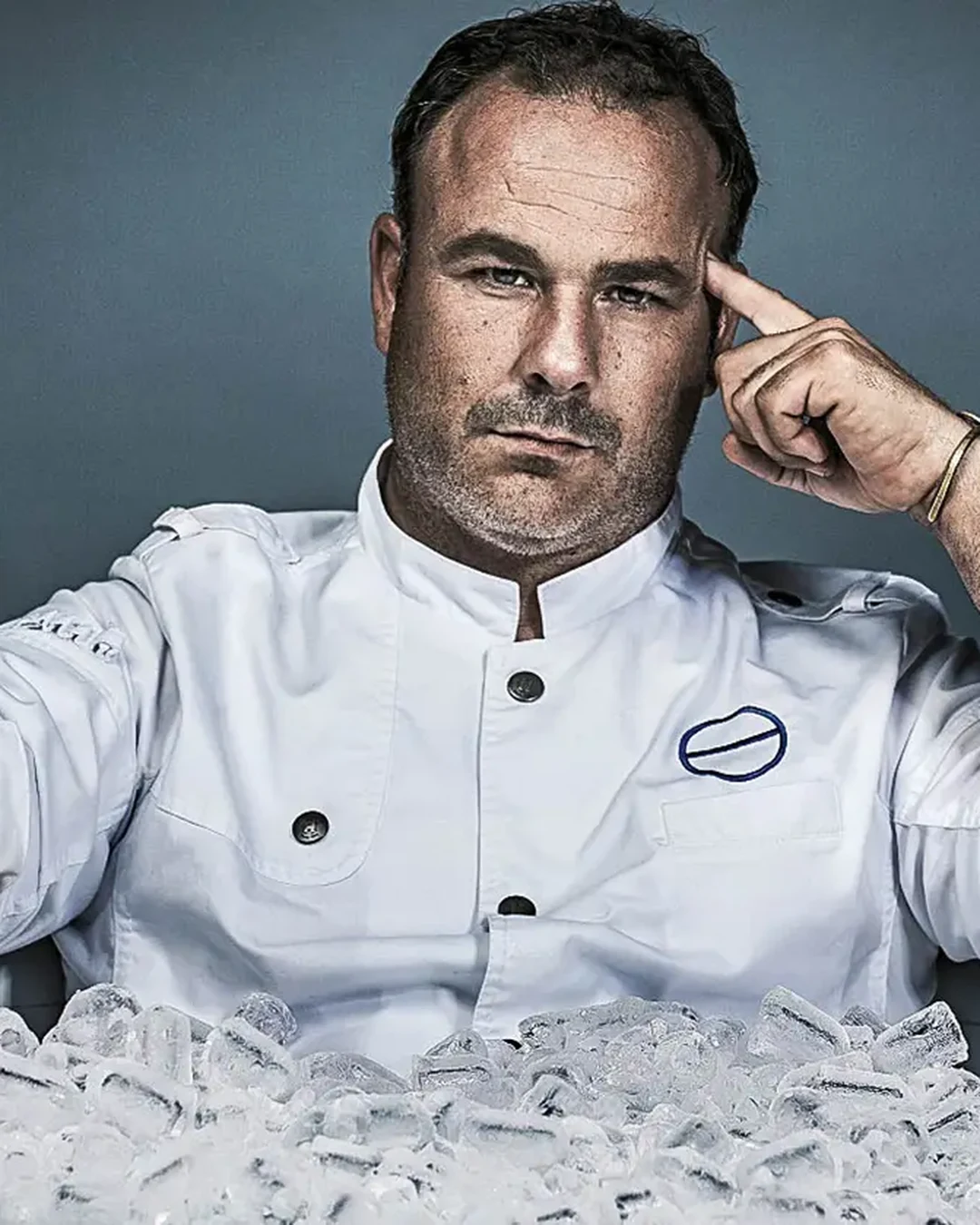
i. Biography
Marine cookery at Alevante in Chiclana de la Frontera, Spain, is built from the sea as working material rather than scenery. In Angel Leon’s kitchens, the usable field includes family fishing knowledge, formal training, and marine life that many cooks leave outside the mise en place. The point of reference is stated plainly in his own words: “The sea is a part of me. My dad taught me to love the sea. He was a great fisherman who’s always taken me out to navigate.”
Coming Up
Formal kitchen discipline, including training in France, gave Angel Leon a structure for work that was already turned toward saltwater, currents, nets, and marine species. The development of the craft has been a tightening of focus: less a general restaurant career than a sustained inquiry into what the ocean can provide beyond the obvious fish counter. Restaurant building is part of the method here. As chef-owner of Aponiente Restaurant since 2007 and director of Alevante since 2016, Angel Leon has kept the work aligned around a marine vocabulary over time. Aponiente Restaurant marks the longer laboratory. The Chiclana de la Frontera dining room carries that language into another space with the same core premise: the sea is not decoration; it is the source text.
The Work Today
The current practice spans the Chiclana de la Frontera restaurant, Aponiente, and La Taberna del Chef del Mar in El Puerto de Santa María, Spain. Across those rooms, Angel Leon keeps the center of gravity on the sea as memory, material, and technical challenge. There, the cooking combines innovation, sustainability, local products, unconventional marine life, and respect for traditions. The work is not novelty for its own sake. It depends on coastal culture and on treating overlooked marine materials as usable ingredients, with the same seriousness another kitchen might give to meat, grain, or dairy. Atlantic porchetta is a useful example: a known format is rebuilt by replacing pork with marine products. In Angel Leon’s hands, the reference remains legible, but the grammar shifts to the ocean. Tradition is not discarded; it is rerouted through saltwater. The working position is blunt in his own words: “I believe my connection with the sea borders on the psychopathic, it’s such a primitive relationship; what has brought me to this point is bringing the life of the sea into the kitchen, and developing it there.” For another cook, the important part is the verb: bringing. The craft depends on moving marine life into the kitchen and then developing it there, rather than treating the sea as a finished idea.
Signature
Signature dishes include Marine phytoplankton as a cooking ingredient, Edible marine luminescence, and First saline cheese. The set shows the range of the marine register in Angel Leon’s work: microscopic life, light, and a saline reading of a familiar culinary category. These signatures are not separate tricks. They mark a kitchen practice that keeps asking how marine material can function as ingredient, technique, and category. The cooking is technical and speculative, but it stays tied to the waters that define the work.
Credentials
Angel Leon has received MICHELIN Guide — Three Michelin stars for Aponiente. Recognition for Angel Leon’s marine cuisine includes Second Michelin star for Alevante (2024), First Michelin star for Alevante (2017), Three Michelin stars for Aponiente, and Repsol sun for Alevante. The awards follow a sustained body of work that has widened the place of the marine world in haute cuisine while keeping its reference points close to fishing, coastal knowledge, and the sea as daily material.
Profile updated July 2026
FAQ
Asked of Angel
What is Angel Leon's day job?
Angel Leon is chef directing Alevante.
Where did Angel Leon train or study?
Angel Leon Trained in France.
What recognition has Angel Leon received?
Second Michelin star for Alevante (2024).