Chef
Anton Kovalkov
- Discipline
- Chef
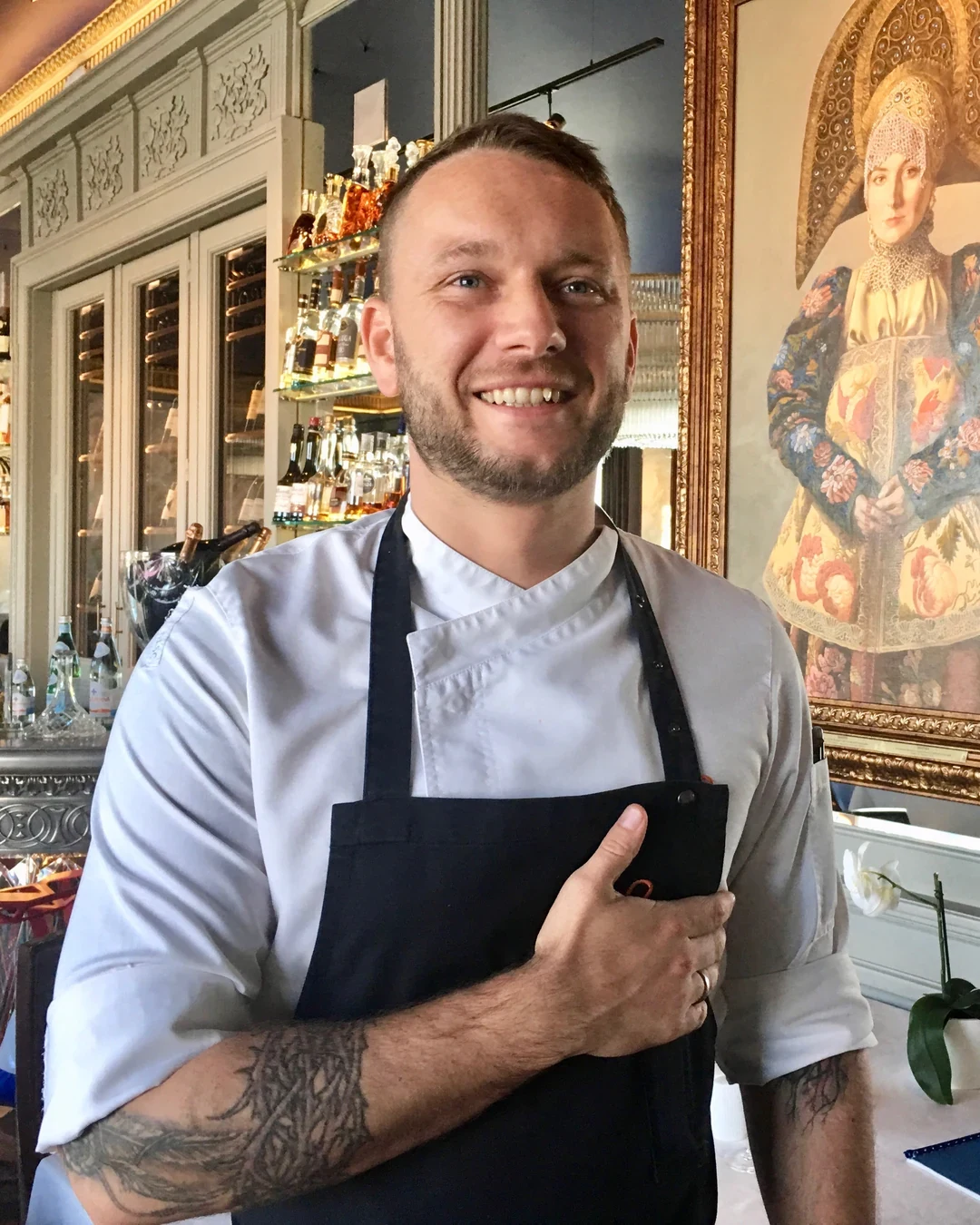
Portrait of Anton Kovalkov
i. Biography
The Climb
Contemporary Russian cooking in Anton Kovalkov’s practice is built through discipline, travel, and repeated exposure to kitchens with different systems of authorship. Training at Noma gave the work a frame of season, place, restraint, and intensity. The useful part for the craft is not imitation of that kitchen, but the pressure it places on decision-making: what to keep, what to remove, and how to make locality carry the plate. Kitchen leadership entered the work through head chef roles at Bezuhov and chef work at The Kitchen, where authorship is tested against service, consistency, and responsibility. Further training outside Russia added other registers: Anton Kovalkov was a trainee and collaborator with Dominique Crenn at Dominique Crenn in San Francisco, and a trainee at Eleven Madison Avenue in New York. Those placements put technique, narrative, and dining-room expectation into close contact. A later head chef role at Fahrenheit in Moscow continued that movement between observation and application. The current post, head chef of Depo project, places Anton Kovalkov’s Contemporary Russian cooking in a present working context. The craft carries accumulated habits from training, travel, and leadership: precise editing, attention to season, and an interest in what Russian cuisine can become without being detached from its source.
The Sunday letter
Read Made By's new profiles every Sunday.
Meet the chefs, winemakers and sommeliers behind the places we cover. See a sample below before you subscribe.
See a sample of the Sunday emailOne email a week. Unsubscribe from any issue.
Today
Contemporary Russian cuisine is the stated specialty, but in Anton Kovalkov’s hands the category is treated as working material rather than a fixed inheritance. The task is reinvention and challenge: taking traditional Russian cuisine seriously enough to question it. Memory, seasonality, preserved flavors, and familiar references remain available, but they are handled through a modern kitchen rather than protected as static forms. The tension in the cooking comes from that position. Respect for tradition does not require stillness. Inherited tastes, ingredients, and memories are brought into a present-tense vocabulary, where clarity matters more than nostalgia and reference has to earn its place on the plate. The Russian frame also travels. At Patina Maldives in the Maldives, the craft is described as Contemporary Russian cuisine with Asian influences. That description keeps the source intact while allowing another setting to enter the work: Russian in origin, contemporary in method, and open to other textures and inflections.
Career - Head chef — Depo project, Moscow - Head chef — Bezuhov - Chef - Trainee / worked with Dominique Crenn — Dominique Crenn, San Francisco - Trainee — Eleven Madison Avenue, New York - Head chef — Fahrenheit, Moscow Education: Noma
Signature
Signature dishes include Dessert "Arianna". As a named dessert, it sits in the part of the craft where technique, reference, and personal address have to be compressed into a single plate. For Anton Kovalkov, signature is not only repetition or recognizability; it is the ability to make a specific work hold its own inside a broader Contemporary Russian practice.
In Their Words “I am always looking forward to each different season, and try to forage ingredients during the summer which I can keep throughout the winter and serve to our guests.” Seasonality here is not limited to immediate freshness. The statement points to a working cycle: summer for foraging, winter for service, and preservation as the bridge between them. The craft value is in planning ahead, carrying an ingredient across time, and giving guests something gathered in one season and served in another. “It was immensely inspiring. It’s unlike any other kitchen on the planet and an experience I took a huge amount from.” The comment frames training as usable influence rather than borrowed identity. A kitchen can alter standards, pace, and attention without becoming the final voice. What matters is what the cook takes from the experience and how it is later converted into independent work.
Recognition
One signature work is the dessert "Aria
Explore

The Sunday letter
Get the next Made By profile in your inbox.
We send one email every Sunday morning with the people we profiled that week.
See a sample of the Sunday emailOne email a week. Unsubscribe from any issue.