Culinary legend
Aarón Sánchez
- Discipline
- Culinary legend
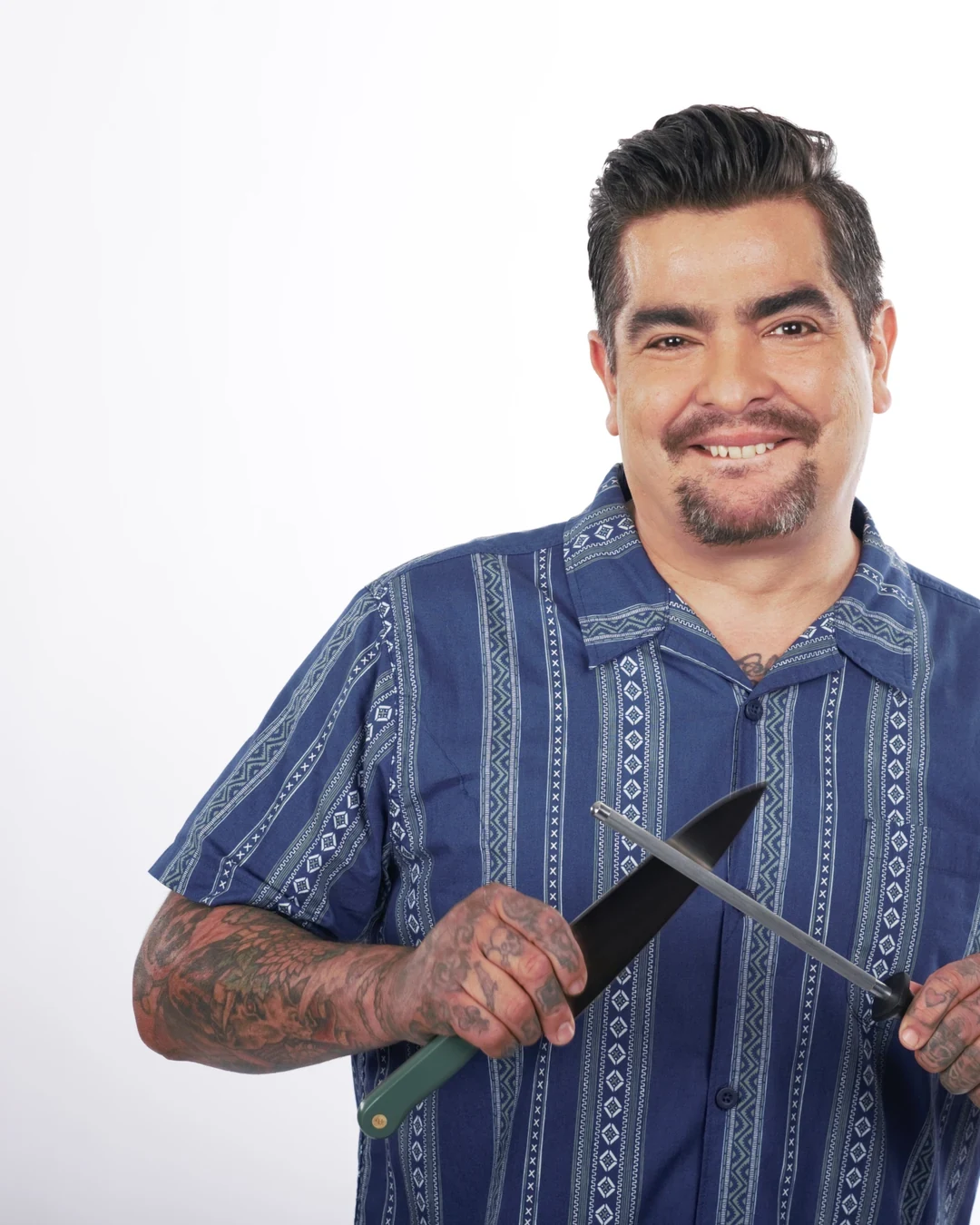
Portrait of Aarón Sánchez
i. Biography
“My nonprofit and scholarship fund is going to help and identify a core group of people—the new face of our industry. Specifically people of multicultural backgrounds and women because fine dining kitchens still lack diversity today.” The access question in fine dining is a labor question: who gets trained, who is trusted with technique, who is promoted, and who is visible. Aarón Sánchez, born on February 12, 1976, in Chihuahua, Mexico, has built a Mexican-American career across restaurants, television, and mentorship where public attention is treated as a tool for widening entry, not as a separate track from kitchen work.
The Path
Formal culinary training gave structure to an education already shaped by repetition and service. Aarón Sánchez trained at Johnson & Wales University after early work as a restaurant worker and kitchen worker at his mother's restaurant, where pace, pressure, and consistency were learned inside service rather than described from outside it. That kind of foundation matters in a trade built on timing, stamina, and standards that have to hold plate after plate. Restaurant openings placed that training into public rooms before television expanded the audience. Sánchez opened restaurant at Centrico in New York and opened restaurant at Mestizo in Leawood, Kansas, bringing a defined Mexican-American point of view into different markets. The screen work that followed kept technique and judgment in view: co-star at Chefs vs. City (2009–2010), co-star at Chopped, host at Aarón Loves New York, co-star at Heat Seekers (2011–2012), host at Taco Trip (2014–2015), and judge and co-host at MasterChef (2017–2024). Food television, at its most useful, turns kitchen thinking into visible criteria: taste, timing, improvisation, restraint, and recovery under pressure. In those formats, Sánchez’s role has been to translate standards in real time for cooks and viewers. Today, Aarón is executive head chef and part-owner of Johnny Sánchez and judge of MasterChef Junior (since 2018), work that keeps critique, instruction, and mentorship tied to the same public craft.
The Work Today
The current practice spans restaurant work, broadcast work, business, and scholarship. At Johnny Sánchez in Louisiana, United States, Sánchez serves as chef and owner, with the restaurant positioned around Mexican-American cooking in a contemporary hospitality setting. Chicken Flautas with Johnny Sánchez is a named make-at-home recipe associated with Johnny Sánchez in New Orleans, extending a restaurant dish into domestic cooking without separating it from the professional kitchen that made it recognizable. Partnership has also become part of the craft infrastructure around the work. In New Orleans, Sánchez is chef/partner at Showbird.
Career - Executive head chef and part-owner — Johnny Sánchez, New Orleans - Judge — MasterChef Junior (2018–present) - Restaurant worker — his mother's restaurant - Kitchen worker — his mother's restaurant - Opened restaurant — Centrico, New York - Opened restaurant — Mestizo, Leawood, Kansas - Co-star — Chefs vs. City (2009–2010) - Co-star — Chopped - Host — Aarón Loves New York - Co-star — Heat Seekers (2011–2012) Education: Johnson & Wales University
Signature
Signature, in this case, sits at the point where restaurant identity becomes repeatable outside a single service. Aarón's signature dishes include Chicken Flautas with Johnny Sánchez and Johnny Sanchez Margarita. The first is a named make-at-home recipe associated with Johnny Sánchez in New Orleans; the second is a signature cocktail tied to the same restaurant world. Together, they show how a public-facing restaurant can carry both food and drink as recognizable markers of its style.
In Their Words “My nonprofit and scholarship fund is going to help and identify a core group of people—the new face of our industry. Specifically people of multicultural backgrounds and women because fine dining kitchens still lack diversity today.” “I got bit wi