Peter Hahn left finance in Sydney, London and Paris, then found his longest home on four hectares of Vouvray Chenin Blanc.
HM
Director of Editorial Standards
Hugo Marchetti
Filed November 3, 2026
12 min read
"I’ll take it," Peter Hahn said after seeing four hectares, a house and a sequoia in Vouvray in 2002, after years of finance work in Sydney, London and Paris, and before he had ever really known Loire wines.
Hahn was born in the United States, left when he was four years old, and came to France after finance jobs in Sydney, London, and Paris. His ancestors were from Germany and Poland. He grew up in Australia and Asia, went to high school in Australia, returned to the United States for university, then entered a sequence of finance jobs with a pace that kept him moving: stockbroker in Sydney, financial consultant in London, private equity fund in Paris. By the time he began looking for land in France, the work had given him pay and status, and had also left him unhappy.
The Sunday email
Get new Made By stories every Sunday.
Every Sunday we send a lead story and up to four more about the chefs, winemakers, sommeliers and hoteliers behind the restaurants, bars, wineries and hotels we cover.
Free. One email a week, and you can unsubscribe from any issue.
Vouvray did not enter as a planned destination. Hahn had mainly looked in the Languedoc, with red wine in mind, and found properties that did not fit the life he imagined. The plots were too large, too scattered, too far from the daily contact he wanted between house, vines and work. He saw an article on vineyards for sale in Touraine. The property he visited had four hectares and a house. Wine had not been made there for decades. The vines were rented out. The house needed plumbing, electricity and windows. He began with repairs to the house and the property.
The Story of Peter Hahn in Vouvray
Peter Hahn has lived in Vouvray since 2002, after a working life that moved through the United States, Australia, Asia, Sydney, London and Paris. The useful measure is simple: this is not a tasting-room detour, but more than two decades on the same four hectares of Chenin Blanc.
He came to Vouvray by chance, but the choice was physical. Hahn wanted to live where he worked and work where he lived. The family selling the place would not separate the vines from the house, and local buyers wanted the vines rather than the building. Hahn wanted the whole project, even with wind coming through the windows and decades of neglect attached to the wine side.
"I came down, saw the place and said "I’ll take it". It was a feeling, it was the fact that everything was here, and little weird things like the sequoia in the garden, the American connection."1
Peter Hahn, winemaker, Decanter
The house, the vines and a sequoia in the garden gave Hahn a small American echo on French ground. He chose the house and vines, then had to repair the house, recover the project, learn the region, learn Chenin Blanc, and learn how not to impose too much on a place that already had its own memory.
From Finance Capitals to Four Hectares of Chenin Blanc
Before Vouvray, Hahn’s working life moved through cities built on screens, clients and capital. Sydney gave him stockbroking. London gave him financial consulting. Paris gave him private equity. Those cities trained him in abstraction. Vouvray required touch.
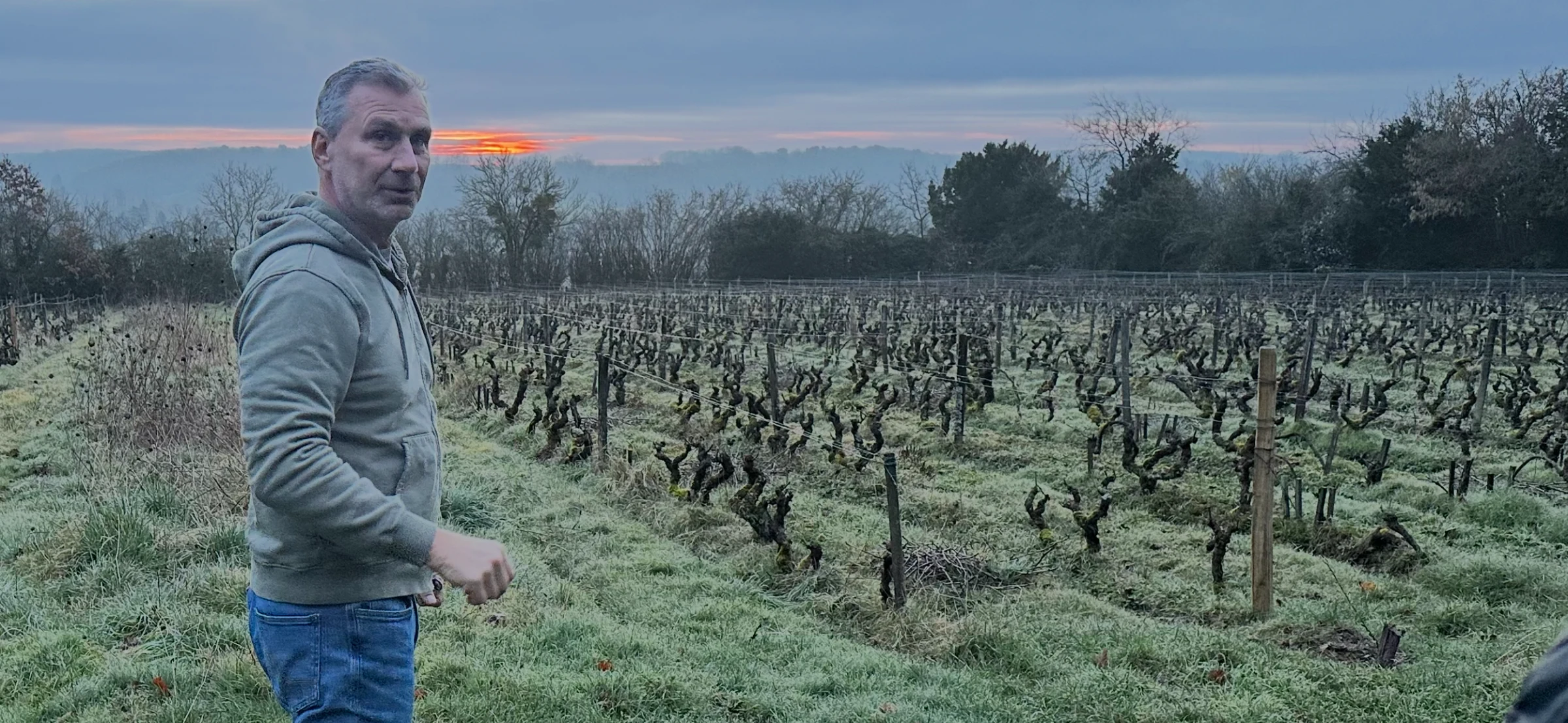
At dusk, a man in a gray hoodie stands in a dormant vineyard.
The four hectares gave him a different unit of attention. A market position can change in seconds. A vine answers over months. A neglected house reveals its demands one room at a time. When Hahn arrived, wine had not been made on the property for decades, and the vines were in someone else’s hands.
Hahn enrolled in a part-time degree program in viticulture and enology in Amboise, a small city about fifteen minutes from the vineyard. He went fifteen minutes away, studied part-time, and returned to the property where theory had to meet damaged pipes, rented vines and a local culture with its own expectations (Forewordreviews3). Watch that distance: it kept the classroom close enough to the rows for each lesson to be tested the same day.
His mentors became mentors and friends during the first years of the project. They stood between Hahn’s outsider status and Vouvray’s inherited methods, showing him where the region’s habits had been earned through generations on the tools (Forewordreviews3).
Hahn’s earlier life had given him fluency in global movement. In Vouvray, he learned pruning, waiting and watching weather from people whose families had measured the place in seasons rather than quarters. Hahn moved from finance to Vouvray and learned by listening.
Learning Vouvray Before Claiming It
Hahn had not been to Vouvray before and did not really know Loire wines before arriving. For a winegrower in an old appellation, that admission has weight. It places him outside the expected path of family succession, regional schooling and inherited cellar memory. For anyone tasting his wines, that origin matters because his apprenticeship began in public, among neighbors who already knew the place.
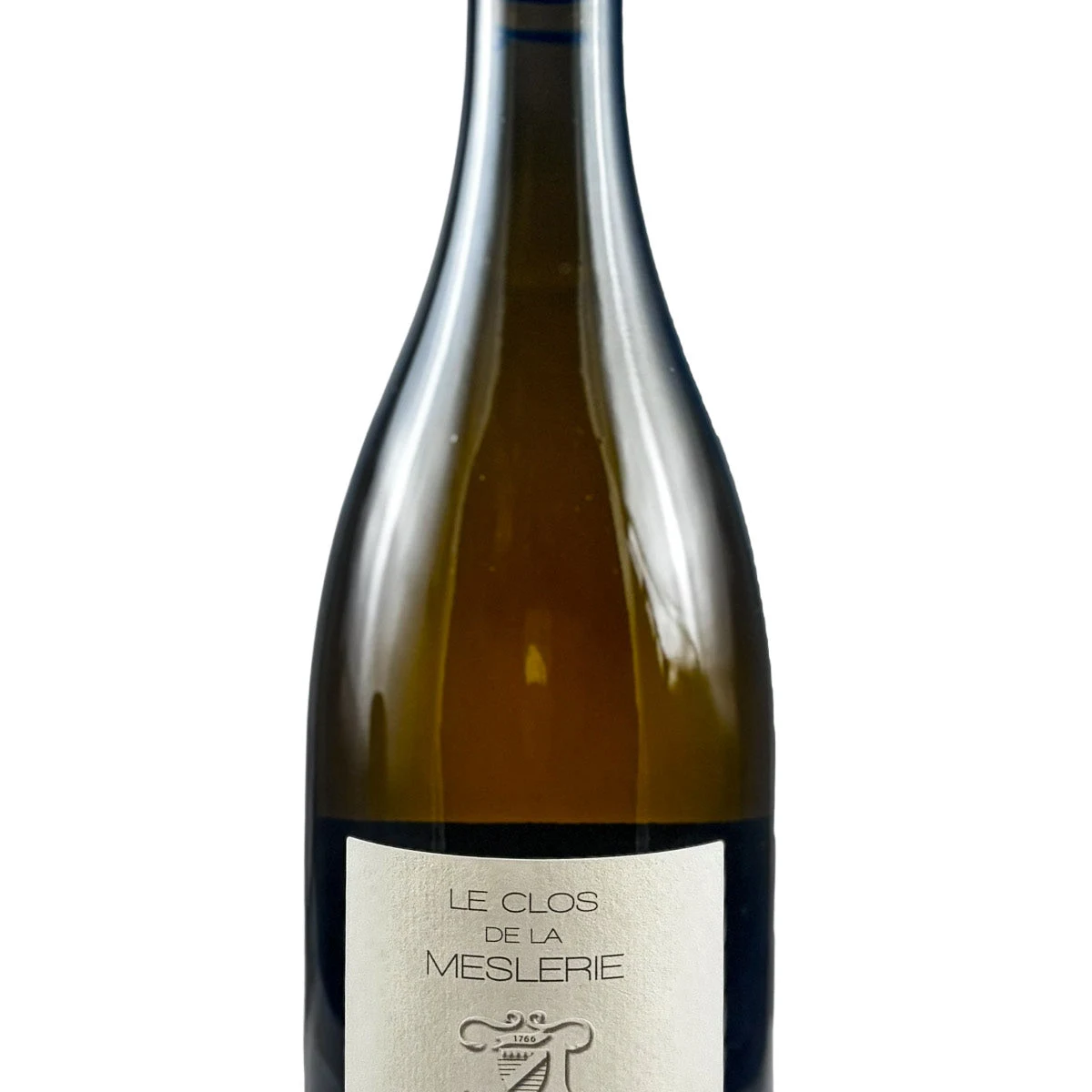
A wine bottle of Le Clos de la Meslerie Vouvray appears on a neutral background.
That visibility carried stakes. Hahn has said there was reticence from many people in the region when he arrived, a question around who this American was and whether he thought he would show Vouvray how to make Vouvray. He speaks of modesty, of understanding that he did not know what he was doing, of learning from the past and trying to tread lightly.
The property was in poor condition. The house required basic systems. The wine project had stopped for decades. The vines were rented out. The region did not owe him welcome. The grape variety differed from the red wine he first imagined in the south of France.
"I set out to make red wine in the south of France and I ended up making white wine here."2
Peter Hahn, winemaker, Decanter
Languedoc was the first image, Vouvray became the work, red wine was the imagined medium, and Chenin Blanc became the grape under his hands.
A Philosophy of Modesty, Seasons and Treading Lightly
Hahn’s language around the move returns again and again to life before wine style. He says he came to Vouvray more to live than specifically to make wine. He wanted a different rhythm, to live with the seasons, to work outside, to work with the land, and to produce something he could touch and feel. In another conversation, he said he wanted to restore himself and live in a way that reflected who he was and what he wanted for his family.
Hahn’s wine work was tied to the life he wanted in Vouvray. He did not start with a desired market position; he started with four hectares, a house no one else wanted as a whole project, and the question of how to live there without erasing what came before. His stated aim to tread lightly reads as restraint.
Vouvray, within the Loire Valley, is tied to Chenin Blanc. Hahn says he loves Chenin Blanc and the variety of wines that can be made with it. Chenin Blanc gives a single variety many possible registers, and the maker must decide how much to guide and how much to follow. If you follow Hahn’s work, follow the grape’s range rather than a single fixed style.
The art of winemaking fits Hahn’s feeling for place through duration, repetition and dependence. Four hectares, a house no one else wanted, vines once rented out, decades without wine made on site, a part-time degree in Amboise, two local mentors from winegrowing families and more than two decades in the same village form the working record.
The Mentors Fifteen Minutes Away in Amboise
Hahn did not enter Vouvray as a self-declared natural. He enrolled in viticulture and enology, part-time, close enough to the vineyard that study and practice could answer each other. The fifteen-minute distance between Amboise and the property matters because it kept education local. His teachers were not distant authorities; they were young local winegrowers from families with long-established ties to the region.
Those two teachers became mentors and friends, guiding him before and during the first years of the project. They helped him approach the work while the property was still becoming workable, while the vines had to be brought back into the center of the estate, while Hahn was still translating himself from finance to farming (Forewordreviews3).
In every appellation, the harder education often comes from people who know the rules in practice. A mentor can tell a new grower when to wait, when to cut, and when a decision belongs to the vine rather than the calendar. Here, the practical takeaway is the human scale: Amboise was fifteen minutes away, and the counsel came from local growers with family ties to the region.
He had already worked across three finance centers. He had managed roles with prestige attached. In Amboise, he had to become a student in a field where younger local growers carried knowledge he did not have. He could bring energy, resources and conviction, but he could not bring inherited Loire memory. He had to borrow it carefully, then earn his own time in the rows.
Chenin Blanc as the Chosen Discipline
Chenin Blanc entered Hahn’s life after he ended up in Vouvray instead of the south of France. He had imagined red wine in the south of France. He ended up making white wine in Vouvray. The grape became the discipline through which he learned to stay in Vouvray. He has said he loves Chenin Blanc for the variety of wines it can produce, a maker’s answer that points to range rather than fashion.
Hahn came to Vouvray without inherited mastery and built his practice through study, local mentorship and repeated contact with land. Chenin Blanc matters because it became the material that received that change. Taste his Vouvray with that in mind: the white wine came after the red-wine plan failed to become his life.
The Loire setting also changed how Hahn talks about nature. In his previous life, he has said, nature sat outside his daily interaction, something seen as separate objects: a tree, vines, a bush. Time in Vouvray altered that perception. The vineyard did not give him a decorative rural life. It changed how he experienced the living system around him, including the bird he imagines following him when he prunes and the music he plays in the cellar because he prefers to live as if it might matter.
That last instinct will divide some practitioners. A cellar worker who measures temperature, sulfur, pressure and fill height may have little patience for music in the room. Hahn himself does not claim certainty. He left finance because the former life no longer fit. In Vouvray, he found a craft where uncertainty did not have to be eliminated before it could be respected.
What to Watch in Hahn’s Next Vouvray
Peter Hahn’s work in Vouvray centers on the four hectares, the house, the Chenin Blanc, the mentors from Amboise, and the decision to stay in one place after a life of movement. Hahn has been in Vouvray since 2002 and has worked the same land for more than two decades.
Look for continuity rather than a single bottle note: the same land, the same village, the same white grape he did not set out to make, and a property once left without wine for decades now held as a living practice.
The Sunday email
Get new Made By stories every Sunday.
Every Sunday we send a lead story and up to four more about the chefs, winemakers, sommeliers and hoteliers behind the restaurants, bars, wineries and hotels we cover.