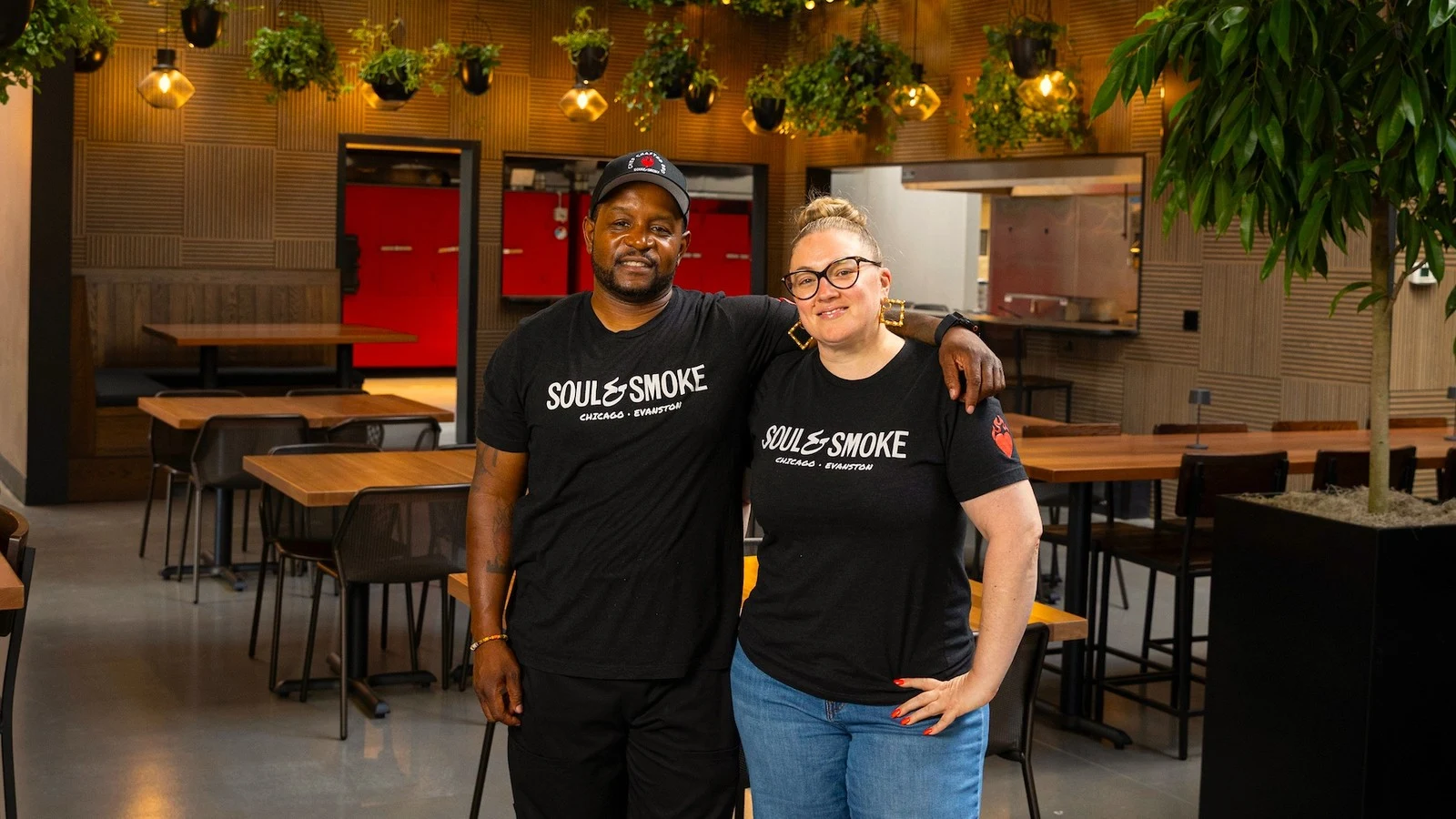
Chef D’Andre Carter and Heather Bublick Open Soul & Smoke in Evanston
Chef D’Andre Carter and Heather Bublick’s first brick-and-mortar gives Soul & Smoke 180 seats, A.N. Bewley smokers, and a wider table.
HM
Director of Editorial Standards
Hugo Marchetti
Filed October 31, 2026
9 min read
At 4 p.m. at 1601 Payne Street, the lamps come on and chef D’Andre Carter’s barbecue counter widens its range; Soul & Smoke Evanston opened in September as the first official brick-and-mortar restaurant for the operation Carter started with sommelier Heather Bublick in 2012. The opening moves Soul & Smoke into a 180-seat room in the same Evanston building where the team has handled barbecue production since 2015 (Eater Chicago3).
The new flagship keeps the work in view: smoke over hickory and cherry, rib tips with South Side lineage, a wine list built by Bublick, and a community fridge outside the restaurant that stays connected to the block after service ends. Soul & Smoke still runs counter-service locations in Avondale, Union Station, and Soldier Field.
The Sunday email
Get new Made By stories every Sunday.
Every Sunday we send a lead story and up to four more about the chefs, winemakers, sommeliers and hoteliers behind the restaurants, bars, wineries and hotels we cover.
Free. One email a week, and you can unsubscribe from any issue.
Why the Soul & Smoke Evanston Flagship Matters
Barbecue remains the house language. The room now gives the team table service, a chef’s counter, a fuller beverage program, and a 4 p.m. turn toward dishes shaped by Carter’s time in fine dining.
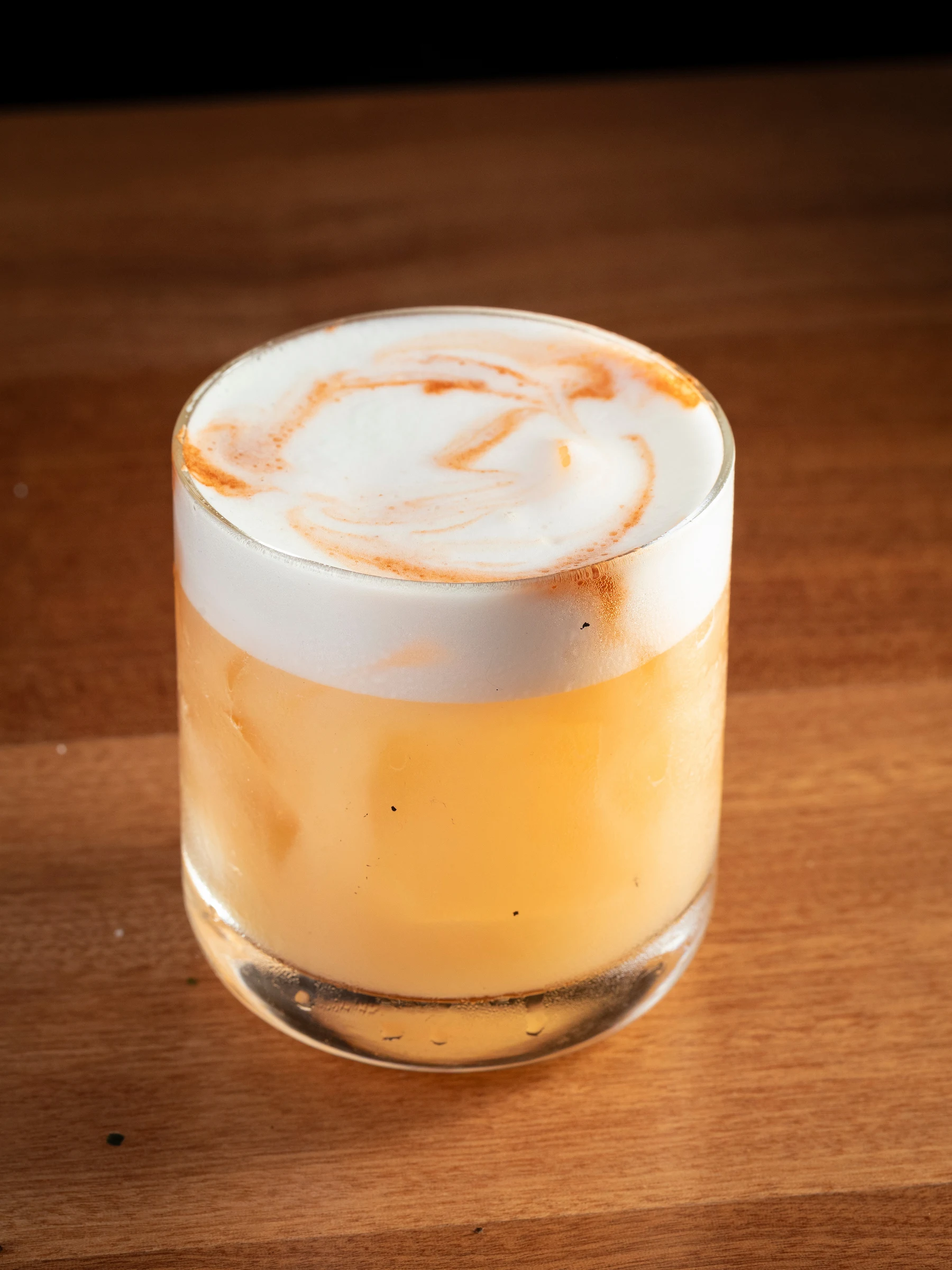
A cocktail in a rocks glass has a layered presentation with a golden liquid base topped with white foam.
The restaurant occupies a large skylight-lit space that was most recently the historic Robinson Bus Company storage depot. Before the September opening, the space worked within Soul & Smoke’s operation as an events area; now it seats 180.
Carter’s Chicago biography sits close to the pass. He grew up on the South Side, where the route to the smoker at his grandmother’s house passed along a black chain link fence, a memory echoed in the design. He also worked at Michelin-starred Moto, where he and Bublick met in 2008.
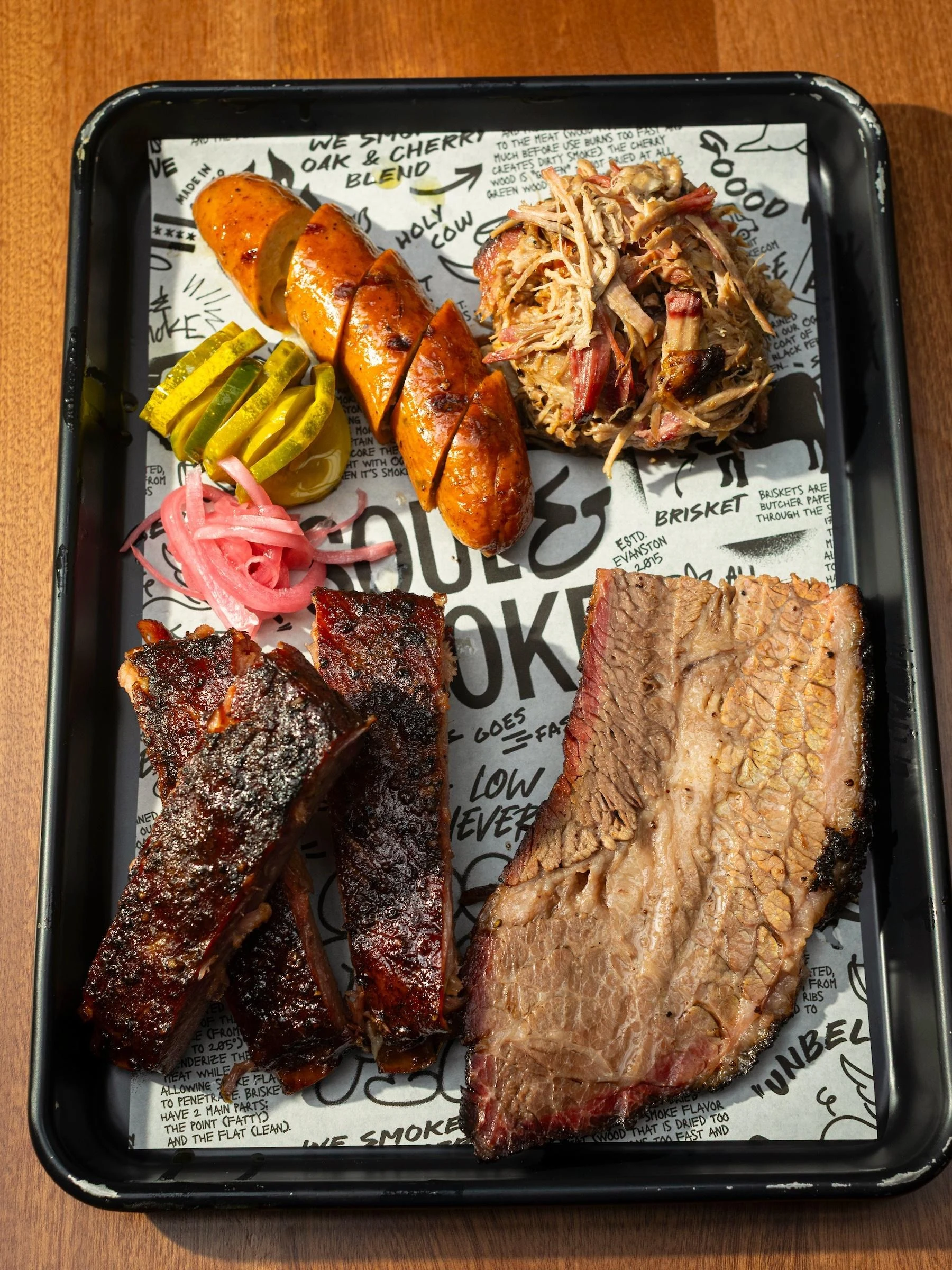
The menu includes brisket, pulled pork, smoked Duroc rib tips, and a rib tip combo. The six-seat counter faces the smokers and remains part of service past 4 p.m. as small lamps hit the tables and Carter’s higher-end menu joins the full barbecue menu.
From Chicago Barbecue Roots to Full-Service Dining
Bublick has described Soul & Smoke’s barbecue as Chicago-style, drawing from multiple regional traditions with heavier seasoning, varied rub ingredients, and two types of firewood. Carter smokes over hickory and cherry, and he has said he is playing with mesquite. The wood choice matters because the meat roster moves across textures: brisket, pulled pork, smoked Duroc rib tips, a $45 beef rib, and pastrami beef cheeks.
A charcuterie board from Soul & Smoke features smoked meats including brisket, pulled pork, ribs, and sausage, accompanied by pickles, onions, and other traditional barbecue sides.
The rib tips carry the clearest local lineage. The cut has South Side roots, tied to Black pitmasters in the 1940s and ’50s who sold the tougher tops of spare ribs rather than discard them. At Soul & Smoke Evanston, that history sits on the same menu as a beef rib priced for a different kind of meal.
Carter gives guests four house sauces: a Carolina vinegar-based sauce, a mustard-based gold sauce, classic jerk, and original BBQ. Bublick has described the original as combining Kansas City style with the flavor Chicagoans grew up with, closer to Sweet Baby Ray’s and less sweet. Vinegar, mustard, jerk seasoning, and a sweeter tomato register all sit beside the same rack of ribs.
Carter uses Niman Ranch and Nichols Farm for meat and produce. The meat and produce reach the pass through Carter’s fire.
At 4 p.m., the kitchen adds dishes while keeping the barbecue menu. Carter brings in dishes that reach back to his fine-dining years and his catering repertoire: charcoal-grilled halibut collar, ahi tuna poke cones with smoked dashi, potato salad-deviled eggs, oysters with smoked kaluga caviar, and a Moto-inspired cigar made with smoked oxtail wrapped in collard greens and served smashed into sesame ash. Carter said he did not want to just stick to primal cuts.1
Smoked dashi is one way Carter extends smoke into broth. Halibut collar asks the grill to handle collagen and fat in a different register from brisket. Oxtail, collards, sesame ash, and a cigar shape return Carter to Moto while keeping the ingredient language close to the South Side plate.
The Six-Seat Counter and the A.N. Bewley Smokers
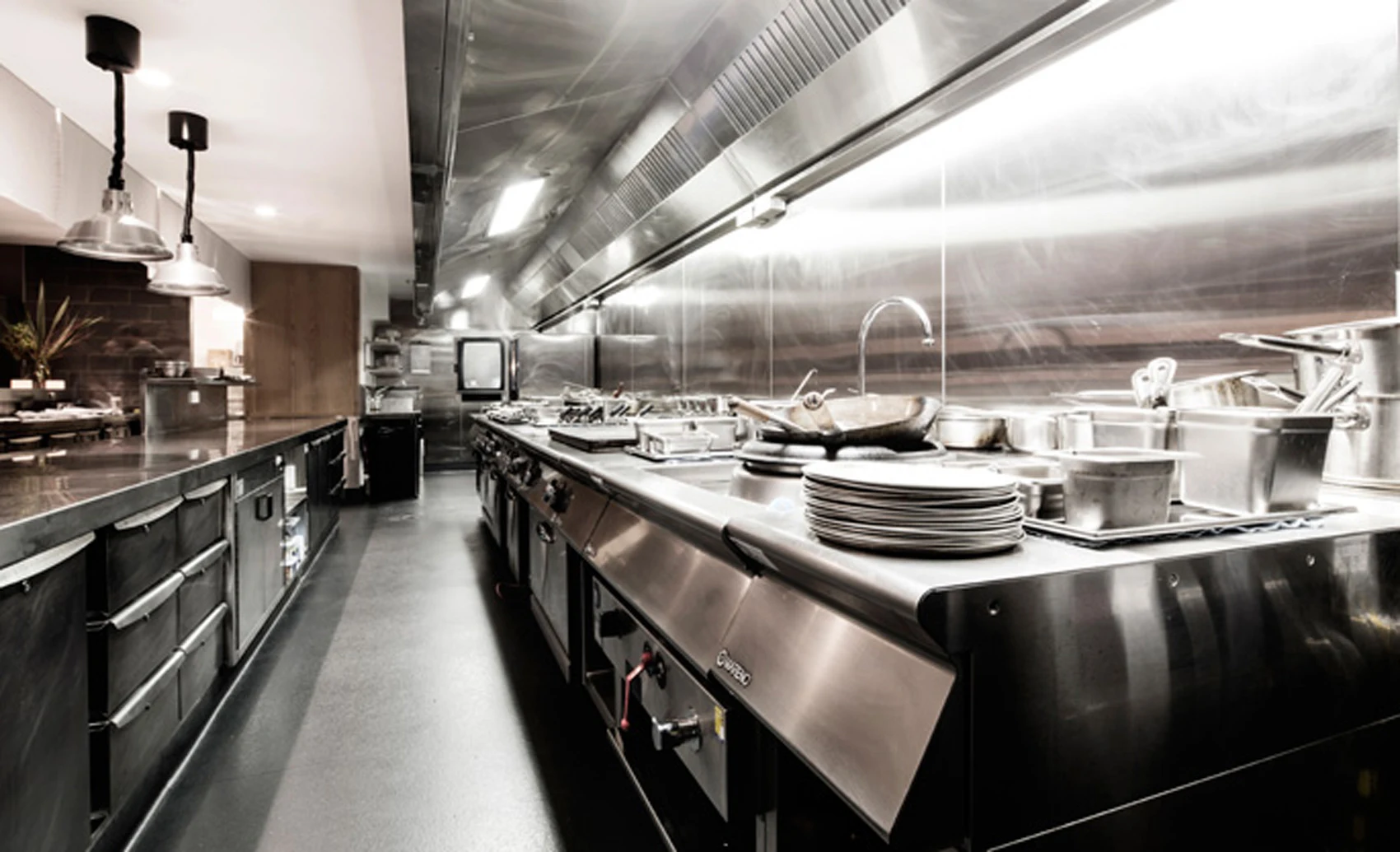
The chef’s counter is the six-seat counter that looks into the open kitchen and toward the bright red A.N. Bewley smokers. Six guests look into the open kitchen and toward the bright red A.N. Bewley smokers. The counter looks onto the station, the hands, the timing, and the traffic between the kitchen and a 180-seat dining room.
That openness changes barbecue into a present-tense act. In many restaurants, smoke arrives as aroma and plate. The smoker sits in the guest’s sightline. The counter turns a long cook into a present-tense act, even when the brisket or rib tips began their work hours before the reservation.
Smoked chicken gumbo with Carolina Gold rice, mac and cheese, shrimp and grits, Brown Sugar Bakery cakes, and a tall sweet potato pie join the barbecue. A deep-fryer has joined the kitchen, answering the front-of-house team’s question about fries. Desserts bring in Brown Sugar Bakery cakes, while Carter worked with consulting pastry chef Casey Doody, associated with Boka and Gibson’s Restaurant Group, on a tall sweet potato pie.
The build includes Brown Sugar Bakery, Doody, Niman Ranch, Nichols Farm, A.N. Bewley, and the internal Soul & Smoke team. Carter and Bublick remain the makers at the center, but the restaurant’s method depends on a wider set of hands.
Heather Bublick’s Wine Program and the 4 P.M. Turn
Bublick’s role as sommelier matters because she refuses the narrow pairing script around barbecue. Her glass and bottle list features wines from BIPOC or woman-owned producers, and she built it for meat cooked over fire. "I think only in this country is barbecue something that’s become all bourbon and beer. Everywhere else in the world, you have grilled meats with red wine," said Heather Bublick.2
Barbecue can be difficult with wine when sugar, smoke, chile, vinegar, and rendered fat pull in different directions. Bublick’s list begins with producer identity, BIPOC and woman-owned houses, then has to meet the actual table: jerk sauce, mustard gold sauce, smoked beef, shrimp and grits, oysters with smoked kaluga caviar, and halibut collar.
The beverage program includes classics and retro drinks such as a dark and stormy, amaretto stone sour, and hurricane. Bourbon still appears in drinks like the smoked peach Arnold Palmer and blackberry sour. The restaurant also serves cocktails on draft, spirit-free frozen drinks, local beer, and Beer for the Soul, a collaborative brew from Sketchbook Brewing Co. in nearby Skokie.
After 4 p.m., the lamps come on and the upscale dishes join the full menu. Before then, the room can function as a barbecue destination. A table can order a rib tip combo or move toward oysters, smoked dashi, and red wine.
Art, Food Security, and the Community Fridge Outside
Soul & Smoke Evanston also makes the couple’s community work part of the restaurant’s daily structure. Through the Soul & Smoke Foundation, the flagship houses a 24/7 community fridge that supplies free meals to neighbors in need. The fridge sits outside the restaurant and is replenished with day-old bread and leftover food for people in Evanston’s Fifth Ward and beyond (Soulandsmoke4).
The restaurant also works with Rethink Foods, the chef-led food sustainability nonprofit, to provide 750 meals a week to communities in need. For Thanksgiving, Soul & Smoke planned to partner with neighborhood organizations to provide meals for around 125 families.
The art program follows the same line of connection. Local artists Hebru Brantley, Paul Octavious, and JC Rivera appear in the dining room’s visual language. JC Rivera’s Bear Champ is near the entrance. A Flyboy universe mural by Hebru Brantley sits over one wall. A mural by Northwestern graduate Dwight White, painted on an original barn door from the building’s dairy-farm past, depicts the connection between farmer and chef. Custom floral wallpaper by Rello covers the bathrooms.
The room’s design ties personal memory to local hands. The chain link fence points back to Carter’s grandmother’s smoker route. The Moto photographs point to his early fine-dining station and to the year he met Bublick. The murals keep Evanston and Chicago artists in the sightline.
How to Visit the Evanston Flagship Now
Soul & Smoke Evanston is open Sunday through Thursday from 11 a.m. to 8:30 p.m., and Friday through Saturday from 11 a.m. to 9 p.m. Soul & Smoke Evanston takes reservations on Resy. Large group dining carries a $40 per person food and beverage minimum.
The six-seat chef’s counter has a close view of Carter’s station and the A.N. Bewley smokers. The midday menu includes brisket, pulled pork, rib tips, sauces, and sides. A reservation after 4 p.m. brings the full barbecue menu together with the higher-end dishes, the wine list, cocktails, and the room’s evening shift.
The flagship uses smoke from hickory and cherry, wines chosen by producer ownership, art from Chicago-area makers, and a 24/7 fridge outside the same building where Soul & Smoke has done production since 2015.
The Sunday email
Get new Made By stories every Sunday.
Every Sunday we send a lead story and up to four more about the chefs, winemakers, sommeliers and hoteliers behind the restaurants, bars, wineries and hotels we cover.