By the third week of January 1995, Jim Rutledge had plant manager Al Young carrying new make distillate samples almost daily from Four Roses in Lawrenceburg, Kentucky, to Seagram’s distillery in Lawrenceburg, Indiana, where Jim Warner and Pat Loach evaluated them against a one-to-five quality scale. This month marks 60 years in bourbon for Rutledge, and in January 1995 Four Roses produced its first four-rated distillate in over three years while facing a June shutdown deadline (Whiskeyuniv3).
Rutledge was averaging 16 to 18 hours a day during that turnaround. He arrived around 7 a.m. to prepare for the 8 a.m. shift, walked through the distillery at least three times a day, and spent the next shift with operators after the day staff left. He arrived around 7 a.m. to prepare for the 8 a.m. shift.
The Seagram’s Start: Louisville, Sears, and a Career Chosen in 1966
Jim Rutledge was born in 1943 and attended the University of Louisville, where he ended up with a degree in Marketing after entering college with mechanical engineering in mind. He worked at Sears in the credit collections department while in college, then stayed there for two years after graduation before choosing Seagram’s over a job at Philip Morris (Whiskeyuniv3).
In 1966, Rutledge took the Seagram’s job at Calvert Distillery on 7th Street Road in Louisville. The first years put him into research and development, case goods shipping, and bottling line planning. By 1975, he was head of Industrial Engineering and Budgets.
He later recalled that operators in those days used pencil marks on valves to control optimal temperature and flow on stills, the kind of bench-side memory that matters because computers now handle those controls. He also managed a transition to palletization in the warehouses before Seagram’s transferred him to New York in November 1977 (Whiskeyuniv3).
Stanley Bershaw was Rutledge’s mentor. The Seagram’s system trained people across plants, budgets, bottling, warehouses, and production. Rutledge spent 15 years in New York working for Seagram’s in the company structure that later sent him back to Kentucky, while he wanted to return to the production floor.
New York, Cox’s Creek, and the Long Route Back to Production
Rutledge moved to White Plains, New York. He had been told the move was a promotion to chief industrial engineer, and the title changed by the time he arrived. The work kept him in Seagram’s system for 15 years, while his stated desire was to get back to production.
In 1990, Rutledge was offered the opportunity to head up Four Roses Distillery in Kentucky. Two years later, he returned to Kentucky and spent his first two years back at Cox’s Creek, working with the bottling operation and warehousing side before shifting focus to Four Roses Distillery in Lawrenceburg in November 1994.
He had seen research and development, case goods, bottling line planning, budgets, standards, warehouses, palletization, and plant systems. In 1994, he walked the Four Roses floor.
By 1994, Jim Rutledge was named Master Distiller of Four Roses with poor distillate and a June 1995 shutdown deadline looming. The distillate coming off the still before barreling had been poor for about three and a half years, and Four Roses faced a summer shutdown deadline in the second week of June 1995 if quality did not improve.
Rescuing Four Roses From the 1995 Shutdown Threat
Four Roses had shifted focus in 1959 to international consumers, mainly Japan. The Four Roses sold in the United States at the time was a blended whiskey made in Indiana and Maryland, and the bourbon carried its reputation overseas. By the time Rutledge arrived in Lawrenceburg, the Kentucky distillery was producing for markets that many American drinkers could not reach, and its future inside Seagram’s depended on the new make coming off the still.
Seagram’s used a one-to-five rating system for new make distillate, with one the lowest and five the highest. For more than three years before Rutledge took over, the average score sat at one. A four-rated sample by January 1995 showed improvement before the June shutdown deadline.
Rutledge worked inside a union shop with clear lines between management and maintenance. If he saw a valve that needed turning, he could not simply reach for it. He had to find the right person to do the job. A manager who wanted control might have been frustrated by the union shop. For Rutledge, it became the method. He needed to understand who did what, when, and why, because the quality of the distillate depended on those hands.
He walked the distillery at least three times a day, talking with clerical staff, maintenance, operators, and managers. After the day ended, he stayed with the next shift, listening and learning. He could not tell the floor that jobs were at risk if quality did not improve, so he talked about quality itself. Workers saw his repeated presence on site.
"That's the kind of atmosphere I've always believed in, working together. I felt like they might report to me, but I worked for them."1
Jim Rutledge, distilling legend, VinePair
Rutledge’s turnaround at Four Roses was a management act built from production discipline: daily presence, repeated sampling, a shared quality target, and the willingness to learn from the person standing at the still.
Jim Rutledge and Four Roses Return to the U.S. Market
Four Roses Bourbon was sold in Japan and other foreign markets. The domestic relaunch reintroduced Four Roses to American drinkers.
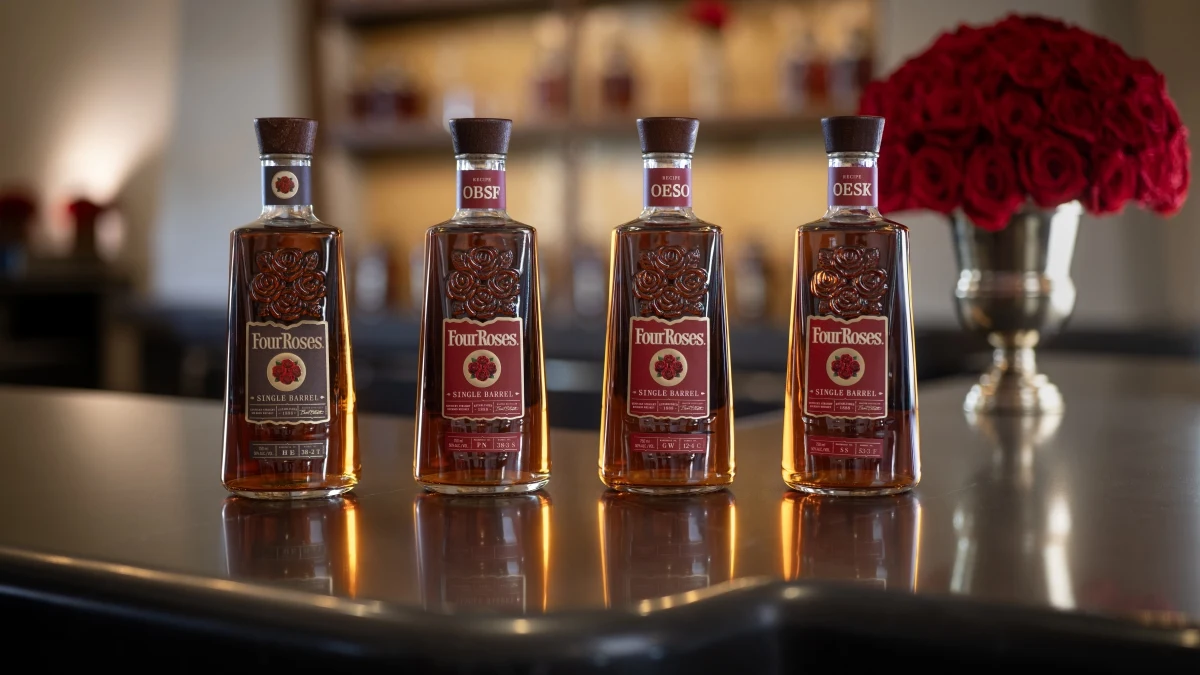
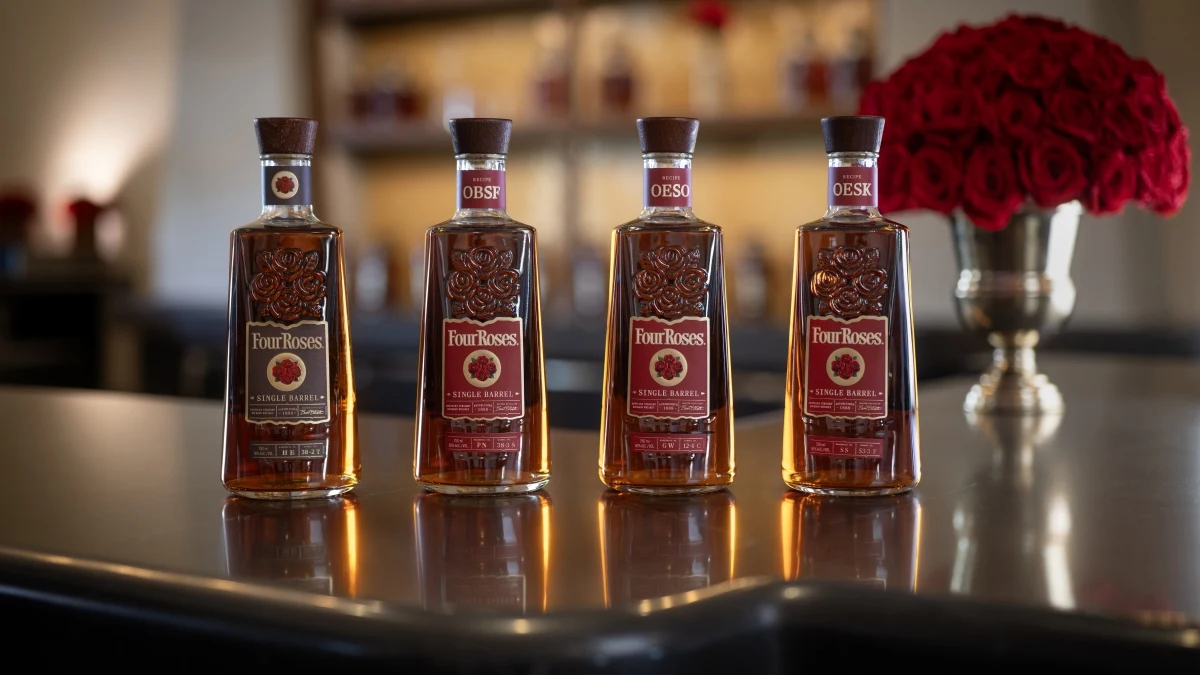
Four Roses Single Barrel was released for the first time in 2004. Four Roses Small Batch reached the public in 2006. Those releases gave American drinkers a way to understand Four Roses through bourbon again, after years in which the U.S. market saw a blended whiskey under the name. The bottles also presented yeast, mash bill, warehouse selection, and blend to bartenders, retailers, and drinkers during bourbon’s return to the back bar.
Rutledge’s Four Roses years placed him at the hinge between an export-focused past and a domestic bourbon market willing to study production detail. He served on the Kentucky Distillers’ Association Board of Directors for 13 years. He also served on the Kentucky Bourbon Festival board for nine years, including seven years as chairman. The awards followed the work: a Lifetime Achievement Award from Malt Advocate Magazine in 2007, Whisky Ambassador of the Year from Whisky Magazine in 2008, and induction as the 13th person in Whisky Magazine’s Global Whisky Hall of Fame in 2013.
The January 1995 samples, the 2004 Single Barrel release, and the 2006 Small Batch release sit on the same line of work: quality first, then release.
The Floor-Time Philosophy and Ashley Barnes
Ashley Barnes started working with Rutledge at Four Roses in 2014. Barnes, a master blender and now an industry consultant, later said Rutledge taught her to ask the person who had been running the equipment.
"One of the things that he told me was to go talk to the guy that's been running the still for 20 years and see what you could learn"2
Ashley Barnes, master blender, VinePair
The operator has run the still for 20 years. Sometimes it is a young blender sent to stand beside an operator, ask questions, and learn what a gauge reading means when the room sounds different.
Barnes worked with Rutledge at Four Roses starting in 2014. She is now working with him again on Jacob Spears. Rutledge’s teaching continued through people who learned to value the operator’s knowledge as much as the title on the office door.
He trained under Stanley Bershaw, worked through Seagram’s systems, learned from operators, worked with Al Young, sent samples to Jim Warner and Pat Loach, and later taught Barnes to go back to the still man with 20 years on the tools. The chain is visible because the names remain attached to the work.
After Four Roses: Cream of Kentucky, Echoes of Oak, and New Hands
Rutledge retired from Four Roses in 2015 and continued working in bourbon. Within eight months, he announced a new distillery venture with Stephen Camisa and Jon Mowry, J.W. Rutledge Distillery, LLC. Plans for that distillery have included using two or more yeast strains with several high-rye bourbon mash bills, and producing Kentucky Straight Bourbons, Rye Whiskey, and Wheated Whiskey.
Rutledge has also worked as Liquid Advisor for Blue Run Spirits, overseeing bourbon barrel selections and distilling new-make bourbon. He has helped launch Cream of Kentucky and Echoes of Oak, and he distilled Echoes of Oak at Castle & Key Distillery in Kentucky. He has also been curating Cream of Kentucky Bourbon and High Plains Bourbon and rye whiskey.
The post-Four Roses work keeps returning to the same concerns: yeast, mash bill, barrel selection, new make, and the integrity of bourbon and rye whiskey. Rutledge has said he hopes to maintain that integrity, and plans for J.W. Rutledge Distillery have included a mid-sized Kentucky distillery with capacity for 35,000 barrels a year, pending funding, built as a modern and sustainable distillery that looks more like a Californian winery.
What 60 Years in Bourbon Leaves on the Bench
Rutledge reached 60 years in bourbon. He joined Seagram’s in 1966. He moved to New York in 1977. He was offered the Four Roses opportunity in 1990. He returned to Kentucky in 1992. He shifted to Lawrenceburg in November 1994. Four Roses Single Barrel arrived in 2004, Small Batch in 2006, and Rutledge retired in 2015.
Rutledge spent enough time inside one industry to see handwritten ledgers give way to computers, pencil marks on valves give way to automated controls, and a bourbon brand sold abroad return to American drinkers. He also stayed close enough to production after retirement to distill at Castle & Key and work with a new generation through Barnes and Jacob Spears.
His next work includes Ashley Barnes on Jacob Spears and the teams around Cream of Kentucky and Echoes of Oak.