Winemaker Ilaria Felluga’s Case for Aged Pinot Bianco
At 26, Ilaria Felluga took on Marco Felluga and Russiz Superiore. Her case for aged Pinot Bianco now points Collio forward.
HM
Director of Editorial Standards
Hugo Marchetti
Filed October 31, 2026
13 min read
Ilaria Felluga starts with an interval: six, seven months after harvest, the first moment she names when she talks about Pinot Bianco from the hills of Collio. Then she moves the bottle forward, to 10, 15, even 20 years in the cellar. Ilaria Felluga is a sixth-generation Friuli winemaker at Marco Felluga and Russiz Superiore. She took the reins of the two family wineries at 26 after the death of her father Roberto in November 2021.
Marco Felluga and Russiz Superiore have been majority-owned by Tommasi Family Estates group since 2024. A family line through Giovanni Felluga, Marco Felluga, and Roberto Felluga. A region that Felluga says still has to explain where it is before it can explain what it tastes like. A grape, Pinot Bianco, that she says fewer than 3% of Collio producers make, even though it was the favourite variety of both her father and grandfather (Marcofelluga1).
The Sunday email
Get new Made By stories every Sunday.
Every Sunday we send a lead story and up to four more about the chefs, winemakers, sommeliers and hoteliers behind the restaurants, bars, wineries and hotels we cover.
Free. One email a week, and you can unsubscribe from any issue.
Why Ilaria Felluga's Pinot Bianco Matters in Collio
Felluga’s argument begins with time. She speaks about Pinot Bianco in two registers: the early bottle and the cellared one. Six or seven months after harvest, she looks for the elegance and sapidity the grape takes from the hills. With age, she places it among the wines that can unsettle a buyer’s shorthand for Italian whites.
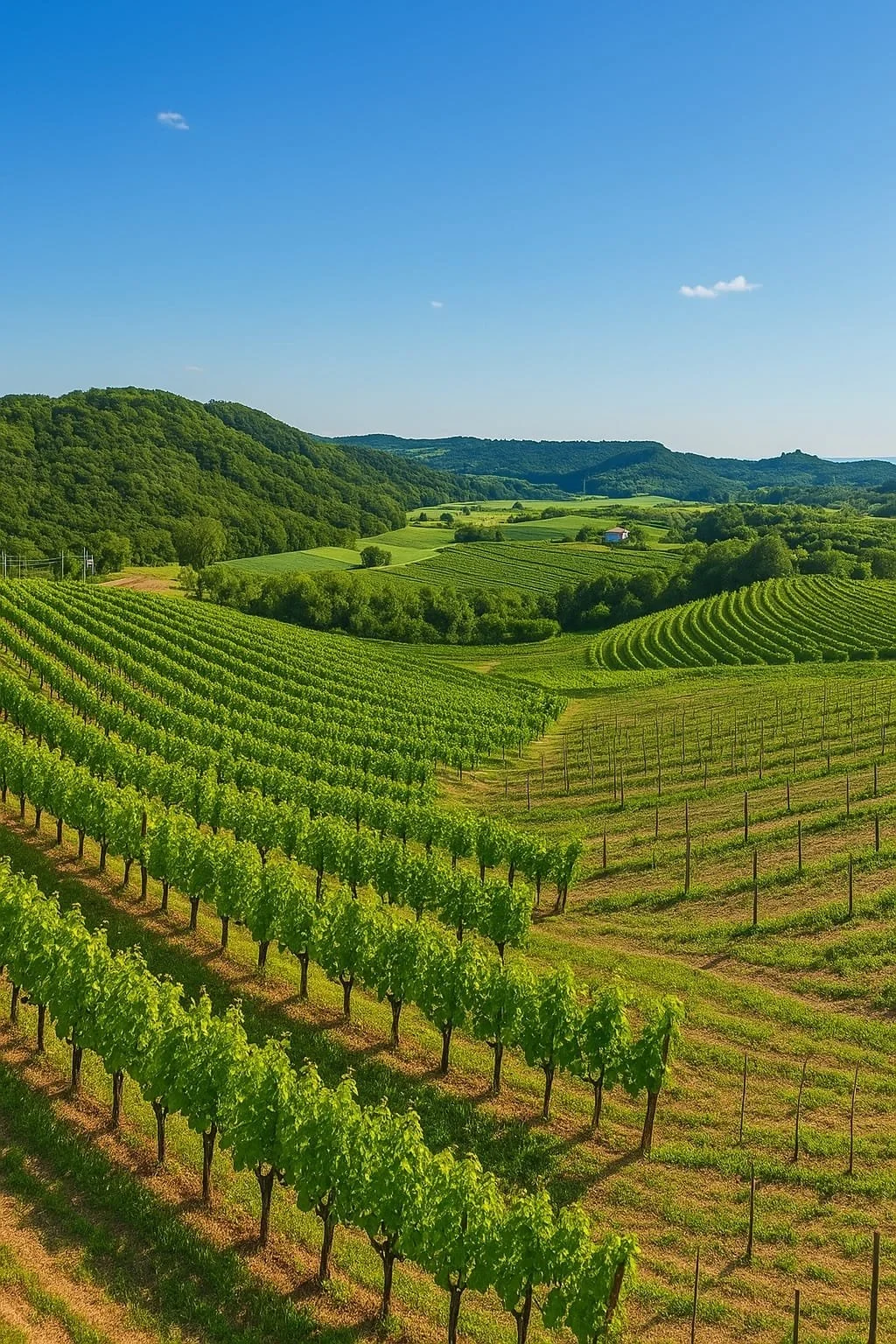
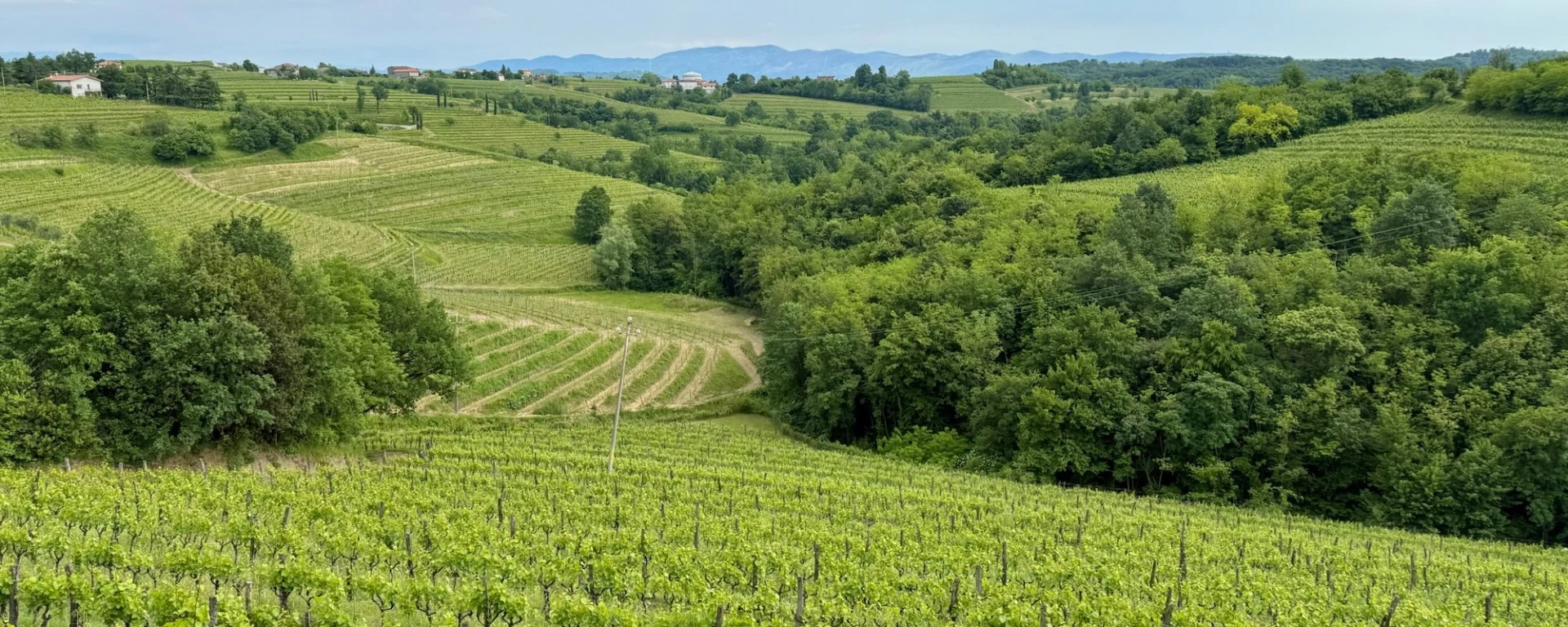
Terraced vineyards with young grapevines stretch across rolling hills in a lush wine region, showcasing the landscape where quality white wines are cultivated.
"I’m very into Pinot Bianco, aged, it’s out of this world. But even six, seven months after harvest, I love the elegance and sapidity it gets on these hills."Decanter2
Felluga treats Pinot Bianco as part of the family bench. She links it to the hands before hers. Her father Roberto and her grandfather Marco both favoured the grape, and she has said she may have drunk a lot of it without realizing the influence. That is lineage working quietly through what gets opened, poured, and remembered at table.
Collio gives her a numerical frame. Whites account for 87% of the denomination, Felluga says, and Friuli produces wines from Pinot Grigio, Ribolla Gialla, Pinot Bianco, Chardonnay, Sauvignon Blanc, Friulano, and other varieties. Friulano and Ribolla Gialla carry the native-variety conversation. Pinot Bianco sits in a narrower channel. Felluga calls it a niche of a niche, and the less-than-3% figure gives the phrase its weight.
For collectors, the point is that a white wine category can be opened young and also held for 10, 15, or 20 years. Felluga keeps the door open for immediate drinking. She welcomes patience without making it a purity test. She does say that Friuli whites can reward forgetting, the way certain bottles need time away from the dinner calendar before their shape becomes legible.
"Friuli wines can be enjoyed straight away, though if you have the patience to cellar them and forget about them for a while, you can happily drink them after 10, 15, even 20 years with no problem."Decanter2
Felluga’s leadership began before most winemakers have had much time on the tools. Family estates rarely move that way. A daughter steps into signatures, staff rhythms, importer relationships, vineyard memory, and the unfinished work of the predecessor.
Her path into the cellar did not start as a foregone conclusion. Felluga was born in Friuli and lived half her life in Liguria, where her mother, Roberta, is from. After her parents divorced during her elementary school years, day-to-day life sat with Roberta in Liguria. Friuli and the family winery belonged to school breaks, harvests, Christmas, and Easter. She grew up with the business, by her own account, but not completely inside it.
The turn came in London. Felluga was there on a gap year, living with a family, going to school in the mornings, caring for the family’s children in the afternoons, and also working with the family importer in the UK. Roberto asked her to an importer dinner. She arrived in Converse All Stars, school jeans, and a T-shirt. The restaurant was almost Michelin-starred, the chef had built a menu for the tasting, and Roberto led the room through the wines. Felluga returned to Italy and chose viticulture and oenology.
She joined the winery in 2017 after those studies. Marco Felluga appeared on the list of suggested wineries for her internship, which put her back into the family’s own discipline through the ordinary route of a student placement. She worked in the vineyards, learning how to gauge acidity and sugars in the grapes, and took part in fermentation once the grapes came in. Later, she spent more of her time on global travel and commercial sales, including Italian and foreign markets.
Those two forms of training, the vineyard and the road, now meet in her work. Her vineyard work and sales trips teach timing, consequence, translation, and what a market hears, mishears, or never hears at all. Felluga’s current emphasis on communication comes from that combined station: the cellar cannot carry the whole argument if the drinker cannot place Friuli on the map.
The Felluga Lineage, From Grado to Russiz Superiore
Giovanni Felluga, her great-grandfather, opened a winery in Gradisca d’Isonzo after moving the family from Grado, a small city on the Friulian coast.
Giovanni’s children carried the name forward. Marco Felluga and Livio Felluga, two of seven children, followed winemaking under the Felluga name until 1956, when their paths split. Ilaria’s grandfather Marco, born in 1927, bought Russiz Superiore in 1967. He named it for the local geographical area: russiz means earth in an ancient Slovenian dialect, and superiore means higher, because the site sits on a hill.
Russiz means earth and Superiore means higher. The word Russiz carries border language inside it; Superiore fixes the eye upward to the hill. When Felluga talks about Pinot Bianco taking on sapidity on these hills, she is tying taste back to that inherited vocabulary, even when she is speaking to a younger audience at an aperitivo musicale rather than to a room of trade buyers.
Marco Felluga and Russiz Superiore now sit inside a new business shape. Since 2024, the wineries have been majority-owned by Tommasi Family Estates group. The family name remains on the bottles, and Ilaria Felluga remains the sixth-generation winemaker. For a family estate, that split between heritage, partnership, and daily leadership requires careful handwork. The past cannot sit behind glass. The present needs decisions.
A bottle of aged Pinot Bianco needs a customer willing to wait. A customer willing to wait needs a reason to understand Collio. A region that has to explain itself needs people who can do the explanation without flattening the wines into slogans.
Collio’s Communication Problem Starts With the Map
Felluga identifies communication about wine and consumption as one of the region’s central challenges. Communication about Collio often begins by locating Friuli before explaining Pinot Bianco, Friulano, Ribolla Gialla, Sauvignon Blanc, Pinot Grigio, Chardonnay, Cabernet Sauvignon, Merlot, or Cabernet Franc. Her working shorthand is practical: five minutes from the Slovenian border.
Rolling hillside vineyards with gentle slopes and wooded valleys in the Collio wine region.
Slovenia sits close enough that Felluga uses it to orient people who may have a clearer image of the border than of Collio itself. She also describes the sea as a 40-minute drive away, with sandy or stony beaches, and the mountains as one hour away for walking, biking, and skiing. Between them sit gentle hills, wineries, typical trattorias, and Michelin-star restaurants.
Those distances give wine tourism its frame. The sea, the border, the hills, the trattoria table, and the cellar door all sit within a day’s reach. Felluga says Friuli is not known for one particular grape. The multiplicity is the point, and it is also the communication problem.
A single-variety region gives buyers an easy shelf talker. Collio asks for more explanation. Whites dominate the denomination at 87%, but the white-wine bench includes native varieties and international ones. Pinot Bianco sits beside Ribolla Gialla, Friulano, Pinot Grigio, Chardonnay, and Sauvignon Blanc. That range is useful to sommeliers and retailers once staff know the distinctions. That range can blur for drinkers who do not know the region.
Felluga’s answer is to slow the encounter down. She talks about education, questions, and settings where a younger public can feel permitted to ask. Wine often loses new drinkers when the room makes ignorance expensive. Felluga’s hospitality program tries to lower that cost without lowering the discipline of the wines.
Wine Tourism as a Working Station
At Marco Felluga and Russiz Superiore, wine tourism has become part of the estate’s work. Felluga has pointed to art classes where people paint while drinking wine paired with a small bite to eat. She has also described aperitivi musicali, relaxed gatherings designed to bring in younger guests and make questions easier.
Another hospitality idea came from her team: a wine and DJ night built around music from different generations. It has been a hit, according to Felluga. The estate treats generational exchange through a wine and DJ night built around music from different generations. Music from different ages sits beside wine from different harvests; the room can hold parents, children, students, locals, and visitors without forcing them into the same register.
The wineries also use the vineyards as a classroom. A local guide takes visitors through the vines to look at the plants and animals in the area and to show soils containing fossils. Cooking classes bring guests into typical dishes paired with the wines. It is to see the ground, hear how the place is described by someone who walks it, and connect a glass of Friulano, Ribolla Gialla, Sauvignon Blanc, Chardonnay, Pinot Grigio, or Pinot Bianco to food and terrain.
That access has practical value for Made By readers who plan travel around producers. The art class guest and the cellar collector may want different levels of technical language and both need contact with the hands behind the bottle. Felluga’s program makes that contact repeatable. It gives hospitality staff a role in communication and service.
Good wine tourism does not turn a winery into a theme park. It makes the discipline visible. In Felluga’s case, the visible parts include the hillside language of Russiz Superiore, the regional distances to Slovenia, the sea, and the mountains, the cooking of typical dishes, and the cellar argument for white wines that can age. Each piece answers the same question: why should someone remember Collio after the tasting ends?
The Next Generation Shares at Fairs, Dinners and Tastings
Felluga speaks warmly about the new generation of winemakers in Friuli, especially the amount of sharing among them. She sees them at wine fairs, dinners, and tastings. They are growing up together and exchanging ideas. The names are less important here than the pattern: a cohort learning in public, across tables, while the region tries to sharpen its language.
This is one of the quiet shifts in Italian wine families. A young winemaker who inherits a cellar no longer speaks only to the predecessor, the oenologist, the vineyard crew, and the importer. She speaks to peers in adjacent valleys, to visitors who arrive through tourism rather than trade, to younger drinkers who may have less tolerance for formal wine codes, and to export markets that need a clean explanation of Friuli before they will make space for the bottles.
Felluga’s own market work gives her a wider bench. She has been more involved in global travel and commercial sales, including Italian and foreign markets. After Italy, the United States is the next market for the wineries; Germany, Austria, the UK, and Australia are among the other main markets. Each one asks different questions of a Collio white. Some buyers may know Pinot Grigio first. Some may come through orange wine, borderland culture, or the reputation of Friulian whites. Some buyers may not know that Pinot Bianco from Collio exists.
That is where Ilaria Felluga Pinot Bianco becomes more than a preference. It becomes a teaching tool. A grape made by fewer than 3% of Collio producers can focus a conversation because scarcity forces specificity. The bottle cannot stand for all of Friuli, and it should not be asked to. It can, however, demonstrate the age question, the hill question, and the family question in one pour.
The family question is especially present because Pinot Bianco was favoured by Roberto and Marco before Ilaria. When she talks about it now, she carries their taste forward without treating it as fixed law. She brings it into importer conversations, hospitality settings, and the broader work of explaining Collio to drinkers who may know the Slovenian border better than the denomination.
What to Watch Next at Marco Felluga and Russiz Superiore
The next visible work is already in motion: wine tourism at the two estates, younger-audience gatherings such as aperitivi musicali, vineyard walks with local guides, cooking classes with typical dishes, and the continued public argument for aged Friuli whites. Visitors can ask which white on the table is for tonight and which one should be left alone for 10, 15, or 20 years.
Ilaria Felluga Pinot Bianco sits at the point where family memory, Collio scarcity, and ageability meet. Less than 3% of Collio producers make Pinot Bianco, Felluga says; her father and grandfather favoured it; she is now making it part of a broader explanation of what Friuli whites can become. The next work will be measured in harvests, in bottles held past their first year, and in guests who leave Collio able to explain where it is.
The Sunday email
Get new Made By stories every Sunday.
Every Sunday we send a lead story and up to four more about the chefs, winemakers, sommeliers and hoteliers behind the restaurants, bars, wineries and hotels we cover.