Winemaker
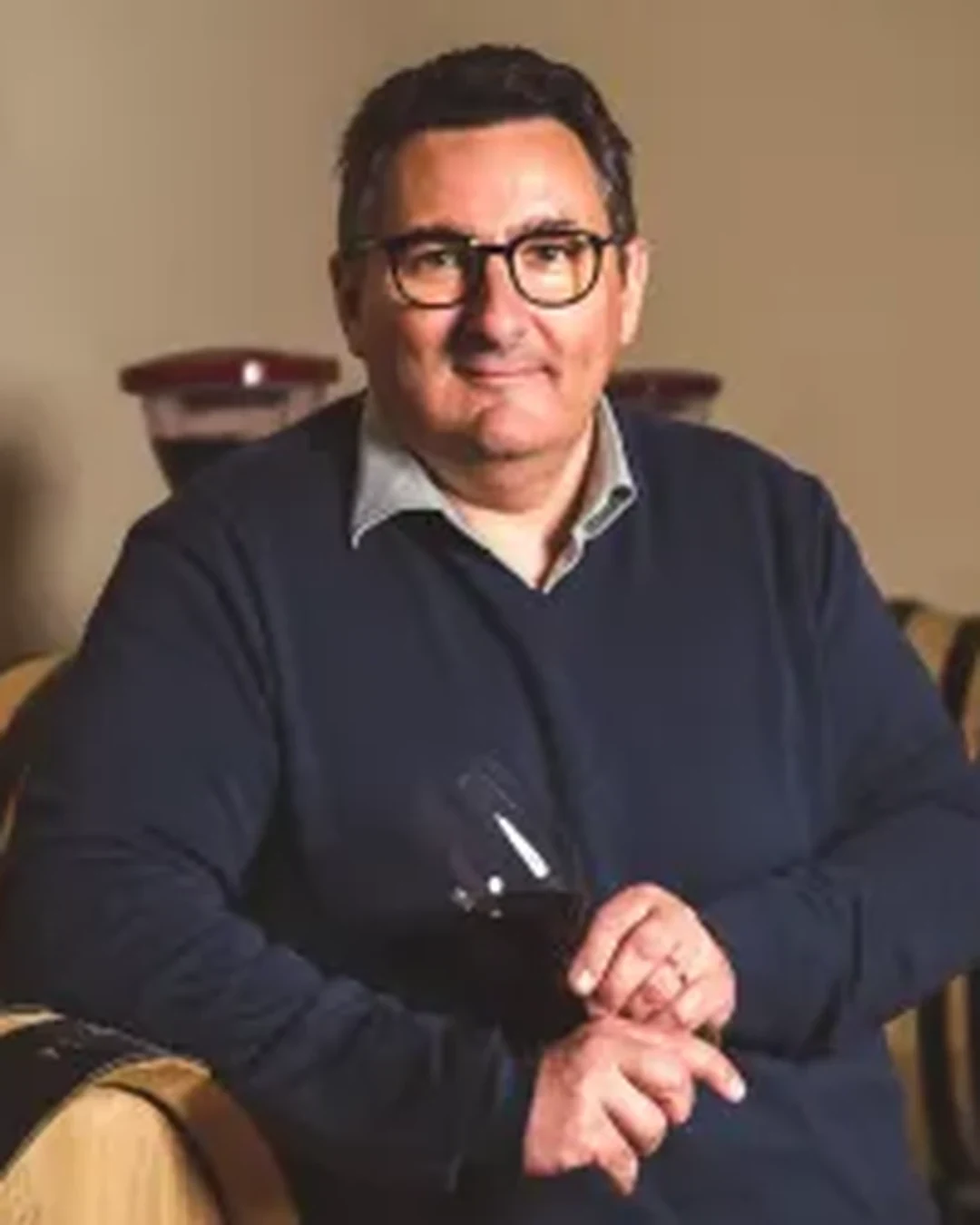
Bruno Lacoste
- Discipline
- Winemaker
i. Biography
Bruno Lacoste works at Château Saint-Jean de Lavaud in Lalande-de-Pomerol, where old vines planted with Merlot and Cabernet Franc set the terms of the wine before it reaches the cellar. The practice is built on co-fermentation, keeping the two varieties together from the outset so they develop side by side. That choice sits within a traditional frame, with balance and texture carrying as much weight as force or polish.
The Essentials At Château Saint-Jean de Lavaud, Bruno Lacoste works with old vines in Lalande-de-Pomerol, drawing on Merlot and Cabernet Franc in a way that keeps the two varieties closely intertwined from the outset. Rather than separating their paths, he relies on co-fermentation, allowing the grapes to develop together and build their character in tandem. This traditional method is part of a broader philosophy that prizes nuance over embellishment, and structure without losing the supple, generous quality that gives the wines their appeal. His cellar choices follow the same logic. Maturation in 500-litre barrels is used to support the wine without overwhelming it, helping preserve fruitiness and maintain clarity. It is a careful, understated craft, one that suggests confidence in the raw material and a clear sense of restraint. In a region where tradition carries real weight, Lacoste’s work at the château appears to be about fidelity to the vineyard as much as technique in the cellar, with each decision reinforcing the identity of the wine rather than masking it.
In Their Words “After completing my studies in Bordeaux, I immediately joined Michel Rolland’s oenological consulting firm.” The sequence is direct: studies in Bordeaux, then immediate entry into Michel Rolland’s oenological consulting firm. For a winemaker, that kind of start means early exposure to the pace and expectations of professional oenology, with no long pause between school and practice. It also places Lacoste inside a specific working lineage, one that shaped the practical base behind his later role at Château Saint-Jean de Lavaud. “Because I don’t come from such a background, I have a much wider understanding and approach to oenology.” This is a statement about perspective, not pedigree. Not coming from such a background, Lacoste says, has given him a wider understanding and approach to oenology, which points to breadth of reference rather than inherited habit. In trade terms, that kind of distance can sharpen judgment: it encourages attention to method, to context, and to what the wine needs rather than what tradition alone expects.
FAQ What is Bruno Lacoste known for? The estate uses old vines planted with Merlot and Cabernet Franc, traditional methods, co-fermentation of the two grape varieties, and maturation in 500-litre barrels to preserve fruitiness.


