Chef
Christian Scharrer
- Discipline
- Chef
i. Biography
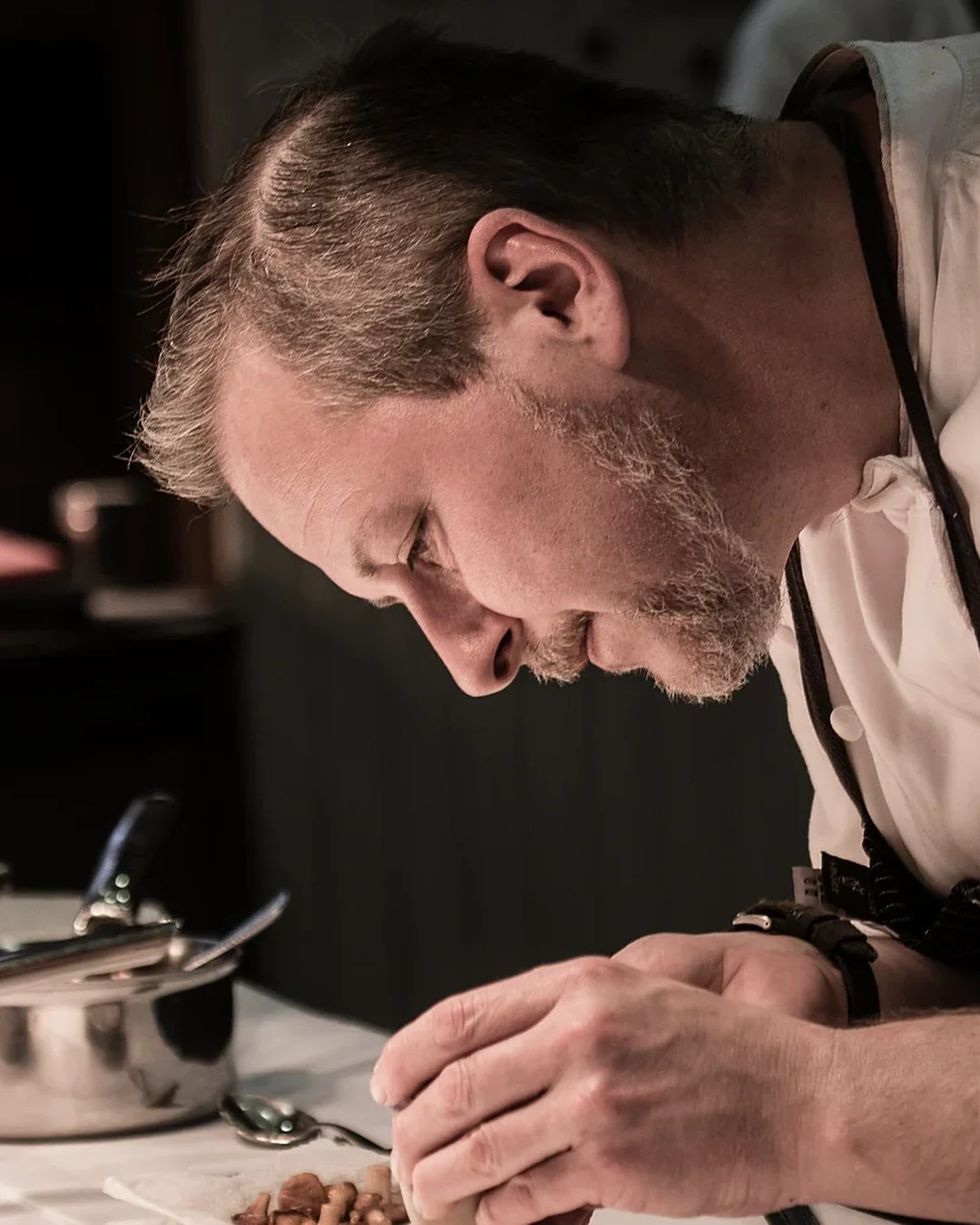
The 2017 Michelin Guide’s two stars for Courtier in Wangels, Germany, were a public reward for Christian Scharrer’s exacting kitchen, but the deeper story begins with formation: the long Weissenhaus years, the trust around him, and a nearly 20-year working relationship with Frank Nagel. At Weissenhaus Private Nature Luxury Resort in Weissenhaus, Scharrer’s cooking carried the memory of French classicism while moving toward sharper composition, deeper lines, and a more progressive sense of flavour.
The Training From 2016 to 2025, Scharrer served as head chef of Courtier in Weissenhaus, Germany, a tenure long enough for a cuisine to mature in public. In 2017, he earned two Michelin stars at Courtier in Wangels, Germany, fixing that chapter to a specific year and a specific room. The language of the kitchen there was Modern French cuisine: French classicism without being overly traditional in composition. It was also described as classic cuisine with modern accents, a phrase that suits a chef whose work did not reject the old grammar so much as redraw its lines. Across the Weissenhaus years, the cooking became more creative in composition, more progressive in flavour, and more finely drawn and deep in its lines. That progression matters in a lineage story because it shows formation as movement, not preservation: a chef receiving a tradition, then tightening, lengthening, and colouring it through practice.
The Lineage Scharrer’s own words place Frank Nagel at the center of the human chain behind the work. “I look back with gratitude on an intense and inspiring time, and my greatest thanks go to Frank Nagel, with whom I have worked for almost 20 years. He provided me at Weissenhaus with the stage for my work and my creative activity.” That sentence carries the warmth of a house history: one person offering space, another using it to build a culinary voice. Scharrer also thanked Jan Henric Buettner directly: “My thanks also go to Jan Henric Buettner for his trust and support, which I was able to experience here for years.” At the close of the starred-gastronomy chapter, his language turned toward renewal. “But now the moment has come when I would like to develop anew away from starred gastronomy.” The line does not erase the Michelin years; it sets them within a longer arc of craft, gratitude, and change.
The Table At Verbena by Christian Scharrer on Lake Lucerne, Switzerland, the cooking is described through emotional comfort food joined to fine-dining precision, origin, craftsmanship, and a clear, modern style. The same pull between comfort and refinement appears in the main courses cited as especially revealing of his signature. Pikeperch from the Alps with creamy polenta, radicchio, and orange shows that style through contrast: mountain fish, soft grain, bitter leaf, citrus lift. Veal Maultaschen, the Swabian ravioli, arrives in aromatic lovage broth with Baden-style potato salad, bringing regional memory into a precise plate. Delicate Alpstein chicken in a puff pastry pillow with spring herbs is described as combining classic cuisine with seasonal freshness. Onion roast beef from Luma with egg noodles and young vegetables represents robust flavours and artisanal perfection, a grounded counterpoint to the more finely etched side of his cooking.
FAQ What tradition or house shaped Christian Scharrer? The house was Weissenhaus, and the tradition was French classicism expressed as Modern French cuisine and classic cuisine with modern accents. Who has Christian Scharrer mentored? His own words point back to Frank Nagel rather than forward to a named protégé.


