Chef
Dave Beran
- Discipline
- Chef
- Venue
- Seline · Restaurant
Made By record
Awards & recognition
3 total
2 winners

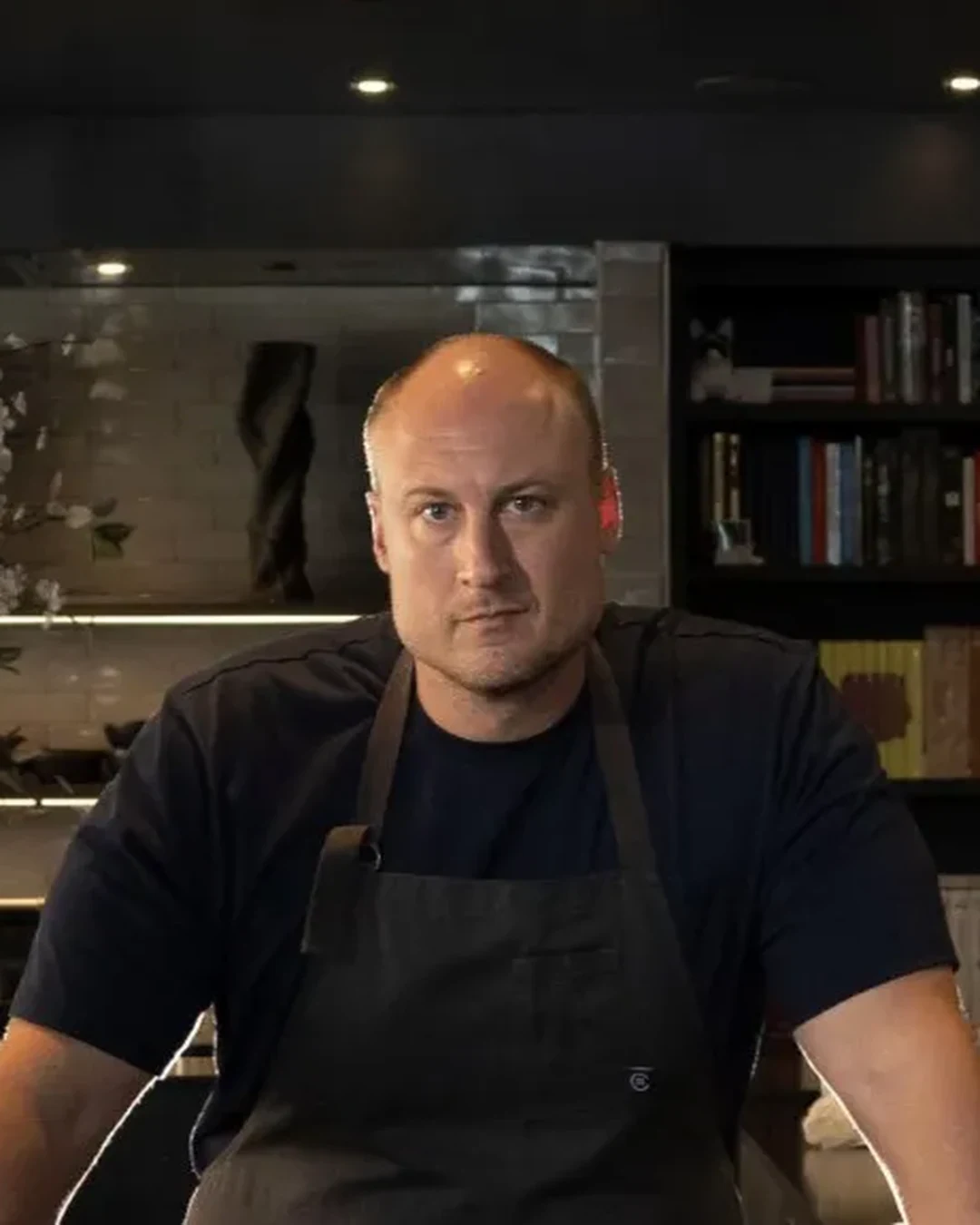
Portrait of Dave Beran
i. Biography
Dave Beran works seasonal tasting menus as a format for pacing, restraint, and sequence. The structure gives a chef room to control rhythm course by course, and Beran uses it to build meaning through composition rather than volume. He has said, “I was a vegetarian at the time, but I realized how emotional food could be.” That line reads as a working principle: flavor can carry feeling, and a menu can be set up to let that feeling accumulate.
The Sunday letter
Read Made By's new profiles every Sunday.
Meet the chefs, winemakers and sommeliers behind the places we cover. See a sample below before you subscribe.
See a sample of the Sunday emailOne email a week. Unsubscribe from any issue.
The Path
Lake Forest College is the starting point in Beran’s formal education, before the discipline of Chicago fine dining set the terms for the rest of his career. In that market, kitchens are measured by exacting standards, and Beran moved through some of the city’s most watched rooms while taking on progressively heavier responsibility. He worked as chef at MK in Chicago, chef at Tru in Chicago, chef at Alinea in Chicago, and head chef at Alinea in Chicago. Across those roles, the work centered on timing, texture, and composition—the practical grammar of contemporary fine dining. Next in Chicago became a longer chapter in menu construction, with Beran serving as executive chef there from 2011–2016. Over those years, the menu itself functioned as a changing framework, not a fixed script. He later moved into Dialogue in Santa Monica, Los Angeles, where he was owner and operator from 2017–2020, carrying the same seasonal, story-driven approach into a new dining room. Today, Dave is owner and operator of Pasjoli and chef-owner of Seline. Those titles mark authorship as much as management: the kitchen direction sits with the person whose name is attached to it. From Lake Forest College through Chicago’s fine-dining circuit, then Next in Chicago (2011–2016) and Dialogue in Santa Monica, Los Angeles (2017–2020), and now Pasjoli and Seline, Beran’s work has stayed tied to the same problem: how to make a menu say more than the sum of its dishes.
Career - owner and operator — Pasjoli, Santa Monica, Los Angeles - chef-owner — Seline, Santa Monica, Los Angeles - chef — MK, Chicago - chef — Tru, Chicago - chef — Alinea, Chicago - head chef — Alinea, Chicago - executive chef — Next, Chicago (2011–2016) - owner and operator — Dialogue, Santa Monica, Los Angeles (2017–2020) Education: Lake Forest College
Signature
Dave Beran is known for seasonal tasting menus. That format rewards control. Seasonal tasting menus depend on restraint, attention to timing, and a clear sense of sequence, since each course has to do its part without crowding the others. In Beran’s work, the menu reads as a structured progression rather than a single declaration. The plate carries one beat, then the next, and the meal builds through rhythm. The emotional register behind that structure is part of the signature too. When Beran said, “I was a vegetarian at the time, but I realized how emotional food could be,” he put language to a core idea in his cooking. Technique is present, but it is not the only point. The work is arranged so that flavor, pacing, and feeling operate together, course after course.
FAQ Where did Dave Beran train or study? Dave Beran trained at Lake Forest College. What recognition has Dave Beran received? James Beard Award for Best Chef: California (2026).

The Sunday letter
Get the next Made By profile in your inbox.
We send one email every Sunday morning with the people we profiled that week.
See a sample of the Sunday emailOne email a week. Unsubscribe from any issue.