Chef
Emmanuel Renaut
Chef & Owner, Flocons de Sel
- Discipline
- Chef
Made By record
Awards & recognition
1 total
verified records

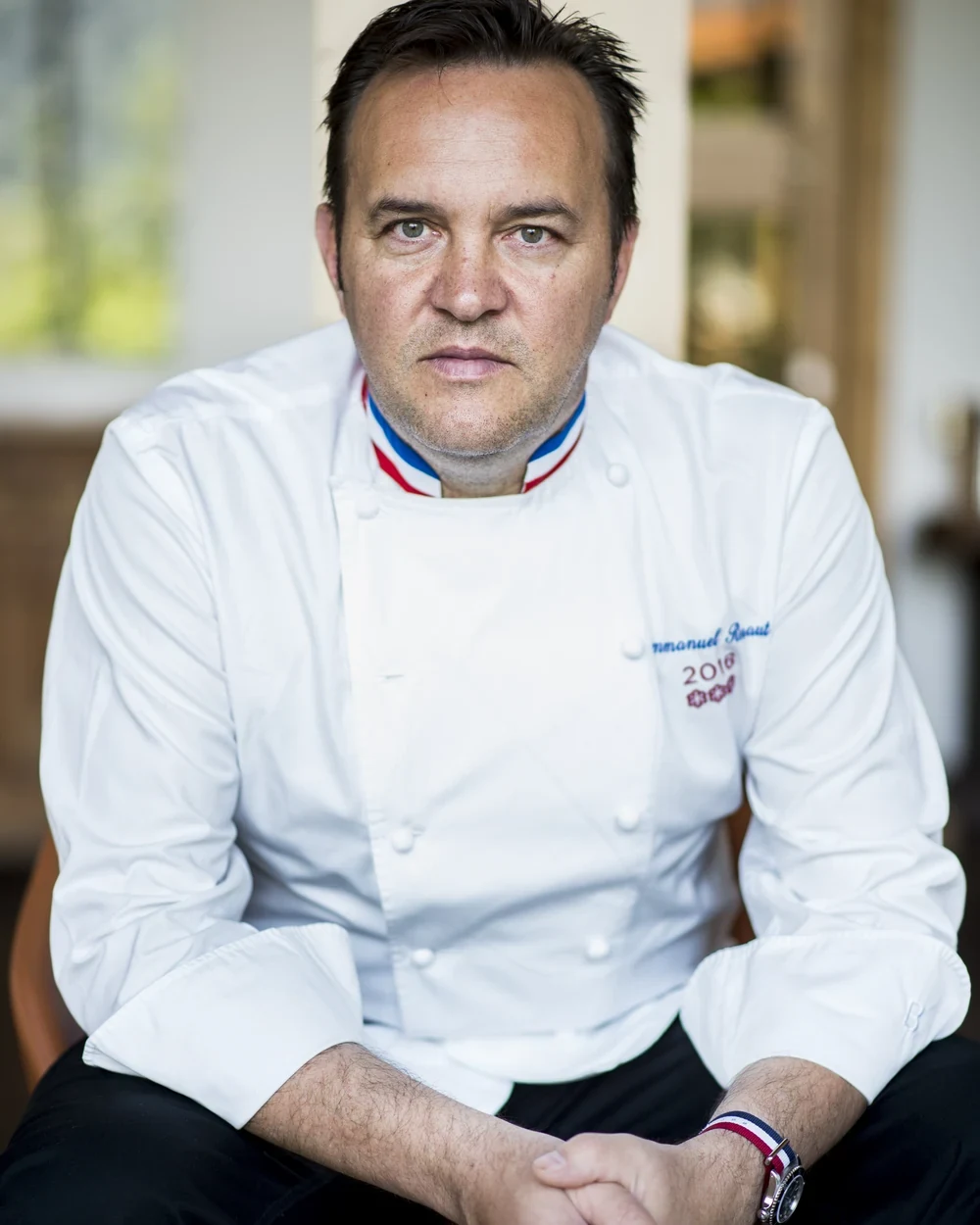
Portrait of Emmanuel Renaut
i. Biography
Emmanuel Renaut’s cooking is rooted in Megève and the French Alps, where the landscape shapes both the ingredients and the discipline of the work. Rose hip, wild blackberries, gentian, ceps, chanterelles, whitefish and arctic char place his cuisine in the peaks, woods, forests and plains around him. The Alpine pantry is not decorative in his hands, but the basis of the cooking, with bright fruit, firm bitterness, forest earth and clean freshwater notes recurring as part of its language. Formal training at CFA of Laon gave him a technical base before his work narrowed toward Megève and the French Alps. He then moved through a sequence of kitchens that built precision, timing and hierarchy: team member at Hôtel Le Lotti in Paris, first cooking assistant at Hôtel de Crillon in Paris, sous-chef at Auberge de l'Eridan in Veyrier-du-Lac, chef at Yves Thuriès, and head chef at Claridge's in London. This path supplied classical discipline and hotel exactitude before the cooking was brought back to an Alpine register. The founding of Flocons de Sel in 1998 gave that register a fixed address. As founder and chef, Renaut has used the restaurant to join technical control with a kitchen language drawn from the immediate mountain environment. His approach privileges clarity over display. Product, season and place are held in a tight frame, with foraging, wild produce from the mountain environment and sourcing from the French Alps defining the mise en place before style enters. Nature, feeling and sincerity are stated aims, and the work is described as an instinctive ode to nature, terroir, seasons and their benefits. In practice, the mountain year sets the range of flavor and texture. His ingredient vocabulary is direct. Rose hip and wild blackberries supply acidity and fruit. Gentian gives mountain bitterness. Ceps and chanterelles carry the forest floor. Whitefish and arctic char bring the clean line of Alpine waters. Pike and monkfish biscuit and fillet of venison have been cited as examples of reduction to the essential. Technique remains present, but it does not announce itself ahead of the ingredient. Refinement is used to strip away excess rather than add weight. Renaut’s Alpine language has also been shown outside Megève. For the Michelin Chef Showcase at Stellar at 1-Altitude in Singapore in 2016, he served gnocchi of parsnip and red beetroot harvested from the garden, along with salsify spaghetti lightly smoked with truffles from Alba in Italy. Even away from his home ground, the dishes followed the same logic of vegetable depth, measured aromatic use and seasonality without heaviness. Flocons de Sel is a member of Relais & Châteaux, while Aux Flocons de Sel in Megève is associated with Les Grandes Tables du Monde. Recognition for the restaurant and its chef came in sequence with the first Michelin star for Flocons de Sel in 2003, Meilleur Ouvrier de France in 2004, the second Michelin star in 2006, the third Michelin star in 2012, and Cooking Chef of the Year in 2012. For Renaut, the chronology reflects sustained validation of a Megève-based cuisine built from discipline, terrain and restraint.
The Sunday letter
Read Made By's new profiles every Sunday.
Meet the chefs, winemakers and sommeliers behind the places we cover. See a sample below before you subscribe.
See a sample of the Sunday emailOne email a week. Unsubscribe from any issue.

The Sunday letter
Get the next Made By profile in your inbox.
We send one email every Sunday morning with the people we profiled that week.
See a sample of the Sunday emailOne email a week. Unsubscribe from any issue.