i. Biography
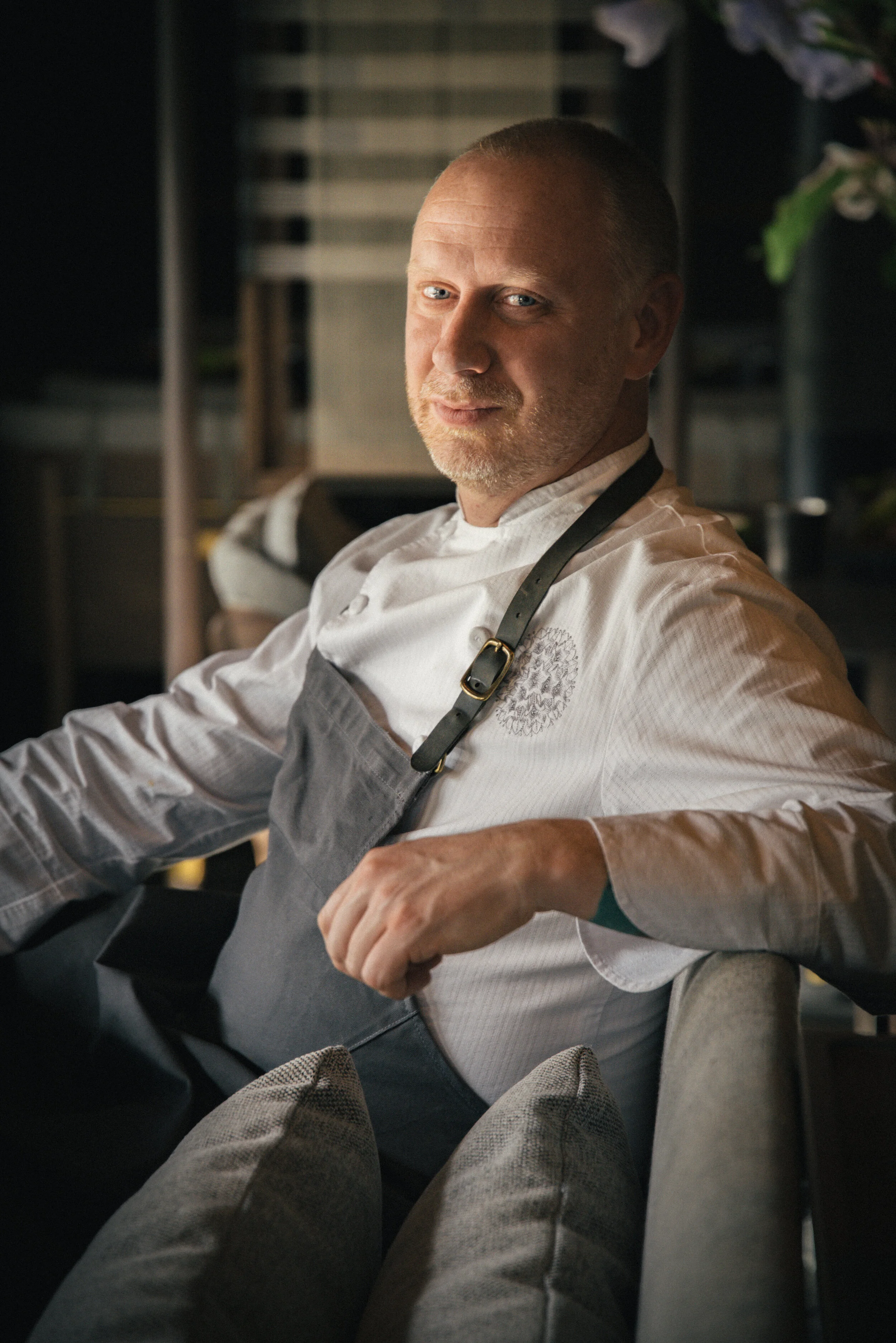
Career Training at the French Culinary Institute set the foundation for a career built on discipline, movement and practical kitchen work. Early roles as waiter and chef assistant in Russia gave Fedor a view of service from both sides of the pass: the timing of the room, the pressure of the line, and the economy of motion that keeps a service clean. In 1990, he became a cook at small family restaurant in Italy, then in 1991 moved to cook at Odessa restaurant in Brighton Beach. Those posts widened the frame without changing the method: cooking that stays close to the room, the ticket and the plate rather than to spectacle. Ownership followed at Cafe Europe in Boston, Stoli restaurant and bar in Manhattan, Love cafe and bar in Manhattan, and Visit Kitchen in Brooklyn, NY. Those roles show a chef not only cooking the food, but carrying the responsibility of shape, pace and identity across different rooms. Work as self-employed caterer at Ik kook bij jou extended that same approach beyond a fixed dining room. Today, Fedor is chef and executive chef of Bistrobar Berlin (since 2016) and executive chef of Bistrobar Bankoh, with a career that keeps returning to clarity, accessibility and direct execution.
Signature
Signature cooking here is plainspoken and specific. Fedor's signature dishes include kabeljauwkop and the choice says as much about method as it does about taste: a willingness to work directly with an ingredient that others may pass over. The line is not dressed up. It is exact, and that exactness is the point.
In Their Words “This dish arose from the fact that the ocean is not utilized optimally.” “My signature dish is the cod head.” Read together, those lines show a kitchen logic based on noticing what is available and using it well. The thinking is practical rather than decorative. It treats underused material as a source of dish development, and it does so without theatrical language.
Acclaim
Michelin Bib Gourmand (2024) places Fedor's work in a context where consistency matters. For a chef whose path runs from French Culinary Institute through Russia, Italy, Brighton Beach, Boston, Manhattan and Brooklyn, NY, and into Bistrobar Berlin in Nijmegen and Bistrobar Bankoh, the recognition aligns with a body of work defined by repetition, adaptability and a recognizable point of view.
The Path
Training at the French Culinary Institute set the foundation for a career built on discipline, movement and practical kitchen work. Early roles as waiter and chef assistant in Russia gave Fedor a view of service from both sides of the pass: the timing of the room, the pressure of the line, and the economy of motion that keeps a service clean. In 1990, he became a cook at small family restaurant in Italy, then in 1991 moved to cook at Odessa restaurant in Brighton Beach. Those posts widened the frame without changing the method: cooking that stays close to the room, the ticket and the plate rather than to spectacle. Ownership followed at Cafe Europe in Boston, Stoli restaurant and bar in Manhattan, Love cafe and bar in Manhattan, and Visit Kitchen in Brooklyn, NY. Those roles show a chef not only cooking the food, but carrying the responsibility of shape, pace and identity across different rooms. Work as self-employed caterer at Ik kook bij jou extended that same approach beyond a fixed dining room. Today, Fedor is chef and executive chef of Bistrobar Berlin (since 2016) and executive chef of Bistrobar Bankoh, with a career that keeps returning to clarity, accessibility and direct execution.
The Work Today
The kitchen language here is modern, accessible and built around signatures rather than excess. At Bistrobar Berlin in Nijmegen, that approach gives the menu its structure. The work values repetition, precision and a point of view that does not need to raise its voice to be understood.
Profile updated August 2026
FAQ
Asked of Fedor
What is Fedor's current role?
As of 2026, Fedor is executive chef.
Where did Fedor train or study?
Fedor trained at French Culinary Institute.