James Beard Award winner
Jeong Kwan
- Discipline
- James Beard Award winner
Made By record
Awards & recognition
1 total
1 winner

i. Biography
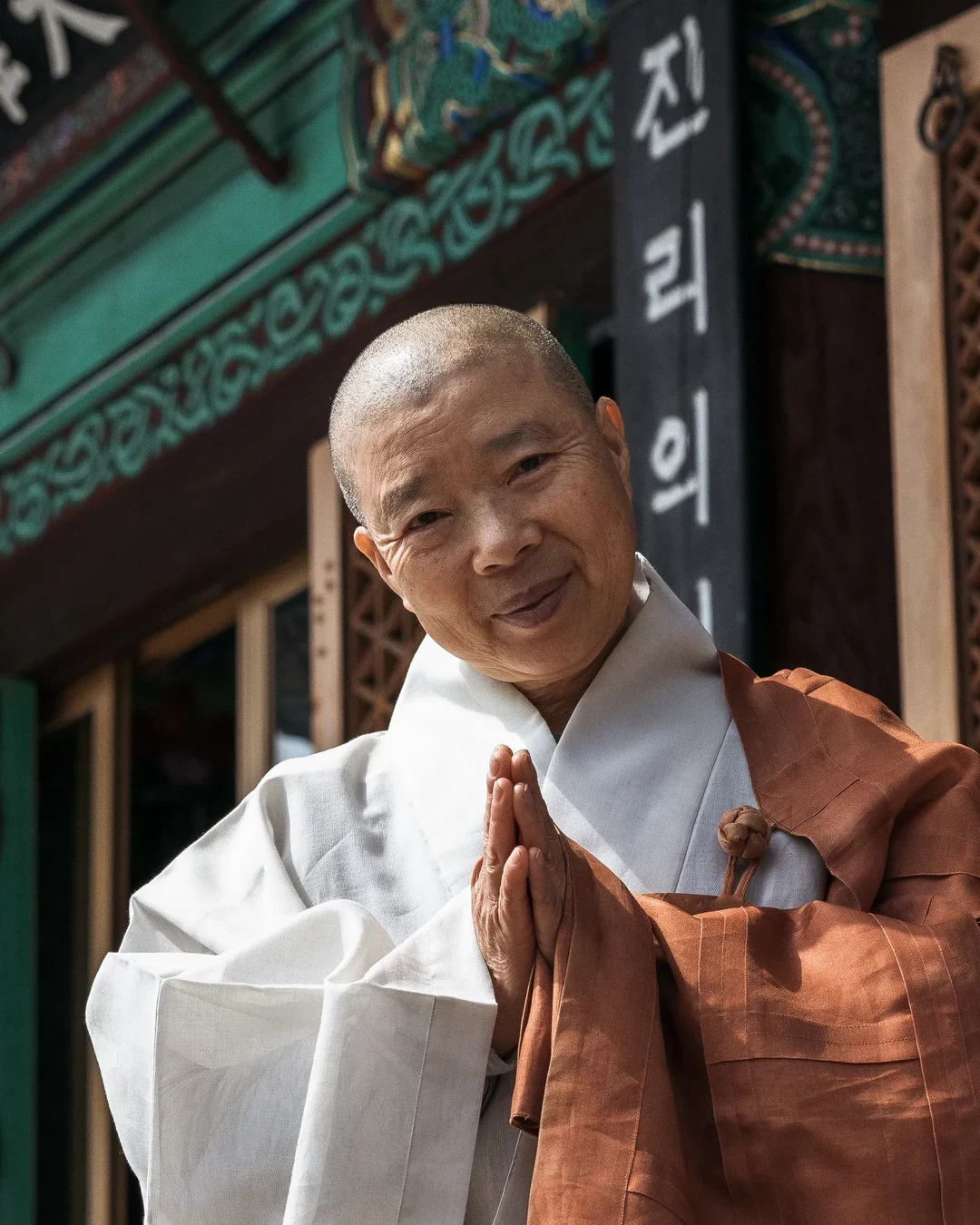
Jeong Kwan is the chef of Korean temple cuisine at Baekyangsa Temple in South Korea, and she also directs Chunjinam Hermitage in South Korea. The work is framed less as a profession than as Buddhist practice: “Well, first of all, I’m not a chef. I’m a practicer of Buddhism. For me, making food is a kind of meditation.” That distinction matters. In her kitchen, technique is discipline, and food is treated as part of devotion rather than performance.
The Path
Seon Buddhist practice shapes the terms of the work at Baekyangsa Temple in South Korea, where Jeong Kwan serves as a Seon Buddhist nun of the order of Seon nuns and as a chef of Korean temple cuisine. The repetition of temple life becomes method: measured, exacting, and stripped of excess. In that setting, cooking is not presented as a break from Buddhism but as one of its expressions. The kitchen functions as a place of attention, and the act of preparing food carries the same quiet rigor as the surrounding monastic life.
The Work Today
Korean temple cuisine at Baekyangsa Temple in South Korea is built on continuity, and Jeong Kwan cooks within that frame. She also serves as director of Chunjinam Hermitage in South Korea, linking administration and daily practice to the same steady rhythm. Her work has also become part of the wider conversation around temple food, which she describes with distance and time: “It’s been ten years since the world has known about temple food.” The point is not novelty. It is endurance, and the long visibility of a tradition that was never designed for spectacle.
Career - Seon Buddhist nun — order of Seon nuns - chef of Korean temple cuisine — Baekyangsa Temple, South Korea
Signature
Jeong Kwan's signature dishes include Baru, Braised Maesaengi Seaweed, and maesaengi jjim. The set reads like temple cuisine at close range: restrained, seasonal, and built from careful handling rather than display. Each dish points back to a kitchen where balance matters more than flourish, and where the work is defined by attention to ingredients, sequence, and restraint. The names carry the grammar of the tradition; the method stays quiet.
In Their Words “Well, first of all, I’m not a chef. I’m a practicer of Buddhism. For me, making food is a kind of meditation.” “It’s been ten years since the world has known about temple food.”
Acclaim
Recognition for Jeong Kwan comes through temple food, but also through the way she names the work. She does not separate cooking from Buddhism, and that refusal gives the practice its shape. Jeong Kwan has drawn attention by holding to discipline rather than display, and by treating food as part of a religious life. The result is a cuisine defined by patience, continuity, and a clear line between nourishment and performance.
FAQ What is Jeong Kwan's current role? As of 2026, Jeong Kwan is chef of Korean temple cuisine. What is Jeong Kwan known for? Korean temple cuisine.


